The best road cycling routes around Forêt d'Araize
3.7
(4)
153
riders
61
rides
Road cycling around Forêt d'Araize offers a tranquil environment with verdant landscapes in Ille-et-Vilaine, Brittany. The region is characterized by quiet country roads with minimal motorized traffic and mostly well-paved surfaces, making it suitable for various fitness levels. The substantial Forêt d'Araize itself covers approximately 1025 hectares, predominantly with deciduous trees like beech, oak, and chestnut. Cyclists can expect serene rides through forested areas and surrounding rural countryside.
Best road cycling routes around Forêt d'Araize
- The most popular road cycling route is Pouancé Castle – Château de Châteaubriant loop from Carbay, a 40.6 miles (65.3 km) trail that takes 2 hours 44 minutes to complete. This route offers views of historical castles and passes through varied terrain.
- Another top favourite among local road cyclists is Martigné Ferchaud church – Le Clos Loisel loop from Martigné-Ferchaud, a moderate 47.1 miles (75.9 km) path. This route features quiet country roads and significant elevation gain.
- Local road cyclists also love the Martigné Ferchaud church loop from Martigné-Ferchaud, a 14.9 miles (23.9 km) trail leading through rural countryside, often completed in about 1 hour 2 minutes.
- Road cycling around Forêt d'Araize is defined by quiet country roads, dense deciduous forests, and historical points of interest. The network offers options for different ability levels, from easy rides to more challenging moderate routes.
- The routes in Forêt d'Araize are highly rated by the komoot community with an average score of 4.3 stars from over 4 reviews. More than 100 road cyclists have used komoot to explore Forêt d'Araize's varied terrain.
Last updated: November 5, 2026
4
riders
22.5km
00:56
160m
160m
Easy road ride. Mostly well-paved surfaces and easy to ride.
4
riders
76.1km
03:17
640m
640m
Moderate road ride. Good fitness required. Some segments of this route may be unpaved and difficult to ride.

3
riders
23.9km
01:02
170m
170m
Easy road ride. Mostly well-paved surfaces and easy to ride.
4
riders
55.7km
02:23
340m
340m
Moderate road ride. Good fitness required. Some segments of this route may be unpaved and difficult to ride.
2
riders
41.5km
01:53
390m
390m
Moderate road ride. Good fitness required. Mostly well-paved surfaces and easy to ride.
Get access to more routes and recommendations from other explorers.
Already have an account?
Our route recommendations are based on thousands of hikes, rides, and runs completed by other people on komoot.
Start today with a free account
Your next adventure awaits.


Tips from the Community

About the small 19th-century church.
0
0
Saint-Pierre Apôtre Church, built in the Neo-Gothic style, around 1867.
1
0
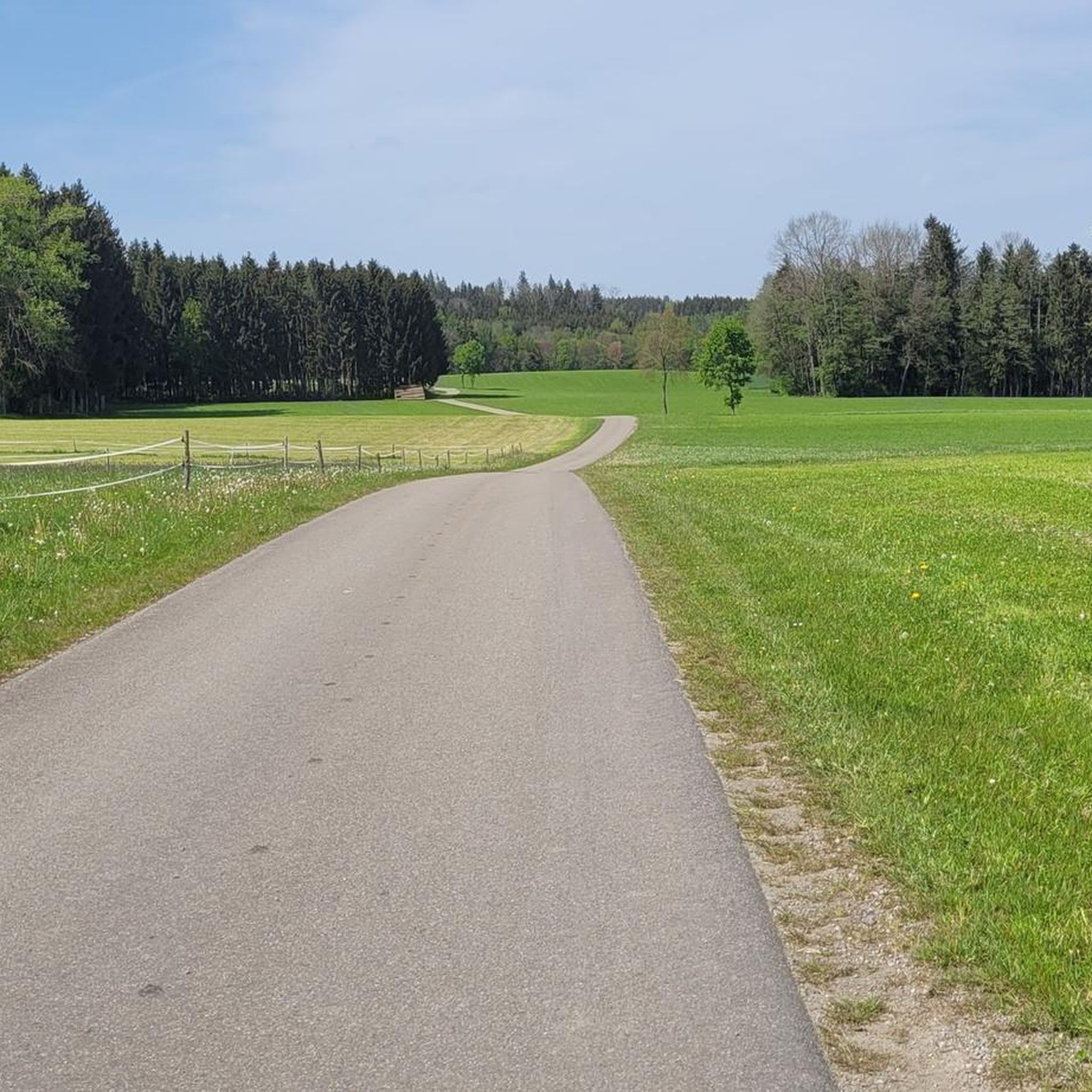
Magnificent greenway, rolling and shaded. Less flat than I expected.
0
0

The church, which consists of a large nave and two six-bay aisles, a transept, and a three-bay choir without an ambulatory, is 65 meters long. The transept is 26.50 m long, and the naves are 17.5 m wide. The bell tower is 65 meters high without the cross. It has a set of five bells made in 1895 by the Bollée foundry in Le Mans: Saint-Nicolas (the bourdon), weighing 4027 kg, playing the A of octave 2 Anne, weighing 1552 kg, playing the D of octave 3 Marie, weighing 1067 kg, playing the M of octave 3 Joséphine-Jeanne, weighing 726 kg, playing the F sharp of octave 3 Henriette-Victorienne, weighing 450 kg, playing the A of octave 3
0
0
The original chapel, initially dedicated to Notre-Dame, was built by Geoffroy IV, Baron of Châteaubriant, on the site where the cattle market was held from May to October until 1763. A text attests to its existence in 1263. [Threatening to fall into ruin, it was demolished in 1518, leaving only the choir of the old chapel standing. The place of worship was immediately rebuilt in a more spacious form using Châteaubriant schist (Nozay stone), based on the plans of Jean Delorme, brother of Philibert Delorme, thanks to the demolition of a neighboring house and the financial support of Jean de Laval. However, the latter's poor financial situation meant that by 1530, only the nave of the building had been built. At the death of Françoise de Foix in 1537 and Jean de Laval in 1543, the Notre-Dame chapel still lacked a framework. It was not until 1551 that the final work was undertaken by Baron Anne de Montmorency. The dedication of the new place of worship took place ten years later, on November 5, 1561, in the presence of the coadjutor of the Bishop of Nantes, and the name of Notre-Dame was changed to Saint-Nicolas, for an unknown reason. On the same day, the body of Jean de Laval, then encased in a lead reliquary, was transported from the castle chapel to the new building. Jean de Laval had wished to see the chapel erected as a collegiate church, but this wish was not granted. However, the building, as vast as a church, shared the honors of worship with the Church of Saint-Jean de Béré, which was then the parish church of the town, until the Revolution. Indeed, the Saint-Nicolas chapel, although of undeniable architectural value, was not suitable for worship in a parish as large as that of Châteaubriant. Nevertheless, in the 15th and 16th centuries, masses, vespers, and many ceremonies were held in the chapel for reasons of convenience, as it was closer to the town of Châteaubriant, while baptisms were all celebrated at Saint-Jean de Béré. At the end of the 19th century, the church, which became the parish seat in 1801, was completely rebuilt. The architect Eugène Boismen drew up the plans, inspired by those of the Saint-Nicolas basilica in Nantes, one of the first neo-Gothic projects in France, which was beginning to inspire architects throughout the west of the country. The foundation stone was blessed on April 25, 1875, by Bishop Fournier of Nantes. The choir, sacristies, transept, and five bays were only completed at the time of the consecration, which was performed by his successor, Bishop Le Coq, on February 1, 1881. The foundations of the bell tower and the remaining bay began in June 1892, based on plans by architect François Bougoüin. The tower and spire were completed in August 1894.
0
0
nighttime. A medieval fortress and Renaissance building, Châteaubriant Castle recounts ten centuries of history. In the Middle Ages, Châteaubriant Castle was at the heart of the Marches of Brittany. It served as a stronghold defending the duchy against the Kingdom of France. The keep, ramparts, seigneurial chapel, and the medieval courtyard lodgings still bear witness to the power of this fortress. In the 16th century, the bailey became a residence opening onto the gardens. The castle gardens are open to the public from February to December. Visit maps are available at the reception-shop for a better understanding of the site. A 3D space allows you to discover, with free access, the architectural evolution of the castle, from the 11th century to the present day. From February to December, heritage mediators will accompany you on an in-depth tour of the castle, its keep, and its gardens. During school holidays, family workshops allow parents and children to develop their creativity or spark their curiosity! Opening days: Gardens are open to the public, Wednesday to Sunday: 9am-6pm (February-March and October-December) or 9am-7:30pm (April-September). Prices: - Free entry for those over €0.00 (Free access to the château gardens) - Individual adult rate from €3.00 to €6.00 (Guided tours, free for those on minimum income and special cards) - Individual child rate from €0.00 (Guided tours free for those under 26) - Individual child rate from €0.00 (Guided tours free for those under 26) Child from €4.00 to €8.00 (Family activity) - Adult group rate from €5.00 (From 15 people) Payment methods: Credit cards - Bank and postal checks - Cash Tours Self-guided tours (individual): Yes Guided tours (individual): Yes Average visit duration (individual): 1 hour Self-guided tours (groups): Yes Guided tours on request (groups): Yes Guided tours (groups): Yes Average visit duration (groups): 1 hour Languages: Tour: French, English - Signs: French, English Services: Interactive kiosk - Shop - WiFi Additional information: Groups of 15 people or more are welcome - Pets allowed (Dogs on leashes are allowed in the park.) - Points of interest visible without a tour Access Location: SNCF train station: 0.5 km
0
0
This recently built church (end of the 19th century) is visible from afar with its 65 meters in height.
0
0
The castle is a self-guided tour. A little tip: there are bike racks inside the castle, just beyond the entrance.
1
0
Frequently Asked Questions
What is the general terrain and difficulty level for road cycling around Forêt d'Araize?
The region around Forêt d'Araize is characterized by quiet country roads with mostly well-paved surfaces, making it suitable for various fitness levels. You'll find a mix of easy and moderate routes. For example, the Martigné Ferchaud church loop from Martigné-Ferchaud is an easy option, while routes like the Saint-Marse Church of Bais – La Guerche-de-Bretagne loop from Eancé offer a moderate challenge with more elevation.
What natural features and landmarks can I expect to see while cycling?
Cyclists can enjoy serene rides through verdant landscapes, including long rows of beech trees and magisterially arranged oaks, especially in the areas surrounding the Forêt d'Araize. Points of interest include the picturesque Étang de la Forge near Martigné-Ferchaud, the historic Moulin de St-Morand, and traces of historical brickworks in Saint-Morand. The Pouancé Castle – Château de Châteaubriant loop from Carbay also offers views of historical castles.
Are there any established cycling routes or greenways in the area?
Yes, the well-known La Régalante cycling route passes through Martigné-Ferchaud, connecting it to nearby towns like Châteaubriant and La Guerche-de-Bretagne. This route incorporates both quiet country roads and designated greenways, providing a safe and enjoyable experience. You can find more information about sections of this route, for example, between Martigné-Ferchaud and Châteaubriant or La Guerche-de-Bretagne and Martigné-Ferchaud.
When is the best time of year for road cycling in Forêt d'Araize?
The region's tranquil environment and verdant landscapes are particularly pleasant during spring, summer, and early autumn. These seasons generally offer favorable weather conditions for enjoying the quiet country roads and forested ambiance.
Are there family-friendly road cycling routes around Forêt d'Araize?
Yes, the region offers several easy road rides on mostly well-paved surfaces, which are suitable for families. The overall character of quiet country roads with little motorized traffic makes it a safe and enjoyable environment for cyclists of all ages. An example of an easy route is the Martigné Ferchaud church loop from Martigné-Ferchaud.
What do other road cyclists enjoy most about road cycling in Forêt d'Araize?
The area is highly rated by the komoot community, with an average score of 4.3 stars. Reviewers often praise the quiet country roads, the dense deciduous forests, and the historical points of interest that can be discovered along the routes. The variety of options for different ability levels is also frequently appreciated.
Are there amenities like cafes or accommodation near the cycling routes?
Yes, the commune of Martigné-Ferchaud, where Forêt d'Araize is situated, provides access to amenities. The Étang de la Forge, for instance, features a municipal campsite, and you can find cafes and other services in Martigné-Ferchaud and surrounding towns like La Guerche-de-Bretagne and Châteaubriant, which are connected by cycling routes.
How many road cycling routes are available in the Forêt d'Araize area?
There are over 50 road cycling routes available around Forêt d'Araize, catering to various preferences and fitness levels. These include a good mix of easy and moderate options to explore the region's quiet country roads and scenic landscapes.
Are there any circular road cycling routes available?
Yes, many of the routes in the Forêt d'Araize area are designed as loops, allowing you to start and end in the same location. Examples include the Martigné Ferchaud church – Le Clos Loisel loop from Martigné-Ferchaud and the Châteaubriant Castle – La Guerche-de-Bretagne loop from Martigné-Ferchaud.
Is public transport available to access the cycling routes?
While specific public transport links directly to the start of every route are not detailed, the region is accessible, and major towns like Martigné-Ferchaud, La Guerche-de-Bretagne, and Châteaubriant serve as good starting points, often with regional transport connections. It's advisable to check local transport schedules for the most up-to-date information.
Are there specific parking areas for cyclists near the routes?
Parking is generally available in the towns and villages that serve as starting points for many routes, such as Martigné-Ferchaud. For routes that pass through specific attractions like the Étang de la Forge, dedicated parking facilities are often provided for visitors.
Most popular routes around Forêt d'Araize

Get inspired with the komoot mobile app


Explore more
Browse the best Road cycling routes in other regions.
