The best road cycling routes around Max-Eyth-See
4.4
(2062)
39,845
riders
403
rides
Road cycling routes around Max-Eyth-See are primarily characterized by their proximity to the Neckar River, offering flat riverside paths suitable for various skill levels. The area includes sections through urban landscapes and agricultural zones, with some routes featuring vineyard climbs. The terrain around Max-Eyth-See provides a mix of paved roads and dedicated bike paths, making it accessible for road cyclists. Cyclists can enjoy views of the lake, green spaces, and terraced vineyards rising above the Neckar River.
Best road cycling…
Last updated: May 23, 2026
5.0
(2)
52
riders
39.0km
01:42
340m
340m
Moderate road ride. Good fitness required. Mostly well-paved surfaces and easy to ride.
3
riders
37.6km
01:44
270m
270m
Moderate road ride. Great for any fitness level. Some segments of this route may be unpaved and difficult to ride.

Sign up for free
27
riders
60.6km
02:59
870m
870m
Moderate road ride. Good fitness required. Mostly well-paved surfaces and easy to ride.
5.0
(3)
31
riders
Moderate road ride. Good fitness required. Mostly well-paved surfaces and easy to ride.
4.0
(2)
28
riders
44.3km
02:07
430m
430m
Moderate road ride. Good fitness required. Some segments of this route may be unpaved and difficult to ride.
Get access to more routes and recommendations from other explorers.
Sign up for free
Already have an account?
Our route recommendations are based on thousands of hikes, rides, and runs completed by other people on komoot.
Start today with a free account
Your next adventure awaits.
Login or Signup
Popular around Max-Eyth-See



Tips from the Community

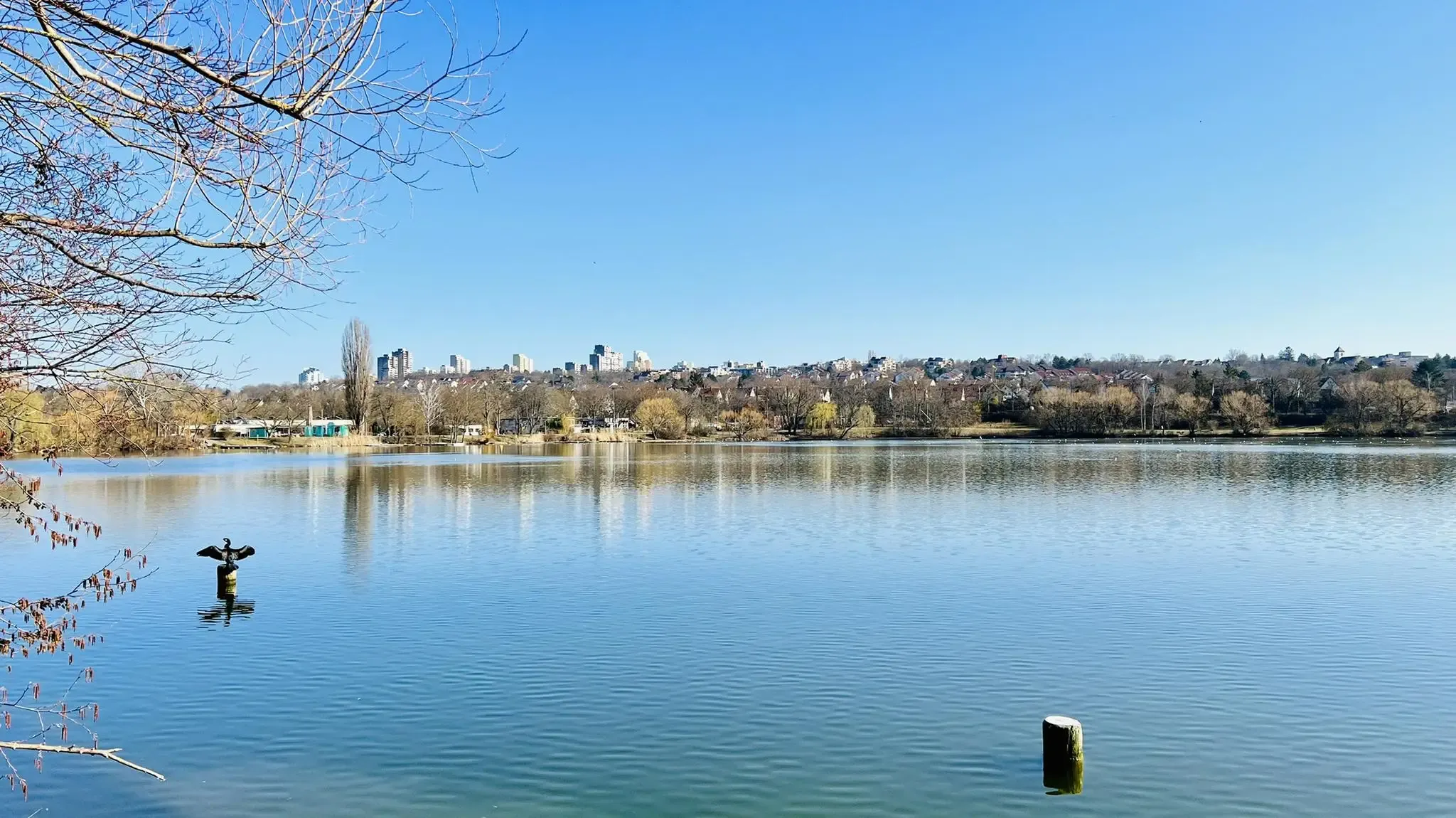
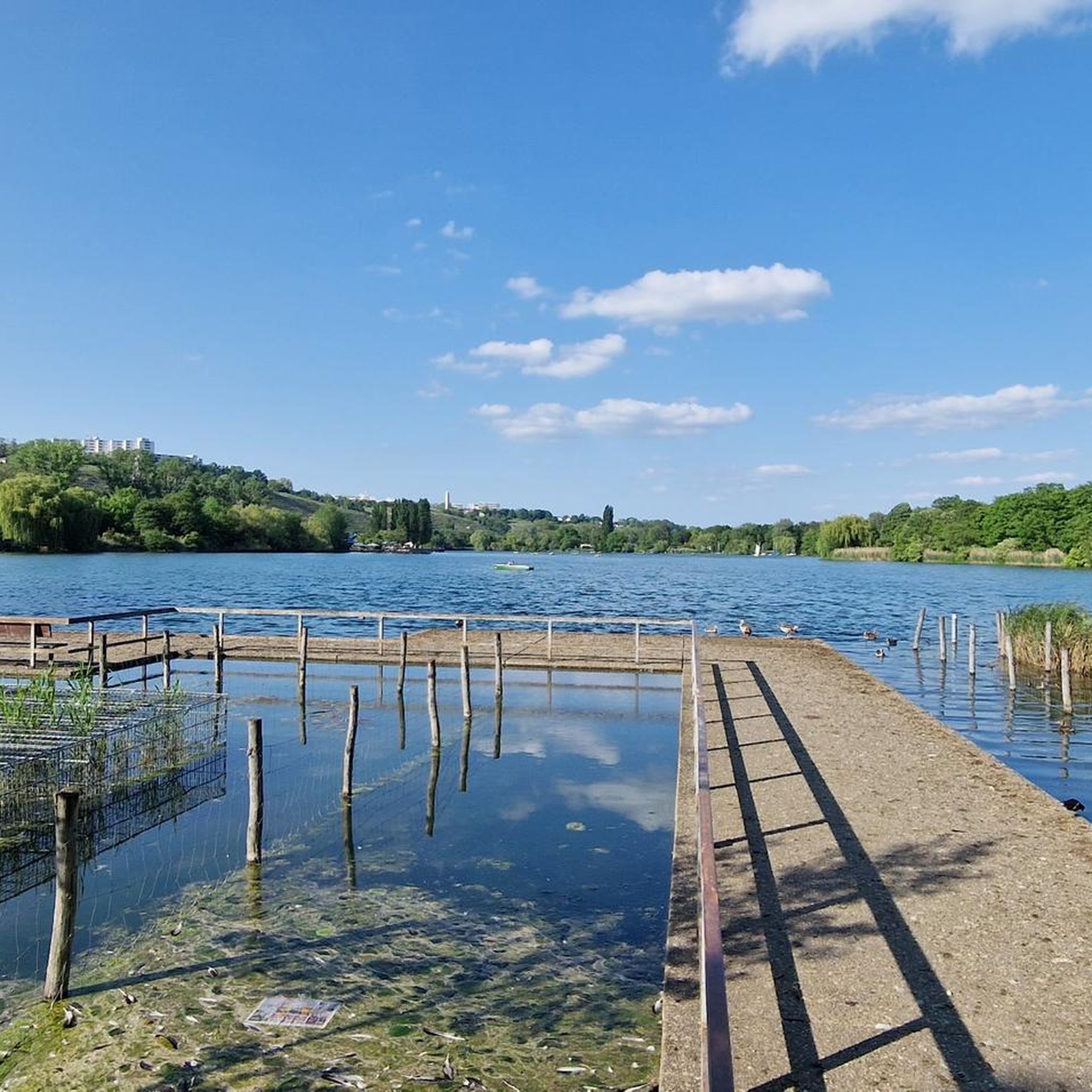
The Hofen weir clearly marks the transition from the „Bonatz weirs“ to those of the 1950s: the roller weir, probably co-designed by Bonatz, has the weir bridge over the downstream for the first time since 1927. In the lock built in 1957, a lift-and-turn and a lift-and-slide gate are combined. In the impoundment area is the Max-Eyth-See, which was created in 1935 for a water sports exhibition accompanying the Neckar canalization.
2
0

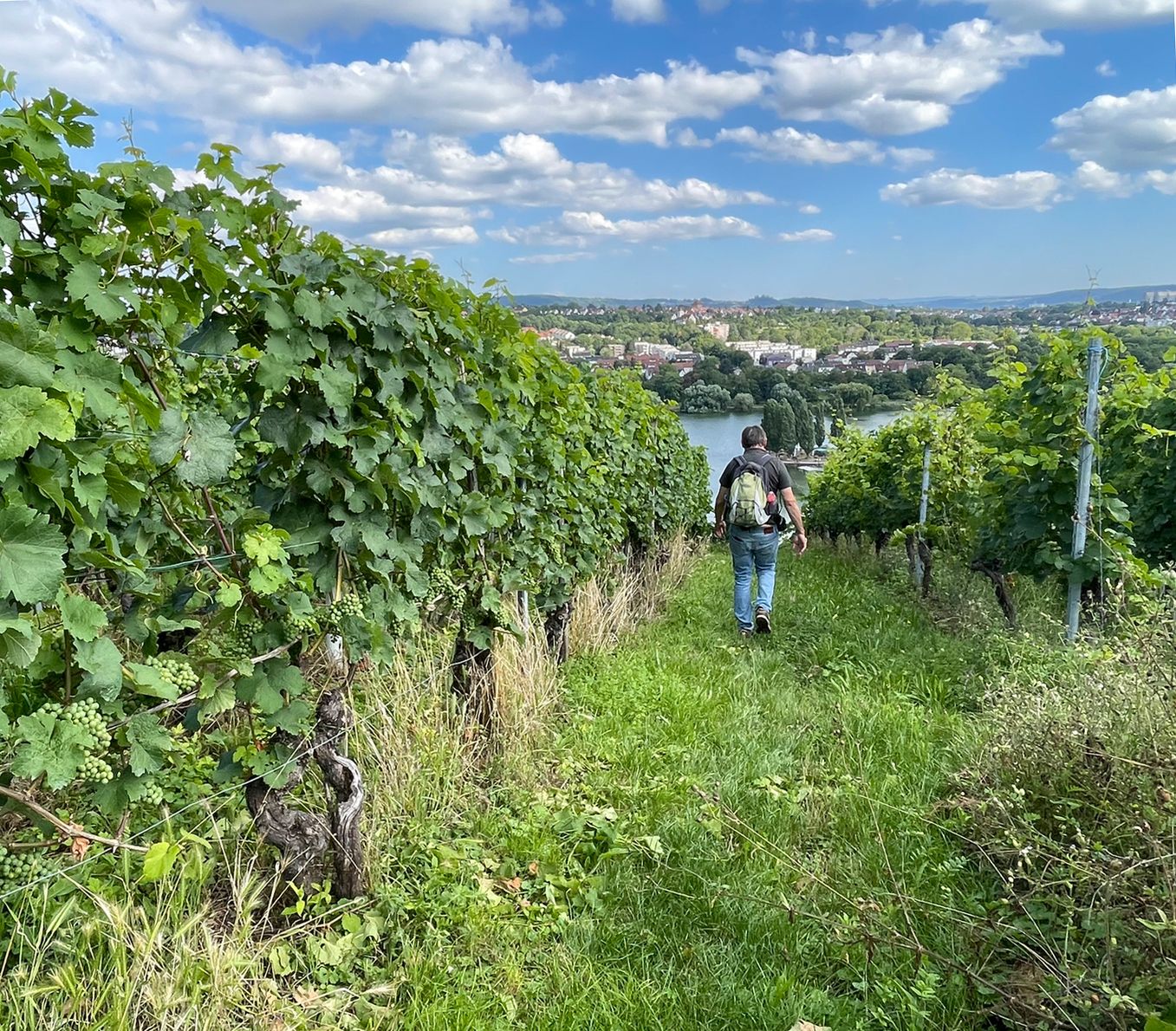
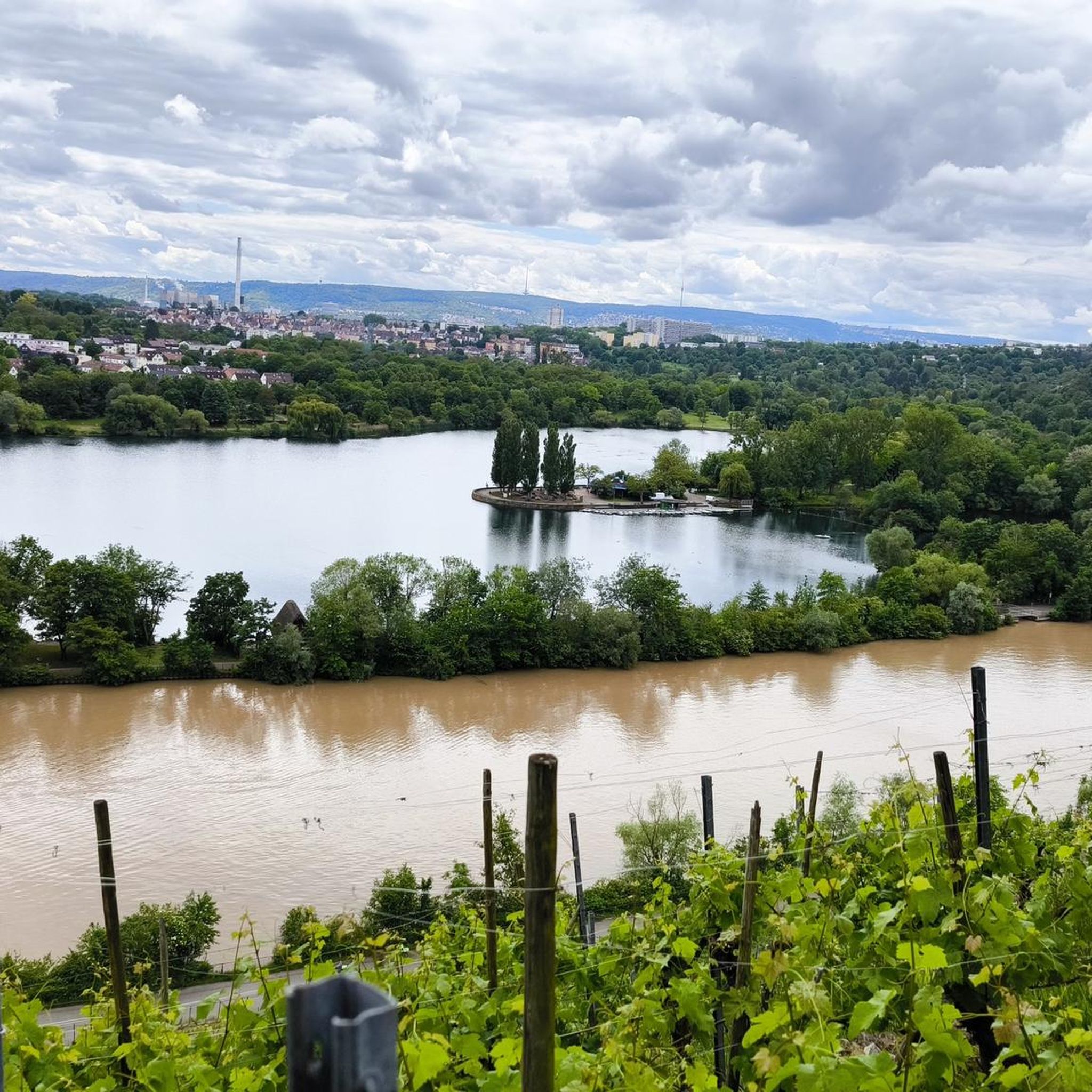
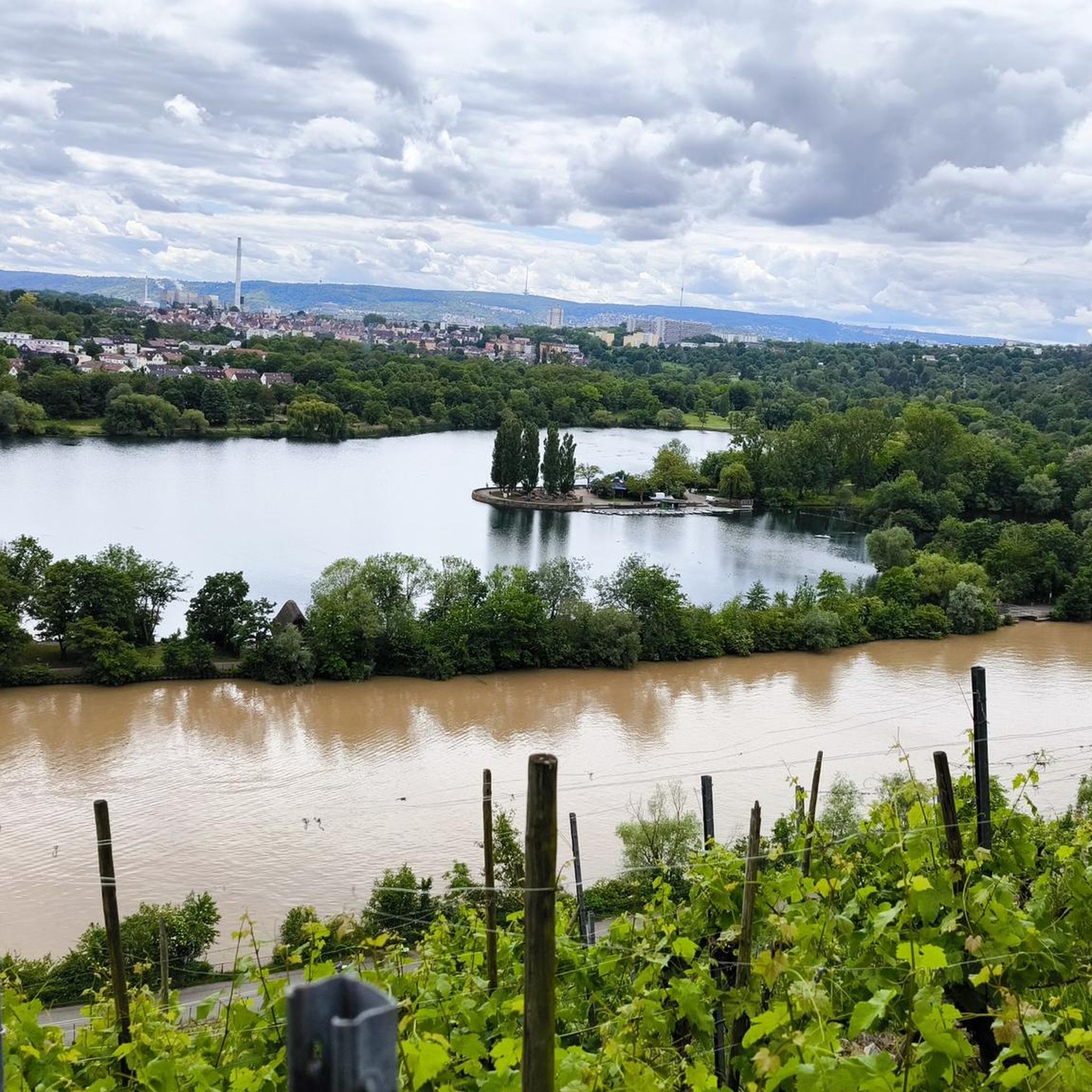
The Cannstatter Zuckerle is a single vineyard site on the Neckar, supported by numerous dry stone walls.
0
0
Good view of the railway line between Stuttgart and Mannheim.
8
0

Rosenstein Palace in Stuttgart is a neoclassical palace located in the Rosenstein Park. Today, it houses the Natural History Museum with fascinating exhibitions on wildlife and ecology.
13
0

The tower spire impressively enlivens the mighty structure. The simple half-timbering is striking due to its ornamental clarity. The half-timbering is decorated with diamond motifs and curved bands. Fachwerkstock and gable floors of today's town hall were added in 1687 on the renovated walls of a wine press. This was already documented in 1541 and in turn formed the ground floor of a previous town hall. This predecessor building from the period 1590 - 1599 burned down – just like St. John's Church – in the Thirty Years' War (1643). The predecessor building was probably erected between 1590 and 1599. A partially preserved year number on the southern round arch portal supports this assumption. A wine press with two beams to be maintained by the Duke and a house above it has been documented since 1541. A "beam" is understood to be a long, horizontal piece of wood used to turn the spindle of the grape press. The building erected around 1590 was therefore already the successor to an earlier building that existed at this location. Information about the reconstruction in 1687 is provided by a wooden plaque above the main entrance. This inscription with the letters "SHSSR" and "BIW" suggests the then mayor Jakob Schmalzried and the then mayor Jakob Wetzel. The carpenter's tools depicted below and the designation "MW" indicate the carpenter, who is no longer known by name. The number "1687" indicates the year of construction. The offices were located densely packed above the wine press. Since 1728, they were accessible via an external staircase, which replaced a steep staircase inside. This staircase was removed in 1884. Until the renovation in 1956 and 1957, six oak columns supported the ceiling of the wine press floor. They were removed, and an intermediate ceiling and a curved internal staircase were installed. This created a new intermediate floor with offices, which is externally recognizable by the newly added row of windows. Since the municipal reform in 1975, the Münchingen town hall has been the seat of the Münchingen administrative office. The citizen service, the Münchingen registry office, and the Office for Family, Public Order, and Real Estate are now housed here and in the neighboring Widdumhof. https://youtu.be/xut_zU_pfDw?si=HtF7LyMTL2zyrDrF
0
0

Blends beautifully into the landscape. For hikers and cyclists only.
12
0

Even if you don't want to buy any plants, it's worth walking through the very large exhibition area, as there are flowers here depending on the season, and the different tree species (including sequoias) are also worth seeing.
5
0
Frequently Asked Questions
What are the typical distances and difficulties of road cycling routes around Max-Eyth-See?
Road cycling routes in the Max-Eyth-See area vary in length and challenge. You'll find routes ranging from around 23 miles (37 km) to over 37 miles (60 km). The difficulty levels are diverse, with options for easy, moderate, and difficult rides, catering to different experience levels. For example, the Path Between the Linden Trees – Neckar Riverside Path loop from Hofen is a moderate 24.3-mile route.
Are there beginner-friendly road bike trails around Max-Eyth-See?
Yes, the Max-Eyth-See area offers several beginner-friendly road cycling options. Many routes follow the Neckar River, providing flat riverside paths that are suitable for those new to road cycling or looking for a more relaxed ride. Out of nearly 400 routes, 67 are classified as easy.
Are there challenging road bike routes near Max-Eyth-See?
For more experienced road cyclists seeking a challenge, the region around Max-Eyth-See includes routes with vineyard ascents and more significant elevation changes. An example is the moderate Reichenbach Cemetery Pass – Climb to Ödernhardt loop from Mühlhausen, which covers over 37 miles (60 km) with substantial elevation gain. There are 93 routes classified as difficult in the area.
Is there parking available for road cyclists at Max-Eyth-See?
Yes, there are parking options available for road cyclists. You can find free parking, for instance, opposite Max-Eyth-See. A specific highlight for this is Free parking opposite Max-Eyth-See.
How can I reach the Max-Eyth-See bike trails using public transport?
Max-Eyth-See is well-connected by public transport within Stuttgart. You can typically reach the area by tram or bus, with stops conveniently located near the lake, making it easy to start your road cycling tour without a car.
Are there family-friendly road cycling routes suitable for all ages around Max-Eyth-See?
The flat sections along the Neckar River are ideal for family-friendly road cycling. These paths offer a safe and enjoyable environment for cyclists of all ages, allowing families to ride together without significant challenges. Look for routes categorized as 'easy' for the most suitable options.
What is the best season for road cycling around Max-Eyth-See?
The best season for road cycling around Max-Eyth-See is generally from spring to autumn. During these months, the weather is most favorable, with pleasant temperatures and less chance of rain, making for comfortable riding conditions along the riverside paths and through the vineyards.
Are there places to eat or drink along the road cycling routes near Max-Eyth-See?
Yes, you'll find various options for refreshments along the routes. The Meeting Point Am See Beer Garden & Restaurant is a popular spot directly at Max-Eyth-See. Many routes also pass through urban areas or small towns where cafes and pubs are available.
What scenic viewpoints can I find along the road cycling routes?
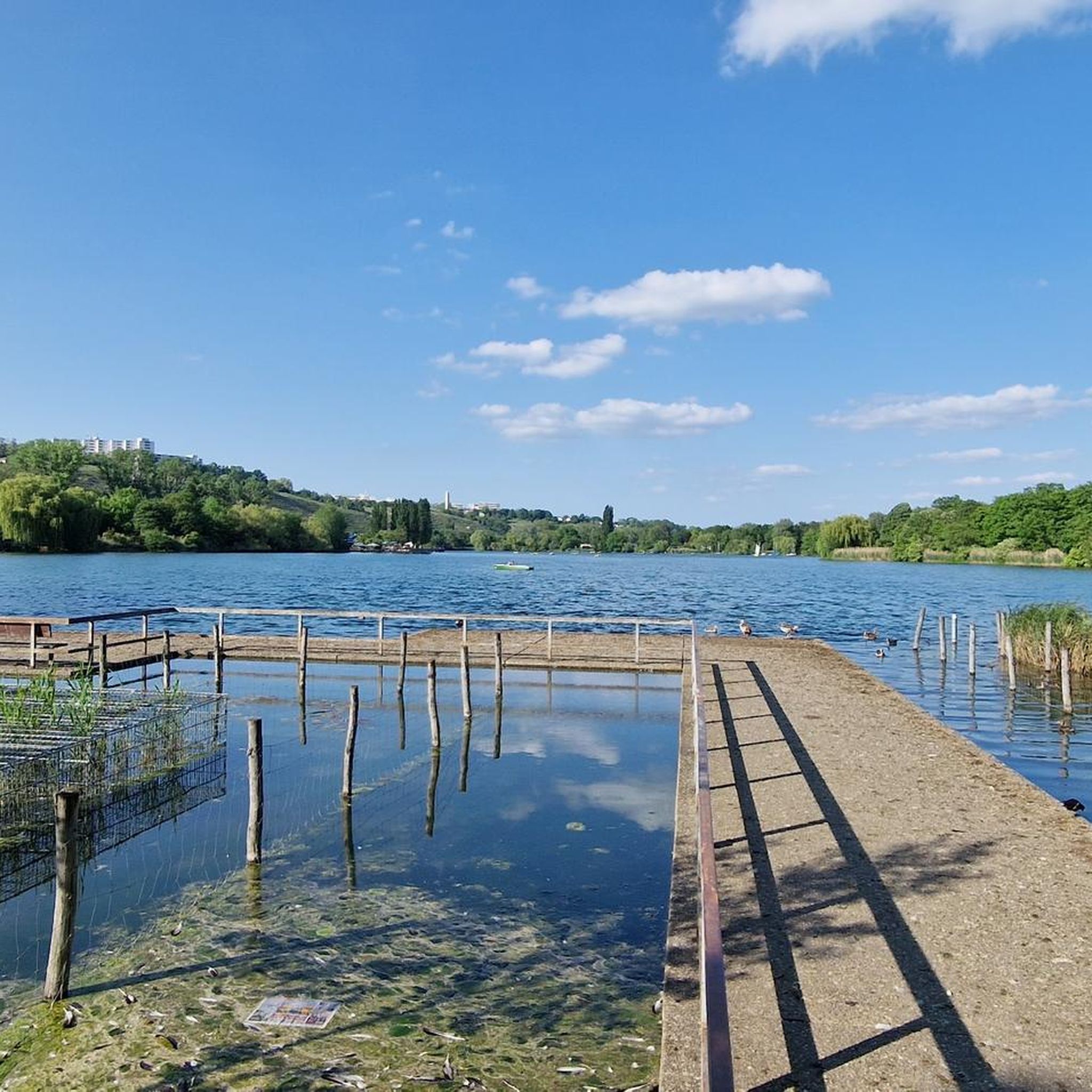
The road cycling routes around Max-Eyth-See offer several scenic viewpoints. You can enjoy beautiful vistas of the vineyards on the Neckar, such as the View of the vineyards on the Neckar, or relax at a Bench by the Max-Eyth-See dock with lake views.
Are most road cycling routes around Max-Eyth-See loop trails?
Many of the road cycling routes in the Max-Eyth-See area are designed as convenient loop trails, allowing you to start and end your ride at the same point. This is particularly true for routes following the Neckar River, such as the Cannstatter Zuckerle Vineyards – Lodzer Steg Pedestrian and Bicycle Bridge loop from Max-Eyth-See.
What do other road cyclists enjoy the most about road cycling in Max-Eyth-See?
The area is highly rated by the komoot community, with an average score of 4.4 stars from over 1,900 reviews. Road cyclists often praise the consistent surfaces of the Neckar riverside paths, the blend of flat sections with gentle undulations, and the scenic vineyard areas.
Are there any historical landmarks along the road cycling routes?
Yes, you can encounter historical sites while cycling. For example, The Heidenschloss – Roman Estate at Max-Eyth-See is a notable historical landmark that can be explored along some of the routes.
Most popular routes around Max-Eyth-See
Most popular attractions around Max-Eyth-See

Get inspired with the komoot mobile app


Explore more
Browse the best Road cycling routes in other regions.
