The best walks and hikes around Weikensee
4.6
(6629)
27,546
hikers
758
hikes
Hiking around Weikensee offers varied landscapes, including riverside paths along the Issel River and distinct natural environments like dune and moor landscapes. The region features a network of trails suitable for different fitness levels, from easy walks to more challenging routes. Elevation gains are generally low, with the terrain primarily consisting of flat to gently rolling paths.
Best hiking trails around Weikensee
- The most popular hiking route is Dune landscape – Stag Beetle Route loop from Hamminkeln, a 10.1…
Last updated: May 12, 2026
5.0
(3)
25
hikers
16.3km
04:07
30m
30m
Moderate hike. Good fitness required. Easily-accessible paths. Suitable for all skill levels.
4.0
(4)
18
hikers
Easy hike. Great for any fitness level. Easily-accessible paths. Suitable for all skill levels.

Sign up for free
17
hikers
4.89km
01:14
10m
10m
Easy hike. Great for any fitness level. Easily-accessible paths. Suitable for all skill levels.
4.0
(3)
8
hikers
Moderate hike. Good fitness required. Easily-accessible paths. Suitable for all skill levels.
5.0
(1)
12
hikers
Easy hike. Great for any fitness level. Easily-accessible paths. Suitable for all skill levels.
Get access to more routes and recommendations from other explorers.
Sign up for free
Already have an account?
Our route recommendations are based on thousands of hikes, rides, and runs completed by other people on komoot.
Start today with a free account
Your next adventure awaits.
Login or Signup
Tips from the Community

In 1571, it is noted that Ringenberg became Protestant. The parish no longer belonged to the Catholic parish of Dingden, but was oriented towards Hamminkeln, which was also Protestant. But what did that mean back then? Consequently, disputes repeatedly arose over who owned the church: the (Hamminkeln) Lutherans or the (Ringenberg) Reformed? In 1648, the Elector of Brandenburg (the Counts of Kleve had already been extinct for half a century) decreed that the church should serve both (Protestant) parties for worship. In the same year, 1648, he also enfeoffed one of his officers and comrades-in-arms from the Thirty Years' War with the lordship of Ringenberg. From then on, the von Spaen family (pronounced Spahn, not Spän) ruled there and had to set about rebuilding. For the village, castle, and church had been destroyed by the war, and the parsonage had burned down. In 1661, the castle was expanded into a Baroque palace. In the rebuilt church, a burial chamber was created under the choir for family members. A tomb slab from this period is still preserved (stands in the tower), and the saber under the organ also comes from the possessions of the von Spaen family. In the time of "Old Fritz", a new church was built, consecrated in 1754; the old one threatened to collapse and was demolished. According to the taste of the time and the plans of the architect Vierevandt from Arnhem, the church consists of an 8-sided brick building in the Dutch Baroque style, initially still without a tower. In 1907, a comprehensive renovation of the church took place, and only then was the 3-story tower with a Baroque "Schweifhaube" (curved hood) added. In 1933, the "Luther Oak" was planted in the square in front of the church to commemorate the 450th birthday of Martin Luther. In 1945, the church was largely destroyed. The burial vault and the wooden epitaphs (memorial tablets) of the von Spaen family were irretrievably lost. After the war, the architect Grütjen from Hamminkeln led the reconstruction; the church was reconsecrated in 1950. The then pastor Steinbach also ensured that displaced persons were settled on church grounds. Source: Evangelische Kirchengemeinde An Issel und Rhein
0
0

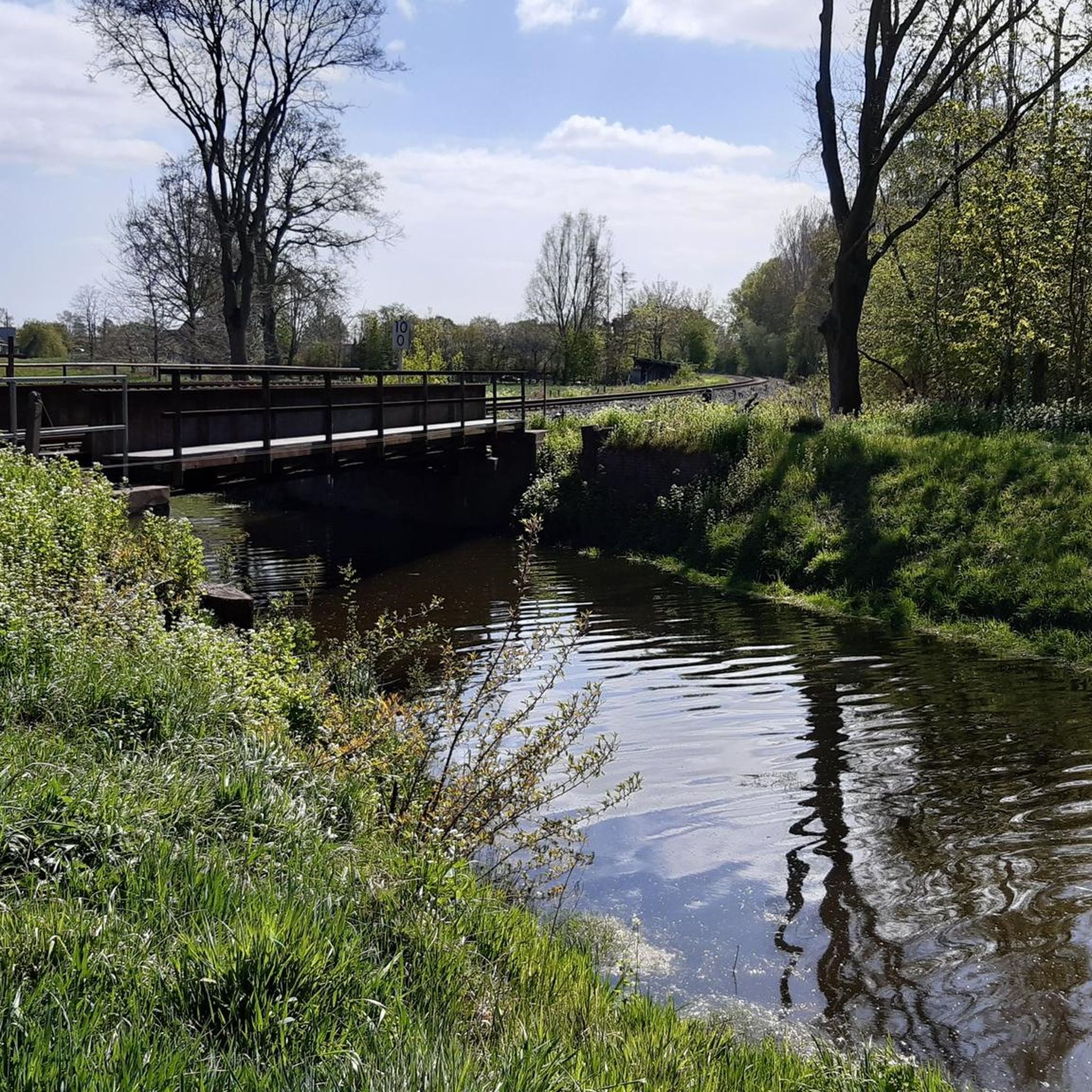
Unfortunately, the bridge has a high step and ends in a meadow... It's better to continue along the main road and then turn left...
0
0

"The Protestant church in Ringenberg was built in the second half of the 18th century according to plans by the Dutch architect Vierevandt from Arnhem and consecrated in 1754. It consists of an elongated octagonal brick building and a 3-storey tower in the simple Dutch Baroque style. The tower has a tail cap on an octagon. The church dates back to a castle chapel mentioned as early as the 14th century. As early as 1571, the originally Catholic church was transferred to the Evangelical Lutheran community. The building was destroyed in the Thirty Years' War. The direct predecessor building was built from 1660/1661 and was so dilapidated in the 18th century that it had to be demolished. In 1907 and 1908, the church building from 1754 was extensively renovated and restored. The war damage at the end of the Second World War required the restoration of the coved framed mirror ceiling. However, the epitaphs in memory of the family members of the former lords of the castle, von Spaen, were irretrievably lost. Only a marble slab from 1768 in memory of Alexander Sweder von Spaen remained." https://www.hamminkeln.de/de/inhalt/evangelische-kirche-ringenberg/
0
0
<< Christ the King Church in Hamminkeln-Ringenberg >> "The Christ the King Church is a Roman Catholic church in Ringenberg, a district of Hamminkeln. It was consecrated in 1936 and is an important example of modern church architecture, designed by the well-known architect Dominikus Böhm. The patronage of Christ the King was frequently chosen during this period after Pope Pius XI introduced the Feast of Christ the King for the Catholic Church in 1925. The church, also known as Christ the King Church or St. Christ the King, is a listed building and was built during the Nazi era, when few churches were built in Germany. The squat hall church consists of a nave and two short transepts that meet an elevated central space that culminates in the massive square crossing tower. The light comes mainly from a large round-arched window behind the free-standing altar, but also from the rose window opposite, smaller side windows and cross-frame windows in the crossing tower. The church is characterized externally by its monumental pyramid roof and the impressive rose window on the gable facade. A forecourt with a bell tower forms an area separated from the street space. The church building of St. Christ the King is an early example of Christocentricity in Roman Catholic church architecture, in which the altar is the center and the believers gather around a people's altar. This concept was not generally established until the 1960s through the Second Vatican Council and the liturgical reform. The parish was originally separated from the parish of St. Mary's Assumption in Hamminkeln, into which it had been incorporated in 1895. In 2013, several parishes were merged to form the new parish of "Maria Frieden Hamminkeln". " Author: Editorial team baukunst-nrw, September 2nd, 2024 https://www.baukunst-nrw.de/objekte/Christus-Koenig-Kirche-in-Hamminkeln-Ringenberg--14496.htm
1
0

Moors are always exciting to discover and explore
1
0

If you're lucky, you can see a variety of wild animals here. A little time, patience and binoculars are helpful.
1
0
Well signposted and accessible path, where you can learn interesting things from several information boards.
3
0
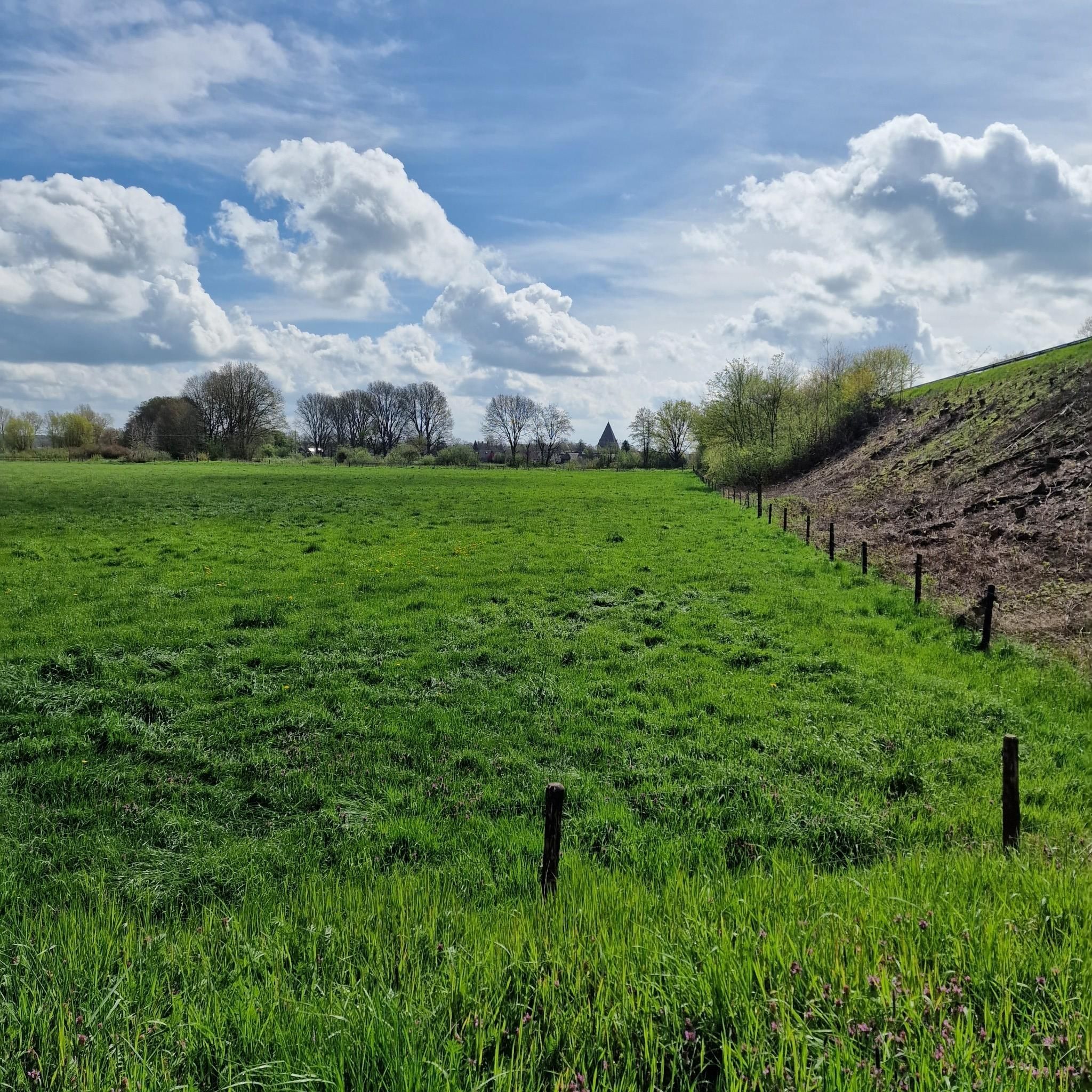
Here you have a beautiful view
4
1
Frequently Asked Questions
How many hiking trails are available around Weikensee?
The Weikensee region offers a vast network of over 700 hiking routes. These trails cater to various preferences, from easy strolls to more challenging day hikes.
What kind of terrain can I expect on hikes near Weikensee?
The terrain around Weikensee is generally flat to gently rolling, with low elevation gains. You'll find diverse landscapes including picturesque riverside paths along the Issel River, unique dune landscapes, and fascinating moor areas.
Are there easy or family-friendly hiking options in Weikensee?
Yes, Weikensee is very welcoming for families and beginners. Over 500 of the available routes are classified as easy. An excellent option for a gentle walk is the Issel River – Small Bridge Over the Issel loop from Hamminkeln, which is just over 4 km long and follows the scenic Issel River.
Can I bring my dog on the hiking trails around Weikensee?
Many trails around Weikensee are suitable for dogs, offering open paths and natural environments. It's always recommended to keep your dog on a leash, especially in areas with wildlife or near agricultural land, and to check specific route details for any restrictions.
What natural features or landmarks can I see while hiking in the area?
The region boasts several unique natural features. You can explore fascinating moor landscapes on a 'Moor Experience Trail' or discover distinct dune environments. The View of Schloss Ringenberg – Bovenkerck Distillery Museum loop from Hamminkeln offers views of the historic Schloss Ringenberg.
Are there any circular hiking routes available?
Yes, Weikensee is known for its numerous circular walks. Many routes, such as the View of Schloss Ringenberg – Bovenkerck Distillery Museum loop from Hamminkeln, are designed as loops, allowing you to start and end at the same point.
What do other hikers say about the trails in Weikensee?
The hiking routes in Weikensee are highly regarded by the komoot community, with an average rating of 4.6 stars from over 5,000 reviews. Hikers frequently praise the varied landscapes, well-maintained paths, and the peaceful atmosphere of the region.
Is it possible to observe wildlife while hiking?
Yes, the area provides opportunities for wildlife observation, particularly near the 'Wildlife Observation Hut Hohe Mark Nature Park'. Patience and binoculars are recommended for the best viewing experience of the diverse wild animals in their natural habitat.
What is the best time of year to go hiking in Weikensee?
Weikensee offers enjoyable hiking experiences throughout the year. Spring brings blooming flora, summer provides lush green landscapes, and autumn showcases vibrant colors. Even in winter, the trails can be beautiful, though some paths might be muddy or require appropriate footwear.
Are there any trails that follow the Issel River?
Absolutely. The Issel River is a prominent feature of the region, and many hiking routes incorporate its picturesque banks. You can find several loops that feature the river, offering serene waterside views.
Are there any moderate trails for more experienced hikers?
Yes, for those seeking a bit more challenge, there are 176 moderate routes available. These trails might be longer or have slightly more varied terrain. An example is the Dune landscape – Stag Beetle Route loop from Hamminkeln, which is over 16 km long and explores unique natural environments.
Most popular routes around Weikensee

Get inspired with the komoot mobile app


Explore more
Browse the best Hikes in other regions.
