The best cycling routes around Siebleber Teich
4.6
(2273)
9,410
riders
422
rides
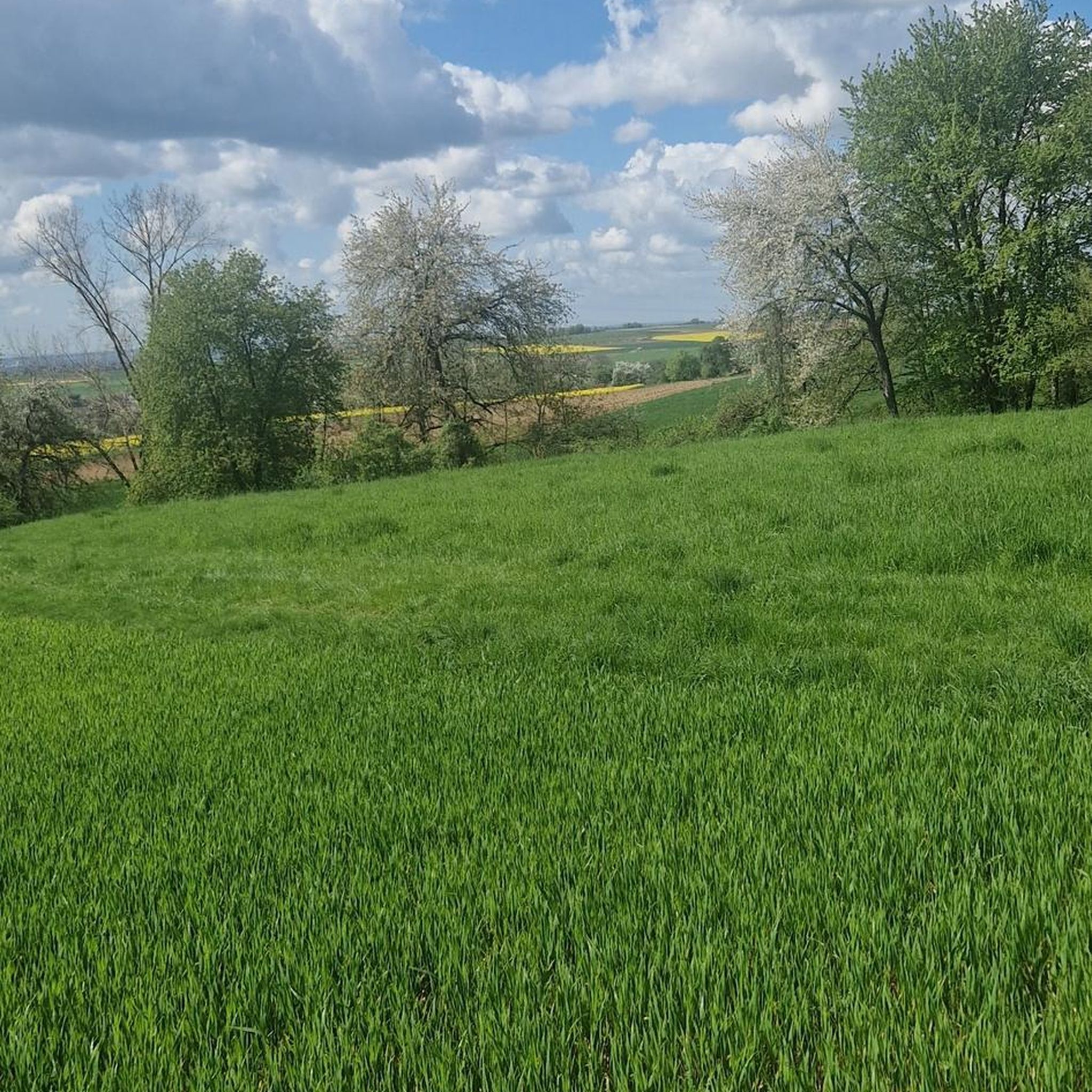
Touring cycling routes around Siebleber Teich navigate a landscape characterized by an artificial reservoir, protected nature reserves, and diverse biotopes. The area, part of the larger "Seeberg-Siebleber Teich" Fauna-Flora-Habitat, features forested ridges composed of Muschelkalk, Keuper, and Jura rock formations, alongside oak dry forests and semi-arid grasslands. Accessible paths around the Teich and its surroundings provide suitable terrain for various cycling abilities. The region's elevation is approximately 275 meters, offering a generally gentle cycling experience.
Best touring cycling routes around…
Last updated: May 30, 2026
4.7
(7)
51
riders
Easy bike ride. Great for any fitness level. Mostly paved surfaces. Suitable for all skill levels.
5.0
(2)
19
riders
18.0km
01:04
70m
70m
Easy bike ride. Great for any fitness level. Mostly paved surfaces. Suitable for all skill levels.

Sign up for free
4.0
(2)
12
riders
Easy bike ride. Great for any fitness level. Mostly paved surfaces. Suitable for all skill levels.
14
riders
7.80km
00:29
60m
60m
Easy bike ride. Great for any fitness level. Mostly paved surfaces. Suitable for all skill levels.
3.0
(1)
12
riders
Easy bike ride. Great for any fitness level. Mostly paved surfaces. Suitable for all skill levels.
Get access to more routes and recommendations from other explorers.
Sign up for free
Already have an account?
Our route recommendations are based on thousands of hikes, rides, and runs completed by other people on komoot.
Start today with a free account
Your next adventure awaits.
Login or Signup
Tips from the Community

The main market in Gotha is absolutely worth seeing. The most striking building on the main market is the Historic Town Hall, which forms the center of the Gotha main market and divides it into the upper and lower main market. The portal on the north side is among the most beautiful German Renaissance portals ever. Many decorative elements and inscriptions give the building its special character. A head sculpture with a movable lower jaw, which popular belief holds to be that of the knight Wilhelm von Grumbach, executed in 1567, is also worth mentioning.
0
0

At the former horse trough, the sandstone amphoras and vases were removed and replaced with bronze sculptures designed by Bernd Göbel, depicting the virtues of humanity on the one hand, and dice with numbers and words that are historically linked to Gotha and the main market square on the other.
2
0
a good opportunity for a short rest
0
0
interestingly designed traffic junction over the B 247
1
0
The Augustinian Monastery in Gotha is the oldest settlement of Augustinian monks in Thuringia and the mother monastery of the famous monastery in Erfurt. It was first documented in the 13th century. Today, the monastery is a meeting center with a wide range of offerings, including concerts, events, and exhibitions. It also operates a café, and those who wish can even stay overnight, as Martin Luther did around 1515.
0
0
The shopping center in this dreamy little town where you feel like time has stood still
0
0
The beautiful, undisputed center of the city, around the Red Town Hall
0
0
The Seeberg Observatory on the Kleiner Seeberg was put into operation in 1790. It served as an astronomical observatory until 1839. Built according to plans by the Austrian astronomer Franz Xaver von Zach, astronomical research flourished here, including the first European Astronomy Congress in 1798. Today, the building is used as a restaurant.
0
0
Frequently Asked Questions
What kind of terrain can I expect when touring cycling around Siebleber Teich?
The touring cycling routes around Siebleber Teich generally offer a gentle experience, with the region situated at an elevation of about 275 meters. The landscape features an artificial reservoir, forested ridges composed of Muschelkalk, Keuper, and Jura rock formations, as well as oak dry forests and semi-arid grasslands. You'll find easily walkable paths that are suitable for less technical cycling.
Are there many touring cycling routes available in the Siebleber Teich area?
Yes, the Siebleber Teich area offers a wide variety of touring cycling routes. There are over 400 routes available, catering to different skill levels. Approximately 178 routes are considered easy, 115 are moderate, and 111 are more difficult, ensuring options for everyone.
What are some notable natural features or landmarks to look out for on a touring cycling trip?
Beyond the Siebleber Teich itself, which is a 28-hectare nature reserve, you can explore the diverse biotopes of the larger "Seeberg-Siebleber Teich" Fauna-Flora-Habitat area. Look for near-natural oak dry forests and semi-arid grasslands, especially on the "Heiligen Lehne" and "Steppenheide" southwest of Seebergen. The region also features unique "Badlands" on the southeast slope of the Großer Seeberg. Historically, Seeberg Rätsandstein from this area was used in significant structures like the Wartburg and Erfurt Cathedral.
Are there any family-friendly touring cycling routes around Siebleber Teich?
Yes, many of the routes around Siebleber Teich are suitable for families. The area is known for its 'leicht begehbare Wege' (easily walkable paths) which are also great for less technical cycling. For an easy and pleasant ride, consider the Covered rest area – Cobstädt Church loop from Siebleber Teich, which is 11.2 miles (18.0 km) long and offers scenic views.
Can I bring my dog on the touring cycling routes?
While the region is rich in natural beauty and offers many paths, specific regulations regarding dogs on cycling routes within the nature reserve or FFH area should be checked locally. Generally, dogs are welcome on many public paths, but it's always best to keep them on a leash, especially in protected areas, to protect wildlife and ensure a pleasant experience for all users.
What is the best time of year to go touring cycling in Siebleber Teich?
The best time for touring cycling around Siebleber Teich is generally from spring to autumn. May and June are particularly beautiful months to visit, as various orchid species, including bee and fly orchids, are in bloom. The weather is typically pleasant for cycling during these seasons, allowing you to fully enjoy the natural landscapes and wildlife.
Are there any circular touring cycling routes available?
Yes, many touring cycling routes around Siebleber Teich are designed as loops, allowing you to start and end at the same point. A popular option is the Covered rest area – Kleinrettbach Stone Cross loop from Siebleber Teich, an easy 15.1 miles (24.3 km) trail that takes about 1 hour 23 minutes to complete.
Where can I park my car when visiting Siebleber Teich for cycling?
While specific parking areas for cyclists are not detailed in the provided information, the region is accessible. Paths lead to the Teich from various points, including one south of the railway line from the "Europabrücke" and another south of the Mönchhof/Mönchpark. It is advisable to look for designated parking in nearby villages like Siebleben, Tüttleben, or Seebergen, or near known access points.
What kind of wildlife can I observe while cycling in the area?
The Siebleber Teich area, being a nature reserve and part of the FFH area, offers opportunities for wildlife observation. In the open areas of former quarries, you might spot various bird species such as the wheatear (Steinschmätzer) and wryneck (Wendehals), and potentially even the Eurasian eagle-owl (Uhu). Rare warmth-loving grasshoppers and butterflies can also be found in these diverse habitats.
Are there any cafes, restaurants, or accommodation options near Siebleber Teich?
While the immediate vicinity of Siebleber Teich is focused on nature, the surrounding villages like Siebleben, Tüttleben, and Seebergen, as well as the nearby city of Gotha, offer various amenities. You can expect to find cafes, restaurants, and accommodation options in these areas to support your cycling trip.
What do other touring cyclists enjoy most about the routes around Siebleber Teich?
The touring cycling routes around Siebleber Teich are highly rated by the komoot community, with an average score of 4.7 stars from over 2,500 reviews. Cyclists often praise the blend of natural beauty, the accessible paths suitable for various abilities, and the peaceful atmosphere of the nature reserve. The variety of routes, from easy loops to more challenging options, is also frequently highlighted.
Is there a route that explores the historical quarry areas?
Yes, you can explore the historical quarry areas. The Seeberg Sandstone Quarry – Kammerbruch Quarry loop from Siebleber Teich is a moderate 19.5 miles (19.464 km) route that takes you through these interesting landscapes, where Seeberg Rätsandstein was once extracted for famous structures.
Can I reach Siebleber Teich using public transport?
The region around Siebleber Teich is generally accessible. While specific public transport connections directly to the Teich are not detailed, the area is located near Gotha, which has public transport links. You can look for connections to Siebleben or other nearby villages, from where paths lead to the Teich, including one south of the railway line from the "Europabrücke".
Most popular routes around Siebleber Teich

Get inspired with the komoot mobile app


Explore more
Browse the best Cycling routes in other regions.
