The best cycling routes around Lake Giacopiane
4.6
(38)
406
riders
15
rides
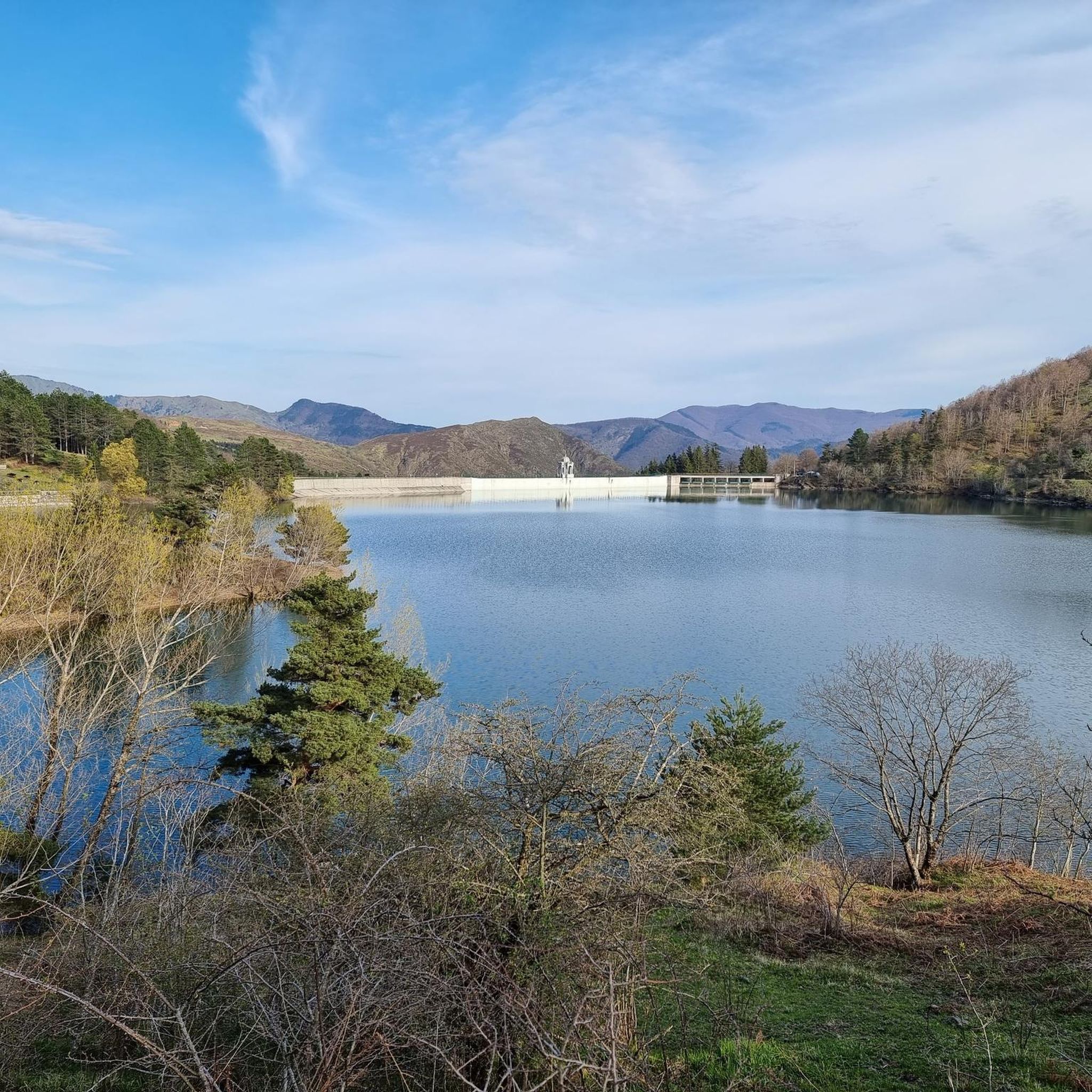
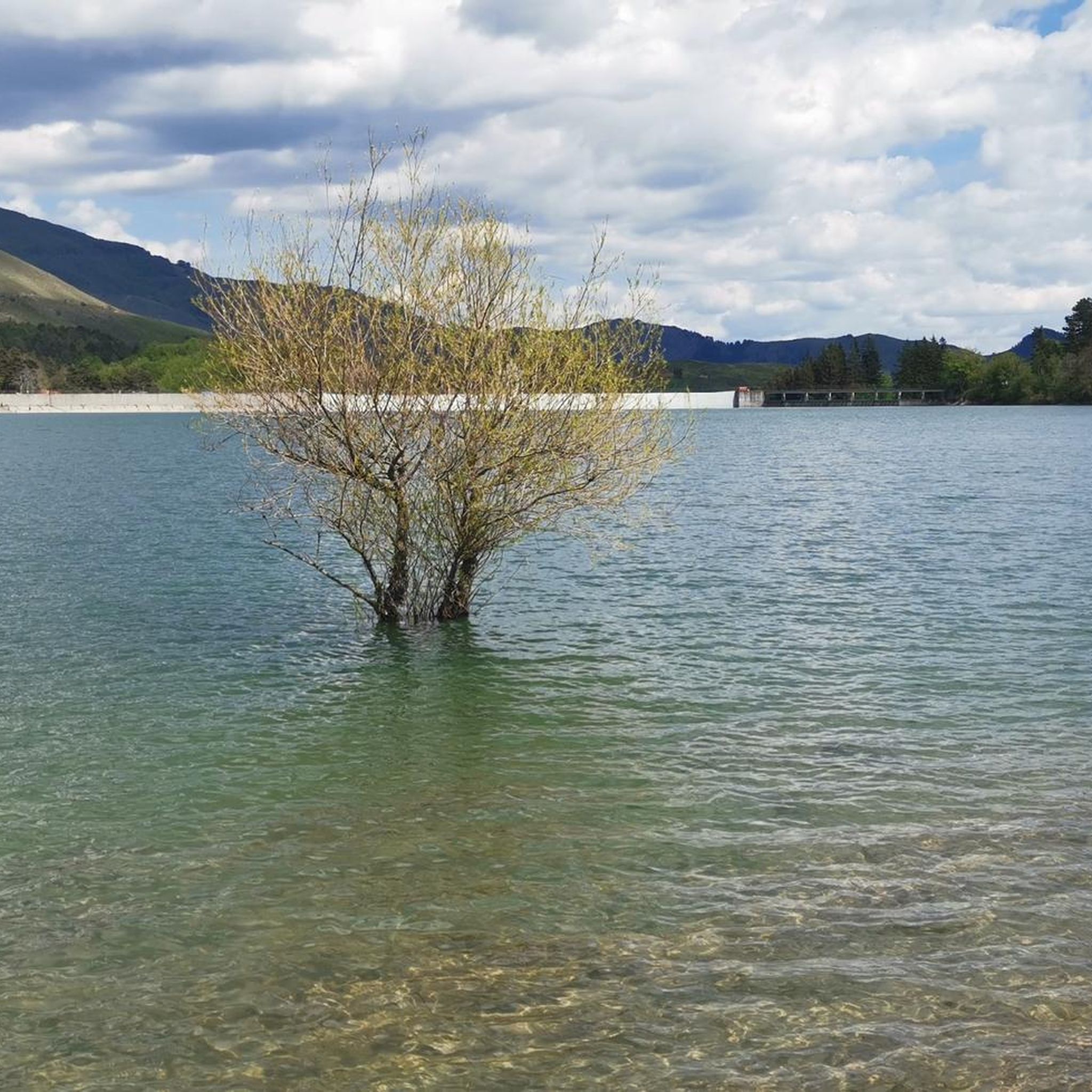
Touring cycling routes around Lake Giacopiane are situated at an elevation of approximately 1,000 meters above sea level within the Apennine mountains. The area features an artificial lake system, characterized by fir, larch, and beech forests. The terrain includes a carriage road encircling the lake, providing a mostly flat route, alongside more challenging trails with significant elevation changes in the broader region. Wild horses roam freely in the surrounding Ligurian hills.
Best touring cycling routes around Lake Giacopiane
- The most…
Last updated: June 2, 2026
34
riders
51.1km
05:08
1,680m
1,680m
Hard bike ride. Very good fitness required. Mostly paved surfaces. Suitable for all skill levels.
7
riders
67.1km
06:27
2,190m
2,200m
Hard bike ride. Very good fitness required. Mostly paved surfaces. Suitable for all skill levels.

Sign up for free
5.0
(3)
13
riders
34.3km
03:27
1,290m
1,290m
Hard bike ride. Very good fitness required. Mostly paved surfaces. Suitable for all skill levels.
5.0
(1)
3
riders
37.4km
02:53
960m
960m
Hard bike ride. Very good fitness required. Mostly paved surfaces. Suitable for all skill levels.
3.5
(4)
43
riders
36.7km
02:20
410m
410m
Moderate bike ride. Good fitness required. Mostly paved surfaces. Suitable for all skill levels.
Get access to more routes and recommendations from other explorers.
Sign up for free
Already have an account?
Our route recommendations are based on thousands of hikes, rides, and runs completed by other people on komoot.
Start today with a free account
Your next adventure awaits.
Login or Signup
Tips from the Community

Pria Burgheisa (Pietra Borghese) is a massive outcrop of mantle peridotites, among the best-known and most significant in the area. It lies on the southwestern edge of the Prato Mollo plateau, on the southern slopes of Mount Aiona, at an altitude of 1,465 m. It is a geosite of considerable petrographic, mineralogical, and regional geological interest, allowing us to study the evolution of a portion of the lithospheric mantle subsequently involved in the Apennine orogeny. The outcrop has a highly irregular shape: 30 m long, 10 m wide at its maximum, and 7–8 m high. The rocks are dark in color, ranging from blackish to brownish; the mass is affected by three main fracture systems, more or less orthogonal to each other, which fragment it into numerous square-shaped blocks. The surface of the blocks has a pitted appearance, as the pyroxene crystals, more resistant to erosion than olivine, remain prominent. At the outcrop, mantle foliation is evident, due to the presence of frequent pyroxenite bands. Source: Liguria Geosite Registry.
0
0

In the heart of the village of Prati di Mezzanego, right near the town hall, stands a magnificent centuries-old wisteria, listed in the Ligurian Regional Register of Monumental Trees. The plant has entwined itself around an old metal structure, now completely engulfed in branches, creating a natural display reminiscent of an art installation. The most evocative time to admire it is early spring, when the blossoms offer a truly unique display of colors and scents.
0
0
The Rifugio Casermette del Penna (1,400 m) is located within the Aveto Park, in a beautiful beech forest at the foot of Mount Penna, where the Forestry Corps barracks once stood. Renovated sustainably using local wood, photovoltaic panels, and a biomass boiler, the refuge offers 25 beds in both rooms and dormitories, as well as home-cooked meals prepared using local produce. Today, it is a popular destination for hikers, families, and groups, thanks in part to the large green lawn in front of the building: in summer, it's ideal for relaxing in the sun, picnicking, or letting children play freely. The location is perfect for exploring the trails of Mount Penna, the Lago Penna loop, the Pennino forests, or tackling more technical climbs to the rocky peaks. In winter, it's an ideal base for snowshoeing and cross-country skiing.
0
0
The Rifugio Faggio dei Tre Comuni (1,400 m), opened in 2011, is located in a beautiful clearing among the beech forests of the Ligurian-Emilian Apennines, at the symbolic meeting point of the municipalities of Bedonia, Tornolo, and Santo Stefano d'Aveto. Built of wood and concrete, it offered approximately 20 beds and was managed by the Parma branch of the Italian Alpine Club (CAI). Unfortunately, with the agreement between the CAI and the Unione Montana (Mountain Union) having expired, the refuge is now closed and abandoned. A real shame: if the facility were reopened at least during the summer months, it could once again become an ideal base for hiking and biking excursions to Monte Trevine, Monte Penna, and the source of the Taro River. The beauty of the site remains intact, and the refuge's clearing is a perfect stop for a break in the silence of the forest.
0
0
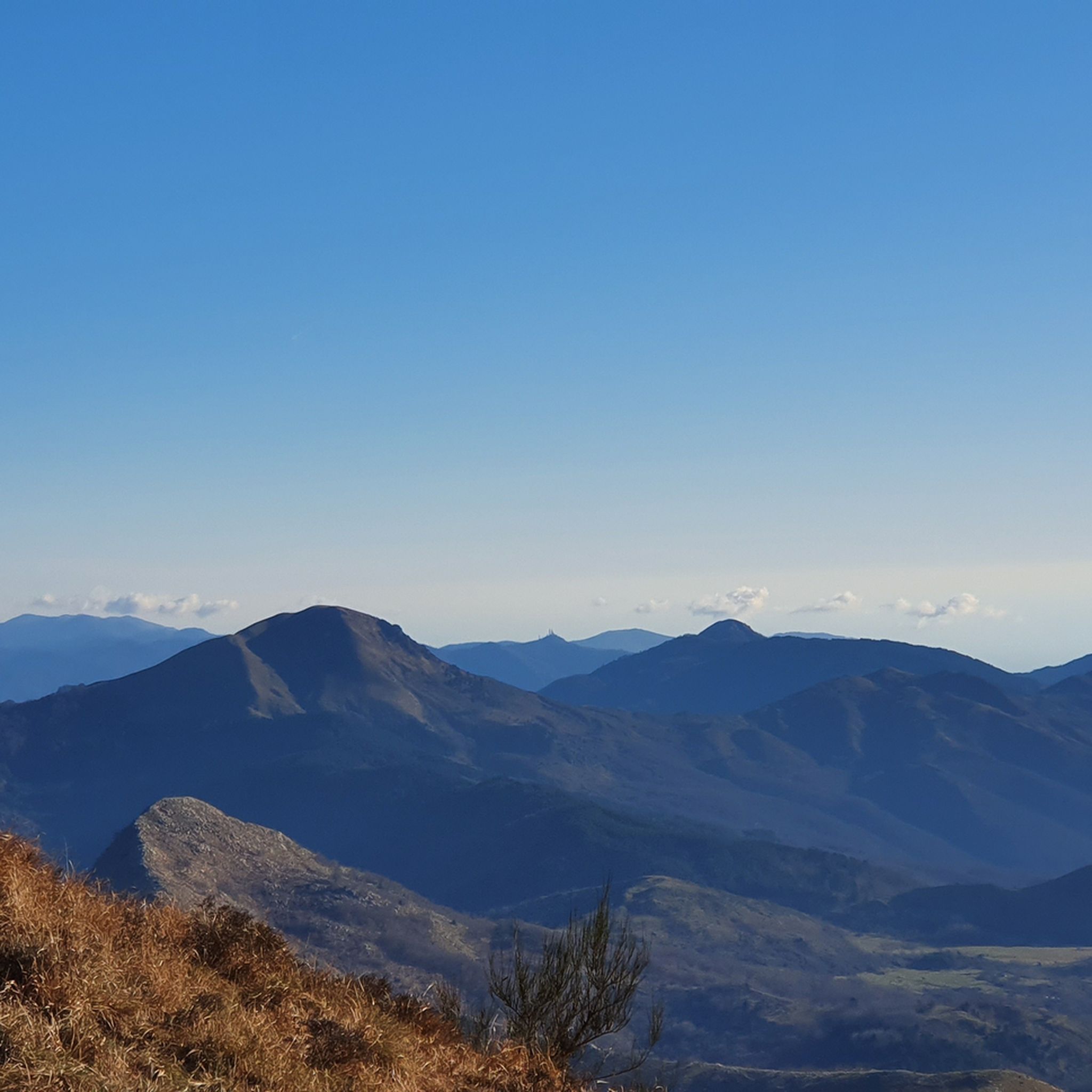
This long stretch of the dirt road that goes from Perlezzi up towards the Aiona–Pratomollo Refuge offers wide panoramic views: from the Aveto Mountains to the sea, with Lake Giacopiane appearing between the mountains like one of those bodies of water in the nativity scene, reflected on silver paper. The surface is generally hard and compact, but in some short stretches the loose gravel can reduce grip, both uphill and downhill. The descent is pleasant and never too steep, while the climb requires a certain amount of effort: the difference in altitude is felt and the ascent is constant, with no flat stretches to recover. However, the effort is well rewarded by the increasingly spectacular views that open up as you climb higher.
0
0
This stretch of the dirt road that climbs from Perlezzi towards the Aiona–Pratomollo Refuge runs entirely through a splendid beech forest. Many of the trees are large, a sign of the age and majesty of the forest. In summer, you cycle in the shade of a cool green tunnel; in autumn, the landscape is tinged with warm shades, from yellow to brown. Even in winter, the forest retains a special charm, with the branching of the beech trees clearly visible in its elegant geometry. The surface is compact and smooth, making cycling easy. The difference in height is minimal, making this stretch particularly pleasant to ride.
0
0
The chapel near the Aiona-Pratomollo Refuge, dedicated to the Fallen of the "Balconia", commemorates a tragic period of the Second World War. "Balconia" is not a place, but the symbolic name given to a series of ferocious Nazi-Fascist roundups and massacres that struck the Ligurian Apennines between 1944 and 1945. This mountain area, a true "balcony" over the valleys, was strategic for the Resistance. The harsh German and Fascist repression aimed to annihilate the partisans and terrorize the civilian population that supported them, causing countless victims. The term "Balconia" thus became the dramatic synthesis of those sacrifices, a way to give a collective name to the pain and heroism of those who fought for freedom in those heights. The chapel is a monument to the memory of all of them. A touch of life and care: at the bottom of the left wall, a small fountain offers refreshment (especially in the summer months) and allows you to water the flowering plants that adorn the chapel, with the bottles made available.
0
0
Not far from the Aiona–Pratomollo Refuge, near the dirt road, you come across Pietra Borghese, a truly unique rocky outcrop. At first glance, it may seem like a simple dark mass that emerges from the pastures, but it is actually a very ancient rock, among the oldest in Italy: it is over two billion years old and actually comes from the Earth's mantle. Its composition, rich in magnetite, causes compasses to go crazy in the surrounding area, and it is not uncommon for its summit to be struck by lightning during storms. Some legends have also developed around this stone, including one that wants it to be a meteorite that fell from the sky. In reality, its true charm lies in its deep geological origin, which tells an ancient story linked to the birth of the Apennines and the disappearance of a prehistoric ocean.
0
0
Frequently Asked Questions
How many touring cycling routes are available around Lake Giacopiane?
There are over 15 touring cycling routes around Lake Giacopiane, offering a variety of experiences for different skill levels. These routes are highly rated by the komoot community, with an average score of 4.6 stars.
What is the overall difficulty level of touring cycling routes in the Lake Giacopiane area?
The majority of touring cycling routes around Lake Giacopiane are considered difficult, featuring significant elevation changes through the Apennine mountains. However, there is also an easy route, the Lakes of Giacopiane loop from Borzonasca, which is mostly flat and suitable for a more relaxed ride.
Are there any easy, family-friendly cycling routes around Lake Giacopiane?
Yes, the Lakes of Giacopiane loop from Borzonasca is an easy 4-kilometer route that encircles Lake Giacopiane. It follows a carriage road, offering a mostly flat path with scenic views, making it suitable for families.
Can I find circular touring cycling routes in the region?
Yes, several circular routes are available. For instance, the easy Lakes of Giacopiane loop from Borzonasca offers a scenic circuit around the lake. For more challenging options, consider the difficult Passo del Chiodo – Monte Penna Forest loop from Parco Regionale dell'Aveto or the Monte Penna Hut – Incisa Pass loop from I Crosi.
What natural features and landmarks can I expect to see while cycling around Lake Giacopiane?
Cyclists can enjoy a diverse landscape featuring fir, larch, and beech forests, panoramic views that can extend to Corsica on clear days, and the artificial Lake Giacopiane itself, with its notable Art Nouveau-style dam. A unique highlight is the chance to spot wild horses roaming freely in the surrounding Ligurian hills.
Are there any specific permits or access requirements for cycling around Lake Giacopiane?
Access to Lake Giacopiane typically requires purchasing a pass in Borzonasca. It's advisable to check local regulations before your visit.
What is the best time of year to go touring cycling around Lake Giacopiane?
Given its elevation of approximately 1000 meters above sea level, the area is best enjoyed during spring, summer, and early autumn when the weather is milder and the forests are lush. Winter cycling might be challenging due to snow and colder temperatures.
Are there picnic areas or facilities available along the routes?
Picnic areas are available around Lake Giacopiane. However, visitors are advised to bring their own supplies for waste disposal and drinking water, as facilities might be limited.
What are some of the longer, more challenging touring cycling routes in the area?
For experienced touring cyclists seeking a challenge, the Monte Penna Hut – Incisa Pass loop from I Crosi is a difficult 67.1 km trail through the Apennine mountains, often taking over 6 hours to complete. Another demanding option is the Nature Trail in Frazione Loro – Pratosopralacroce loop from Borzonasca, covering 34.3 km with significant elevation.
What do other touring cyclists enjoy the most about touring cycling in Lake Giacopiane?
The area is highly rated by the komoot community, with an average score of 4.6 stars from over 30 reviews. Cyclists often praise the stunning natural environment, the diverse terrain ranging from flat lakeside paths to challenging mountain trails, and the unique opportunity to observe wild horses.
Is it possible to reach Lake Giacopiane cycling routes using public transport?
While the region is well-suited for cycling, specific public transport options directly to the lake's cycling routes are not detailed. It's recommended to plan your journey to Borzonasca, the nearest town, and then cycle to the lake, or check local transport services for connections.
Are there opportunities for wildlife spotting while cycling?
Yes, the region is known for its natural beauty and wildlife. A captivating feature of the landscape is the presence of wild horses that roam freely in the Ligurian hills surrounding the lake, offering a unique wildlife spotting opportunity during your ride.
Most popular routes around Lake Giacopiane

Get inspired with the komoot mobile app


Explore more
Browse the best Cycling routes in other regions.
