The best walks and hikes around Winterborne Zelston
4.6
(453)
3,893
hikers
223
hikes
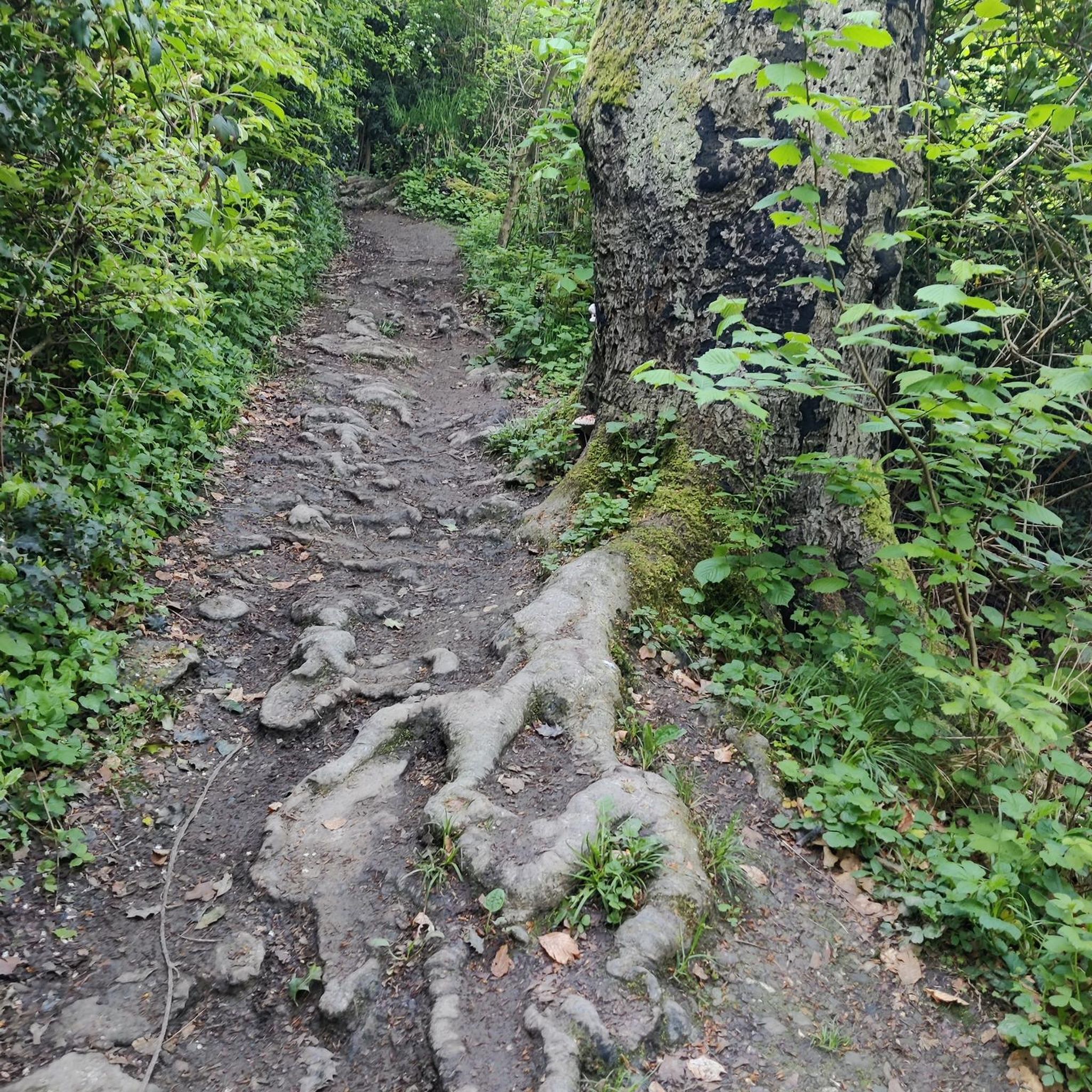
Hikes around Winterborne Zelston explore the Dorset countryside, characterized by gentle riverside paths along the Winterborne stream, open fields, and sections of woodland. The terrain is generally composed of rolling hills and well-defined footpaths, making it accessible for various walking abilities. The area provides a mix of short circular walks and connections to longer regional trailways.
Best hiking trails around Winterborne Zelston
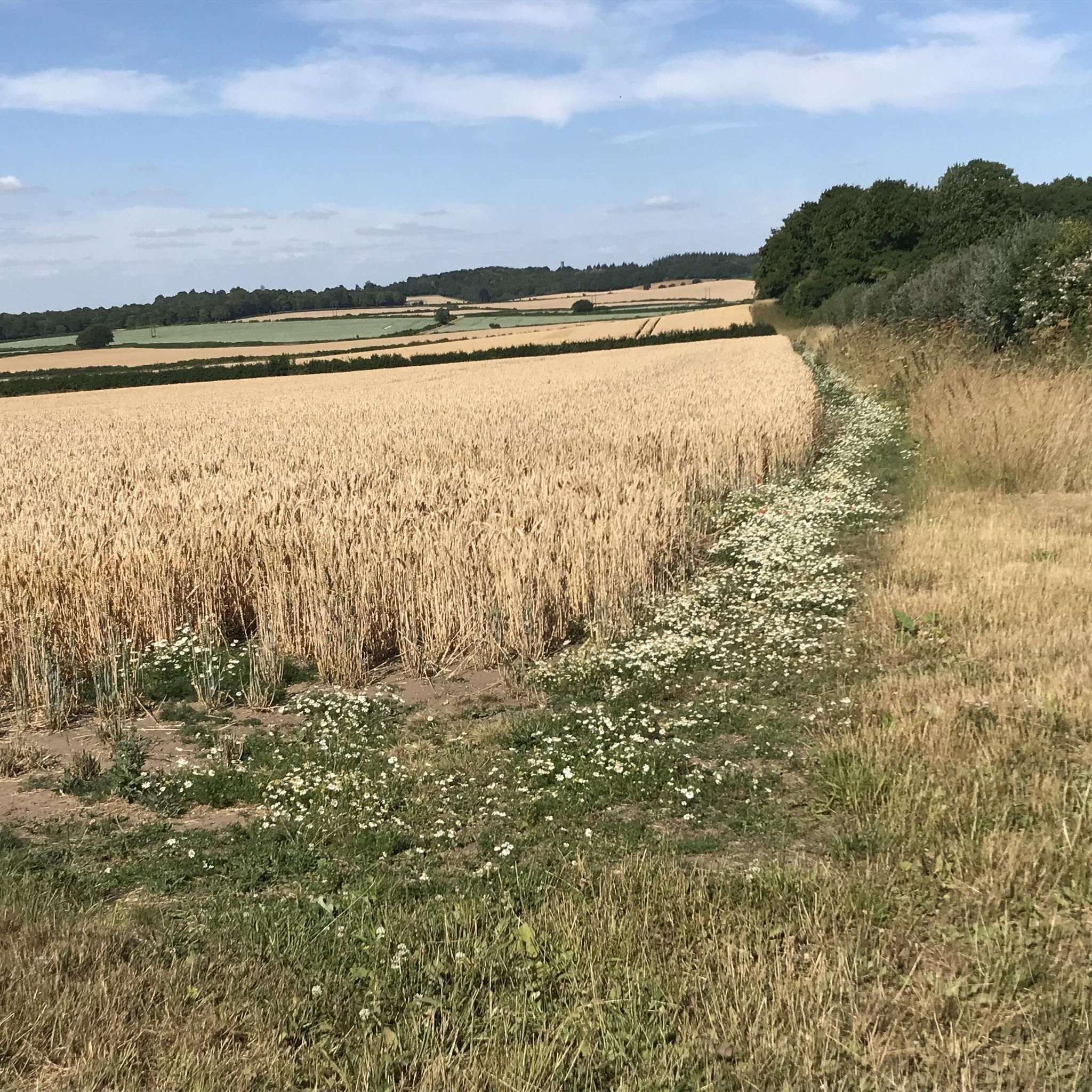
- The most popular hiking route is Field of White Flowers loop from Winterborne Kingston, a 3.0 mile (4.8 km) trail that takes about 1 hour 15 minutes to complete. This easy route follows paths through open fields typical of the local landscape.
- Another top favourite among local hiking enthusiasts is View of Gorcombe – View of Wheat Fields loop from Winterborne Kingston, a moderate 5.8 mile (9.3 km) path. The trail offers views over agricultural land and involves some gentle elevation changes.
- Local hiking enthusiasts also love the Woolsbarrow Hillfort loop from Bloxworth, a 6.1 mile (9.8 km) trail leading through woodland to the historic hillfort, often completed in about 2 hours 35 minutes.
- Hiking around Winterborne Zelston is defined by riverside footpaths, agricultural field tracks, and woodland trails. The network of paths provides options for both short, easy walks and more moderate routes.
- The routes in Winterborne Zelston are highly rated by the komoot community with an average score of 4.6 stars from over 400 reviews. More than 3,400 hikers have used komoot to explore Winterborne Zelston's varied terrain.
Last updated: September 30, 2026
4.8
(11)
54
hikers
Easy hike. Great for any fitness level. Easily-accessible paths. Suitable for all skill levels.
4.0
(7)
8
hikers
13.7km
03:34
100m
100m
Moderate hike. Good fitness required. Easily-accessible paths. Suitable for all skill levels.

10
hikers
9.53km
02:32
100m
100m
Moderate hike. Good fitness required. Easily-accessible paths. Suitable for all skill levels.
4.0
(2)
10
hikers
Easy hike. Great for any fitness level. Easily-accessible paths. Suitable for all skill levels.
4.7
(6)
10
hikers
9.23km
02:28
100m
100m
Moderate hike. Good fitness required. Easily-accessible paths. Suitable for all skill levels.
Get access to more routes and recommendations from other explorers.
Already have an account?
Our route recommendations are based on thousands of hikes, rides, and runs completed by other people on komoot.
Start today with a free account
Your next adventure awaits.
Tips from the Community

The Greyhound is a classic 16th-century thatched pub where "local charm" meets "excellent gravy." Expect roaring fires, real ales, and a warm Dorset welcome. It’s the perfect pitstop after getting lost in a cornfield or browsing the phone box library. Friendly, rustic, and very, very British. Cheers!
0
0
If St Nicholas Church is the village’s "grandparent," the Red Phone Box in Winterborne Kingston is that eccentric uncle who retired, refused to leave his chair, and has now reinvented himself as a local intellectual. Located near the heart of the village, this iconic K6 kiosk is a classic piece of British design that has survived the ultimate indignity: the invention of the smartphone. The "I’m Not Dead Yet" Career PivotSince almost nobody uses a public phone to call a taxi or report a stray cow anymore, the Winterborne Kingston phone box has undergone the classic village transformation. It is no longer a telecommunications hub; it is now a Book Exchange/Library.The Content: You walk in expecting to find a dial tone; you leave with a dusty copy of a 1994 Danielle Steel novel and a slightly damp guide on how to grow prize-winning marrows. The Security: It operates on the "Honor System," which in Dorset means if you steal a book without replacing it, the local crows will be notified and will glare at you from the power lines.Key Features of the "Library"FeatureRealityStorage CapacityRoughly 40 books and one very confused spider.Acousticse are excellent for shouting "HEAR YE" if you want to feel like a town crier. Smell a sophisticated blend of "Old Paper" and "Dorset Humidity." Connectivity0G. The only thing you’ll connect with is a story about a detective in the Cotswolds. Why It’s Historically Significant (Sort of)Designed by Sir Giles Gilbert Scott (who also did Battersea Power Station, because apparently, he only worked in "Red"), these boxes were meant to be indestructible.The one in Winterborne Kingston stands as a monument to the era when you had to press "Button A" to talk and "Button B" to get your money back. Now, the only buttons you'll find are the ones on the cardigan you’re wearing while browsing the "Biographies" shelf.The VerdictIt is arguably the smallest, most stylish library in the world. It’s red, it’s proud, and it’s a great place to hide if it starts raining (which, let’s be honest, happens every twenty minutes in Dorset).
0
0
Why It’s Actually Cool (Literally) The Font: There’s a 12th-century font inside that’s older than the actual building. It’s basically the antique heirloom that the new house was built around. The Peace and Quiet: It’s located in a "Winterborne" village. For the uninitiated, a winterborne is a stream that only flows in winter. So, half the year the village is "Kingston by the Stream" and the other half it's just "Kingston by the Dry Ditch." The church remains consistently stoic regardless of the water table. The Tower: It’s got a modest, sturdy tower that says, "I’m not trying to touch the heavens, I’m just trying to make sure the bell-ringers have a roof." Is it worth a visit? Absolutely. It’s the kind of place where you can sit in a pew, enjoy the silence, and wonder if the vicar in 1872 also thought the new carvings were "a bit much." It’s peaceful, it’s historic, and it hasn’t been turned into a luxury apartment complex yet—which is a win in 2026!
0
0
If you’re looking for a church that perfectly captures the "I’ve been standing in this field since the 14th century and my back kind of hurts" vibe, St Nicholas in Winterborne Kingston is your spot. It’s a charming, flint-and-stone hug of a building nestled in the Dorset countryside. Here’s the lowdown on why this place is more than just a backdrop for a period drama. The "Wait, How Old Is It?" Factor The church mostly dates back to the 14th century, though like any good Dorset homeowner, the locals couldn't resist a massive renovation. In the 1870s, a fellow named George Edmund Street (who also designed the Royal Courts of Justice in London) decided to give it a "glow-up." The Result: A mix of genuine medieval grit and Victorian "we have a very specific vision for how pious this should look" energy. The Vibe: It’s cozy. If "hygge" was a religious architectural style, this would be it. The Flinty Exterior The church is built with knapped flint and bands of stone. It basically looks like a very sophisticated, holy chessboard. Pro Tip: Don't try to count the flints. You will lose, and the sheep in the nearby field will judge you.
0
1
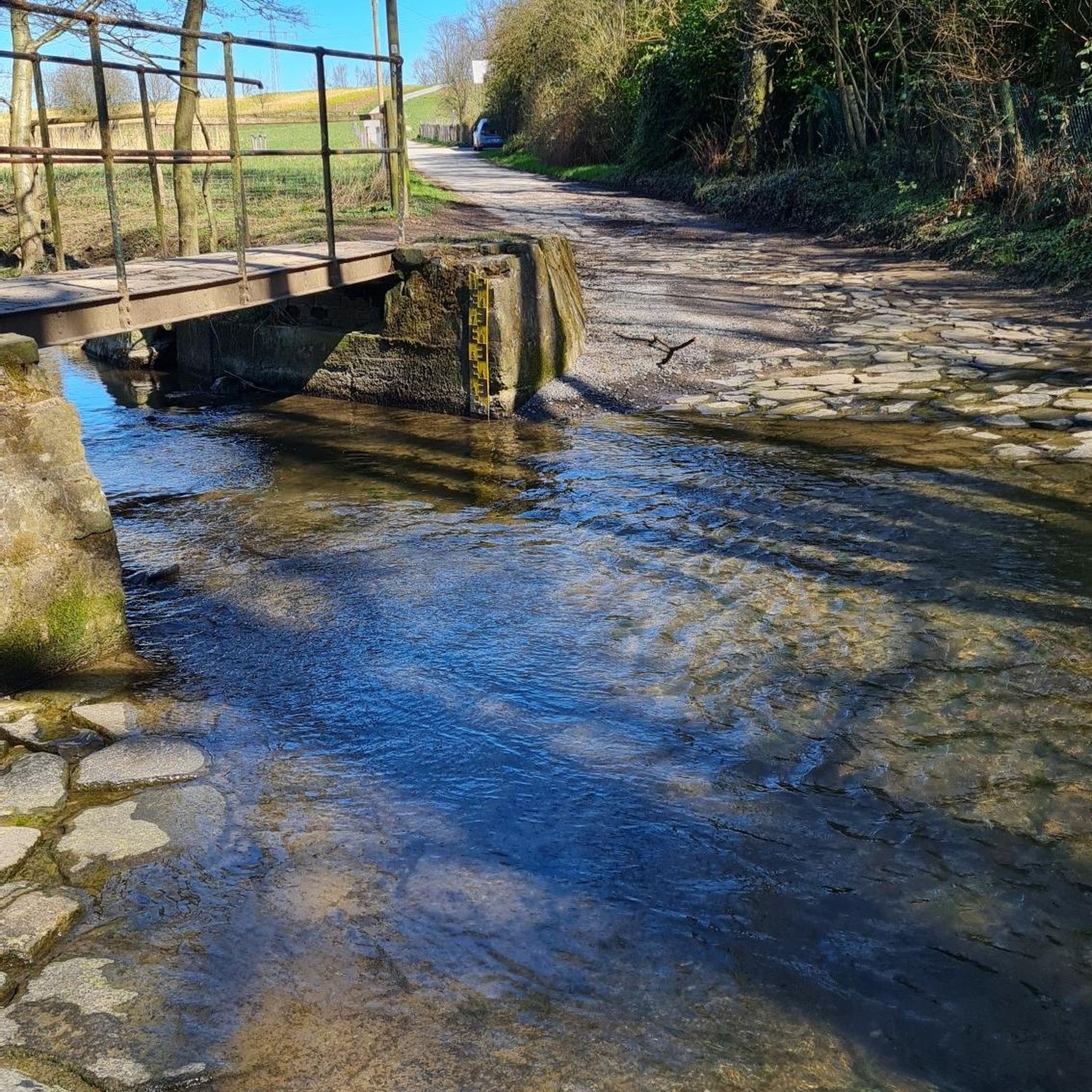
I expect it makes a great crossing and cuts off a HUGE diversion along a main road. Typical council neglecting their duites to repair this bridge.
0
0
All Saints Church at Langton Long Blandford is a beautiful Victorian-era parish church that has an interesting history connected to the local gentry. Victorian Rebuilding (1861-1864): The church you see today is not medieval, but a complete rebuild of an earlier church that stood on the same site. It was designed by the notable Victorian architect Thomas Henry Wyatt (1807-1880). The Farquharson Family: The rebuild was generously financed by the Farquharson family, who owned the nearby Langton Long House (a large mansion, since demolished in 1949). The large size of the church, compared to the tiny hamlet of Langton Long, reflects that it was built to serve the mansion and its many servants. Architectural Style: It is built in a distinctive Gothic Revival style, specifically referencing the Perpendicular style of earlier English churches. Materials: The exterior is notable for its use of banded flint and stone (ashlar bonding courses and chequer patterns), which gives it a striking appearance. Features: It has a cruciform (cross) plan with a nave, chancel, north aisle, and north and south transepts. The most impressive exterior feature is the tall, three-stage west tower, which is adorned with an embattled parapet and prominent crocketed pinnacles.
0
0
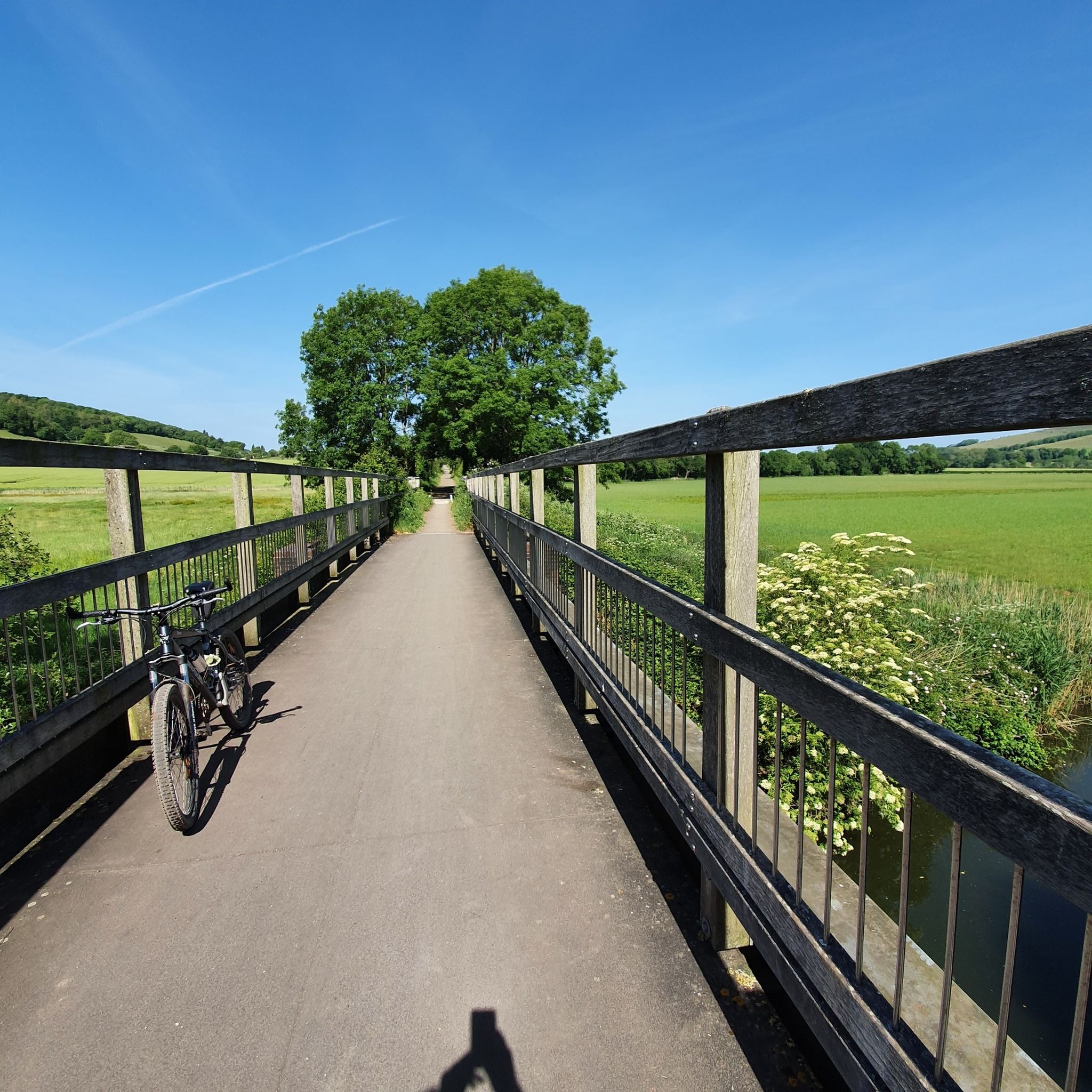
The stretch of the old Somerset & Dorset Joint Railway (S&DJR) line at Spetisbury and Blandford area provides a tangible connection to the past and is a key part of the modern landscape. This crucial cross-country route connected the English Channel at Poole/Bournemouth with the Bristol Channel and Bath, allowing direct passenger and freight services from the Midlands and the North to the South Coast. Track Doubling: While initially a single track, the line at Spetisbury was upgraded to double track around 1901. This required the construction of the second platform (the 'Up' platform) and a signal box to manage the crossover points. Down Line: Trains travelling towards Bailey Gate, Wimborne, and Bournemouth used the Down platform (the original platform). Up Line: Trains travelling towards Blandford, Templecombe, and Bath (Green Park) used the Up platform (the new platform). The Scenery: The line through Spetisbury was known for its gentler curves and gradients compared to the difficult northern section over the Mendip Hills, allowing for fast running. It offered picturesque views over the River Stour Valley, which you can still enjoy today. Closure: The tracks at Spetisbury saw their final passenger services (the main S&D line closure) in March 1966. The rails were lifted a few years later in 1970.
0
0
The North Dorset Trailway Connection Today, Spetisbury Station is a popular access point for the North Dorset Trailway. Trailhead: The section of the Trailway running from Spetisbury north to Sturminster Newton, largely following the old railway bed, is a well-maintained, traffic-free path for walking, cycling, and riding. Visitor Stop: The former station site makes a perfect place to stop, rest, and picnic while exploring the Trailway, offering fine views over the Stour Valley. It's a wonderful example of local history being preserved and repurposed for community and recreation!
0
0
Frequently Asked Questions
Are there many walking routes to choose from around Winterborne Zelston?
Yes, there are over 200 hiking routes in the area. The majority are easy or moderate, making the region accessible for most walkers. You'll find a mix of short village loops, woodland paths, and trails across open countryside.
What do other hikers enjoy about the trails near Winterborne Zelston?
The area is highly regarded by the komoot community, with an average rating of 4.6 stars. Hikers often praise the well-maintained paths, the peaceful riverside sections along the Winterborne stream, and the classic Dorset scenery of rolling hills and open fields.
Are there any easy, family-friendly walks in the area?
Absolutely. The region has many gentle routes suitable for families. For a pleasant outing, consider a walk through the Milldown Nature Reserve, which is popular with local families and has a children's play area. The terrain around Winterborne Zelston is generally flat with rolling hills, ideal for shorter legs.
Can I bring my dog on hikes around Winterborne Zelston?
Yes, the area is very dog-friendly. Many trails pass through open fields and woodlands where dogs can explore. For a walk with plenty of shade and a stream for cooling off, Delph Woods is a popular choice. As always, please be mindful of livestock in fields and keep your dog under control.
Are there any circular walks that start and end in the village?
Yes, there are several circular routes available. A great option for exploring the wider area is the View of Wheat Fields – View of Gorcombe loop from Morden. This moderate trail showcases the agricultural landscape and scenic views characteristic of the region.
What kind of terrain should I expect on the trails?
The hiking around Winterborne Zelston is defined by a mix of well-defined footpaths, tracks across agricultural fields, and woodland trails. You'll often be walking alongside the gentle Winterborne stream. Most routes involve gentle, rolling hills rather than steep climbs.
Are there any long-distance footpaths in the area?
Yes, the North Dorset Trailway is a key long-distance route nearby. It follows the path of a former railway line, offering a relatively flat and accessible path for walkers and cyclists. It's a great way to cover more ground and explore the countryside between Sturminster Newton and Blandford Forum.
What are some notable landmarks I might see on a hike?
The area is rich in history. Several routes, such as the Woolsbarrow Hillfort loop from Bloxworth, take you to ancient sites. The Iron Age hillfort of Badbury Rings is another significant landmark nearby, offering panoramic views from its ramparts.
Where can I find a good walk that includes a pub or cafe?
Thorncombe Wood Local Nature Reserve is an excellent choice. It's highly rated for its shaded woodland walks, which are great on warmer days, and it has a cafe on-site for refreshments after your hike. Many village pubs in the surrounding area also welcome walkers.
What is the best time of year to hike near Winterborne Zelston?
Hiking is enjoyable here year-round. Spring brings wildflowers to the fields, while summer offers long days to explore. Autumn provides beautiful colours in the woodlands, and crisp winter walks are invigorating. The paths can get muddy after rain, so waterproof footwear is recommended in wetter months.
How difficult are the hikes in this area?
The trails cater to a range of abilities. Out of more than 200 routes, over half are rated as easy, perfect for casual strolls. The rest are mostly moderate, like the Field of White Flowers – View of Gorcombe loop from Winterborne Kingston, which involves some gentle climbs. There are very few technically difficult hikes.
What are some popular places for hiking near Winterborne Zelston?
Besides the immediate village trails, hikers often explore several highly-regarded nearby locations:
- Dorset National Landscape (AONB): Offers a huge variety of landscapes, from coastal cliffs to rolling hills, with countless trails.
- Delph Woods: A local favorite for its beautiful woodland paths and clear stream.
- Thorncombe Wood Local Nature Reserve: Known for its well-shaded walks and connection to Thomas Hardy's cottage.
- North Dorset Trailway: A popular, accessible path along a former railway line, ideal for walking or cycling.
Most popular attractions around Winterborne Zelston

Get inspired with the komoot mobile app


Explore more
Browse the best Hikes in other regions.
