The best road cycling routes around Lake Trzechowskie
5.0
(6)
104
riders
11
rides
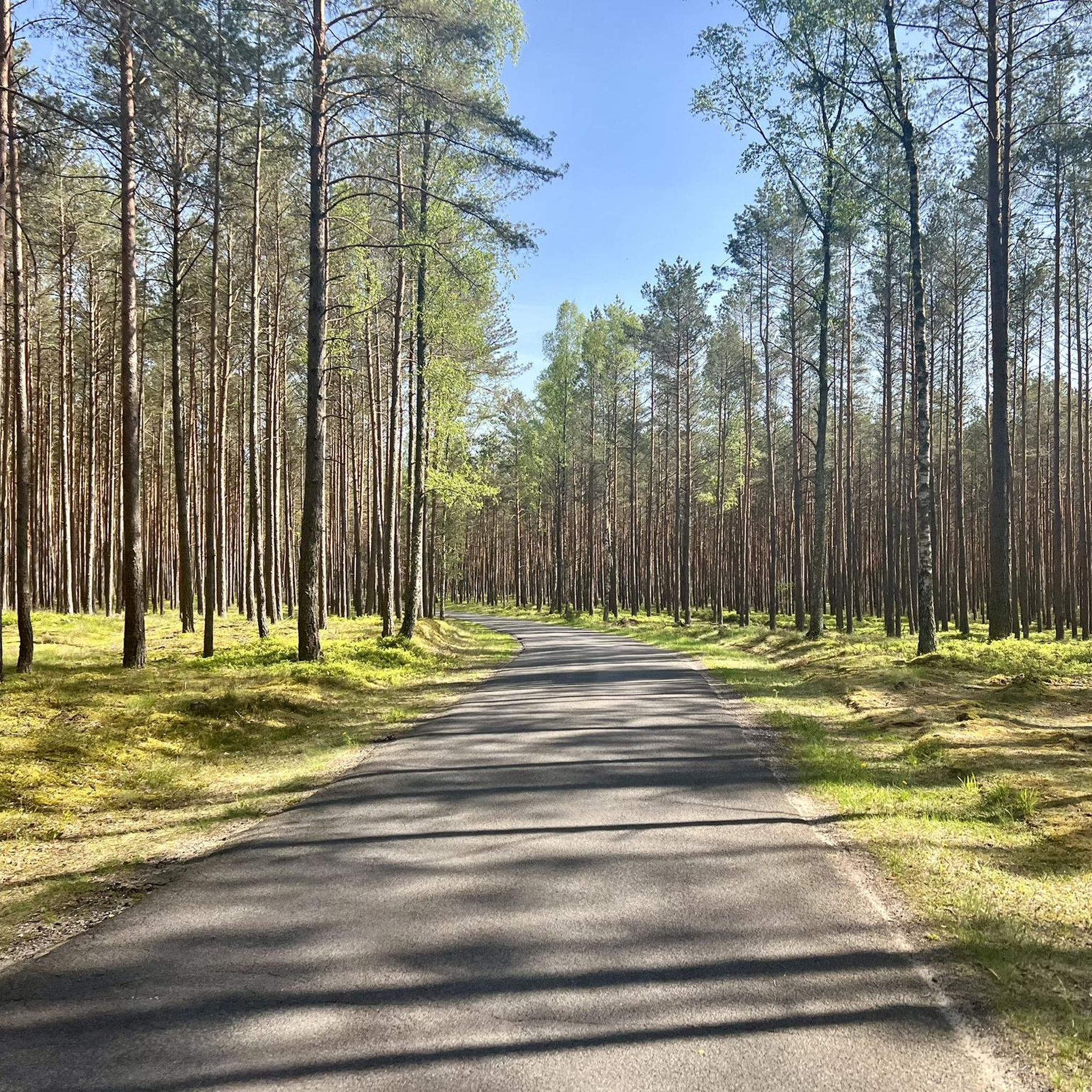
Road cycling routes around Lake Trzechowskie are situated within Poland's Western Lake District, an area characterized by numerous clean lakes and scenic landscapes. The region features gently undulating terrain, with some individual climbs, and a network of asphalt cycling paths, many built on former railway tracks. This infrastructure provides a suitable environment for road cyclists seeking routes through natural beauty.
Best road cycling routes around Lake Trzechowskie
- The most popular road cycling route is Starogard Gdański Town Hall – Kociewie…
Last updated: May 20, 2026
5.0
(1)
11
riders
60.7km
03:08
310m
310m
Moderate road ride. Good fitness required. Some segments of this route may be unpaved and difficult to ride.
8
riders
Moderate road ride. Good fitness required. Some segments of this route may be unpaved and difficult to ride.

Sign up for free
4
riders
33.9km
01:25
190m
190m
Easy road ride. Great for any fitness level. Mostly well-paved surfaces and easy to ride.
6
riders
56.2km
02:22
240m
240m
Moderate road ride. Good fitness required. Some segments of this route may be unpaved and difficult to ride.
4
riders
76.1km
03:17
350m
350m
Moderate road ride. Good fitness required. Some segments of this route may be unpaved and difficult to ride.
Get access to more routes and recommendations from other explorers.
Sign up for free
Already have an account?
Our route recommendations are based on thousands of hikes, rides, and runs completed by other people on komoot.
Start today with a free account
Your next adventure awaits.
Login or Signup



Tips from the Community

A wonderful place. Here you can admire ancient buildings from Kashubia, Kociewie, and the Tuchola Forest. There are wooden cottages, windmills, an inn, churches, and entire old farmsteads. Travel back in time to see what people did when there was no internet! A truly interesting place, such living, fascinating history. You can peek into each building and see what it was like. Don't forget to buy tickets! http://www.muzeum-wdzydze.gda.pl/
1
0
This observation tower is over 35 meters high and is a must-climb for a magnificent panorama of Wdzydze and Wda, with their numerous islands. The views are breathtaking. There's also a restaurant nearby, so you won't go hungry.
0
0

you can get to the tower from the water side, there is a special jetty where you can moor your yacht
2
0
Once a year, the open-air museum hosts the Wdzydzki Fair, which lasts two days and is worth seeing
1
1

The observation tower in Wdzydze, 35.6 meters high, has a larch wood structure, with three observation platforms located at a height of 10, 20 and 30 m. From the tower you can admire the panorama of Wdzydze and the Cross of Wdzydze Lakes with numerous peninsulas and the largest island of Lake Wdzydze - Ostrów Wielki. The observation tower in Przytarnia is 40 m high from the base. There are two observation terraces on it: the first at a height of 27 m, and the second at a height of 37 m. The terrace offers a beautiful panorama of the Karsin commune. The tower is located in a town on an upland near the southernmost part of the Wdzydzkie Lakes. The tower is part of a complex consisting of: a tourist information point, toilets, parking for buses, cars and bicycles and a place for recreation. https://wdzydzkipark.pl/co-robimy-3/turystyka-2/wieza-widokowa/
3
0
The Museum – Teodora and Izydor Gulgowski Kashubian Ethnographic Park in Wdzydze Kiszewskie is located on the picturesque shores of Lake Gołuń. There are over 50 buildings characteristic of the rural landscape of Kashubia, Kociewie and Tuchola Forest from the 17th to the 20th century. Visitors can admire the wealth of old wooden architecture of Pomerania with its equipment: cottages, manors, a school, windmills, churches, inns, farm buildings and craft workshops. The farmsteads present: methods of grinding snuff and grinding grain, washing, mangling, tailoring, weaving, the work of a blacksmith, wheelwright and forest worker. The museum offers various workshops and shows, both for individual visitors and for groups. For the youngest visitors, an interactive exhibition has been prepared “Museum for fun?” - where children can experience the past and plan a museum of the future. This is an exhibition where you are allowed to touch the exhibits: check what it is like to sleep under a duvet, look inside a cast iron waffle iron and rummage through a kitchen cupboard. It tells about various museums that exist in the world; explains why we need museum collections in the first place; shows what kind of exhibits can be collected, for example, in open-air museums. It asks children and adults the question: "What matters to people?" In this way, the exhibition makes visitors aware that research never ends, and that history and tradition are constantly being created. https://wdzydzkipark.pl/o-parku-4/dziedzictwo-kulturowe-6/muzea/kaszubski-park-etnograficzny/
3
1

At the beginning, the asphalt is poor, but the further you go, the better it gets!
0
0

The oldest part of the city - on this side of the Wierzyca River, there used to be a farm and a village belonging to Piotr Święca. Shortly after he sold the local lands to the Teutonic Knights, in 1305, under the direction of Theodotus from Florence, they began to mark out the area for the development of a new settlement. In this way, a spatial layout was created with a regular network of streets radiating from the centrally located square market square, which is larger than the Old Town Square in Warsaw.
0
0
Frequently Asked Questions
How many road cycling routes are available around Lake Trzechowskie?
There are 9 dedicated road cycling routes around Lake Trzechowskie on komoot, offering a range of experiences from easy loops to more challenging moderate rides.
What kind of terrain can I expect on road cycling routes near Lake Trzechowskie?
The road cycling routes around Lake Trzechowskie feature gently undulating terrain with some individual climbs, reaching a highest point of 245m above sea level. While predominantly asphalt, some sections may include gravel or unpaved roads, suggesting a trekking or gravel bike might be more versatile for those specific parts.
Are there any easy road cycling routes suitable for beginners around Lake Trzechowskie?
Yes, there are several easy routes. For instance, the Roadbike loop from Dąbrowa is an easy 16.4-mile (26.4 km) trail that takes about 1 hour 4 minutes to complete, leading through pleasant rural landscapes.
What are the best times of year for road cycling around Lake Trzechowskie?
The region is ideal for cycling during warmer months when the numerous clean lakes provide opportunities for swimming and enjoying the water. The peaceful environment, less frequented by mass tourism, makes it pleasant for cycling throughout spring, summer, and early autumn.
Are there any notable landmarks or natural features to see along the road cycling routes?
Yes, the routes traverse through multiple landscape parks, offering authentic contact with nature and showcasing pristine lakes. You might also encounter historical points of interest such as the historic Mill-Paper Mill in Barlinek or the former railway station in Lubiana, which features a 1942 locomotive.
Are there any circular road cycling routes around Lake Trzechowskie?
Yes, many of the routes are designed as loops. For example, the Starogard Gdański Town Hall – Kociewie loop from Iwiczno is a popular moderate 37.0-mile (59.6 km) trail offering varied scenery, and the Jezioro Jabłowskie loop from Bytonia provides extensive lake views on a 47.3-mile (76.1 km) moderate path.
Is Lake Trzechowskie also known by another name?
Yes, Lake Trzechowskie is also referred to as Trzygłowskie Lake. It is part of Poland's picturesque Western Lake District.
What do other road cyclists say about the routes around Lake Trzechowskie?
The routes in Lake Trzechowskie are highly rated by the komoot community, with an average score of 5.0 stars from 5 reviews. Nearly 100 road cyclists have used komoot to explore the varied terrain, often praising the pristine lakes, forests, and well-maintained asphalt paths.
Are there options for longer road cycling tours in the area?
Absolutely. The region is part of a larger network that includes the Myślibórz Lake District and the Choszczno Lake District, offering extensive routes through diverse lake scenery. A good example is the Jezioro Jabłowskie loop from Bytonia, which is a moderate 47.3-mile (76.1 km) ride.
Are the road cycling paths around Lake Trzechowskie well-maintained?
A significant draw for road cyclists is the network of asphalt cycling paths, many of which have been constructed on former railway tracks. The southern section of the Western Lake District Trail, specifically between Siekierki and Ińsko, is noted for its well-prepared infrastructure and dedicated asphalt routes.
Can I find accommodation or places to eat along the road cycling routes?
The routes often pass through peaceful small towns, providing opportunities for genuine rest. While specific cafes or pubs are not listed for each route, the region offers a tranquil experience, and you can expect to find local amenities in the towns you pass through.
Most popular routes around Lake Trzechowskie

Get inspired with the komoot mobile app


Explore more
Browse the best Road cycling routes in other regions.
