Radclive-Cum-Chackmore
Radclive-Cum-Chackmore
The best walks and hikes around Radclive-Cum-Chackmore
4.4
(158)
1,853
hikers
10
hikes
Hiking around Radclive-Cum-Chackmore offers routes through a landscape shaped by the River Great Ouse and its distinctive "red cliffs." The area features varied terrain, including approaches to the expansive Stowe Park. Trails often incorporate scenic views and historical landmarks, providing a blend of natural exploration and cultural immersion.
Best hiking trails around Radclive-Cum-Chackmore
- The most popular hiking route is The Path of the Brave, Stowe, an easy 4.3 miles (6.9 km) trail that takes about 1 hour 48 minutes…
Last updated: May 10, 2026
4.9
(35)
399
hikers
6.93km
01:48
50m
50m
Easy hike. Great for any fitness level. Easily-accessible paths. Suitable for all skill levels.
4.1
(7)
23
hikers
11.8km
03:03
70m
70m
Moderate hike. Good fitness required. Mostly accessible paths. Sure-footedness required.

Sign up for free
4.3
(3)
58
hikers
Moderate hike. Good fitness required. Easily-accessible paths. Suitable for all skill levels.
5.0
(14)
204
hikers
Easy hike. Great for any fitness level. Easily-accessible paths. Suitable for all skill levels.
14
hikers
Easy hike. Great for any fitness level. Easily-accessible paths. Suitable for all skill levels.
Get access to more routes and recommendations from other explorers.
Sign up for free
Already have an account?
Our route recommendations are based on thousands of hikes, rides, and runs completed by other people on komoot.
Start today with a free account
Your next adventure awaits.
Login or Signup

Other adventures around Radclive-Cum-Chackmore

Tips from the Community

The Fane of Pastoral Poetry is a small octagonal temple of ashlar stone, four sides pierced by semi-circular headed arches. The building originally had a steeply domed roof it is now maintained as a roofless ruin. The temple was built by Gibbs in about 1726-7 on the site now occupied by Queen Caroline's Monument and was known as the Gibbs building. It was originally surrounded by the eight Rysbrack British Worthies. Plans were prepared by Borra to convert it to a Temple of Diana but this was never carried out. It was demolished and re-erected in a simpler form on its present site in the mid 1760's. Also known as the Belvedere and in the sale catalogues as the Egyptian Building. Small roofless structure 1727/3 by Gibbs, as The Belvedere. Re-erected on present site 1760's. Ashlar stone with moulded cornice. Octagonal, 4 sides pierced by semi-circular headed arches, with keyblocks, stepped architraves and impost mouldings. Blank oculi in angled faces. In a glade in the wood at the far end of the Grecian Valley is the small open-sided temple or belvedere designed by Gibbs for Lord Cobham, and first set up as part of the early, western phase of the garden in September 1729. It was originally known simply as ‘Gibbs’s Building’ and stood on a mound (accommodating an ice-house) in an almost exactly opposite relationship to the house, to the south-west, where it provided a viewpoint towards the Rotondo and the Queen’s Theatre, and housed the series of busts by Rysbrack (Bacon, Hampden, Locke, Milton, Newton, Shakespeare, Queen Elizabeth and William III) which were later transferred to the Temple of British Worthies in the Elysian Fields. Gibbs’s Building was repositioned by Earl Temple in the 1760s to frame a view of Wolfe’s Obelisk, which he had recently set up outside the gardens to the north, and was rechristened the Fane of Pastoral Poetry. The building also provided framed prospects over the surrounding park, reached via the shady groves of the Grecian Valley. Van Nost’s lead figure of Thalia, the Muse of Pastoral Poetry, was placed just to the north of it. The statue was one of his series of Apollo and the Nine Muses which was removed from the South Vista in the 1740s (see p. 24), but she no longer survives at Stowe. The four terms once outside the Fane are now at Port Lympne. Statue - Muse of Pastoral Poetry - was installed on Tuesday the 4th December 2018. This statue is a direct copy of the c18th lead statue of Heroic Poetry located on the Grenville Column which is attributed to van Nost. Originally (1720s) this statue was locatd on the south front parterre. Source: https://heritagerecords.nationaltrust.org.uk/HBSMR/MonRecord.aspx?uid=MNA130213
0
0
Situated about 330 ft (100 m) to the east of the Corinthian Arch, the inn was built in 1717 specifically to provide accommodation for visitors to the gardens. It was expanded and rebuilt in several phases. The inn housed a small brewery, a farm and dairy. It closed in the 1850s, then being used as a farm, smithy and kennels for deer hounds. The building was purchased in a ruinous condition by the National Trust in 2005. In 2010 work started on converting it into the new visitor centre, and since 2011 this has been the entrance for visitors to the gardens.[49] Visitors had formerly used the Oxford Gates. The New Inn is linked by the Bell Gate Drive to the Bell Gate next to the eastern Lake Pavilion, so called because visitors used to have to ring the bell by the gate to gain admittance to the property. Source: Wikipedia
0
0

From here it is not far to the Palladian Bridge.
1
0
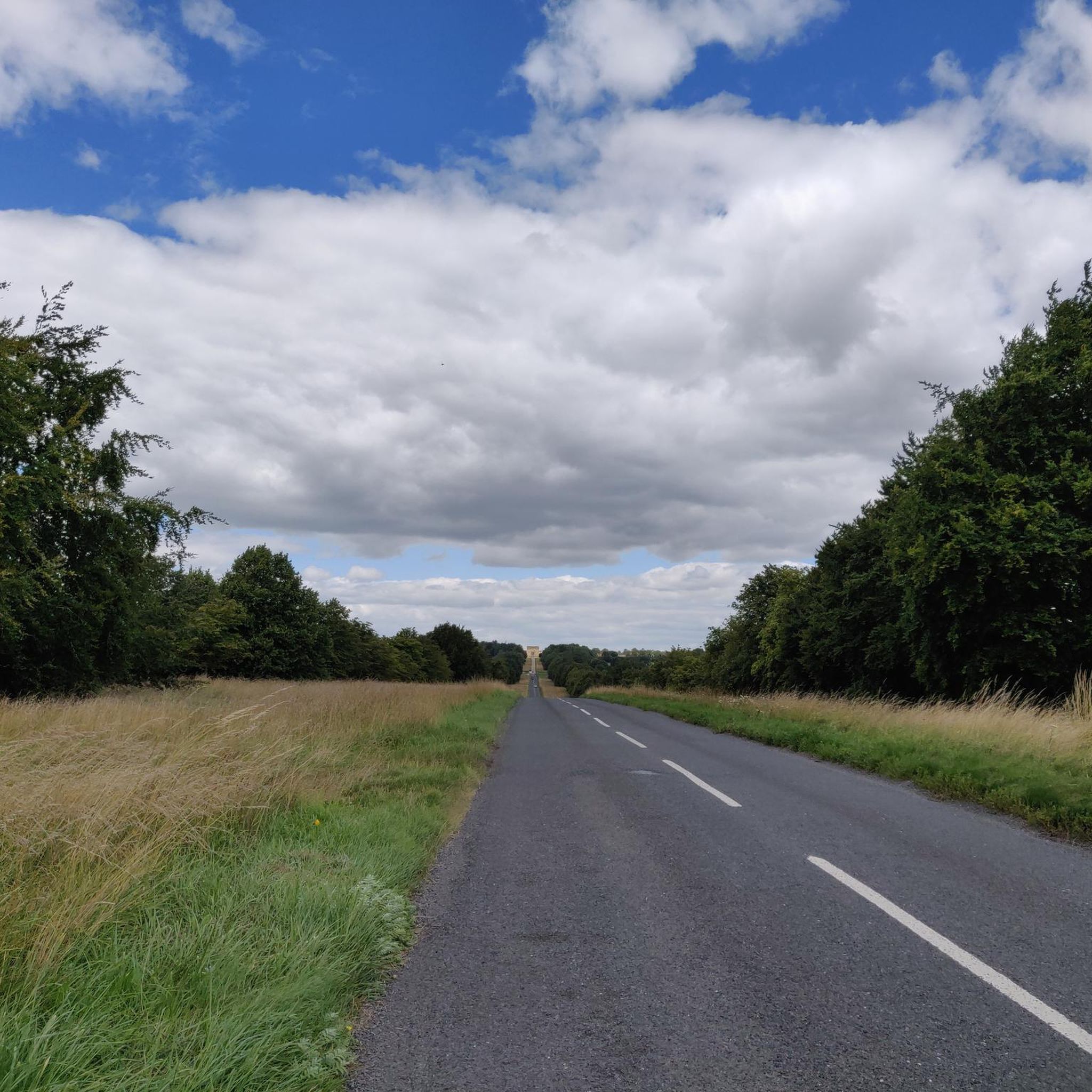
From here you have a beautiful view of the landscape.
1
0
A very prominent Palladian bridge in the park, it is one of the highlights of this property.
1
0

Woodland walk along the edge of the magnificent Stowe Landscape Gardens. If you have time, you may want to divert into the gardens and explore the many structures and statues here.
2
0
Pleasant section of walking through a mosaic of farmland.
2
0

Frequently Asked Questions
How many hiking trails are available in Radclive-Cum-Chackmore?
There are 10 hiking routes available in the Radclive-Cum-Chackmore area on komoot. These trails offer a range of experiences, from easy strolls to more moderate hikes, primarily within the scenic landscapes of Stowe.
What kind of terrain can I expect on hikes in Radclive-Cum-Chackmore?
The terrain in Radclive-Cum-Chackmore is varied, often featuring accessible paths, especially within Stowe Landscape Gardens. You'll encounter landscapes shaped by the River Great Ouse and its distinctive 'red cliffs,' as well as tree-lined paths leading towards Stowe Park. While many routes are easy, some moderate trails require good fitness.
Are there any easy, family-friendly walks in the area?
Yes, there are several easy routes suitable for families. An excellent option is The Path of the Brave, Stowe, which is 4.3 miles (6.9 km) long and explores historic monuments within Stowe Landscape Gardens. Another easy choice is the Temple of Ancient Virtue – Temple of British Worthies loop from Stowe, which is about 2.5 miles (4.1 km).
Can I find circular walks around Radclive-Cum-Chackmore?
Many of the popular routes in the area are circular. For example, the Chackmore to Akeley loop via Stowe Landscape Gardens is a moderate 7.3-mile (11.8 km) circular path. Another option is the New Inn Visitor Centre – Stowe House loop from Stowe, which is 5.4 miles (8.7 km) and also circular.
What historical landmarks or points of interest can I see while hiking?
The area is rich in historical landmarks, particularly within Stowe Landscape Gardens. You can explore architectural marvels like the Palladian Bridge at Stowe, the Temple of Ancient Virtue, and the Gothic Temple. Many routes, such as The Path of the Brave, Stowe, are designed to showcase these sites.
Are there any waterfalls or significant water features along the trails?
Yes, within Stowe Landscape Gardens, you can find the Octagon Lake Cascade and Artificial Ruins, which offers a beautiful water feature. The region is also defined by its proximity to the River Great Ouse, though specific trails directly along the river with waterfalls are less common than the features within Stowe.
What do other hikers say about the trails in Radclive-Cum-Chackmore?
The hiking routes in Radclive-Cum-Chackmore are highly rated by the komoot community, with an average score of 4.4 stars from over 80 reviews. Hikers often praise the well-maintained paths, the blend of natural beauty with historical monuments, and the variety of routes suitable for different fitness levels, especially within Stowe Landscape Gardens.
Is there public transport available to reach the hiking areas?
While specific public transport details for reaching trailheads directly from Radclive-Cum-Chackmore are limited, the hamlet of Chackmore is approached via an avenue connecting to Buckingham and Stowe Park. For detailed public transport information to Stowe Landscape Gardens, it's advisable to check local bus services or the National Trust's official website for visitor access.
Where can I park when visiting the hiking trails?
For trails within Stowe Landscape Gardens, parking is typically available at the New Inn Visitor Centre. For other routes starting from villages like Chackmore, local parking options may be available, but it's always recommended to check specific trailhead information or local signage for designated parking areas.
Are dogs allowed on the hiking trails in Radclive-Cum-Chackmore?
Many outdoor areas in the UK are dog-friendly, but specific rules can vary, especially within managed estates like Stowe Landscape Gardens. While some areas may permit dogs on leads, it's best to check the current dog policy of Stowe National Trust directly before your visit to ensure a smooth experience for you and your pet.
What is the best time of year to go hiking in this region?
The Radclive-Cum-Chackmore area, like much of Buckinghamshire, is enjoyable for hiking throughout the year. Spring brings blooming flora, summer offers longer daylight hours, and autumn showcases beautiful foliage. Even winter walks can be pleasant, especially on the well-maintained paths within Stowe Landscape Gardens, though conditions may require appropriate gear.
Are there any moderate hiking options for those seeking a bit more challenge?
Yes, for those looking for a moderate challenge, the Chackmore to Akeley loop via Stowe Landscape Gardens is a great choice. This 7.3-mile (11.8 km) route requires good fitness and offers accessible paths through the landscape surrounding Stowe. Another moderate option is the New Inn Visitor Centre – Stowe House loop from Stowe, which is 5.4 miles (8.7 km).
Most popular routes around Radclive-Cum-Chackmore
Most popular attractions around Radclive-Cum-Chackmore

Get inspired with the komoot mobile app


Explore more
Browse the best Hikes in other regions.
