The best walks and hikes around Lake Sędańskie
4.9
(39)
415
hikers
38
hikes
Hiking around Lake Sędańskie offers opportunities to explore the flat terrain surrounding this lake in Szczytno, Poland. The region is characterized by its low elevation changes, with routes often staying close to the water or passing through nearby urban and natural areas. Trails frequently feature views of the lake and connect to points of interest within the local municipality. The landscape is generally gentle, making it accessible for various hiking abilities.
Best hiking trails around Lake Sędańskie
- The most popular…
Last updated: May 12, 2026
5.0
(1)
3
hikers
10.5km
02:42
40m
40m
Moderate hike. Good fitness required. Easily-accessible paths. Suitable for all skill levels.
5.0
(11)
123
hikers
6.04km
01:33
20m
20m
Easy hike. Great for any fitness level. Easily-accessible paths. Suitable for all skill levels.

Sign up for free
3
hikers
5.32km
01:22
20m
20m
Easy hike. Great for any fitness level. Easily-accessible paths. Suitable for all skill levels.
4.9
(22)
143
hikers
Moderate hike. Good fitness required. Easily-accessible paths. Suitable for all skill levels.
5
hikers
Easy hike. Great for any fitness level. Easily-accessible paths. Suitable for all skill levels.
Get access to more routes and recommendations from other explorers.
Sign up for free
Already have an account?
Our route recommendations are based on thousands of hikes, rides, and runs completed by other people on komoot.
Start today with a free account
Your next adventure awaits.
Login or Signup


Tips from the Community

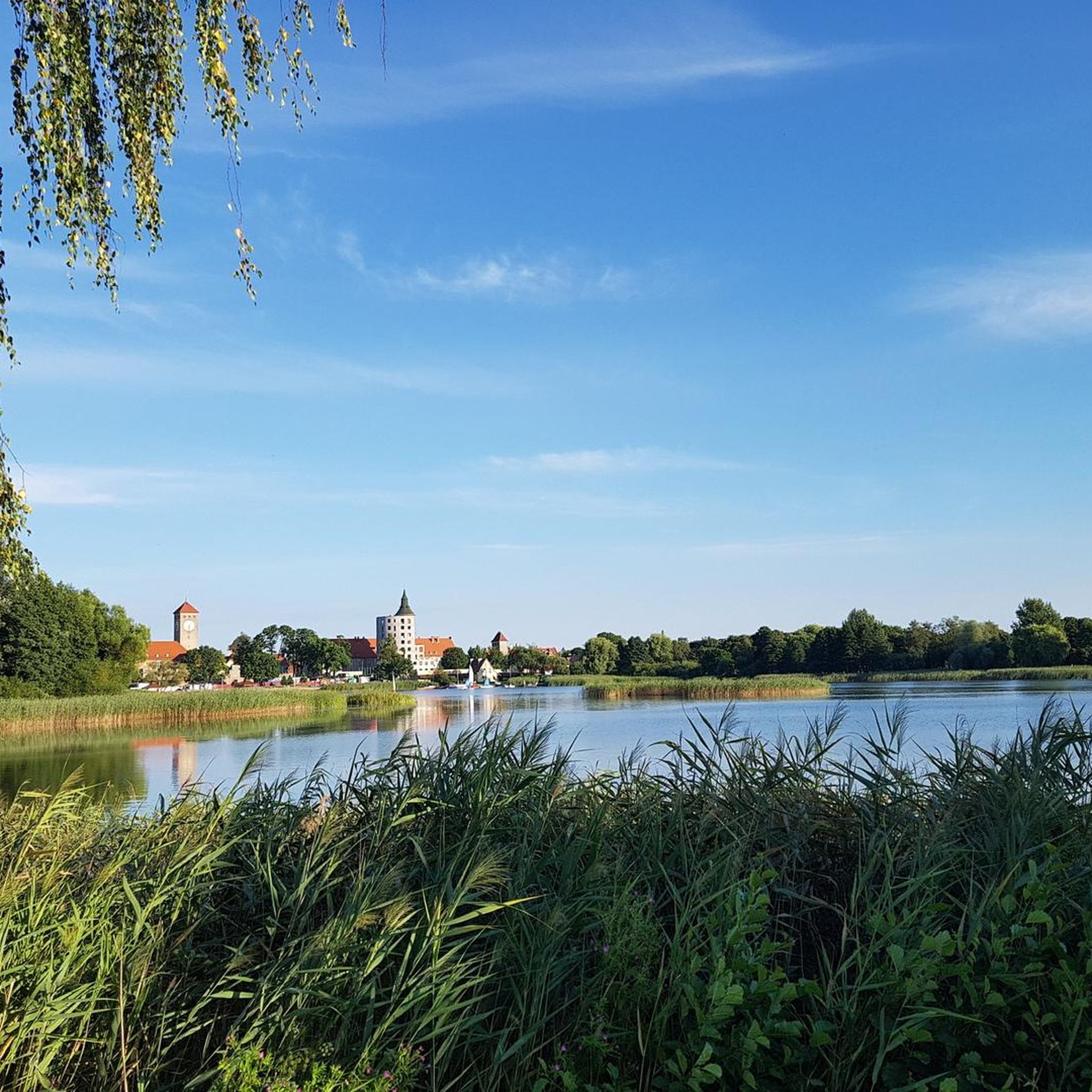
View of the outer lake from the canal connecting the two lakes. A trail circles around both lakes.
2
0
The history of the Szczytno castle dates back to the order's fortress of Hauß Ortelßburg, which was built between 1350 and 1360 on the land connection between the Great and the Small Haussee, with a wooden and earth defensive watchtower on the site of the earlier Prussian stronghold. The Teutonic Order used it as a border fortress against the nearby, Polish-ruled Mazovia and as a base for the settlement of the former Prussian house Galinden, which was found as a primeval forest south of the previously conquered and settled areas and was generally referred to as "wilderness". A caretaker of the order, who was subordinate to the Elbing Commandery, had his seat at the castle. The name of the Ortelsburg is traced back to the Grand Commander and Supreme Spittler of the Order, Ortloff von Trier, who, in his capacity as Commander of Elbing, arranged for the settlement of immigrants from Mazovia with a document dated 24 September 1360. Their settlement was initially established on the north side of the Kleiner Haussee, and they lived mainly from beekeeping. Beekeepers at this time were referred to as Beutner, and so the name Beutnerdorf (Polish Bartna Strona) was created for the new settlement. Less than twenty years later, the Lithuanians led by Prince Kęstutis (Kynstut) burned down the watchtower. However, the Teutonic Order did not want to give up its base and in 1370-1380 immediately built a new more resistant castle of stone and brick on a plan similar to a square, in the middle of which there was a well. It was surrounded by defensive walls and a moat together with the castle. On the south-eastern side, there was an outer bailey separated from the castle by a defensive wall with a gate leading inside. Before the outbreak of the Thirteen Years' War, the castle inventories listed: a grain silo, cellars, a kitchen, a malt house, a powder magazine, a chapel, an attic serving as a meat warehouse, a cattle farm, an ordinary farm, a bathhouse, a pantry and a woodcarving shop. 26 crossbows and 10250 bolts and 43 hook guns were also kept here. During the Thirteen Years' War (1454–1466) it was fiercely fought over and was occupied several times by both warring parties. After the secularization of the state of the Order in 1525 and its transformation into the secular Duchy of Prussia, Ortelsburg Castle became the seat of the prince's Amtshauptmann (starost) for the Hauptamt Ortelsburg, which was subordinate to the Oberländischer Kreis. The Hauptamt in turn was responsible for the offices of Willenberg and Passenheim. It also served as a quarters during the hunts of Duke Albrecht and his successors. Since the duchy was under the feudal sovereignty of Poland at that time, Ortelsburg Castle lost its importance as a border fortress and began to decay. Duke Georg Friedrich I (Brandenburg-Ansbach-Kulmbach) had it rebuilt from 1579 to 1581 by the master builders Blasius Berwart and Hans Wissmar, and expanded by a fortification, serving as a hunting lodge. Many of the craftsmen involved in the construction work settled near the castle and founded the municipality of Ortelsburg in 1581, independently of the already existing village of Beutnerdorf, causing 20 years of sometimes violent fighting. Then it became a magazine and arsenal. The tower and walls along with the towers were demolished in the 17th century. In the years 1766-1792, the north-eastern wing of the castle and the upper storeys of the other wings were demolished and the southern moat was filled. After that, the building fell into disrepair. Today, only the foundation walls of the northern part of the castle can be seen and underwent extensive revitalization with walkways on several levels and lighting, attracting visitors. Before World War II, the town hall building was built in the place of the southern half of the castle. A high tower called the "Jurand Tower", part of the buildings of the outer bailey and a moat have been preserved. The Masurian Museum in Szczytno was established in 1945 on the basis of the surviving collection of the Kreisheimatmuseum Ortelsburg founded in 1925. Originally located in the fourteenth-century Teutonic castle, in 1948 it was moved to the south and east wings of the town hall, adjacent to the ruins of the castle. The branch of the Museum of Warmia and Mazury in Szczytno possesses collections now counting thousands of museum objects, in the field of archeology, history, art, ethnography, including folk art, cartography, numismatics and nature, as well as a scientific collection with old prints - documenting history, cultural heritage and values natural environment of the Mazur region. Among the collections can be mentioned the monuments of regional sacred art (XVIII-XIX centuries), handicrafts, artistic handicrafts (XV-XIX centuries). A special position is occupied by historical documents and publications related to the Polish press and the Polish movement in Masuria (XIX-XX centuries), of which Szczytno was an important center. Ethnographic collections, the oldest of which date back to the end of the 18th century, are painted Masurian furniture, wardrobes with household writing on the inside of the door, decorative and utility fabrics as well as traditional household and farm appliances. These objects are priceless traces of folk culture of Masuria, which at the beginning of the twentieth century was marginalized. https://szczytno.muzeum.olsztyn.pl
3
0

An interesting place with an interesting history of the city. You can visit the museum in the ruins. An interesting place.
0
0
Nice walk around J. Długie. Beautiful surroundings, silence and birdsong. I recommend it.
0
0
I was here and I liked it very much. I recommend visiting the museum where there are some historical curiosities.
0
0
Nice views from the pier. Beautiful and quiet area for relaxation. I recommend
1
0

Ruins of a Teutonic castle, a cool place, on the upper level old walls with the layout of the rooms and the poet Jurand :), in the basement there is an exhibition.
0
0
A great place for a walk, and for a bike ride for the whole family. On the walking route there are benches you can sit and relax. In the park there is a newly built brine graduation tower at ul. Pasymska. You can come in for a while and relax.
0
0
Frequently Asked Questions
How many hiking trails are available around Lake Sędańskie?
There are over 25 hiking routes available around Lake Sędańskie. The area offers a variety of paths, primarily easy to moderate, suitable for different preferences.
What is the typical terrain like for hiking near Lake Sędańskie?
The terrain around Lake Sędańskie is generally flat with low elevation changes, making for gentle walks. Trails often follow lakeside paths or pass through urban areas and local natural settings, providing accessible hiking for various abilities.
Are there any easy hiking routes suitable for beginners or casual walkers?
Yes, a significant number of routes are classified as easy. For instance, the Pier on Lake Domowe Duże – Szczytno Castle and Museum loop from Szczytno is an easy 3.8-mile (6.1 km) path offering views of Lake Domowe Duże and historical landmarks.
Can I find circular hiking routes around Lake Sędańskie?
Yes, many of the routes around Lake Sędańskie are circular. An example is the Sasek Mały loop from Sasek Mały, a 6.5-mile (10.5 km) trail that circles through the local area with minimal elevation gain.
What kind of landmarks or points of interest can I expect to see on hikes?
Hikes in the area often feature views of Lake Sędańskie and other nearby lakes like Lake Domowe Duże. You can also explore historical landmarks such as the Szczytno Castle and Museum, which are incorporated into routes like the Domowe Duże Lake – Szczytno Castle and Museum loop from Szczytno.
Are the hiking trails around Lake Sędańskie suitable for families with children?
Given the generally flat terrain and low elevation changes, many trails around Lake Sędańskie are suitable for families. Easy routes, often staying close to the water or passing through urban areas, provide accessible options for walks with children.
What is the best time of year to go hiking around Lake Sędańskie?
While specific seasonal details for Lake Sędańskie are limited, Poland's lake regions are generally pleasant for hiking from spring through autumn. Spring offers fresh greenery, summer provides warm weather for lakeside activities, and autumn brings beautiful foliage. The gentle terrain makes it accessible for most of the year.
Is public transport available to access hiking trailheads near Lake Sędańskie?
The guide mentions routes starting from Szczytno, which is a local municipality. It is advisable to check local public transport schedules for buses or trains connecting to Szczytno or other starting points near the lake.
Where can I find parking for hiking trails around Lake Sędańskie?
Many routes start from towns or villages like Szczytno or Sasek Mały. Parking is typically available in these local areas, often near public spaces or designated parking lots. It's recommended to check specific trailhead information for the best parking options.
What do other hikers say about the trails around Lake Sędańskie?
The routes in Lake Sędańskie are highly rated by the komoot community, with an average score of 4.9 stars from over 30 reviews. Hikers often praise the accessible, gentle terrain and the pleasant lakeside views.
Are there any longer or more challenging hikes for experienced hikers?
While the region is characterized by low elevation changes, some routes offer longer distances. For example, the Sasek Mały loop from Sasek Mały is a moderate 6.5-mile (10.5 km) trail, providing a longer walk for those seeking more distance.
Can I find places to eat or drink near the hiking trails?
Routes that pass through or start from towns like Szczytno will offer opportunities to find cafes, pubs, and restaurants. These urban areas provide convenient stops for refreshments before or after your hike.
Most popular routes around Lake Sędańskie

Get inspired with the komoot mobile app


Explore more
Browse the best Hikes in other regions.
