Top 10 Castles around Castellbisbal
Castles around Castellbisbal offer a glimpse into the region's historical significance within the province of Barcelona. This municipality features remnants of fortifications strategically positioned on hills overlooking the Llobregat river valley. The landscape provides a setting for exploring historical sites and engaging in various walking routes.
Best castles around Castellbisbal
- The most popular castles is Castellciuró, a castle that consists of ancient ruins offering views over the Baix Llobregat. It is an accessible site for those exploring the Molins…
Last updated: June 1, 2026
Castellciuró Ruins
Highlight • Castle
Translated by Google •
Tip by

Fossada Tower (Castellbisbal)
Highlight • Historical Site
Translated by Google •
Tip by

Sign up now to discover places like this
Get recommendations on the best single tracks, peaks, & plenty of other exciting outdoor places.
Sign up for free
Castellciuró
Highlight • Castle
Translated by Google •
Tip by

Gelida Castle
Highlight • Castle
Translated by Google •
Tip by
La Torre Negra
Highlight • Castle
Translated by Google •
Tip by

Sign up for free to discover even more castles around Castellbisbal.
Sign up for free
Already have an account?
Start today with a free account
Your next adventure awaits.
Login or Signup

Tips from the Community

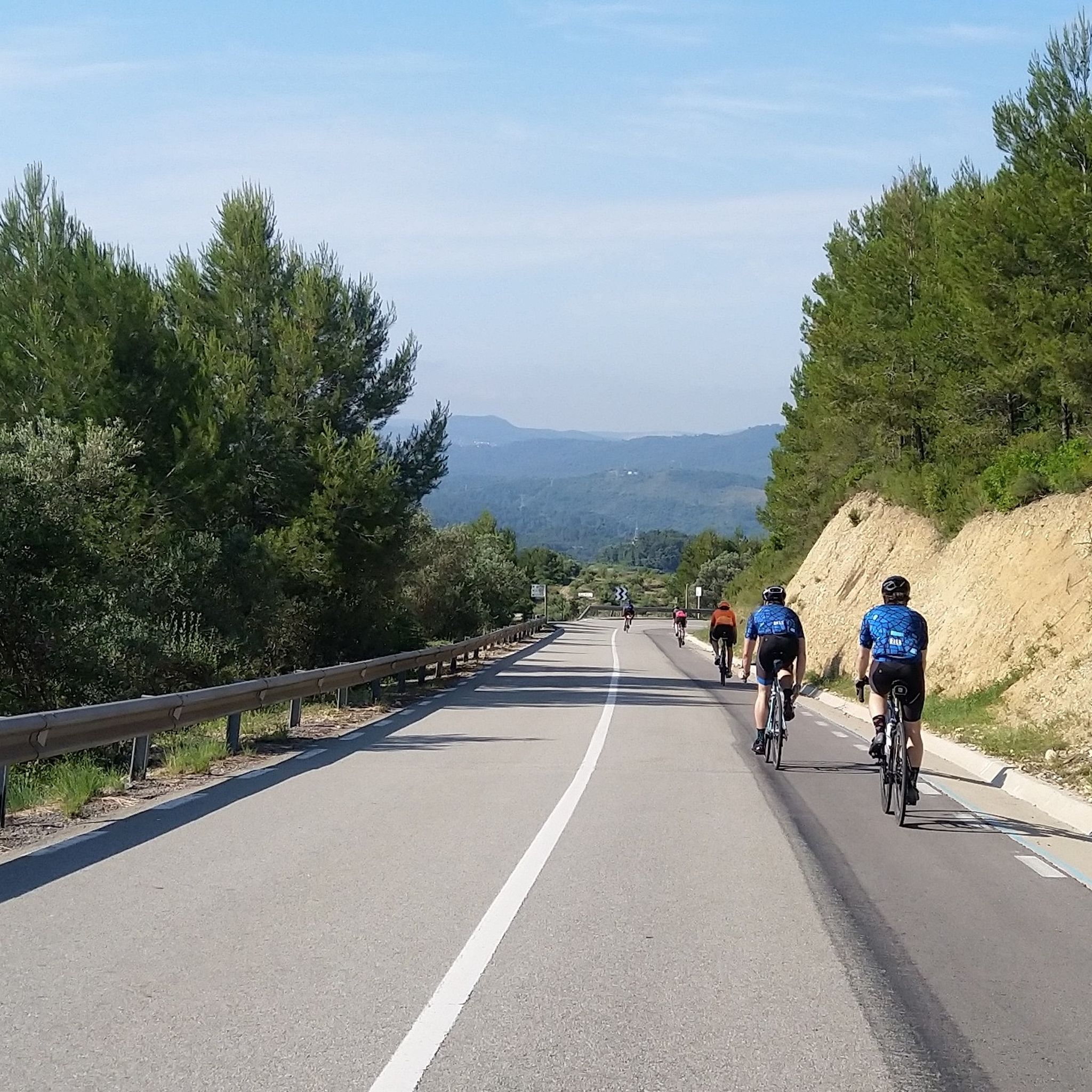
Last section is unpaved but can be climbed easily with a road bike.
0
0
climb from the train station, difficult stretch of + or - 2 km.
0
0
Go up from the train station.
0
0

good views from up there, it is better to go up through the area of the urbanization that is softer, on the river side the climbs are very strong.
0
0

On a small hill, above the town of Molins de Rei, are the ruins of the castle that was built in the 14th century on the remains of an old circular defensive tower, called Guadall or Guadallo, of Visigothic origin (8th century) , that is to say, pre-Romanesque. This is confirmed by the remains of a wall lock that used an opus spicatum facing characteristic of that period. On the west facade stands a three-tiered tower where the door and two openings are preserved, one of which is currently reconstructed. There are also remains of the trapezoidal plant, a small tower attached to the rock, the walls of the Guadall tower and the remains of a large cistern, partially drilled into the rock and protected by a barrel vault (10th and 12th centuries ).
2
0

The castle of Gelida stands on a cliff part of the Sierra de Ordal, next to the town of Gelida. It is a construction from the 10th century and is now in a state of semi-ruin. Part of a tower, several hundred and a pre-Romanesque church have been preserved.
2
0

Documented fortification from the year 945. The walls, the defense towers, a set of anthropomorphic tombs and the church of Sant Pere del Castell stand out. The visit to the castle is very interesting and highly recommended. In addition, there are many hiking and running trails that start from the area.
1
0

Its property passed through the Cervelló, Montcada, Arborea and Bertrán families. It is known that Pedro de Portugal lived in the year 1465. In 1780, the parish priest of San Pedro asked permission to take stone to build the bell tower. The Association of Friends of the Gelida Castle was founded in 1965 to manage and recover the heritage of the castle area, which in 1968 became the property of the Gelida City Council. The last intervention carried out was based on the construction of a space for the management and interpretation of the castle and, on the other hand, an action to settle and consolidate architectural elements, as well as the construction of walkways and railings.
2
1
Frequently Asked Questions
What historical castles can I explore in the Castellbisbal area?
The region around Castellbisbal offers several historical castle sites. You can visit the scarce foundational walls of the ancient Castillo de Castellbisbal, also known as Benviure, which dates back to 1013. Another significant site is Fossada Tower (Castellbisbal), a 19th-century tower built on medieval foundations, which served as part of a military optical telegraph line. Further afield, explore the ancient ruins of Castellciuró, offering views over the Baix Llobregat, or the half-ruined Gelida Castle, which includes an adjacent church and museum space.
Are there any well-preserved castle structures or just ruins?
While many sites are in ruins, such as the Castillo de Castellbisbal and Castellciuró, you can find more discernible structures like Fossada Tower (Castellbisbal). This tower, with its square plan and deep moat, offers a clearer picture of its historical form. Additionally, La Torre Negra is a well-preserved Romanesque military construction with a quadrangular plan.
What kind of views can I expect from the castle sites?
Many of the castle sites in the Castellbisbal area were strategically chosen for their vantage points. From the ruins of Castillo de Castellbisbal, you can enjoy panoramic views over the Llobregat river. Fossada Tower (Castellbisbal) provides splendid views over the Llobregat valley and the nearby Pont del Diable. Castellciuró offers great views over the Baix Llobregat, and La Torre Negra provides views over the Vallés plain.
Are there hiking or walking routes that include these castles?
Yes, the historical sites around Castellbisbal are often integrated into walking and cycling routes. The site of Castillo de Castellbisbal serves as a starting point for various excursions. You can find numerous routes that pass by these historical points. For example, there are several road cycling and gravel biking routes around Castellbisbal that offer opportunities to explore the area's landscapes and historical features. Check out the Road Cycling Routes around Castellbisbal or Gravel biking around Castellbisbal guides for more options.
What is the historical significance of Fossada Tower?
Fossada Tower (Castellbisbal), also known as El Telègraf, played a crucial role as part of the military optical telegraph line connecting Barcelona to Lleida in the mid-19th century. Historically, it also served as a military bastion during the 15th-century Catalan Civil War and the War of the French (Peninsular War), and was one of the last points of resistance for Republican forces in 1939.
Can I visit Gelida Castle and what are its features?
Yes, Gelida Castle is a half-ruined castle located on a hill southeast of Gelida's urban center. It features an adjacent church, dedicated to Saint Peter, which is the only building still standing. The site is part of a museum space managed by a local association, offering insights into its 10th-century origins and history.
Are there any castles that are particularly accessible or easy to reach?
Castellciuró is noted for its easy accessibility, making it a good option for those exploring the Molins de Rei area. While the Castillo de Castellbisbal is on a hill, it serves as a starting point for excursions, suggesting it's reachable for walks.
What do visitors appreciate most about the castles in this region?
Visitors to the castles around Castellbisbal often appreciate the historical significance and the strategic viewpoints they offer. The komoot community has given these sites over 70 upvotes and shared more than 30 photos, highlighting the ancient ruins, panoramic views over valleys like the Llobregat and Baix Llobregat, and the opportunity to connect with the region's past.
Is La Torre Negra open to the public?
La Torre Negra is a Romanesque military construction dating back to the 12th century. Since 1842, it has been in private hands, belonging to the Rabadà family. While it is a well-preserved historical site, its private ownership may affect public access, so it's advisable to check local information for visiting possibilities.
Are there any specific historical periods associated with these castles?
The castles in the Castellbisbal area span various historical periods. The Castillo de Castellbisbal is documented from 1013, with its ownership by the bishopric of Barcelona for centuries. Castellciuró has parts that could be of Visigothic origin (8th century) or pre-Romanesque (10th century), and was documented in 1066. Gelida Castle dates back to the 10th century. Fossada Tower (Castellbisbal) incorporates medieval elements but its current form is from the mid-19th century, playing roles in the Catalan Civil War and War of the French. La Torre Negra originates from the 12th century.
What kind of outdoor activities can I combine with a visit to these castles?
The region around Castellbisbal is excellent for combining castle visits with outdoor activities. You can find numerous road cycling, gravel biking, and general cycling routes that pass by or near these historical sites. For instance, the Cycling around Castellbisbal guide offers routes like the 'Martorell and Castellbisbal Loop via El Suro Ascent' or the 'Martorell's Devil's Bridge – View of Montserrat loop'. These routes allow you to enjoy the natural landscape while exploring the historical remnants.
Most popular routes around Castellbisbal
Most popular attractions around Castellbisbal

Get inspired with the komoot mobile app


Explore more
Looking for the best castles somewhere else? Discover other guides around Castellbisbal:
