The best walks and hikes in Budapest
4.7
(792)
8,823
hikers
196
hikes
Hiking in Budapest provides access to diverse natural landscapes, including the low mountains of the Buda Hills and the scenic Danube Bend. The terrain is characterized by dense forests, river valleys, and elevated viewpoints offering city panoramas. Areas like the Pilis Mountains and Visegrád Hills feature woodlands and rocky formations.
Best hiking trails in Budapest
- The most popular hiking route is Statue of St. Stephen – Fisherman's Bastion loop from Astoria, a 13.0 miles (21.0 km) trail that takes…
Last updated: August 11, 2026
4.9
(122)
1,154
hikers
22.4km
06:07
330m
330m
Hard hike. Very good fitness required. Easily-accessible paths. Suitable for all skill levels.
4.5
(28)
580
hikers
Moderate hike. Good fitness required. Easily-accessible paths. Suitable for all skill levels.

Sign up for free
4.6
(44)
585
hikers
10.6km
03:01
230m
230m
Moderate hike. Good fitness required. Easily-accessible paths. Suitable for all skill levels.
4.7
(21)
486
hikers
7.19km
02:00
130m
130m
Easy hike. Great for any fitness level. Easily-accessible paths. Suitable for all skill levels.
4.5
(17)
253
hikers
Moderate hike. Good fitness required. Easily-accessible paths. Suitable for all skill levels.
5.0
(9)
151
hikers
5.43km
01:32
120m
120m
Easy hike. Great for any fitness level. Easily-accessible paths. Suitable for all skill levels.
4.2
(5)
174
hikers
Easy hike. Great for any fitness level. Easily-accessible paths. Suitable for all skill levels.
4.7
(6)
128
hikers
Easy hike. Great for any fitness level. Easily-accessible paths. Suitable for all skill levels.
5.0
(4)
54
hikers
Hard hike. Very good fitness required. Sure-footedness, sturdy shoes and alpine experience required.
4.6
(9)
97
hikers
Easy hike. Great for any fitness level. Easily-accessible paths. Suitable for all skill levels.
Get access to more routes and recommendations from other explorers.
Sign up for free
Already have an account?
Our route recommendations are based on thousands of hikes, rides, and runs completed by other people on komoot.
Start today with a free account
Your next adventure awaits.
Login or Signup
Popular around Budapest


Tips from the Community

An impressive view of the Danube and the majestic Gellért Hill, one of the most beautiful landscapes in the heart of Budapest. The green hill rises prominently above the river and, together with the Danube, shapes the unique silhouette of the city. From here, the special connection between nature and the big city can be wonderfully experienced. Below, the Danube flows calmly through Budapest, while historical buildings and viewpoints can be discovered on the slopes of Gellért Hill. The view is particularly atmospheric at sunset, when the warm light bathes the hill and the city in golden colors and the last rays of the sun are reflected on the water.
2
0
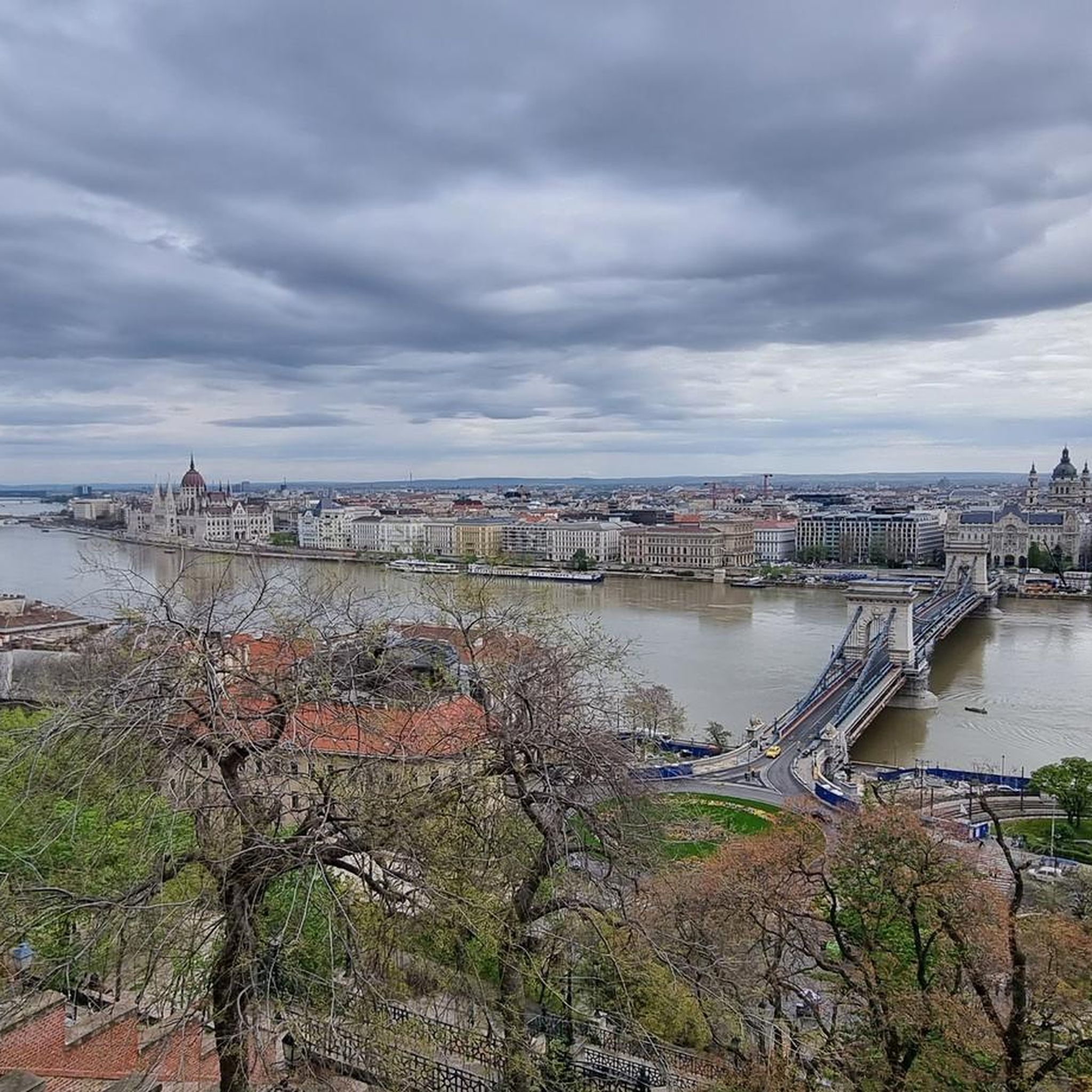
High above the Danube, Buda Castle offers an impressive panorama of Budapest. From up here, the Hungarian capital lies far below – with the majestic Danube, the historic bridges, and the magnificent silhouette of Pest. Particularly striking is the imposing Parliament Building on the opposite bank. Together with the Chain Bridge and the numerous historic buildings, it creates a unique view of the heart of the city. At sunset, the panorama becomes particularly atmospheric: The warm light bathes the roofs and facades in golden colors, while the first lights of the city slowly reflect in the Danube.
2
0
The elegant Liberty Bridge, Szabadság híd in Hungarian, is one of Budapest's most beautiful bridges. With its distinctive green steel structure, it connects Buda and Pest across the Danube and has long since become an unmistakable part of the cityscape. Particularly striking are the golden decorations and the spires with the characteristic Turul birds. From the bridge, a wonderful view opens up of the Danube, Gellért Hill, and the surrounding city. Whether on foot, by bike, or simply on a stroll along the Danube embankment, the Liberty Bridge always offers new perspectives. It is particularly atmospheric in the evening when the lighting makes the green steel structure glow.
2
0
Experiencing Budapest from a bird's-eye view is something very special. From the heights of the Buda side, an impressive panorama opens up over the Danube and the Hungarian capital. In view are the magnificent buildings of Pest, the imposing Parliament building, the historic bridges, and the city's rooftops. In between, the Danube winds its way through Budapest like a silver ribbon, connecting Buda and Pest. The view becomes particularly fascinating in the evening hours, when the city slowly begins to glow and the lights are reflected in the water.
2
0
A beautiful viewpoint on Gellért Hill with a view over the Danube and the Elisabeth Bridge. High above Budapest sits the statue of Saint Gellért, providing an impressive backdrop for the city view. Below, the Danube winds its way through Budapest, while the elegant Elisabeth Bridge connects the two parts of the city, Buda and Pest. Behind them, the city spreads out with its historic buildings and well-known sights. Especially in good weather, this spot becomes a perfect moment to pause and take in the panorama. The combination of the Danube, the bridge, the city, and the green slopes of Gellért Hill once again shows why Budapest is considered one of Europe's most beautiful cities.
2
0
The Matild Palace, a Luxury Collection Hotel, Budapest, is one of the most extraordinary luxury hotels in the Hungarian capital. It is located at the Pest end of the Elisabeth Bridge (Erzsébet híd) and is part of the famous Klotild Palaces, two mirror-image, magnificent buildings from the Belle Époque era. History and Architecture The palace was built around 1902 on behalf of Archduchess Maria Klotild of Saxe-Coburg and Gotha. Architects Kálmán Giergl and Flóris Korb created a representative building in the English Baroque style with rich historicist ornamentation. The two Klotild Palaces were intended to serve as a magnificent gateway to Pest's city center and to welcome visitors crossing the Elisabeth Bridge. Particularly noteworthy are: the artistic facade with towers and sculptural decoration, the historical iron structure of the building, decorative works by Hungarian artisans, glasswork by Miksa Róth and ceramic details by Zsolnay. From Coffee House to Luxury Residence In the early 20th century, the building was an important social meeting point. The famous Belvárosi Kávéház in the palace was part of Budapest's coffee house culture, where writers, artists, and intellectuals met. For decades, the place remained a symbol of elegance and the city's cultural life. After eventful times, two world wars, and political upheavals, the building was extensively restored. Following an elaborate renovation, it reopened in 2021 as the Matild Palace, a Luxury Collection Hotel, Budapest. Hotel and Current Significance Today, the Matild Palace combines historical splendor with modern luxury. The hotel comprises elegant rooms and suites, restored historical areas, and gastronomic offerings, including the restaurant Spago by Wolfgang Puck and a rooftop terrace with views over Budapest. The building is more than just a hotel: it is an example of how Budapest's historical architecture is preserved and revitalized at the same time. With its location near the Danube, the Chain Bridge, and the city center, it is one of the most impressive structures in the Hungarian capital. Particularly worth seeing: the richly decorated exterior facade at night, when the lighting highlights the palace's towers and ornaments.
2
0
The Hungarian State Opera is one of Budapest's most magnificent cultural buildings and ranks among Europe's most important opera houses. It is located on the famous Andrássy Avenue, which is part of the UNESCO World Heritage. The opera house was built to the designs of the Hungarian architect Miklós Ybl in the Neo-Renaissance style. Construction began in 1875, and the building was ceremoniously opened on September 27, 1884. Emperor Franz Joseph I attended the opening. Architecture and Furnishings The facade impresses with its harmonious proportions, richly decorated columns, and numerous sculptures. In front of the entrance stand the statues of two great Hungarian musicians: Ferenc Erkel, founder of the Hungarian National Opera and composer of the Hungarian national anthem, Franz Liszt, one of the most famous pianists and composers of the 19th century. Inside, visitors can expect an exceptionally magnificent space: a gilded staircase, marble columns and elegant boxes, ceiling paintings by Károly Lotz, a richly decorated auditorium with excellent acoustics. The horseshoe-shaped auditorium is considered one of the most beautiful in Europe. The design combines functionality with courtly elegance and reflects Budapest's cultural rise in the 19th century. History and Significance The State Opera was established at a time when Budapest was growing into a modern European metropolis after the unification of Buda, Pest, and Óbuda (1873). It was intended to underscore Hungary's cultural significance and promote its own national opera tradition. Today, the Hungarian State Opera is the country's most important opera stage. Works by Hungarian and international composers are performed, and ballet performances and concerts also take place. With its architecture, rich furnishings, and musical tradition, the Hungarian State Opera is among Budapest's most beautiful sights and a highlight of any cultural trip to the city.
2
0
Szabadság tér (Liberty Square) is one of the most historically significant and impressive squares in the center of Budapest. It is located in the V. district (Belváros-Lipótváros), between the Parliament district and St. Stephen's Basilica, and combines representative architecture with important memorial sites of Hungarian history. The square was created in the 19th century on the site of the former New Fortress (Újépület), a Habsburg military facility. After the revolution of 1848/49, Hungarian freedom fighters were executed here. After the demolition of the fortress, the area was redesigned into a public square and received the name Szabadság tér ("Liberty Square") in 1900. Significant Buildings and Monuments Hungarian National Bank The monumental building of the National Bank dominates the east side of the square. It was built in the early 20th century in the Historicist style and is considered one of the important structures in Hungarian financial history. Ronald Reagan Statue The bronze statue, unveiled in 2011, commemorates US President Ronald Reagan and his role in connection with the end of the Cold War. The figure symbolically shows Reagan on his way towards the former Soviet sphere of influence. Soviet War Memorial The square also features a Soviet war memorial from 1945, commemorating the Soviet soldiers who conquered Budapest in World War II. The monument remains a controversial memorial site to this day and reflects Hungary's complex history in the 20th century. Monument to Imre Nagy Nearby is the statue of Imre Nagy, the symbol of the 1956 revolution. The well-known bronze figure shows him standing on a small bridge, as if mediating between past and future. Atmosphere Today Szabadság tér is now an elegant green space with old trees, well-kept paths, and impressive buildings. At the same time, it is a place of remembrance where different historical eras meet: the Habsburg era, the revolution of 1848, World War II, the communist era, the transition to democracy. This mixture of architecture, politics, and history makes Liberty Square one of Budapest's most exciting places – less spectacular than Parliament, but particularly rich in historical stories.
2
0
Frequently Asked Questions
How many hiking trails are available in Budapest?
Budapest offers a diverse network of over 200 hiking routes. These include 122 easy trails, 74 moderate paths, and 10 more challenging routes, ensuring options for all skill levels.
Are there easy hiking trails suitable for beginners in Budapest?
Yes, Budapest has over 120 easy hiking trails perfect for beginners. Many of these are found within the city's green spaces or offer gentle ascents in the Buda Hills. For example, the Fisherman's Bastion – Statue of St. Stephen loop from Széll Kálmán tér is an easy 5.3 km route that takes just under 1.5 hours.
What kind of terrain can I expect on hikes around Budapest?
The terrain around Budapest is quite varied. Within the city, you'll find urban paths and park trails, while the Buda Hills offer dense forests and low mountain landscapes. Further afield, the Danube Bend region, including the Pilis and Visegrád Mountains, features woodlands, rocky formations, and challenging climbs with significant elevation changes, often providing stunning river views.
Are there any family-friendly hiking options in Budapest?
Absolutely. Many trails in areas like Normafa Park and Margaret Island are ideal for families. The Buda Hills also offer numerous well-marked, shorter trails suitable for children. The Japanese Garden – Margaret Island loop from Nyugati pályaudvar is a moderate 12.3 km path exploring green spaces and gardens, perfect for a family day out.
Can I bring my dog on hiking trails in Budapest?
Yes, many hiking trails in Budapest and the surrounding areas are dog-friendly. The Buda Hills, with their extensive forests and nature reserves like Normafa, are popular choices for walks with pets. Always ensure your dog is on a leash and check for any specific local regulations in protected areas.
What are some notable viewpoints or landmarks I can see on a hike?
Budapest hikes offer numerous spectacular viewpoints. You can reach the Elizabeth Lookout Tower on János Hill for panoramic city views, or explore Gellért Hill for sights like the Liberty Statue and Citadel. Further out, Prédikálószék in the Visegrád Hills offers one of Hungary's most beautiful panoramas of the Danube Bend, often passing the dramatic Vadálló-kövek rock formations.
Are there any circular hiking routes near Budapest?
Yes, there are many circular hiking routes available. For instance, the Károly Guckler Lookout Tower – Guckler Károly Lookout loop from Szépvölgyi út is a challenging 25 km circular trail in the Buda Hills. The Rám Gorge in the Visegrád Mountains can also be part of a popular 10 km circular hike from Dömös.
How accessible are the hiking trails by public transport?
Many of Budapest's hiking areas are easily accessible by public transport. The Buda Hills, including popular spots like Normafa and János Hill, can be reached by bus or even chairlift from within the city. The Danube Bend region also has good public transport links, making it convenient to start hikes without a car.
Are there any unique natural features or gorges to explore?
Yes, the region boasts unique natural features. The Dera Gorge, located between Pilisszentkereszt and Csobánka, offers an adventurous experience with mossy rocks and sheer cliffs. The Rám-szakadék (Rám Gorge) in the Visegrád Mountains is famous for its ladders and rails, guiding hikers through waterfalls and rock formations.
What do other hikers enjoy most about hiking in Budapest?
The area is highly rated by the komoot community, with an average score of 4.6 stars from over 470 reviews. Reviewers often praise the diverse landscapes, from urban green spaces to dense forests and stunning river views, as well as the well-marked paths and accessibility to natural escapes right outside the city.
Are there any waterfalls to see on hikes near Budapest?
While not as numerous as in some mountainous regions, you can find waterfalls. The Rám-szakadék (Rám Gorge) in the Visegrád Mountains features small waterfalls that hikers navigate with the aid of ladders and rails. Within the city, the Gellért Hill Waterfall is a notable attraction.
What is the best time of year to go hiking in Budapest?
Spring (April-May) and autumn (September-October) are generally considered the best times for hiking in Budapest, offering pleasant temperatures and beautiful scenery with blooming flowers or vibrant fall foliage. Summer can be warm, but shaded forest trails provide relief. Winter hiking is also possible, especially on lower elevation trails, offering a different, often serene, experience.
Most popular routes in Budapest
Most popular attractions in Budapest

Get inspired with the komoot mobile app


Didn’t find what you were looking for?
Check out more Hikes throughout Budapest below and find the perfect route in your destination.
Explore more
Browse the best Hikes in other regions.
