The best road cycling routes around Asturianos
5.0
(6)
553
riders
13
rides
Road cycling routes around Asturianos traverse a rugged terrain characterized by mountains, verdant valleys, and significant elevation changes. The region features challenging mountain passes and an extensive network of roads suitable for road cycling. Cyclists can expect varied landscapes, including river valleys and high points, providing diverse riding experiences.
Best road cycling routes around Asturianos
- The most popular road cycling route is Palacios de Sanabria – tour around Eriá river and Truchas – Alto Peñón, a 66.1 miles (106.4…
Last updated: July 25, 2026
21
riders
106km
05:13
1,540m
1,540m
Hard road ride. Very good fitness required. Mostly well-paved surfaces and easy to ride.
8
riders
79.5km
03:58
1,250m
1,250m
Hard road ride. Very good fitness required. You may need to push your bike for some segments of this route.

Sign up for free
15
riders
107km
05:04
1,400m
1,400m
Hard road ride. Very good fitness required. Mostly well-paved surfaces and easy to ride.
12
riders
Moderate road ride. Good fitness required. Mostly well-paved surfaces and easy to ride.
11
riders
Moderate road ride. Good fitness required. Mostly well-paved surfaces and easy to ride.
Get access to more routes and recommendations from other explorers.
Sign up for free
Already have an account?
Our route recommendations are based on thousands of hikes, rides, and runs completed by other people on komoot.
Start today with a free account
Your next adventure awaits.
Login or Signup
Popular around Asturianos

Tips from the Community

Rio de Onor is not just a beautiful village; it's a "living museum" of a way of life that has almost disappeared in Europe. It's worth visiting because it is possibly the village with the most fascinating social history in Portugal. Here are the 4 main reasons to go there: 1. It's a Community Village ("Communitarianism") This is Rio de Onor's great trademark. For centuries, the village lived under a system of total sharing among neighbors, something very rare: Sharing of Goods: The bread oven, the watermill, and even the village bull belonged to everyone. The "Rod of Justice": Decisions and fines for infractions in the village were marked on a wooden rod, managed by the "judge" elected by the people. You can see this history explained at the Casa do Touro (House of the Bull), a small, unmissable museum in the village. 2. One Village, Two Countries Rio de Onor is a village bisected by the international border. On this side is Rio de Onor (Portugal); on the other side is Rihonor de Castilla (Spain). For the inhabitants, the border never really existed: they share land, livestock, and even speak their own dialect (Rionorês), an ancient mixture of Portuguese and Castilian. It's very curious to cross from one country to the other on foot in the middle of the main street. 3. The Schist Landscape and Nature Located in the Montesinho Natural Park, the village is visually stunning. The houses are made of dark schist with wooden balconies, typical of Trás-os-Montes, and are very well preserved. The Onor River, which crosses the village, has clear waters and creates a very pleasant natural river beach in the summer, perfect for picnics. 4. The "Roman" Bridge The old stone bridge (which is actually from the 19th century, despite its popular name) is the village's postcard image. The reflection of the arches in the water with the schist houses in the background creates one of the most photogenic landscapes in Northern Portugal. Visiting Rio de Onor is like stepping back in time and understanding how communities survived in isolation in the mountains, supporting each other. It's a lesson in life and history in an incredible natural setting.
2
0

Rio de Onor is a sleepy little village right on the Portugal/Spain border. The drive through it is a challenging one and absolutely not recommended for larger campervans.
3
1

Rio de Onor is one of the most emblematic villages in Bragança and the Montesinho Natural Park, and was elected the 7th Wonder of Portugal in 2017 – a village in a protected area. Crossing the border with Spain, on one side is Rio de Onor, and on the other, Rihonor de Castilla, which is why it is said to be “one village, two countries”!
5
0

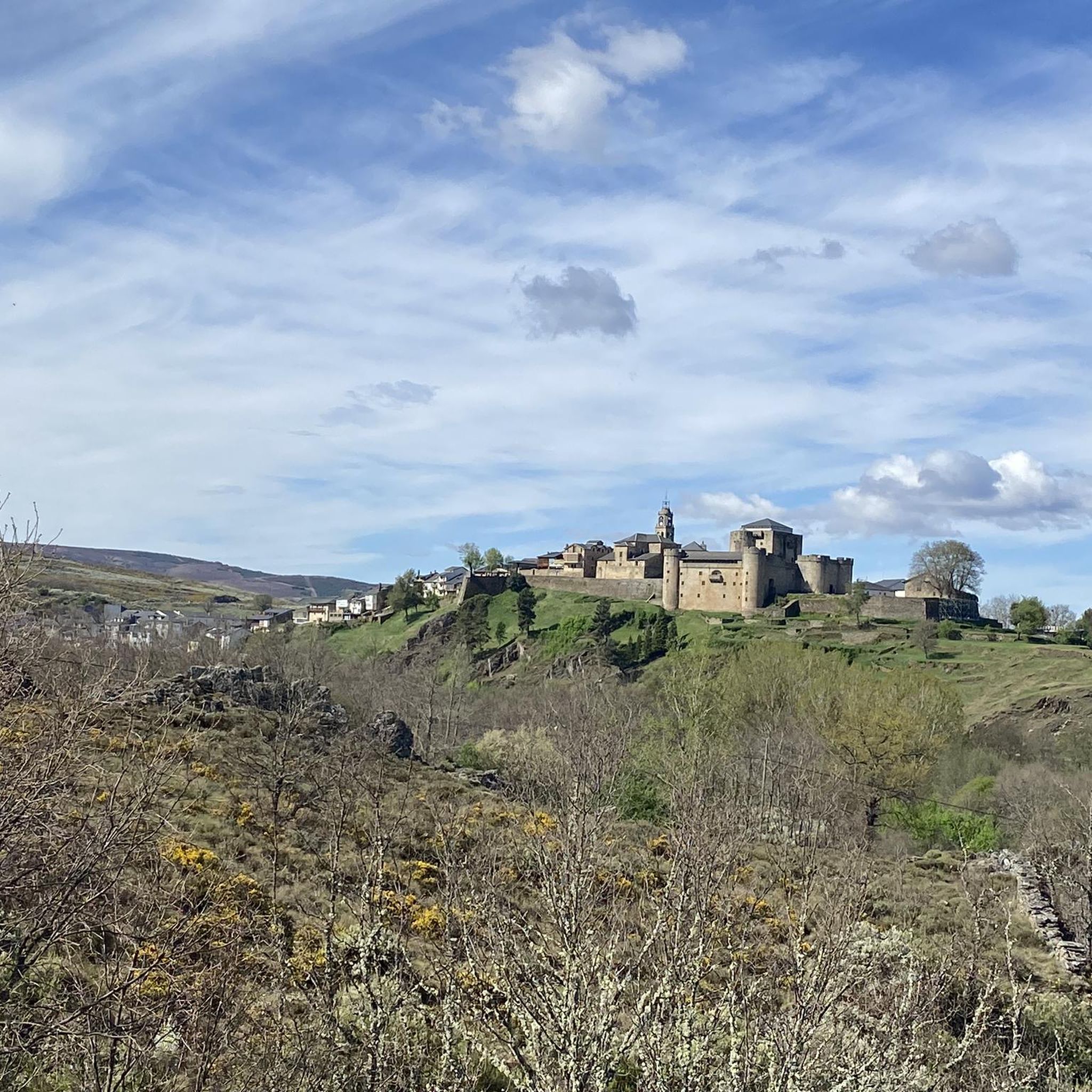
Built in the s. XV by the Pimentel family after taking control of the region, the fortress would witness the wars with Portugal in the s. XVIII and the War of Independence, when Portuguese soldiers would face the Serrar Division of the French army.
0
0

Imposing castle from the 15th century, a military fortress that was destroyed in the late 18th century and early 19th century during the War of Independence with Portugal and France. It suffered abandonment until the end of the 20th century, when the library, the Exhibition Hall and the Assembly Hall were installed. It currently houses the Visitor Center and the Municipal Tourism Office.
4
0

Built in the mid-15th century by Don Rodrigo Alonso de Pimentel and Doña María Pacheco (IV Counts of Benavente), it occupies a privileged position on a promontory. Rocky city plan protected by three river channels. It is a castle-fortress built in granite ashlar with a quadrangular walled enclosure and a central tower, the Torre del Homenaje or as it is popularly known “El Macho”.
5
1

Striking border town, half in Spain called Riohonor and half in Portugal, Río de Onor. At the exit on the Portuguese side there is a campsite with a bar
3
0

Manzanal de Arriba is a beautiful town of houses and traditional slate streets that has all the ideal tourist services for a stop along the way.
0
0
Frequently Asked Questions
How many road cycling routes are available around Asturianos?
Asturianos offers a selection of 11 road cycling routes, catering primarily to moderate and difficult skill levels. These routes traverse a rugged terrain characterized by mountains, verdant valleys, and significant elevation changes, providing diverse riding experiences.
What kind of terrain and elevation can I expect on road cycling routes in Asturianos?
Road cycling in Asturianos is defined by its challenging mountain passes, river valleys, and high points. Routes often feature substantial elevation gains; for example, the Palacios de Sanabria – tour around Eriá river and Truchas – Alto Peñón route includes over 1,500 meters of ascent. The region's diverse geography, from the Picos de Europa to the Cantabrian coastline, ensures varied and engaging landscapes for cyclists.
Are there any easy or beginner-friendly road cycling routes in Asturianos?
The road cycling routes around Asturianos are generally geared towards moderate to difficult skill levels, with no routes specifically classified as easy in the current selection. Cyclists should be prepared for challenging terrain and significant elevation changes, even on moderate paths like the Old Town of Puebla de Sanabria – Hermitage of the Incarnation loop from Mombuey, which still features over 650 meters of ascent.
What are some of the most challenging road cycling routes in the Asturianos area?
For experienced cyclists seeking a challenge, routes like the Palacios de Sanabria – tour around Eriá river and Truchas – Alto Peñón stand out, covering over 106 km with more than 1,500 meters of elevation gain. Another demanding option is the Embalse de Cernadilla y Sierra de la Culebra — circular por Puebla de Sanabria, a 79.5 km path with over 1,200 meters of climbing, traversing a mountain range and reservoir.
Can I find circular road cycling routes around Asturianos?
Yes, several routes in the Asturianos area are circular, offering convenient starting and ending points. A notable example is the Hermitage of the Incarnation – Rio de Onor Village loop from Cernadilla, which is a 107.5 km loop that takes approximately 5 hours and 9 minutes to complete, guiding you through cultural points and village scenery.
What attractions or landmarks can I see along the road cycling routes?
Many routes offer opportunities to explore cultural and natural landmarks. You might pass by historic sites like the Hermitage of the Incarnation or the charming Old Town of Puebla de Sanabria. The region is also rich in natural beauty, with routes traversing river valleys, reservoirs, and offering scenic viewpoints, reflecting Asturias's designation as a 'natural paradise'.
What do other road cyclists enjoy most about cycling in Asturianos?
The area is highly rated by the komoot community, with an average score of 5.0 stars from reviews. Cyclists often praise the varied terrain, the challenge of the mountain passes, and the stunning natural landscapes, which include lush forests, dramatic coastlines, and picturesque valleys. The region's extensive network of roads provides a diverse and engaging environment for exploration.
What is the best time of year for road cycling in Asturianos?
Asturias, with its diverse climate, offers good cycling conditions for much of the year. The region is known for its lush greenery, suggesting a climate that avoids extreme dryness. Generally, spring and autumn provide pleasant temperatures and vibrant scenery, ideal for tackling the challenging climbs and enjoying the coastal or inland routes. Summer can also be excellent, especially in the mountains, though coastal areas might be busier.
Are there any routes that pass through villages or cultural points?
Yes, some routes are designed to take you through charming villages and past cultural landmarks. The Hermitage of the Incarnation – Rio de Onor Village loop from Cernadilla is a prime example, leading cyclists through village scenery and past significant cultural points, allowing for a blend of physical activity and cultural immersion.
How long do road cycling routes in Asturianos typically take to complete?
The duration of routes varies significantly based on distance and difficulty. For instance, the challenging Palacios de Sanabria – tour around Eriá river and Truchas – Alto Peñón, at over 106 km, typically takes around 5 hours and 13 minutes. Shorter, moderate routes like the Codesal – Manzanal de Arriba loop from Manzanal de Arriba, which is about 77 km, can be completed in approximately 3 hours and 30 minutes.
Are there any specific natural features or viewpoints highlighted on the routes?
Asturias is renowned for its stunning natural beauty, and many routes offer breathtaking views. While specific viewpoints are not always named in every route description, the region itself boasts dramatic landscapes including the Picos de Europa National Park, glacial lakes like those at Covadonga, and a rugged coastline. Routes often traverse river valleys and mountain ranges, providing ample opportunities for scenic vistas and encounters with the region's lush, green environment.
Most popular attractions around Asturianos

Get inspired with the komoot mobile app


Explore more
Browse the best Road cycling routes in other regions.
