The best road cycling routes around Parco dei Colli di Bergamo
4.4
(1235)
42,721
riders
20
rides
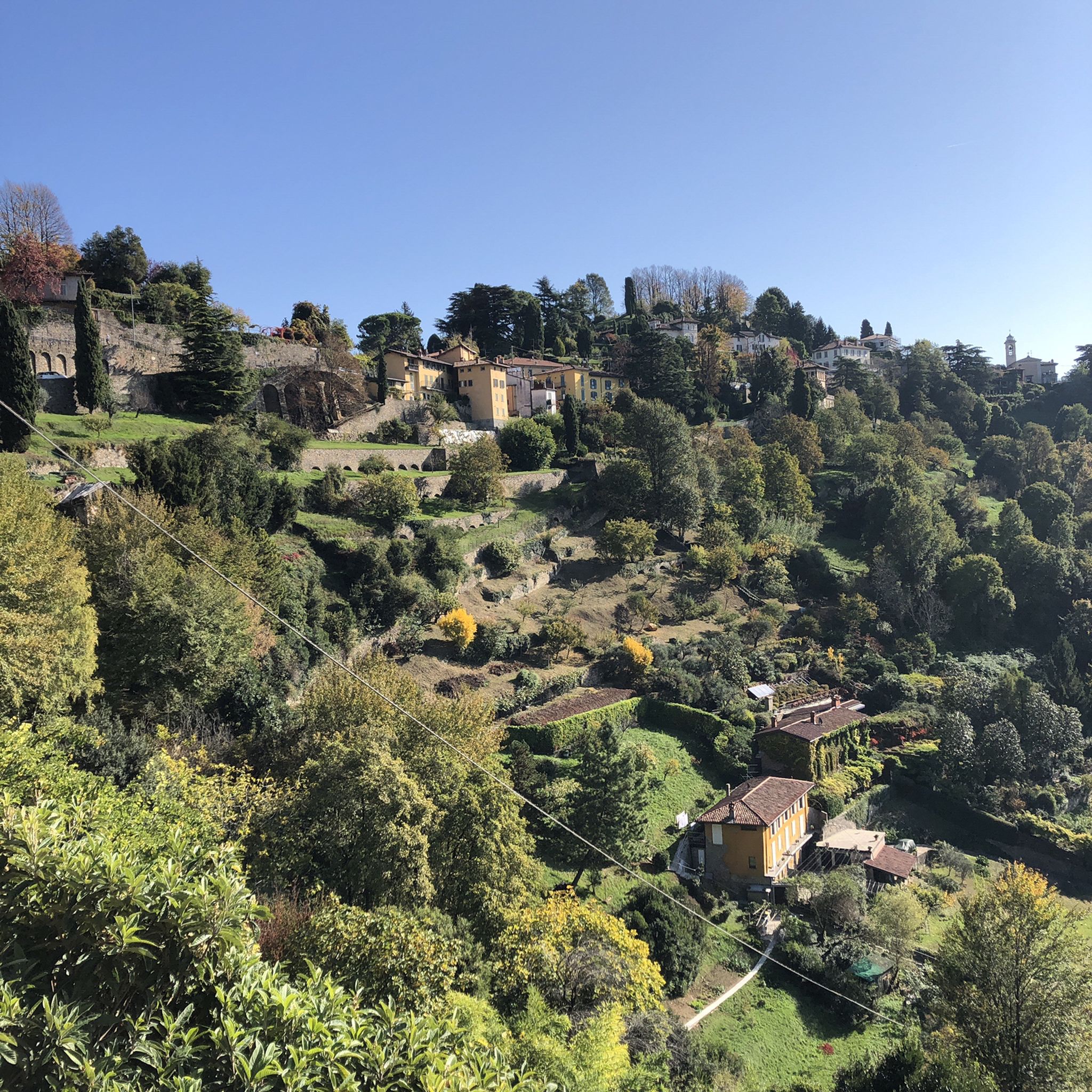
Road cycling routes around Parco dei Colli di Bergamo navigate a diverse landscape characterized by hilly terrain, dense woodlands, and terraced vineyards. This "green lung" of Bergamo features varied topography, with elevations ranging from 244 meters to over 1,100 meters, offering both challenging climbs and scenic valley rides. The park's network of paths winds through ancient farmhouses and offers panoramic views of the walled city and surrounding valleys.
Best road cycling routes around Parco dei Colli di Bergamo
- The most popular road cycling route is View of the Bergamo Hills – Bedulita Climb loop from San Vigilio, a 42.9 miles (69.0 km) trail that takes 3 hours 56 minutes to complete, featuring significant elevation changes through the Bergamo Hills.
- Another top favourite among local road cyclists is Colle dei Pasta – View of the Bergamo Vineyards loop from Colle Aperto, a moderate 28.9 miles (46.5 km) path. This route offers views of the Bergamo vineyards and surrounding valleys.
- Local road cyclists also love the View of the Bergamo Hills – Sarnico Lakeside Promenade loop from San Vigilio, a 67.7 miles (108.9 km) trail leading through the Bergamo Hills and towards the Sarnico Lakeside Promenade, often completed in about 4 hours 56 minutes.
- Road cycling around Parco dei Colli di Bergamo is defined by hilly terrain, ancient farmhouses, and terraced vineyards. The network offers options for various ability levels, from moderate loops to difficult climbs.
- The routes in Parco dei Colli di Bergamo are highly rated by the komoot community with an average score of 4.6 stars from over 37 reviews. More than 2,800 road cyclists have used komoot to explore Parco dei Colli di Bergamo's varied terrain.
Last updated: August 5, 2026
5.0
(7)
427
riders
46.4km
02:08
550m
550m
Moderate road ride. Good fitness required. Mostly well-paved surfaces and easy to ride.
5.0
(6)
400
riders
69.0km
03:56
1,540m
1,540m
Hard road ride. Very good fitness required. Mostly well-paved surfaces and easy to ride.

Sign up for free
5.0
(2)
262
riders
85.3km
04:30
1,510m
1,510m
Hard road ride. Very good fitness required. Mostly well-paved surfaces and easy to ride.
4.0
(1)
212
riders
109km
04:57
1,110m
1,110m
Hard road ride. Very good fitness required. Mostly well-paved surfaces and easy to ride.
4.1
(8)
221
riders
56.3km
03:06
1,110m
1,110m
Hard road ride. Very good fitness required. Mostly well-paved surfaces and easy to ride.
Get access to more routes and recommendations from other explorers.
Sign up for free
Already have an account?
Our route recommendations are based on thousands of hikes, rides, and runs completed by other people on komoot.
Start today with a free account
Your next adventure awaits.
Login or Signup
Popular around Parco dei Colli di Bergamo

Other adventures around Parco dei Colli di Bergamo

Tips from the Community

The Città Alta is the historic and medieval heart of Bergamo, a jewel perched on a hill and entirely enclosed by the majestic Venetian Walls, declared a UNESCO World Heritage site. Unlike the modern Città Bassa located on the plain, the upper part retains the intact charm of its cobbled streets, period buildings, and historic squares.
0
0

Small climb with two beautiful switchbacks leading up to the Madonna del Bosco.
0
0

The Colle dei Pasta from Torre de' Roveri is one of the most classic and scenic cycling climbs and hiking routes in the Bergamasca area. The side that starts from Torre de' Roveri (Pittarello locality) is considered the most spectacular because it climbs through vineyards where the prized local wine is produced. Length: 2.7 kilometers Positive elevation gain: 162 meters Average gradient: 6% Maximum altitude: 416 meters a.s.l. The route develops on asphalt through 7 hairpin bends. The main roads involved are Via Papa Giovanni XXIII, Via Don Stefano Mangili, Via Colle dei Pasta and Via Collina Alta
0
0
The climb to Passo del Colle Gallo (763 m above sea level) and its Sanctuary of the Madonna dei Ciclisti (officially Madonna della Neve) is one of the historic and most beloved ascents in Bergamo cycling. Located in the province of Bergamo, this pass connects the Val Seriana (from Albino/Gramelduro) with the Val Cavallina (from Casazza).
0
0

Road always beautiful and not very busy!
0
0

the stream that runs alongside a large part of the state road
2
0

Connecting pass between Valseriana and Valcavallina. The climb from Casazza is a classic of the Lombardy climbs. Route also taken by some stages of the Giro d'Italia and the Giro di Lombardia. At the pass is the Sanctuary of the Madonna del Ciclista (with an adjacent small cycling museum), once called Madonna della Neve.
12
0
Originally, the current Sanctuary dedicated to the "Madonna dei ciclisti" (Our Lady of Cyclists) was called "Madonna della Neve" (Our Lady of the Snow). Being a classic uphill route, also for some stages of the Giro d'Italia and Giro di Lombardia (in addition to many other minor races), it was later named so towards the end of the last century, considering that a small cycling museum was also created next to the church. To which, well-known cycling professionals donated their memorabilia.
12
0
Frequently Asked Questions
What kind of terrain can I expect when road cycling in Parco dei Colli di Bergamo?
Parco dei Colli di Bergamo offers a diverse and hilly landscape, with elevations ranging from 244 meters to over 1,100 meters. You'll encounter routes winding through dense woodlands, terraced vineyards, and ancient farmhouses, providing varied challenges and scenic views. While Bergamo Alta features challenging cobblestone, many dedicated cycle-pedestrian sections offer smoother rides.
Are there road cycling routes suitable for beginners or families in Parco dei Colli di Bergamo?
Yes, the park offers routes suitable for various skill levels. For easier rides, dedicated cycle-pedestrian paths are available, such as a roughly 6 km section between Via Castagneta and Paladina, or an 8 km out-and-back route from Ciclostazione dei Colli. The Morla Greenway also provides a relaxed ride through urban and agricultural areas, ideal for families.
What are some of the more challenging road cycling routes in the area?
For experienced cyclists seeking a challenge, routes like the View of the Bergamo Hills – Bedulita Climb loop from San Vigilio offer significant elevation changes over 69 km. Another demanding option is the Colli di San Fermo – Passo del Colle Gallo loop from Bergamo Bassa, which covers nearly 85 km with substantial climbs.
What scenic viewpoints or landmarks can I see along the road cycling routes?
Road cycling routes in Parco dei Colli di Bergamo offer numerous scenic views. You can enjoy panoramic vistas of the walled city of Bergamo Alta and the surrounding valleys. Notable landmarks include the historic San Vigilio Castle, the ancient La Rocca - The Rock, and the Canto Alto Summit, which is the highest peak in the park offering expansive views.
Are there any cultural or historical sites accessible by road bike?
Absolutely. The park is rich in cultural and historical sites. The famed Road of the Benedictine Monasteries in the western part of the park allows cyclists to explore significant monasteries in the Astino and Valmarina valleys, including the popular Astino Monastery. The historic Streets of Bergamo's Città Alta, with its architectural and monumental value, is also integrated within the park.
What is the best time of year for road cycling in Parco dei Colli di Bergamo?
The park's diverse ecosystems and varied terrain make it enjoyable across seasons. Spring and autumn generally offer pleasant temperatures for cycling, with vibrant foliage or blooming landscapes. Summer can also be excellent, especially for routes that provide shade through woodlands or lead to higher elevations for cooler air.
Are there circular road cycling routes available?
Yes, many of the road cycling routes in Parco dei Colli di Bergamo are designed as loops, allowing you to start and end at the same point. Examples include the Colle dei Pasta – View of the Bergamo Vineyards loop from Colle Aperto and the View of the Bergamo Hills – Sarnico Lakeside Promenade loop from San Vigilio, offering diverse scenic experiences.
How long do the road cycling routes typically take to complete?
The duration of routes varies significantly based on distance and difficulty. Shorter, moderate loops like the Colle dei Pasta – View of the Bergamo Vineyards loop (46.5 km) can take around 2 hours 10 minutes. Longer, more difficult routes, such as the View of the Bergamo Hills – Bedulita Climb loop (69 km), may require closer to 4 hours.
What do other road cyclists enjoy most about cycling in Parco dei Colli di Bergamo?
The area is highly rated by the komoot community, with an average score of 4.6 stars from over 37 reviews. Road cyclists often praise the diverse terrain, the stunning panoramic views of Bergamo Alta, and the blend of natural beauty with historical sites. The variety of routes catering to different skill levels is also frequently highlighted.
Are there places to stop for refreshments or accommodation along the routes?
Given the park's proximity to Bergamo and its integration with urban and rural areas, you'll find various options for cafes, pubs, and accommodation. Many routes pass through or near villages and towns where you can refuel. The historic center of Bergamo Alta, for instance, offers numerous establishments.
What are the general rules for cycling in Parco dei Colli di Bergamo?
While specific permits are not generally required for cycling on public roads and designated cycle paths, it's always advisable to respect local regulations. Stay on marked trails, be mindful of pedestrians, and ensure you have appropriate safety gear. Some areas, particularly within the historic center of Bergamo Alta, might have restrictions or be better suited for walking due to cobblestones and narrow passages.
Most popular routes around Parco dei Colli di Bergamo
Most popular attractions around Parco dei Colli di Bergamo

Get inspired with the komoot mobile app


Explore more
Browse the best Road cycling routes in other regions.
