The best road cycling routes around Tosos
4.2
(6)
628
riders
30
rides
Road cycling routes around Tosos feature a landscape characterized by varied topography, including significant ascents and descents. The region offers challenging road cycling opportunities with routes often traversing rolling hills and elevated areas like Alto de Codos. These routes provide long distance road cycling options, making Tosos a destination for cyclists seeking demanding terrain.
Best road cycling routes around Tosos
- The most popular road cycling route is Alto de Codos Loop from Cariñena, a 58.7 miles (94.5 km) trail…
Last updated: October 5, 2026
15
riders
94.5km
04:55
1,630m
1,630m
Hard road ride. Very good fitness required. Mostly well-paved surfaces and easy to ride.
4.0
(1)
76
riders
81.0km
04:17
1,010m
1,010m
Hard road ride. Very good fitness required. Some segments of this route may be unpaved and difficult to ride.

4.0
(1)
86
riders
66.5km
03:28
1,050m
1,050m
Hard road ride. Very good fitness required. Mostly well-paved surfaces and easy to ride.
4.0
(1)
53
riders
90.5km
05:00
1,640m
1,640m
Hard road ride. Very good fitness required. Some segments of this route may be unpaved and difficult to ride.
5.0
(1)
52
riders
80.1km
03:54
1,100m
1,100m
Hard road ride. Very good fitness required. Some segments of this route may be unpaved and difficult to ride.
Get access to more routes and recommendations from other explorers.
Already have an account?
Our route recommendations are based on thousands of hikes, rides, and runs completed by other people on komoot.
Start today with a free account
Your next adventure awaits.

Tips from the Community

Since December 14, 2001, the Mudejar tower of Longares has been a UNESCO World Heritage Site. Declared a Historic-Artistic Monument in 1967, it was built on the site of a 12th-century Romanesque building. It is one of the most beautiful towers constructed in Aragon in the 16th century and also one of the few to have received artistic study and recognition. Facing east, the exterior features a square Mudejar tower that could date back to around 1390. It consists of three sections with six levels. The lower section, like the second, is unadorned, but with the difference that it housed the clock, whose machinery is kept in the Chapel of San Pedro. The upper section is framed with four octagonal arches combined with cartouches and porcelain and glass inlays. To the right and left of the tower are the only two entrance doors: one simple with a semicircular arch, and sheltered by a small atrium with a Baroque doorway at the rear, the other larger. The latter has a grille installed in the 18th century to prevent animals and other livestock from entering. The façade features Aragonese arcades. The church is elegant and very similar to the Lonja de Zaragoza and the Cathedral of La Seo. It belongs to the "Hallenckirchen" typology, which is the same as saying a hall-style church. It is built on ringed columns and decorated with a Renaissance theme. The columns supporting the arches are made of stone, with elongated shafts and Ionic capitals. The vaults are adorned with ribbed vaulting and studded with rosettes at the crosses, the altar ones being gilded. The church's construction was completed in three phases: first the central nave, and then the Epistle and Gospel aisles. The church always welcomed Christians and was never used for Muslim rites or masses.
0
0

Stroll and enjoy the scenery
0
0

The Hermitage of the Virgin of the Eagle in Cerveruela, Zaragoza, is a small sanctuary located in a picturesque natural setting, ideal for activities such as hiking and road cycling. It is located in the Campo de Daroca region, within the Zaragoza Iberian System Natural Park, which gives it remarkable scenic and ecological value.
2
0

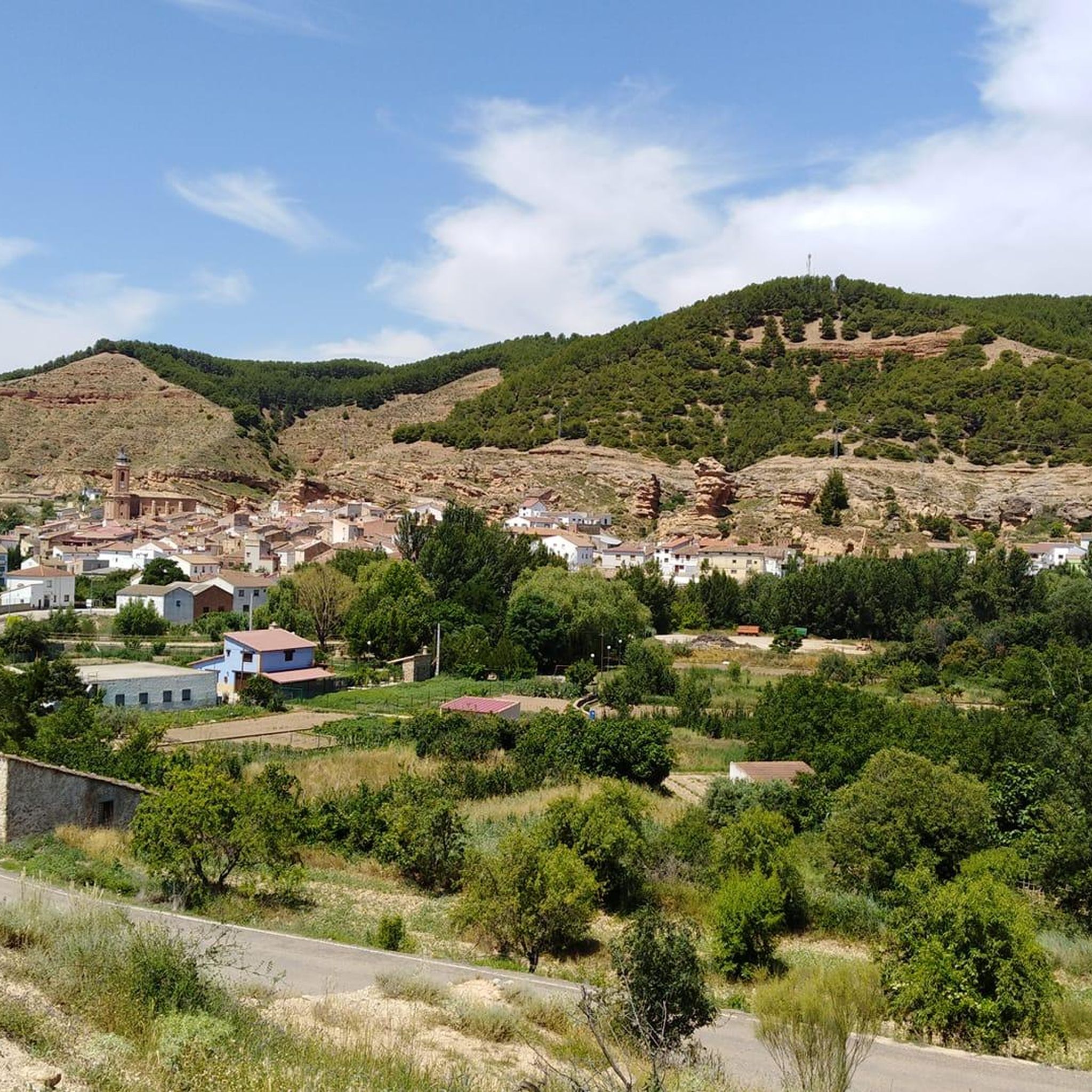
The town of Codos is located on the banks of the Grío River, nestled in a primarily agricultural landscape where cherry and peach orchards predominate. In the center of town there is a bar.
1
0
The town of Santa Cruz de Grío is located between the Vicort mountain range and the Grío river valley. Surrounded by forest masses and fields of almond, cherry and olive trees, Santa Cruz de Grío offers a quiet rural image. In season, the town's municipal swimming pool becomes the ideal place to cool off and have a bite to eat.
1
0
Tobed is a small town located in the Aragonese region of the Community of Catalayud. At the top of one of the hills that surround the town, there are the remains of a medieval fortress. In the urban area, the church of Santa María stands out, in the Gothic-Mudejar style.
1
0
The Capurnos Bridge was built in the 17th century in order to join the towns of Morata de Jalón and Chodes by crossing the waters of the Jalón River.
1
0

Sanctuary to which pilgrimages are made from the various surrounding towns.
0
0
Frequently Asked Questions
Are there road cycling routes suitable for beginners in Tosos?
Yes, while many routes in Tosos are geared towards experienced cyclists due to the challenging terrain, there are approximately 4 easy road cycling routes available. These routes offer a gentler introduction to the region's varied topography.
What kind of challenge can I expect on road cycling routes around Tosos?
Road cycling in Tosos is characterized by significant ascents and descents, often traversing rolling hills and elevated areas like Alto de Codos. The region offers demanding terrain, with 19 routes classified as difficult, providing a substantial challenge for experienced riders.
Are there options for long-distance road cycling in the Tosos area?
Yes, Tosos is well-suited for long-distance road cycling. Many routes cover substantial distances, such as the Alto de Codos Loop from Cariñena, which is nearly 59 miles (95 km) long, and the Alto de Codos – ⭐️ Puerta de Terrer loop from Cariñena, extending over 84 miles (136 km).
Can I find circular road bike routes around Tosos?
Absolutely. Many of the road cycling routes in Tosos are designed as loops, allowing you to start and finish in the same location. Examples include the popular Alto de Codos Loop from Cariñena and the Longares Mudejar Tower – Alto de Codos loop from Longares.
How many road cycling routes are available in Tosos?
There are over 30 road cycling routes available around Tosos, catering to various skill levels. This includes 4 easy, 7 moderate, and 19 difficult routes, ensuring a diverse range of options for cyclists.
What scenic viewpoints or landmarks can I discover along the road cycling routes in Tosos?
The routes around Tosos often pass by notable landmarks and offer scenic views. You can explore cultural sites like the Hermitage of the Virgin of the Eagle, the Longares Mudejar Tower, or the Sanctuary of the Virgin of Herrera. The Alto de Codos – Hermitage of the Virgin of the Eagle loop from Cariñena is a great option for combining cycling with sightseeing.
When is the best time of year to go road cycling in Tosos?
The best time for road cycling in Tosos is typically during the spring and autumn months when temperatures are milder. Summers can be quite warm, especially at lower elevations, so early morning rides are recommended if cycling during July and August. Winters can bring colder temperatures, particularly in the elevated areas.
What do other road cyclists enjoy the most about road cycling in Tosos?
The road cycling routes in Tosos are highly rated by the komoot community, with an average score of 4.3 stars. Cyclists often praise the challenging ascents, varied terrain, and the opportunity for long-distance rides through the region's unique landscape.
Are there any routes that combine cultural landmarks with challenging climbs?
Yes, several routes offer a blend of cultural exploration and demanding cycling. For instance, the Longares Mudejar Tower – Alto de Codos loop from Longares combines a visit to the Mudejar Tower with significant climbs, providing both a physical and cultural experience.
What are some of the most popular road cycling routes in Tosos?
Among the most popular routes are the Alto de Codos Loop from Cariñena, known for its substantial elevation gain, and the Alto de Codos – Hermitage of the Virgin of the Eagle loop from Cariñena, which leads through elevated terrain and past scenic points.
Are there any routes that pass through the village of Herrera de los Navarros?
While specific routes passing directly through Herrera de los Navarros are not detailed, the village is a notable settlement in the area and may be accessible or visible from various routes. Cyclists exploring the broader Tosos region will find it an interesting point of reference.
What is the typical duration for a road cycling route in Tosos?
The duration varies significantly depending on the route's length and difficulty. For example, the Alto de Codos Loop from Cariñena typically takes around 4 hours and 55 minutes, while the Alto de Codos – ⭐️ Church of San Pedro loop from Cariñena can be completed in about 3 hours and 45 minutes.
Most popular attractions around Tosos

Get inspired with the komoot mobile app


Explore more
Browse the best Road cycling routes in other regions.
