Attractions and Places To See around Villanueva De Córdoba - Top 20
Best attractions and places to see around Villanueva De Córdoba include a rich blend of historical landmarks, cultural sites, and natural beauty. Located in the Los Pedroches Valley in the north of Córdoba province, the town features characteristic architecture with granite, stone, and lime, alongside white-washed walls. The region is also known for Europe's most extensive holm oak forest, the Dehesa, offering significant natural landscapes.
Best attractions and places to see around Villanueva De Córdoba
- The most popular attractions is…
Last updated: August 2, 2026
Hermitage of the Virgen de Luna
Highlight • Religious Site
Translated by Google •
Tip by

Guadalmellato Reservoir and Dam
Highlight • Lake
Translated by Google •
Tip by

Sign up now to discover places like this
Get recommendations on the best single tracks, peaks, & plenty of other exciting outdoor places.
Sign up for free
Reservoirs Route
Highlight (Segment) • Trail
Translated by Google •
Tip by
Plaza de España in Villanueva de Córdoba
Highlight • Historical Site
Translated by Google •
Tip by

Dehesa de Los Pedroches
Highlight • Forest
Translated by Google •
Tip by

Sign up for free to discover even more attractions around Villanueva De Córdoba.
Sign up for free
Already have an account?
Start today with a free account
Your next adventure awaits.
Login or Signup

Other adventures around Villanueva De Córdoba

Tips from the Community

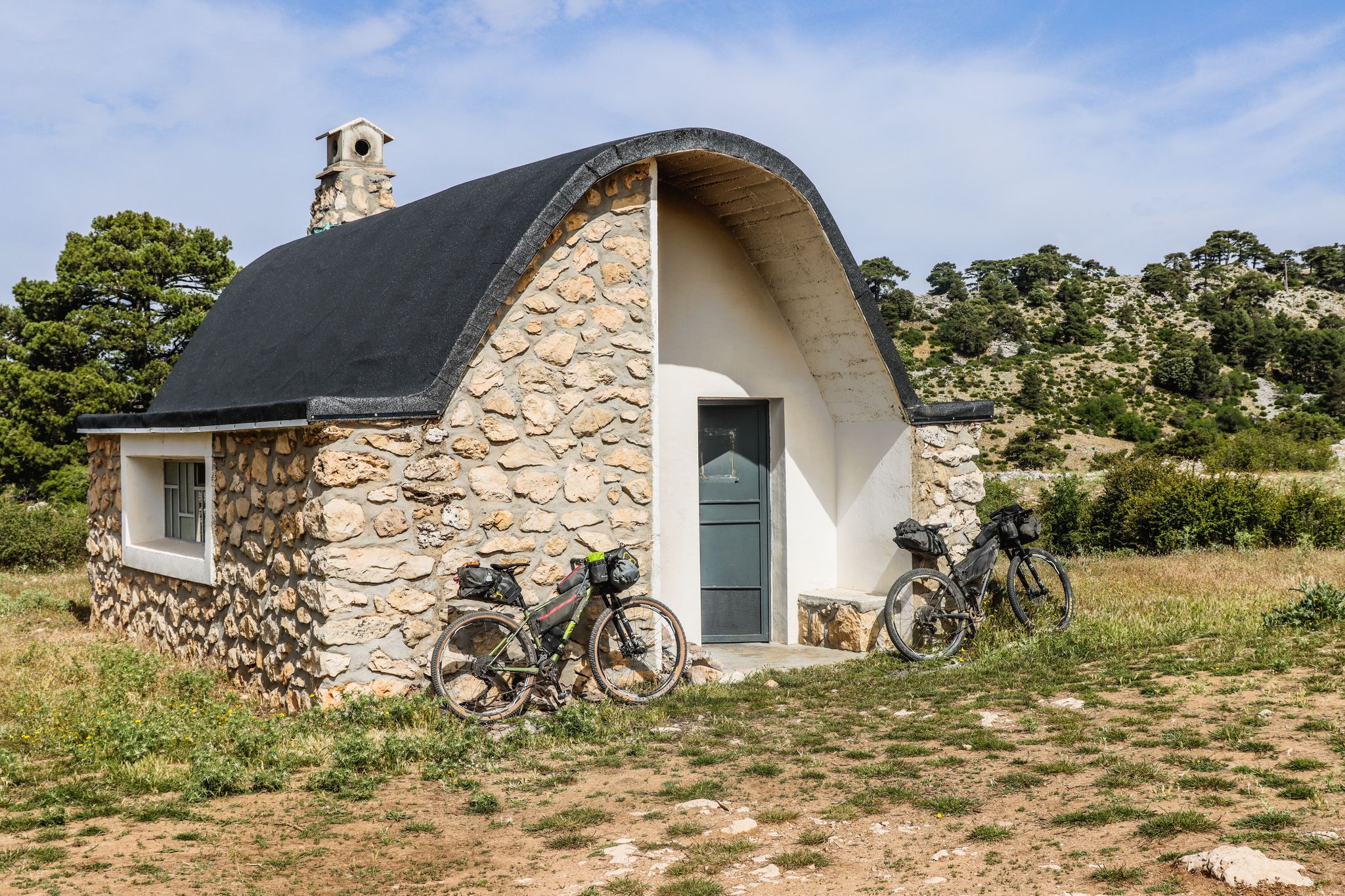
Although the exact date of its construction is unknown, tradition indicates that it was built in the mid-15th century, possibly thanks to a woman from Los Pedroches who promoted the construction of the first hermitage. According to legend, the image of the Virgin was found by a shepherd from Pedroche in a holm oak near the sanctuary at the beginning of the 15th century.
2
0
The Sanctuary of Our Lady of Luna is one of the most emblematic sites in the Los Pedroches Valley, deeply linked to the religious and cultural traditions of Pozoblanco and Villanueva de Córdoba. The sanctuary is located in the Dehesa de la Jara, in the municipality of Navarredonda, a natural holm oak grove characteristic of Los Pedroches. It is situated 15 km from Pozoblanco and 10 km from Villanueva de Córdoba.
2
0

Due to the proximity of the dam to the city of Córdoba, its main function is supply. It was built in 1911 at the source of the Guadalmellato river, which flows into the Guadalquivir after more than 110 kilometers of travel.
2
0

In the central square of the town of Villanueva de Córdoba are the anti-aircraft shelter from the Civil War (it is the best preserved in the province) and the Church of San Miguel Arcángel (from the 16th century).
2
0

The largest continuous pasture in Europe can be crossed on the Al-Ballut route. The sunrises are especially beautiful when driving in an easterly direction, between Pozoblanco and Villanueva de Córdoba. If you have the chance to go out at night from Pozoblanco, then you will probably have a beautiful sunrise before your eyes.
0
0

Beautiful and quiet place in the middle of nature, located in the middle of the Los Pedroches meadow between Pozoblanco and Villanueva de Córdoba. At night it is ideal for stargazing (declared a Starlight Reserve). The days of the Pilgrimage are perfect to enjoy with family and friends.
2
1

The Hermitage of the Virgen de Luna is one of the largest in the region. Pozoblanco and Villanueva de Córdoba share this chapel, making each of the towns a different pilgrimage on different dates. At the back of the hermitage there is a public toilet.
3
0

Beautiful environment accessible by road from Ovejo and Adamuz and by road from Alcolea.
1
0
Frequently Asked Questions
What historical sites can I explore in Villanueva de Córdoba?
Villanueva de Córdoba is rich in history. You can visit the Plaza de España, which features the well-preserved anti-aircraft shelter from the Civil War and the 16th-century Church of San Miguel Arcángel. The church itself houses an ancient Roman Trifinio marker. Other notable historical buildings include the 17th-century Old Courthouse, the 19th-century Town Hall, and the unique House of Aníbal González, designed by the prestigious Sevillian architect.
What natural landscapes are prominent in the Villanueva de Córdoba area?
The most prominent natural landscape is the Dehesa, Europe's most extensive holm oak forest. This area is vital for the region's ecology and culture, providing a habitat for Iberian pigs, cattle, and sheep. You can learn more about this unique environment at the Interpretation Center of the Dehesa. The region is also recognized as a Starlight Reserve, offering excellent conditions for stargazing.
Are there any significant religious buildings to visit?
Yes, the area has several significant religious buildings. The Hermitage of the Virgen de Luna is an emblematic site shared with Pozoblanco, located in the Dehesa de la Jara. The Church of San Miguel Arcángel, located in the Plaza de España, is the oldest church in town, dating back to the 16th century with an 18th-century bell tower. Other churches include the Church of the Dulce Nombre de Jesús, Ermita de San Sebastián, and the Church of Cristo Rey.
What outdoor activities or routes are available near these attractions?
The region around Villanueva de Córdoba offers various outdoor activities. You can explore MTB trails, cycling routes, and gravel biking routes. Popular options include loops to the Hermitage of the Virgen de Luna and routes exploring the Dehesa de Los Pedroches. The Guadalmellato Reservoir and Dam also provides a natural environment for cycling.
Are there family-friendly attractions in Villanueva de Córdoba?
Many attractions in Villanueva de Córdoba are suitable for families. The Hermitage of the Virgen de Luna and the Plaza de España are both categorized as family-friendly. The natural environment of the Dehesa and the Guadalmellato Reservoir offer pleasant settings for family outings and gentle exploration.
Where can I learn about the local history and heritage of Villanueva de Córdoba?
You can delve into the local history at the Local History Museum, situated in the old railway station. It exhibits artifacts spanning from the Paleolithic to the Visigothic periods, including funerary steles and pieces from the Minguillo. Additionally, the Plaza de España offers a glimpse into the town's past with its Civil War air-raid shelter and the ancient Roman Trifinio marker on the Church of San Miguel Arcángel.
What is the significance of the Roman Trifinio marker?
The Roman Trifinio marker, found on the facade of the Church of San Miguel Arcángel in the Plaza de España, is a large granite slab dating back to 123 AD. This ancient marker delineated the borders of three Hispano-Roman settlements: Sacili Martialum, Epora (modern-day Montoro), and Solia, providing a fascinating insight into the region's Roman past.
What is the Guadalmellato Reservoir and Dam used for?
The Guadalmellato Reservoir and Dam primarily functions as a water supply for the city of Córdoba. Built in 1911, it also offers a beautiful natural environment, particularly suitable for cycling, with the Sierra de los Puntales providing scenic routes with minimal motorized traffic.
Are there public facilities available at major attractions?
Yes, at the Hermitage of the Virgen de Luna, there is a public toilet available at the back of the hermitage, as well as a fountain with water in the surroundings.
What makes the House of Aníbal González unique?
The House of Aníbal González stands out because it breaks from the traditional local architectural style of granite and white-washed walls. Designed by the renowned Sevillian architect Aníbal González, known for Seville's Plaza de España, this building features an exposed brick facade and showcases an eclectic, modernist, and innovative style, completed in 1908.
Can I find challenging outdoor routes in the area?
Yes, the area offers challenging routes for experienced outdoor enthusiasts. For example, the Reservoirs Route is described as a hard and interesting trail for cycling and enjoying nature. Many of the cycling, MTB, and gravel biking routes listed for the region are rated as 'difficult', providing a good challenge.
What is the best time to visit Villanueva de Córdoba for outdoor activities?
While specific seasonal recommendations are not provided, the presence of the Dehesa, a natural holm oak grove, suggests that spring and autumn would offer pleasant temperatures for exploring the natural landscapes and engaging in outdoor activities like cycling and hiking, avoiding the intense heat of summer.
Most popular routes around Villanueva De Córdoba
Most popular attractions around Villanueva De Córdoba

Get inspired with the komoot mobile app


Explore more
Still not found the Highlight you’re looking for? See guides of the top attractions in other regions:
