The best road cycling routes around Santaella
4.6
(25)
1,710
riders
29
rides
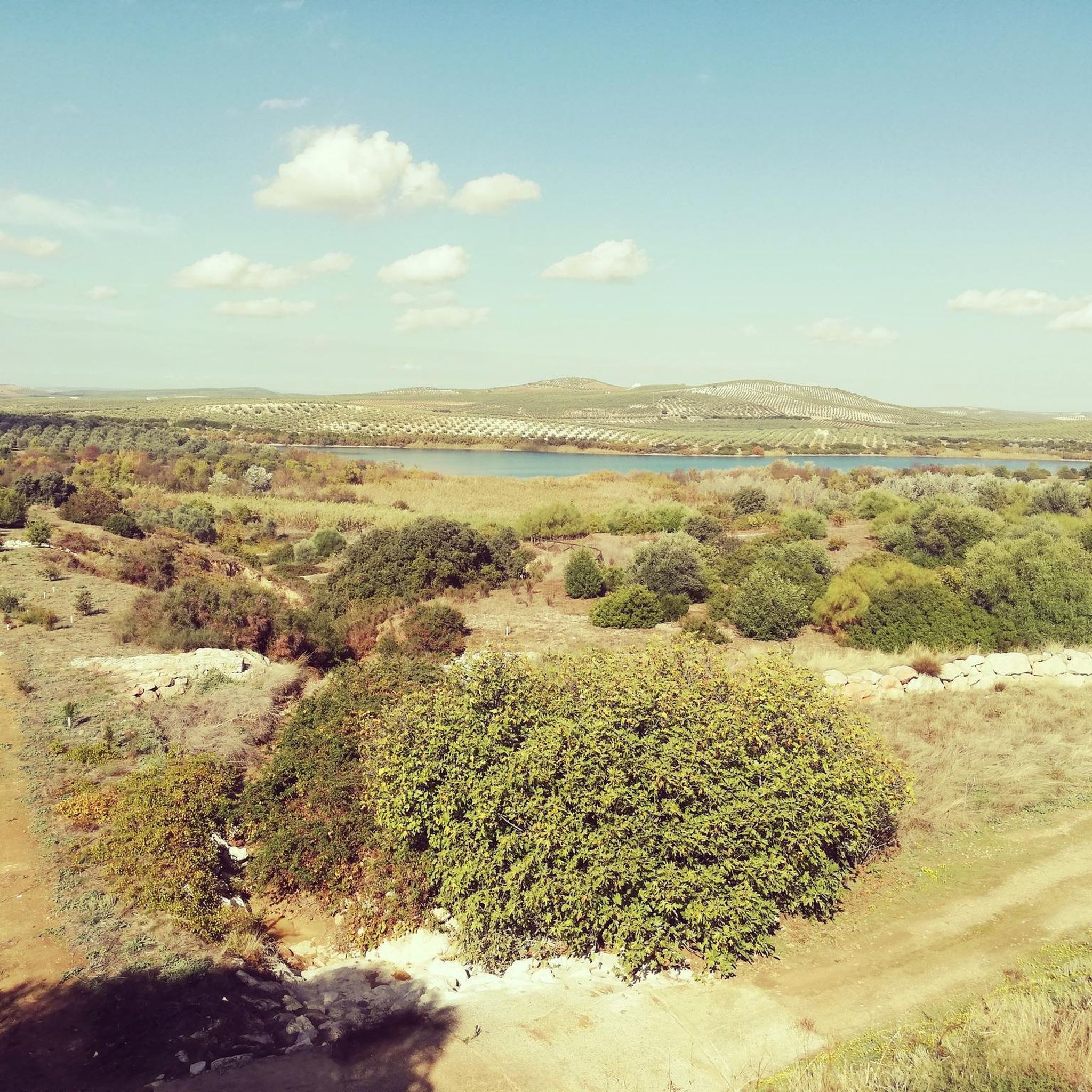
Road cycling around Santaella, located in the province of Cordoba, Spain, offers routes through an undulating terrain characterized by extensive agricultural fields and low hills. The area features cultivated farmlands, providing a mix of gentle climbs and descents suitable for road cycling. Cyclists can explore scenic countryside roads with relatively low traffic, often well-paved for good conditions. The region's landscape includes olive groves and access to wider routes like the Olive Oil Greenway.
Best road cycling routes around Santaella
- The…
Last updated: October 28, 2026
21
riders
65.5km
02:48
570m
570m
Moderate road ride. Good fitness required. Mostly well-paved surfaces and easy to ride.
28
riders
86.1km
03:59
970m
970m
Hard road ride. Very good fitness required. Some segments of this route may be unpaved and difficult to ride.

12
riders
104km
05:01
1,380m
1,380m
Hard road ride. Very good fitness required. Some segments of this route may be unpaved and difficult to ride.
11
riders
105km
04:33
860m
860m
Moderate road ride. Good fitness required. Mostly well-paved surfaces and easy to ride.
10
riders
40.9km
01:49
390m
390m
Moderate road ride. Good fitness required. Mostly well-paved surfaces and easy to ride.
Get access to more routes and recommendations from other explorers.
Already have an account?
Our route recommendations are based on thousands of hikes, rides, and runs completed by other people on komoot.
Start today with a free account
Your next adventure awaits.


Other adventures around Santaella

Tips from the Community

Opening Hours Weekdays: 10:00 AM - 1:00 PM Weekends: 10:00 AM - 11:30 AM
0
0

small community at an altitude of approximately 330 metres
14
0

Aguilar de la Frontera [2] is a Spanish municipality in the southwest of the province of Córdoba, in the autonomous community of Andalusia. The municipality is located in the region of Campiña Sur Cordobesa [3] and is the seat of the judicial district of the same name. [4] It lies at an altitude of 280 m above sea level [5] and about 47 km from the provincial capital, Córdoba. [6] In 2017, it had 13,476 inhabitants and a population density of 82.01 inhabitants/km². [7]
0
0
Sebastian, and Easter eggs. It's safe to say that San Sebastián's colonial and "German" roots are still very present among its residents today, and they are often proud of them, so much so that even the local first name is "Sebastianenses" or "Alemanes." But... what about the language? Why has nothing of the language of these settlers survived to this day? The majority of the population was, of course, German, since the French settlers also came from German-speaking areas. It is believed that the first settlers and their children spoke exclusively German. However, when they came into contact with the locals, they had to learn Spanish. Therefore, it is quite possible that for several decades they spoke German among themselves, especially at home, and Spanish on the street or at work. Certainly, there were German expressions used when speaking Spanish, or words from both languages were mixed when speaking (as happens today in Gibraltar, where they speak the famous "Spanglish," a mixture of English and Spanish). Over the years and across generations, the German language fell into disuse until, almost 250 years later, it reached what it is today. It is striking that (at least as far as I know) there is not a single vernacular word or expression in German or of German origin. Proof that German expressions continued to exist in everyday life even when the Sebastianians spoke Spanish was provided to me by a good friend from the city named Sebastian. This man, about 55 years old, remembers how, when he was very young, his grandmother, who was already very old, fed the chickens instead of calling them with a voice of "PITAS, PITAS, PITAS!" He called them in German: KOMM, KOMM, KOMM! (come, come, come).
0
0

The Benamejí Palace: model of civil baroque in Andalusia. The Benamejí Palace, which houses the museum, is a monument declared a "cultural asset". Built in the first half of the 20th century. XVIII, it is one of the most important examples of civil baroque in Andalusia.
4
0
The old parish church of Santa María belonged to the Gothic-Mudejar type of church. It seems that it was built by D. Pedro Fernández Gragera, a knight in the service of San Fernando in the reconquest of Écija. According to sources, it was completed in 1262. The structure was designed with three naves and a polygonal head, later two side naves were added, so its plan was irregular, with a tower, a patio with orange trees and a cemetery. The building was extensively renovated in the 16th and 17th centuries, with the church being demolished and rebuilt in 1758.
4
0
The Peñaflor Palace, one of the most important sights in Écija Even from the outside, it is one of the most iconic images of the city.
5
0

The tower's origins date back to the 15th century, when it was built on an ancient Arab tower. Due to lightning damage in 1892, it was partially demolished, and the first part of the old Mudejar tower remains today as a bell tower.
3
0
Frequently Asked Questions
How many road cycling routes are available around Santaella?
There are over 20 road cycling routes around Santaella, offering a variety of experiences. These include routes ranging from easy to difficult, catering to different skill levels.
What kind of terrain can I expect when road cycling around Santaella?
Road cycling around Santaella primarily features an undulating landscape of extensive agricultural fields, particularly cereals and herbaceous crops. You'll encounter a mix of gentle climbs and descents, with well-paved, scenic countryside roads that generally have low traffic, providing a peaceful cycling experience.
What is the best time of year for road cycling in Santaella?
The region enjoys a warm climate, making spring and autumn particularly recommended seasons for road cycling. During these times, temperatures are mild, and you can enjoy the vibrant display of wildflowers across the fields.
Are there routes suitable for beginners or families?
Yes, Santaella offers routes suitable for various abilities. While most routes are moderate, there is at least one easy route available, making it possible for beginners or families to enjoy the scenic countryside. The undulating terrain generally provides a manageable challenge.
Are there challenging road cycling routes for experienced riders?
Absolutely. For experienced riders seeking a challenge, Santaella offers several difficult routes. An example is the Plaza de San José – Ducal Palace of Fernán Núñez loop from Santaella, a 87.0 km trail with significant elevation gain, often completed in around 4 hours.
Can I find circular road cycling routes in Santaella?
Yes, many of the road cycling routes around Santaella are designed as loops. For instance, the popular Santaella Historic Center – Plaza de San José loop from Santaella is a moderate 74.5 km path that takes you through the historic center and surrounding agricultural areas.
What historical or cultural attractions can I explore near the cycling routes?
Santaella and its surroundings are rich in history. You can visit the impressive Ducal Palace of Fernán Núñez, or explore the Church of the Immaculate Conception (Puente Genil). The town of Santaella itself features the Renaissance-era Church of Nuestra Señora de la Asunción and a Medieval Castle, both offering insights into the local heritage.
Are there any routes that pass through olive groves or natural parks?
While the immediate area is characterized by agricultural fields, Santaella is within reach of iconic routes like the Olive Oil Greenway (Vía Verde del Aceite). This route takes cyclists through extensive olive groves and the picturesque landscapes of the Sierras Subbeticas Natural Park, offering a unique blend of nature and heritage.
What do other cyclists say about road cycling in Santaella?
The road cycling routes in Santaella are highly rated by the komoot community, with an average score of 5.0 stars from over 20 reviews. Cyclists often praise the varied terrain, the peaceful countryside roads, and the opportunity to explore both the historic center and the surrounding agricultural areas.
Are there any specific local routes that offer a unique experience?
Beyond the main routes, the Santaella Town Hall promotes various themed routes, such as a heritage route, a route of the fountains, and a route of farmhouses and haciendas. These paths offer scenic views and provide unique insights into the local culture and history, often suitable for cycling.
What are the typical weather conditions for road cycling in Santaella?
Santaella generally experiences a warm climate. While spring and autumn offer mild and ideal conditions, summers can be hot. Winters are typically mild, allowing for year-round cycling, though cooler temperatures and occasional rain should be expected.
Where can I find parking for road biking in Santaella?
As a charming town, Santaella typically offers public parking options within or on the outskirts of the urban center. It's advisable to look for designated parking areas near the town's main squares or public facilities before starting your ride.
Most popular attractions around Santaella

Get inspired with the komoot mobile app


Explore more
Browse the best Road cycling routes in other regions.
