The best cycling routes around National Park Montes de Málaga
4.7
(10)
625
riders
24
rides
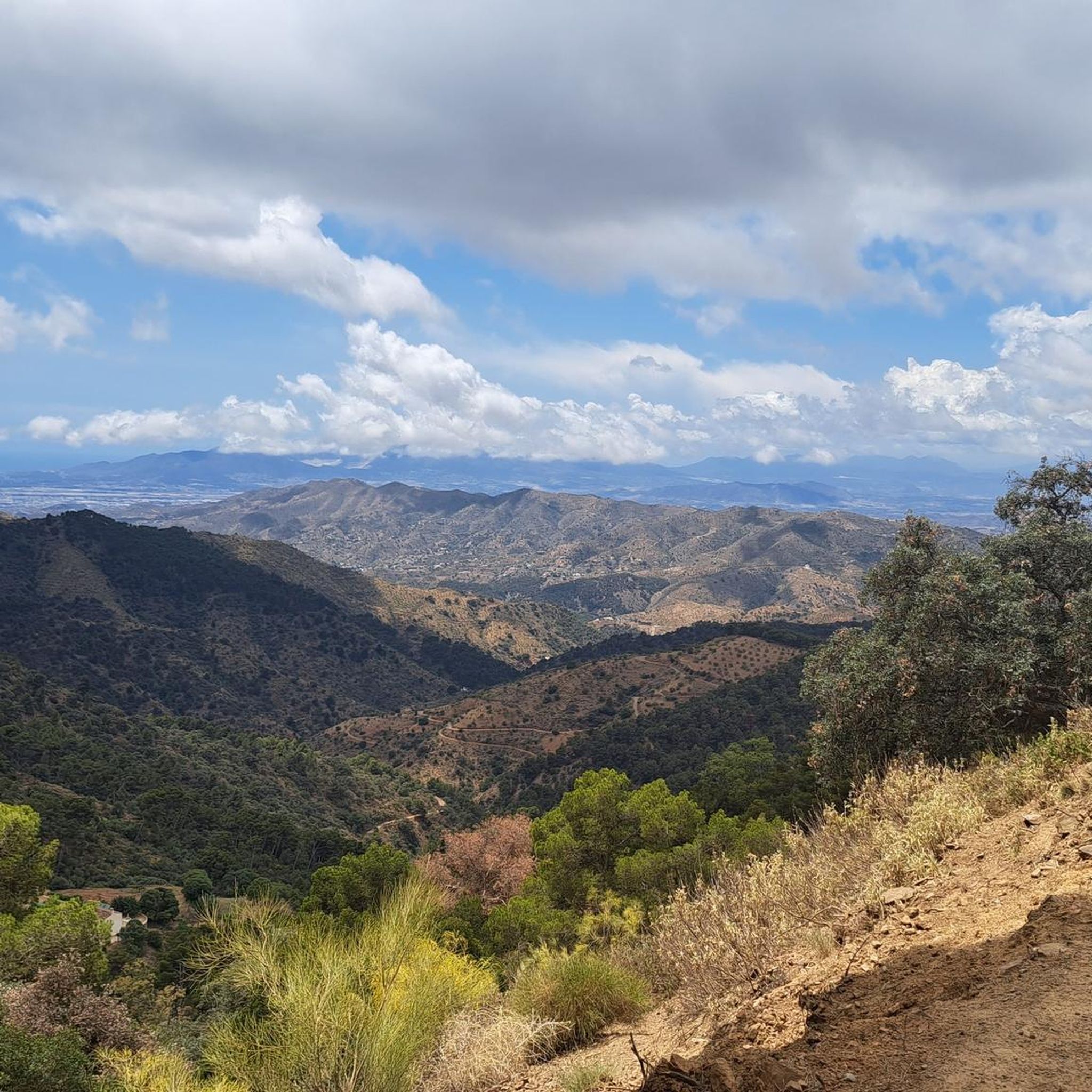
Touring cycling around National Park Montes de Málaga features a landscape characterized by rolling hills, dense pine forests, and deep valleys. The region's terrain includes significant elevation changes, offering challenging ascents and rewarding descents. This natural park provides routes through a Mediterranean ecosystem, with views extending towards the coast and surrounding mountain ranges.
Best touring cycling routes around National Park Montes de Málaga
- The most popular touring cycling route is La Zambrana Campsite – Restaurante Asador Colmenar loop from Colmenar, a 26.6 miles (42.8 km) trail that takes 4 hours 10 minutes to complete. This difficult route offers a substantial workout through the park's varied terrain.
- Another top favourite among local touring cyclists is View of Málaga Bay – View of the Mountains loop from Colmenar, a difficult 25.9 miles (41.7 km) path. This route provides extensive views of Málaga Bay and the surrounding mountains.
- Local touring cyclists also love the Hotel Balcones de los Montes – Colmenar loop from Colmenar, a 17.2 miles (27.7 km) trail leading through the park's interior, often completed in about 3 hours 2 minutes.
- Touring cycling around National Park Montes de Málaga is defined by its hilly landscapes, extensive pine forests, and panoramic viewpoints. The network offers options primarily for experienced cyclists due to the challenging elevation profiles.
- The routes in National Park Montes de Málaga are highly rated by the komoot community with an average score of 4.7 stars from over 5 reviews. More than 600 touring cyclists have used komoot to explore National Park Montes de Málaga's varied terrain.
Last updated: May 9, 2026
28
riders
45.6km
04:26
1,030m
1,030m
Hard bike ride. Very good fitness required. Mostly paved surfaces. Suitable for all skill levels.
8
riders
41.7km
03:16
1,160m
1,160m
Hard bike ride. Very good fitness required. Mostly paved surfaces. Suitable for all skill levels.

Sign up for free
9
riders
27.3km
03:00
930m
930m
Hard bike ride. Very good fitness required. Mostly paved surfaces. Suitable for all skill levels.
9
riders
46.1km
03:09
820m
820m
Hard bike ride. Very good fitness required. Mostly paved surfaces. Suitable for all skill levels.
8
riders
28.5km
02:01
560m
560m
Hard bike ride. Very good fitness required. Mostly paved surfaces. Suitable for all skill levels.
Get access to more routes and recommendations from other explorers.
Sign up for free
Already have an account?
Our route recommendations are based on thousands of hikes, rides, and runs completed by other people on komoot.
Start today with a free account
Your next adventure awaits.
Login or Signup
Tips from the Community

Located in the Montes de Málaga, this restaurant is an ideal stop for cyclists exploring the region's mountain trails. The restaurant exudes a rustic, traditional atmosphere, with old tools, jerrycans, and platters evoking the area's agricultural past. The menu features hearty, typical regional dishes such as migas (a type of sausage), Plato de los Montes (a regional specialty), and meat and game dishes—perfect for refueling after a strenuous climb. From the terrace and windows, there are sweeping views of the surrounding mountains and valleys, making the break particularly worthwhile. Venta Galwey is therefore not only a place for good food but also for relaxation and enjoying the scenery during a cycling tour through the Montes de Málaga.
1
0
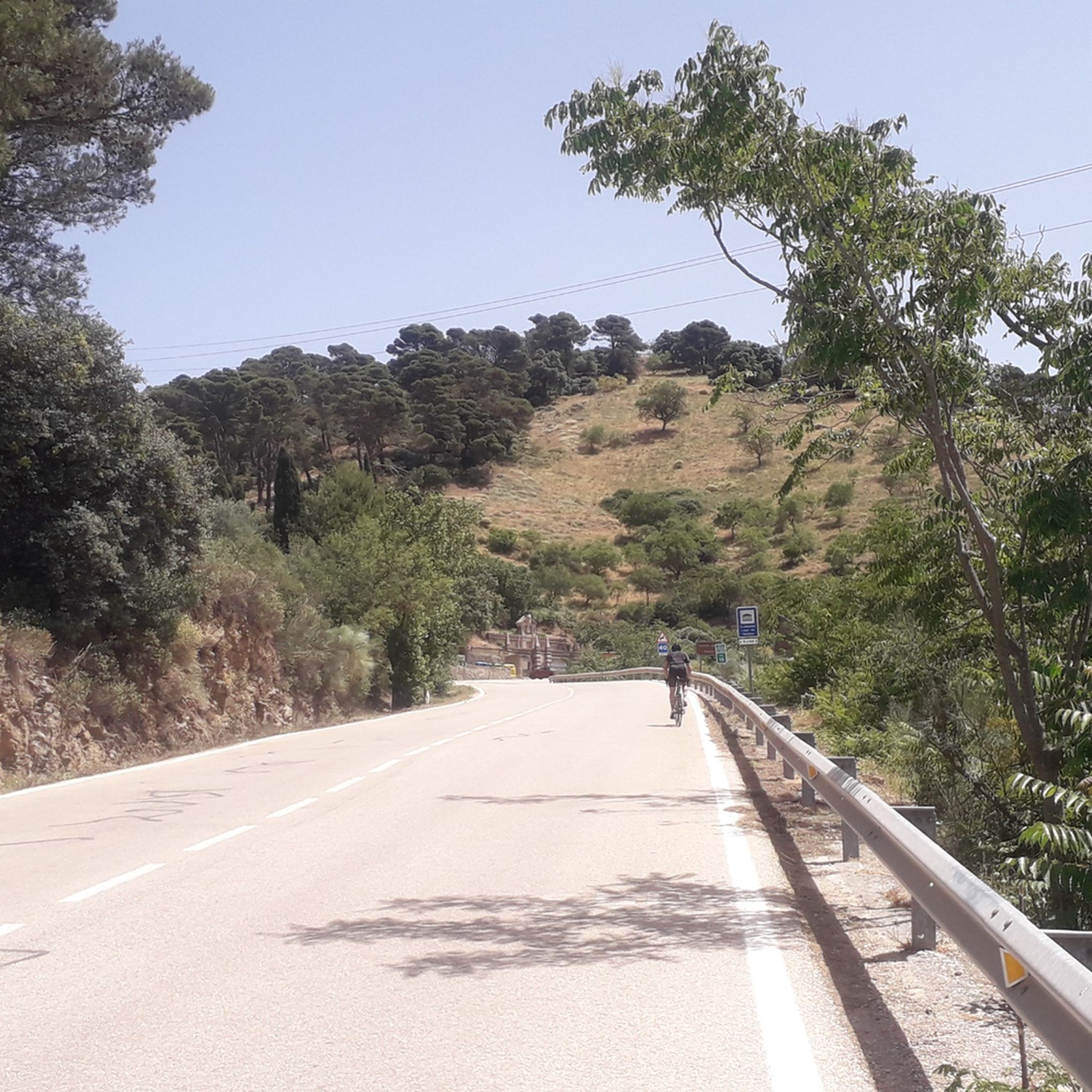
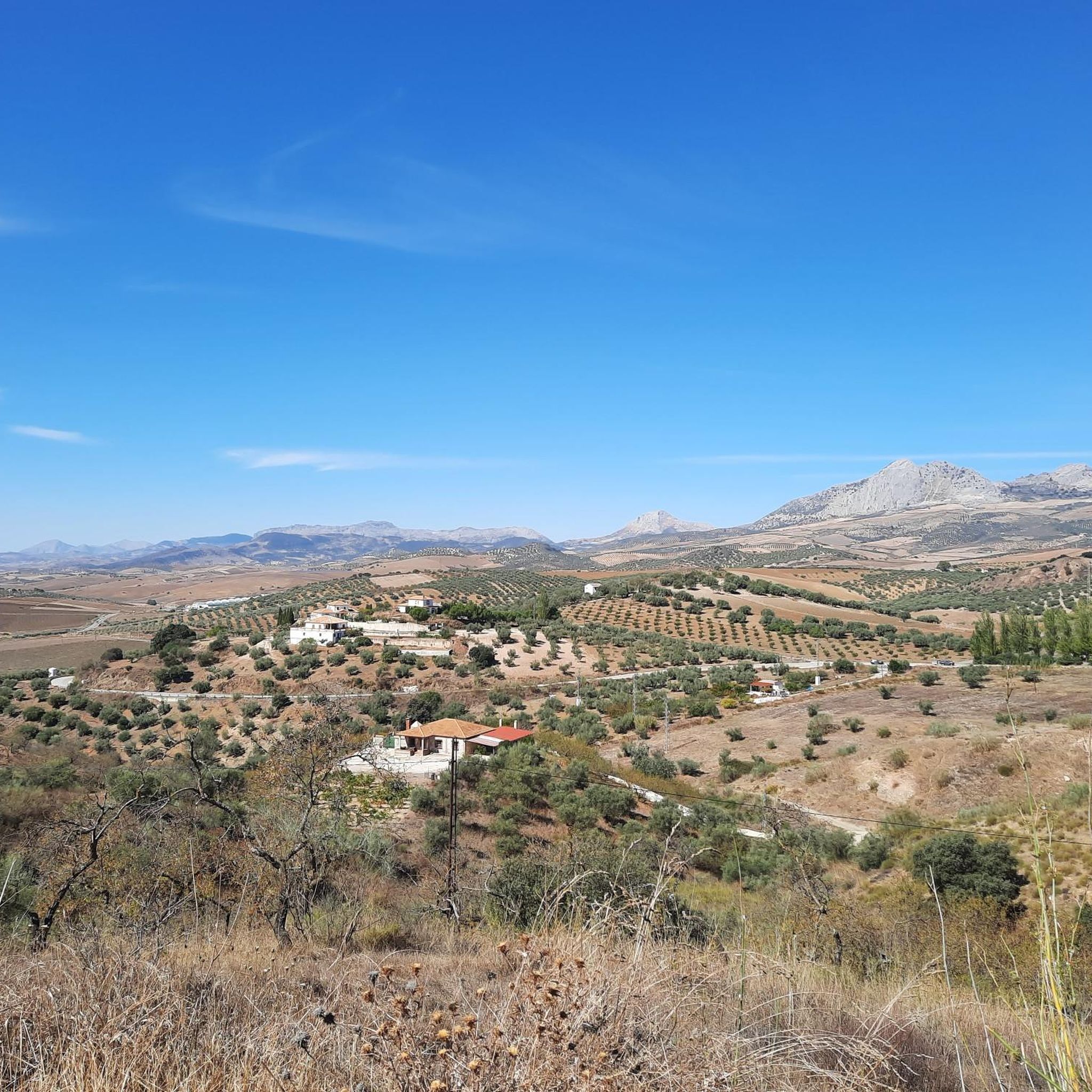
The ascent to Puerto del León follows a winding, paved road characterized by a consistently steep gradient, particularly noticeable in the switchbacks. The route leads through the foothills of the Montes de Málaga, past wooded slopes, scattered olive groves, and small fields. Upon reaching the upper sections, a view opens up to the mountainous landscape of the Axarquía region, with its gentle mountain ranges and deep valleys. The road itself snakes through the mountains, with the gradient frequently alternating between moderate and challenging, demanding both stamina and pedaling technique. The route, combined with the altitude, offers an intense experience of nature and riding.
2
0
The Colmenar Town Hall (Ayuntamiento de Colmenar) is located in the town's historic center, on the Plaza de España, and forms the architectural and administrative heart of the municipality. Dating from the 19th century, the building has been restored several times to serve its function as a modern administrative center. It presents itself in typical Andalusian style with a light-colored plastered facade, symmetrical layout, and traditional wrought-iron balconies. A clock and the municipal coat of arms are located at the top, while the main entrance is emphasized by round arches and stone frames. Together with the church and several historic houses, the Town Hall frames Colmenar's central square, which serves as both a meeting place and venue for local festivals. Thus, the building embodies both the civic history and the architectural identity of this mountain village in the Axarquía region.
5
0
The Museo de la Miel (Honey Museum) in Colmenar is dedicated to beekeeping and honey production. It showcases honey making from antiquity to the present day, explains how beehives work, and the role of bees in nature. The museum is organized thematically, displaying the life of bees, different types of beehives, honey production, and beekeeping tools. Interactive screens supplement the exhibition with information on pollination, beekeeping practices, and products from the hive. In addition, the museum regularly hosts events such as workshops, tastings, and culinary tours that highlight regional products like honey and cheese. Visitors can purchase various types of honey, beeswax candles, and other handcrafted items in the museum shop. Thus, the Museo de la Miel offers a comprehensive insight into the world of bees and the tradition of honey production.
5
0
The Hermitage of Our Lady of Candelaria in Colmenar sits atop a hill overlooking the town and is one of the most important buildings in the Axarquía region. This Baroque chapel was built in the 17th century, its richly decorated chancel dating from 1719. The church consists of a single, rectangular nave with a hemispherical vault over the chancel. The façade, with its round-arched portal, Tuscan pilasters, and a bell gable with three openings, gives the small pilgrimage church its distinctive appearance. Legend has it that it was built in gratitude for the miraculous rescue of sailors who were dedicated to Our Lady of Candelaria. Today, the chapel is considered the spiritual heart of Colmenar and, from its elevated position, offers magnificent views of the surrounding Sierra de Tejeda landscape.
2
0
Colmenar, a picturesque village in the Andalusian province of Málaga, was founded at the end of the 15th century after the Christian reconquest of the region. The village's name derives from the Spanish word colmena ("beehive") and recalls the long tradition of beekeeping, which once played a central role here. Thanks to its favorable location in the Montes de Málaga mountains and the lush vegetation, beekeeping was one of the most important sources of income for the population for centuries. Even today, Colmenar is known as the "Village of Honey" and proudly maintains this cultural heritage. Among the village's most important landmarks is the Ermita de la Candelaria, a small 17th-century chapel perched on a hill overlooking the village, offering sweeping views of the surrounding mountains. In the town center stands the Iglesia de Nuestra Señora de la Asunción, a church dating from the 16th and 17th centuries, which impresses with its simple Andalusian style and tranquil atmosphere. At the town entrance, visitors are greeted by the Puerta de la Cruz, a symbolic gate featuring a monolith bearing the village's coat of arms – adorned with a bee and a honeycomb, representing Colmenar's history and identity. A particular highlight is the Museo de la Miel, the "Honey Museum," where visitors can learn all about beekeeping, the work of bees, and honey production. Thus, Colmenar harmoniously blends history, nature, and tradition – a place where the region's past and a deep love for its landscape are reflected in every street and every scent of wild rosemary.
6
0
The Asador restaurant at the Hotel Balcón de los Montes in Colmenar impresses with its rustic atmosphere and a terrace offering unobstructed views of the surrounding Montes de Málaga mountains. Specialties include grilled meat dishes and traditional regional cuisine. Large windows and the terrace seamlessly connect the dining experience with the expansive, idyllic landscape, making it the perfect place to relax during or after a day of sightseeing.
4
0
The Plaza de España in Colmenar is the vibrant heart of the village, reflecting the typical character of an Andalusian town center. Surrounded by white houses with wrought-iron balconies, small cafes, and orange trees, it forms the social and cultural hub of the community. At its center stands an elegant, multi-tiered stone fountain, a defining feature of the square. The water flows in gentle arcs from one basin to the next, creating a tranquil and inviting atmosphere. Particularly striking are the bees that gather around the upper part of the fountain with its intricately carved jugs—a natural phenomenon closely linked to Colmenar's history and identity. The town's name derives from the Spanish word "colmena," meaning "beehive," and the fountain seems to embody this symbolism in a truly remarkable way. Today, the Plaza de España serves as a meeting place for locals and visitors alike, a venue for celebrations, conversations, and the everyday life of the village. With its harmonious interplay of stone, water, and nature, it conveys an authentic image of the tranquil, welcoming atmosphere that characterizes Colmenar. The square thus represents not only the geographical center of the town but also the heart of its community.
0
0
Frequently Asked Questions
What is the general difficulty level for touring cycling routes in National Park Montes de Málaga?
Touring cycling in National Park Montes de Málaga is generally challenging. Most routes feature significant elevation changes, making them best suited for experienced cyclists. Out of 24 available routes, 21 are rated as difficult, with 3 moderate options and no easy routes.
Are there any circular touring cycling routes in National Park Montes de Málaga?
Yes, many of the touring cycling routes in National Park Montes de Málaga are circular. For example, the La Zambrana Campsite – Restaurante Asador Colmenar loop from Colmenar and the View of Málaga Bay – View of the Mountains loop from Colmenar are popular circular options, starting and ending near Colmenar.
What kind of views can I expect along the touring cycling routes?
The routes offer diverse and panoramic views. You can expect vistas extending towards the coast, including Málaga Bay, and sweeping views of the surrounding mountain ranges and dense pine forests. The View of Málaga Bay – View of the Mountains loop from Colmenar is particularly known for its extensive scenic outlooks.
Are there any family-friendly touring cycling routes in National Park Montes de Málaga?
Due to the challenging elevation profiles and the prevalence of difficult routes, National Park Montes de Málaga is not typically recommended for beginner or family-friendly touring cycling. The terrain is more suited for experienced cyclists seeking a substantial workout.
What is the best time of year to go touring cycling in Montes de Málaga?
The best time for touring cycling in Montes de Málaga is generally during the spring (March to May) and autumn (September to November). During these seasons, temperatures are milder, and the weather is more stable, making the challenging climbs more enjoyable. Summers can be very hot, and winters can bring cooler temperatures and occasional rain.
Are there places to eat or drink along the touring cycling routes?
While the routes primarily traverse natural landscapes, some routes pass near or through small towns like Colmenar, where you can find local restaurants and cafes. For instance, the La Zambrana Campsite – Restaurante Asador Colmenar loop from Colmenar includes a restaurant in its name, indicating potential refreshment stops.
What should I wear for touring cycling in Montes de Málaga?
Given the significant elevation changes and varied terrain, it's advisable to wear appropriate cycling gear, including a helmet, padded shorts, and layers of clothing that can be adjusted for temperature fluctuations. Sun protection is also crucial, especially during sunnier months.
What do other touring cyclists enjoy most about cycling in National Park Montes de Málaga?
The area is highly rated by the komoot community, with an average score of 4.7 stars. Reviewers often praise the challenging terrain, the extensive pine forests, and the panoramic viewpoints that offer rewarding views after the climbs.
Are there any moderate touring cycling routes available?
Yes, while most routes are difficult, there are 3 moderate touring cycling routes in the National Park. These still involve elevation changes but are less demanding than the most challenging options, providing a good stepping stone for those building endurance.
Can I spot wildlife while touring cycling in Montes de Málaga?
As a natural park, Montes de Málaga is home to diverse Mediterranean wildlife. While cycling, you might encounter various bird species, and if you're lucky, you could spot local mammals. Maintaining a quiet pace increases your chances of wildlife observation.
What is the longest touring cycling route in the park?
One of the longer routes available is the Museo de la Miel de Colmenar – Puerto de los Alazores loop from Colmenar, which covers approximately 46 kilometers (28.6 miles) and is rated as difficult.
Are there any specific landmarks or points of interest along the routes?
Many routes offer natural points of interest such as passes and viewpoints. For example, the Queen's Fountain – León Pass loop from Colmenar includes the notable León Pass, offering scenic spots and a sense of achievement after the climb.
Most popular routes around National Park Montes de Málaga

Get inspired with the komoot mobile app


Explore more
Browse the best Cycling routes in other regions.
