Attractions and Places To See around El Herrumblar - Top 20
Attractions and places to see around El Herrumblar, a municipality in the Manchuela region of Cuenca, Spain, offer a mix of historical landmarks, natural beauty, and cultural experiences. Situated at an altitude of approximately 775 meters, the area features flat plains to the west and rugged terrain to the east, including a tributary of the Cabriel River. The region is known for its winemaking tradition and its connection to the Hoces del Cabriel Natural Park.
Best attractions and places to…
Last updated: October 10, 2026
Vadocañas Bridge
Highlight • Bridge
Translated by Google •
Tip by

Turia-Cabriel Nature Trail (section)
Highlight (Segment) • Trail
Translated by Google •
Tip by
Sign up now to discover places like this
Get recommendations on the best single tracks, peaks, & plenty of other exciting outdoor places.
Venta de Vadocañas
Highlight • Historical Site
Translated by Google •
Tip by
La Higuera - Cabriel River
Highlight • River
Translated by Google •
Tip by
Hoz del Rabo de la Sartén Viewpoint
Highlight • Viewpoint
Translated by Google •
Tip by

Sign up for free to discover even more attractions around El Herrumblar.
Already have an account?
Start today with a free account
Your next adventure awaits.

Tips from the Community

The bridge is built of carved stone and is founded with the same rocks that can be found on the banks of the river. Its single eye has about 33 m of span, making it one of the largest bridges of its kind not only in Spain, but also on the European continent.
0
0
Vadocañas Bridge It is a viaduct of Roman origin that connects the regions of Cuenca and Valencia passing over the waters of the Cabriel in a protected space known as the Hoces del Cabriel Natural Park – cataloged as a Natural Reserve on its La Mancha slope.
0
0

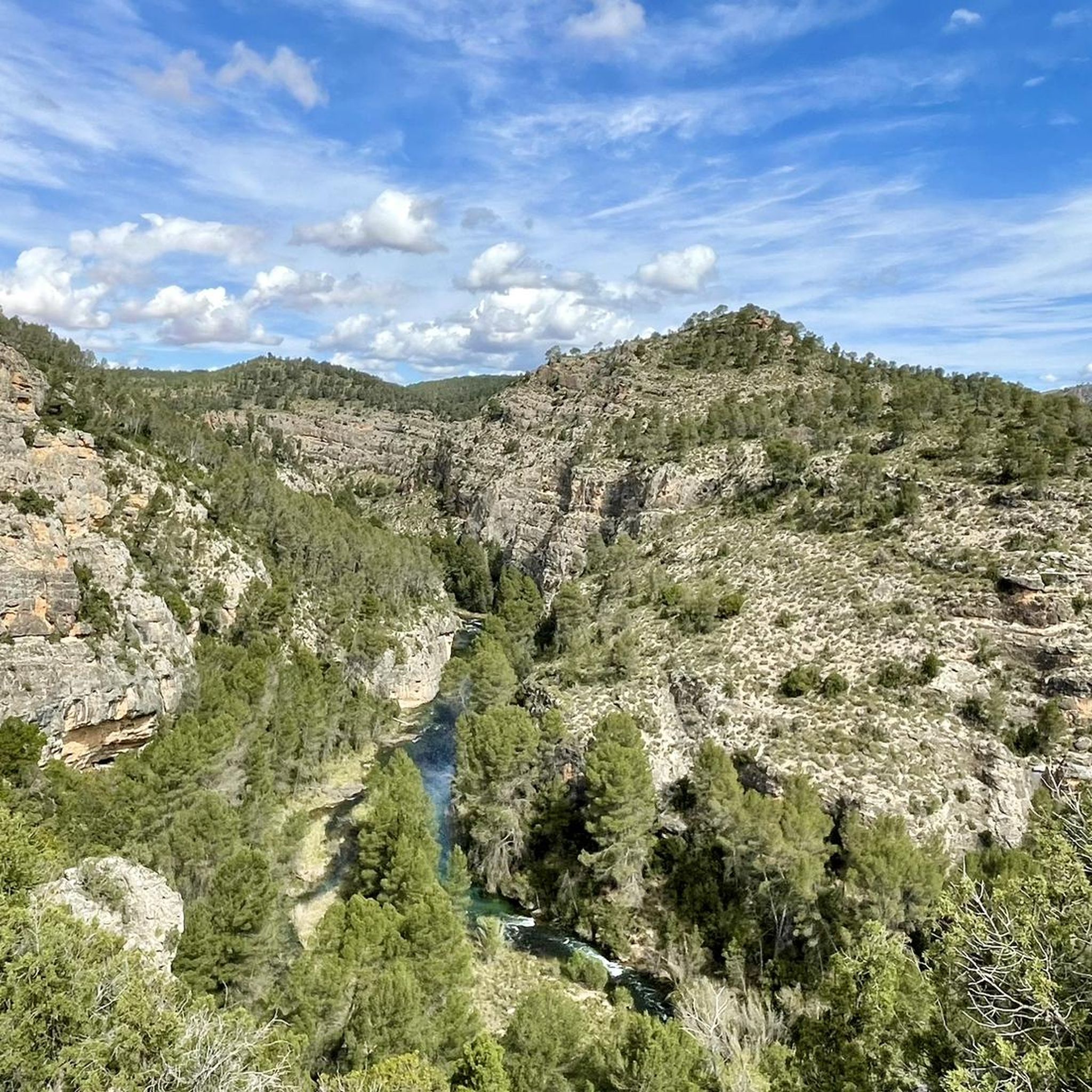
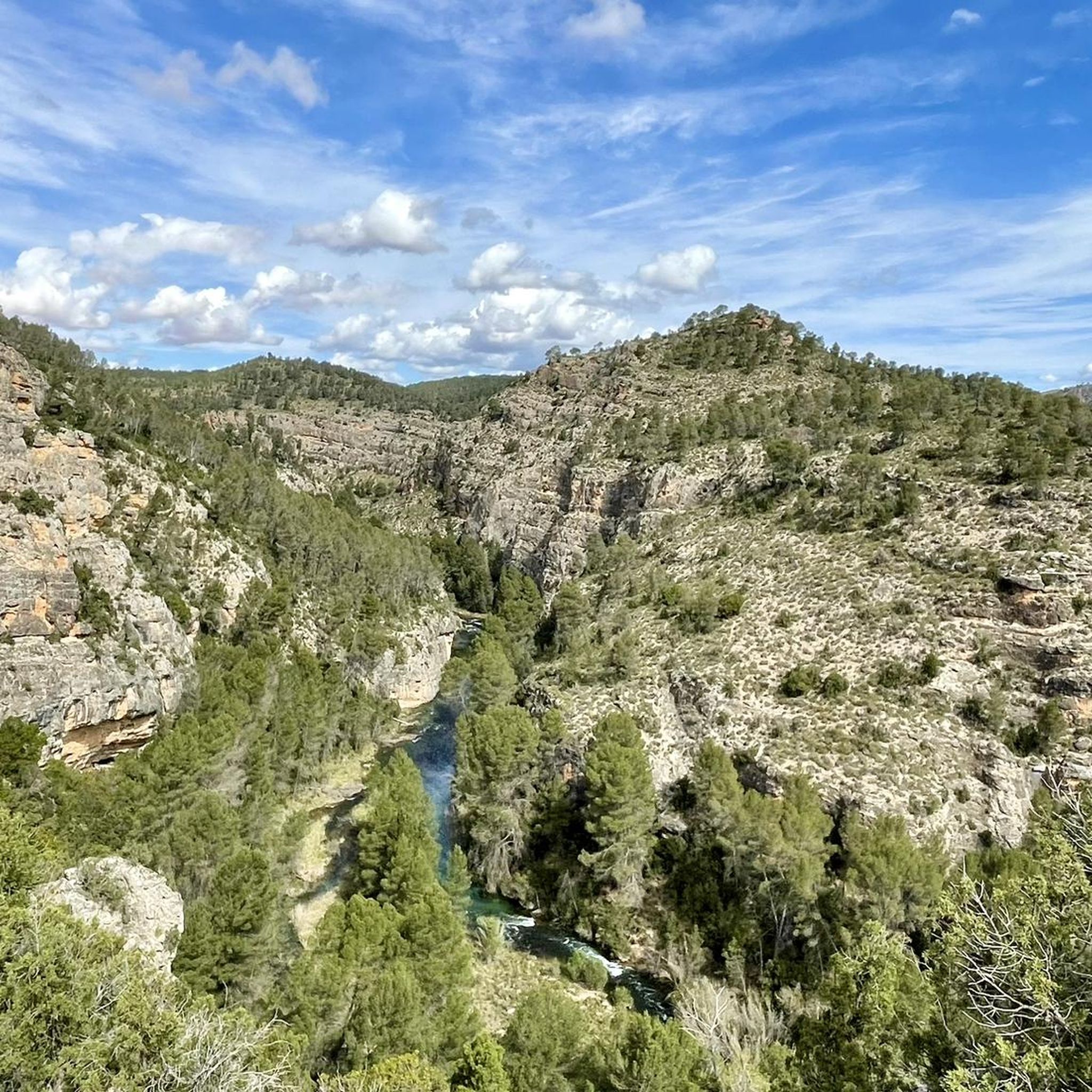
If you go around the Fuente de Oliva counterclockwise (which I recommend), this is the second viewpoint and the first where you can see the Rio Cabriel in the gorges below beautiful cliffs. Continue to the right of the first bench along the cliff, and you will find a second bench and more beautiful views.
1
0

The cycling adventure leaves Los Cárceles along the river plain, passes the Barranco de la Vida and goes up a forest track for a few kilometers to avoid the narrowest meanders of the canyon. In this section there are paths near the shore of the Cabriel, marked with the GR-66 signs, but some are not cyclable for gravel bicycles and it is more convenient to go around the mountain. The climb is about four kilometers, to the agricultural fields of Los Armalletes, then the route takes a forest track to the right and goes down to Venta de Vadocañas, one of the historic passes between La Mancha and Valencia. The other was the Pajazo bridge, which is now submerged in the waters of the Contreras reservoir. The Vadocañas bridge is monumental, it has an eye of 33 light meters and shows an extraordinary work of ashlar masonry, the origin is Roman, although the current construction is from the 16th century. “Cars and people pass by. The eye has one hundred and twenty feet in a very long hole. They claim to be the largest and best and with the largest and largest stones in the kingdom, and they pass beasts, and everything else, from Toledo and other parts to Valencia and Requena where the customs is. On the Valencian shore there are signs for the Turia-Cabriel Nature Trail towards Villargordo del Cabriel. The climb is long, you have to climb again to the agricultural fields of La Plana along the rugged slopes of the Sierra del Rubial, it is a good time to see mountain goats, deer and wild boar. On Mount Moluengo there is a non-cyclable section, known as Senda de la Cueva de los Ladrones, and before arriving there is a detour on the left that crosses the mountain range along a forest track with good cyclability and connects with the Nature Trail in the ravine. from Los Pocicos, following the red milestones until the end of the stage between the vineyards of Villargordo del Cabriel.
0
0

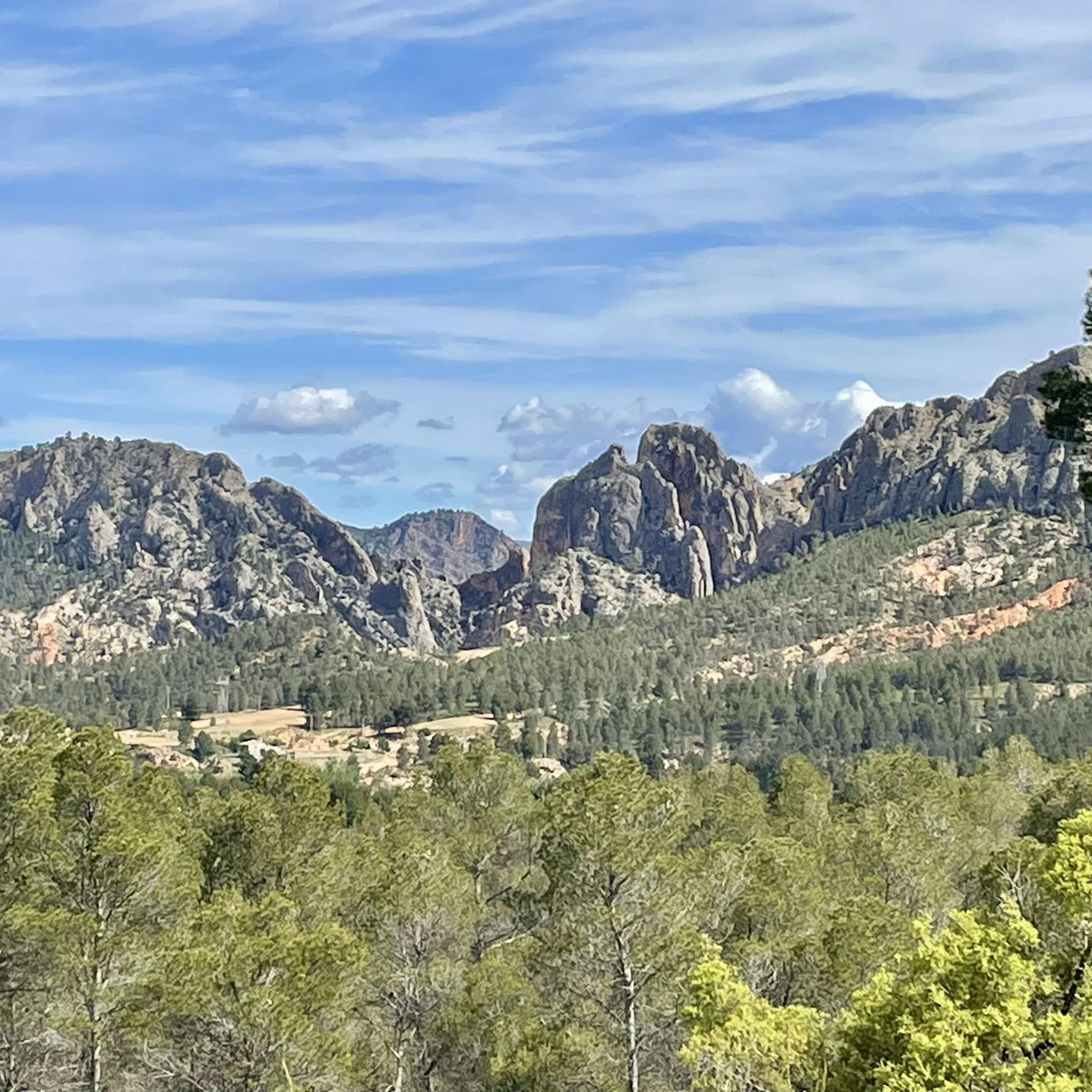
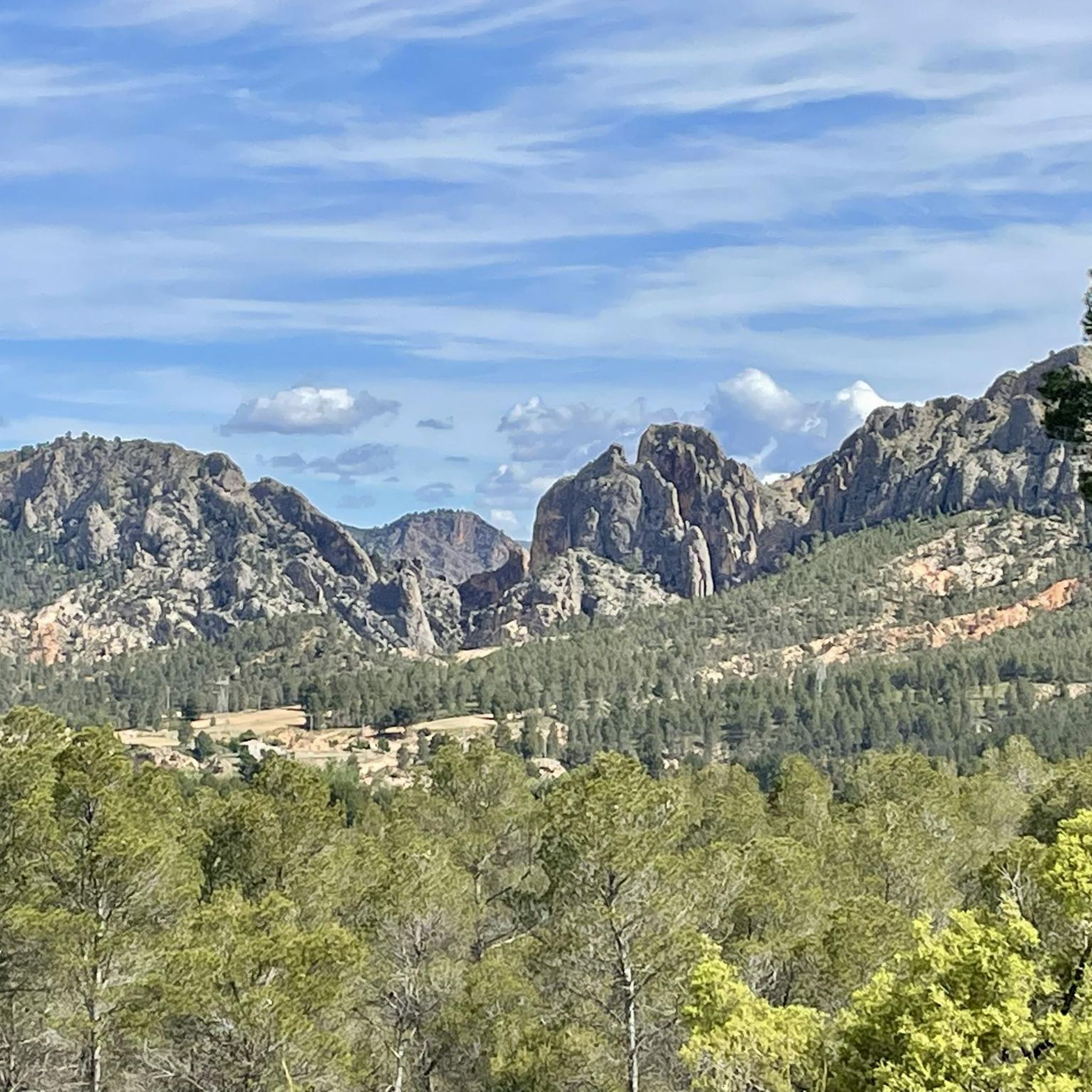
Viewpoint of the Fuente de Oliva route (PR-CV 344) with beautiful views of the gorges of the Cabriel River and its impressive cliffs. The arrival path is completely along a forest track and is a very pleasant and pleasant route with a lot of trees.
0
0
Viewpoint of the Fuente de Oliva route (PR-CV 344) with beautiful views of the gorges of the Cabriel River and its impressive cliffs. The arrival path is completely along a forest track and it is a very pleasant and pleasant route with many trees.
3
0
With its more than 121 km of route, the Turia – Cabriel Nature Trail manages to unite two of the most important rivers in the province of Valencia: the Turia and the Cabriel. This itinerary is protected by two natural parks: the Turia Natural Park and the Hoces del Cabriel Natural Park. This particular section begins (or ends) at the Vadocañas bridge over the Cabriel River. It is a gravel road in excellent condition with gentle slopes and surrounded by vegetation. Ideal for cycling or touring it by mtb or gravel bike.
3
0
Located on the Cabriel River, it unites the provinces of Cuenca and Valencia. Its construction dates back to the 16th century and still retains its original form. A bridge of great cultural, historical and scenic interest that also marks the beginning-end of the Turia-Cabriel Nature Trail.
2
0
Frequently Asked Questions
What natural features can I explore around El Herrumblar?
El Herrumblar is closely connected to the Cabriel River, which flows through the Hoces del Cabriel Natural Park, a UNESCO Biosphere Reserve. You can also discover beautiful natural environments like La Juncosa and La Loma de los Molinos, or enjoy panoramic views from various viewpoints such as Hoz del Rabo de la Sartén Viewpoint and La Fonseca Viewpoint.
Are there good places for hiking or cycling near El Herrumblar?
Yes, the area offers numerous opportunities for outdoor activities. The extensive Turia-Cabriel Nature Trail, over 121 km long, links the Turia and Cabriel rivers, with a section starting or ending at the Vadocañas Bridge that is ideal for cycling. Additionally, there are many rural routes and ancient agricultural paths perfect for walking or cycling through pine forests and past historical sites. For more specific routes, you can find various running trails, road cycling routes, and MTB trails in the surrounding area.
What historical landmarks can I visit in El Herrumblar?
El Herrumblar boasts several significant historical landmarks. The Vadocañas Bridge, dating back to the 16th century with Roman origins, is a monumental structure spanning the Cabriel River. In the town, you can visit the 1777 Iglesia de Nuestra Señora de la Estrella, the 1680 Ermita de San Julián, and the 17th-century Parroquia de San Pedro Apóstol, all featuring historical architecture and baroque altarpieces.
Are there family-friendly attractions or activities in El Herrumblar?
Absolutely. The La Higuera - Cabriel River area is a popular spot for rest and refreshment, surrounded by vegetation, making it ideal for families to cool off on warm days. Sections of the Turia-Cabriel Nature Trail are also considered family-friendly, offering gentle slopes for cycling or walking. Many of the viewpoints, like La Fonseca Viewpoint, are accessible and offer beautiful scenery for all ages.
Can I learn about the region's ancient history?
Yes, the area around El Herrumblar is rich in ancient history. Archaeological vestiges from the Bronze Age (Cerro Chavo), Iberian, and Roman periods have been discovered. Findings from sites like Llano de los Cabezos are preserved in the Archaeological Museum of Cuenca, offering insights into the region's past.
What cultural traditions or products is El Herrumblar known for?
El Herrumblar is part of the Manchuela Denomination of Origin wine region, making winemaking a significant cultural tradition. Visitors can explore local wineries such as Bodegas SAAC and Bodegas Villavid to experience this heritage and taste the region's balanced wines. The local gastronomy, featuring products like olive oil, artisanal bread, honey, and traditional dishes such as ajoarriero and morteruelo, also reflects the area's rich culture.
What is the best time of year to visit El Herrumblar?
The region offers an authentic rural experience throughout the year. For outdoor activities like hiking and cycling, spring and autumn provide pleasant temperatures. Summer is ideal for enjoying the refreshing waters of the Cabriel River, while the town's traditional festivals, such as those honoring Nuestra Señora de la Estrella in September and summer festivities in August, offer cultural highlights.
What do visitors particularly enjoy about the attractions in El Herrumblar?
Visitors frequently praise the stunning panoramic views, especially from viewpoints like Hoz del Rabo de la Sartén Viewpoint, which offers impressive vistas of the Cabriel River valley and its cliffs. The tranquility and natural beauty of spots like La Higuera - Cabriel River for relaxation, and the well-maintained gravel paths of the Turia-Cabriel Nature Trail for cycling, are also highly appreciated.
Are there any unique natural spots or 'hidden gems' to discover?
Beyond the well-known areas, you can explore beautiful natural environments like La Juncosa, perfect for nature observation, and La Loma de los Molinos, another notable natural landscape. The numerous rural routes and ancient 'royal trails' also lead through less-traveled areas, including abandoned hamlets like Garadén and El Pino Casablanca, offering a sense of discovery.
What kind of wildlife can be spotted in the area?
The Hoces del Cabriel Natural Park, a UNESCO Biosphere Reserve, is an excellent area for wildlife spotting. While specific species are not detailed, the rugged terrain and river environment are conducive to diverse flora and fauna, making it ideal for bird watching and observing local wildlife.
Where can I find the main religious sites in El Herrumblar?
The primary religious sites in El Herrumblar include the Iglesia de Nuestra Señora de la Estrella, built in 1777, which is the town's main temple. The Ermita de San Julián, dating back to 1680, is located near the cemetery and is central to patron saint celebrations. Additionally, the Parroquia de San Pedro Apóstol is an emblematic 17th-century construction with a spiritual atmosphere.
Most popular attractions around El Herrumblar

Get inspired with the komoot mobile app


Explore more
Still not found the Highlight you’re looking for? See guides of the top attractions in other regions:
