The best walks and hikes around Chucena
15
hikers
9
hikes
Hiking around Chucena offers routes through a landscape characterized by gentle terrain, rural paths, and proximity to natural areas. The region features greenways, such as the Guadiamar Greenway, and routes near water bodies like the Corumbel Reservoir. Elevation gains on these trails are generally low, making them accessible for various fitness levels. The area provides opportunities to explore the countryside and local villages.
Best hiking trails around Chucena
- The most popular hiking route is Treasure of Doñana Trail, a…
Last updated: July 17, 2026
4
hikers
16.0km
04:06
70m
70m
Moderate hike. Good fitness required. Mostly accessible paths. Sure-footedness required.
16.7km
04:22
120m
120m
Moderate hike. Good fitness required. Easily-accessible paths. Suitable for all skill levels.

Sign up for free
19.1km
04:57
110m
110m
Moderate hike. Good fitness required. Easily-accessible paths. Suitable for all skill levels.
1
hikers
10.2km
02:39
70m
70m
Moderate hike. Good fitness required. Easily-accessible paths. Suitable for all skill levels.
2
hikers
3.89km
01:03
50m
50m
Easy hike. Great for any fitness level. Easily-accessible paths. Suitable for all skill levels.
Get access to more routes and recommendations from other explorers.
Sign up for free
Already have an account?
Our route recommendations are based on thousands of hikes, rides, and runs completed by other people on komoot.
Start today with a free account
Your next adventure awaits.
Login or Signup


Tips from the Community

The first reliable data on the history of Villalba del Alcor date back to the Late Bronze Age, some four millennia ago. Remains of nearby mining operations remain evident; these were scattered along the Corumbel River. From the Roman period, we find several important remains in this municipality, such as coins, vases, and so on. The most notable of these is found on the "Las Estaquillas" estate, two kilometers from the town center. It is a portrait of Agrippina, wife of the Emperor Claudius. Her hairstyle, characteristic of the Agrippinas (the use of small curls and the arrangement of her hair in side bands covering the ears), shed light on her identification. These remains suggest that, in the vicinity of the town center, and in the direction of Corumbel, there were several villas belonging to prominent families, who would have made a living from the mines and farming. Another finding that supports the hypothesis of Roman settlement in the region is the existence of a tombstone dedicated to Iuno Regina in 134 BC. It was found at the base of the bell tower of the Church of San Bartolomé, although it owes its origin to the town of Ostur, near Manzanilla. No other significant events are found from this period; the Dehesa de Purchena was continuously settled. Its name, of Roman origin, comes from Porcius plus the suffix -ana (indicative of ownership), which would mean Villa Porciana. This region was also inhabited by Muslims who established scattered farmsteads along the Giraldo stream. After these basic notions about its surroundings, we will focus on the evolution of the population center and the reasons that made Villalba a prominent town in the County of Huelva. The birth of Villalba del Alcor is due to its appeal as a border area for Christians and Muslims. Villalba's high strategic value led to the construction of a fortress, which also served as a mosque in its time, as was the case with La Rábida. It belonged to Niebla until 1253, when it was reconquered by Alfonso X the Wise. Later, in 1331, Villalba passed into the hands of the daughter of the Chief Constable of Niebla, Leonor Núñez. Around 1350, the town was purchased by Alvar Pérez de Guzmán, thus establishing this lineage, which would extend practically until the 15th century. The Pérez de Guzmán and Zúñiga lines were united in 1395 through marriage. It was then that Villalba passed into the hands of the Zúñiga family until the dissolution of the lordships in 1812. Villalba del Alcor, from the Late Middle Ages, became established. The place names "Villalba" and "Alcor" come from different origins: the former is of Christian origin, and the latter means "hill" and is of Muslim origin. On the social level, the rich and varied heritage reflects the economic strength of its inhabitants. In the 16th century, the town center and its population grew. Two Carmelite congregations were founded: the monastery of friars of Santa María de la Antigua in 1588, and the convent of shod nuns of San Juan Bautista in 1619. In 1642, it had 1,750 inhabitants; in the second half of the century, the country's demographic and economic crisis worsened. In the 18th century, Villalba experienced few demographic changes. To further expand on the data on these dates, we can refer to the Cadastre of the Marquis of Ensenada, which describes this situation in detail. Population growth and dependence on agriculture led, throughout the 19th century, to a widespread movement to clear new lands, nearly wiping out the vacant and municipal lands, and changing the forest landscape. Vineyards, the County's star crop, developed on these lands, along with a significant wine industry that eventually included numerous wineries and at least three brandy stills.
0
0

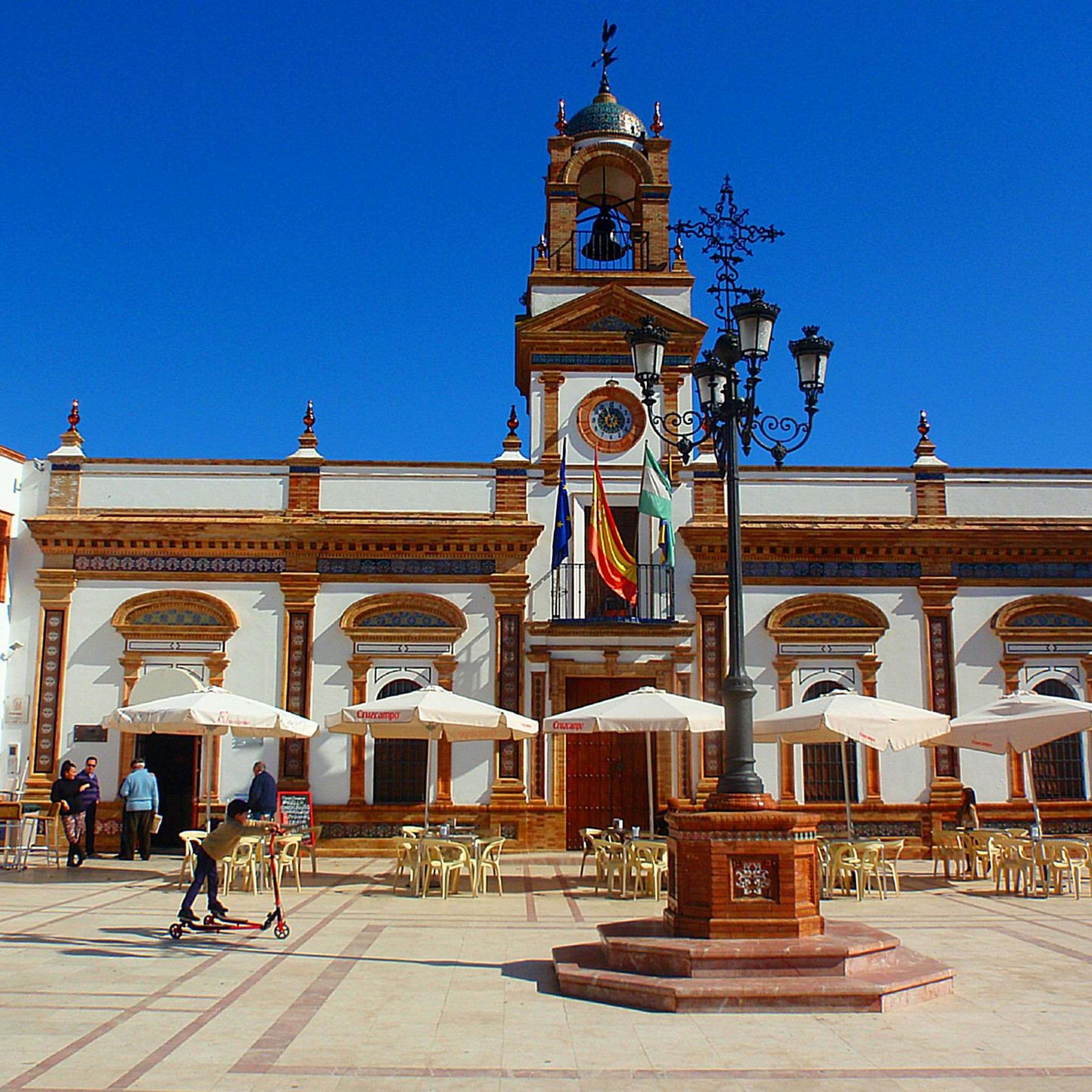
Beautiful Mudejar parish from the 15th century, there are very few in the towns of Andalusia even topped with a kind of defense tower. The tiled clock is also curious.
1
0
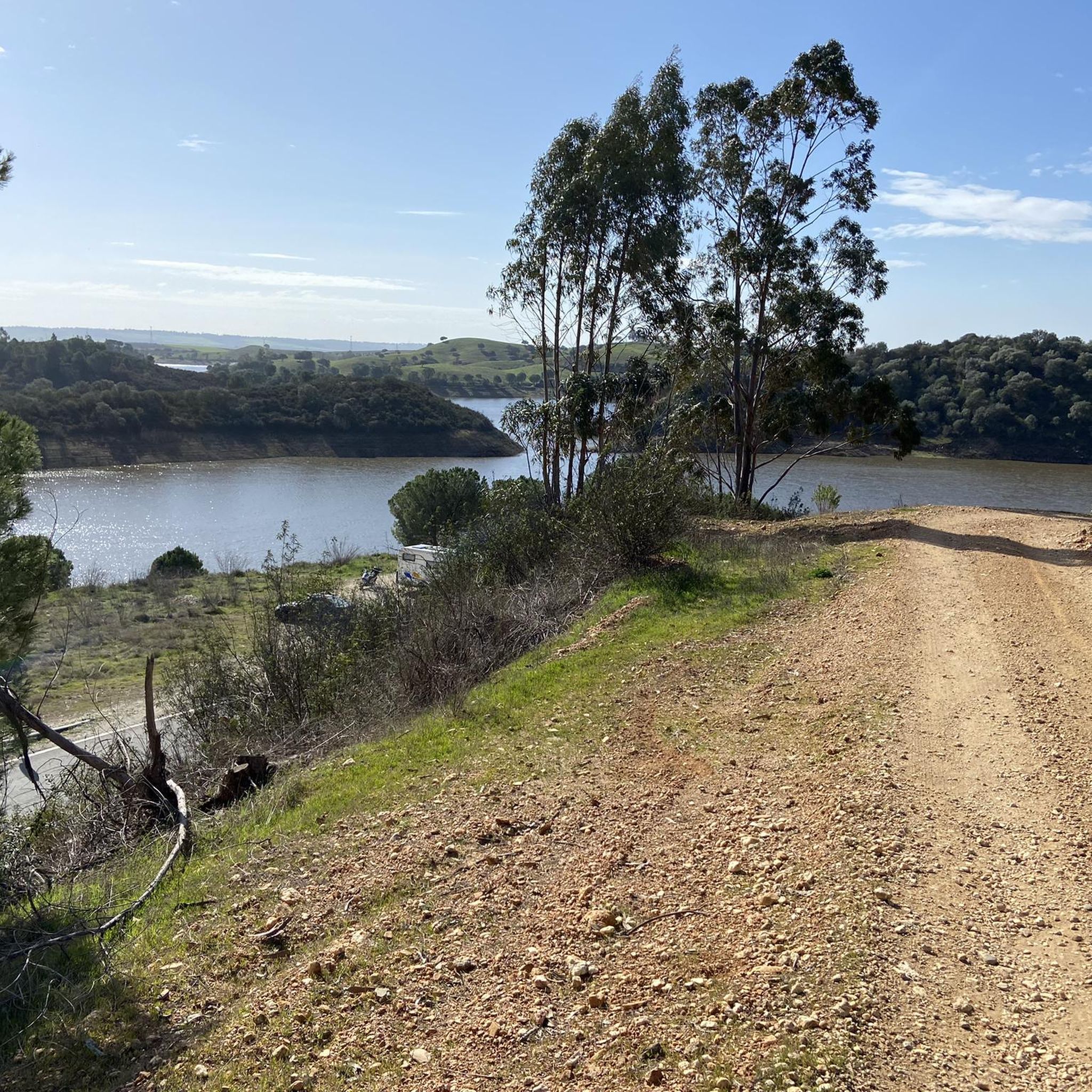
Path between eucalyptus trees which are an endemic tree of this area and uncommon. With respect to the majority of forests that appear in the area, such as pine forests and olive fields, eucalyptus remain planted for their wood.
1
0
A track that is more than five kilometers long and is located in the north of the Doñana Natural Park. The route comes from the town of Hinojosos, where there are different spaces, such as El Arrayán recreational areas.
1
0
Park that is fenced around its entire perimeter and where inside, there is a green and natural space that offers tranquility and a space to be calm. Banks, water spaces and animals around!
1
0
Beautiful church where the outside is painted in blue and orange colors, a fact that contrasts with the other chapel in the center of Pilas that has other colors!
1
0
Path that crosses the Guadiamar River at one of the points where a space appears to do so. Riparian vegetation abounds around the river and creates a unique space!
1
0

A 5.6-kilometre-long cycle lane that connects the municipality of Hinojos, in the area of the Doñana Natural Area, with the El Arrayán Recreation Center. The lane has a gravel base and a concrete surface.
0
0
Frequently Asked Questions
How many hiking trails are there around Chucena?
There are nearly 10 hiking trails around Chucena, offering a variety of experiences through rural landscapes and greenways. These include options for different ability levels, from easy strolls to more moderate routes.
Are there easy hiking trails suitable for beginners or families with children?
Yes, Chucena offers several easy hiking trails perfect for beginners or families. For instance, the Church of Saint Bartholomew loop from Villalba del Alcor is an easy 2.4-mile (3.9 km) route that takes just over an hour to complete, offering a gentle introduction to the area's countryside.
What is the typical length and duration of hikes in the Chucena area?
Hikes around Chucena generally range from short, easy walks of about 2.4 miles (3.9 km) taking just over an hour, to longer, moderate routes up to 11.9 miles (19.1 km) which can take around 5 hours. The terrain is mostly gentle, making for manageable durations.
Are there any circular hiking routes around Chucena?
Yes, several circular routes are available, allowing you to start and end in the same location. A notable option is the Pilas and Guadiamar Greenway Loop, a moderate 10.4-mile (16.7 km) path that follows a scenic greenway.
What kind of natural landscapes can I expect to see on the trails?
The hiking trails around Chucena are characterized by gentle terrain, rural paths, and greenways. You'll encounter agricultural fields, Mediterranean scrubland, and areas influenced by the nearby Doñana Natural Park. Routes often feature views of water bodies like the Corumbel Reservoir, offering a mix of natural and cultivated scenery.
Are there any interesting landmarks or attractions to see along the hiking trails?
Yes, you can discover several points of interest. For example, the Church of Saint Bartholomew is a notable religious building. You might also encounter the iconic The Osbourne Ox, a well-known Spanish roadside landmark, or the Church of Our Lady of the Purification.
Is it possible to reach the hiking trails using public transport?
While Chucena is a rural area, public transport options to nearby towns might exist. However, direct access to trailheads often requires a car. It's advisable to check local bus schedules for connections to villages like Villalba del Alcor or Pilas, from where some routes begin.
What is the best time of year to go hiking in Chucena?
The best time to hike in Chucena is typically during the spring (March to May) and autumn (September to November) months. During these periods, temperatures are milder, and the landscape is often at its most vibrant. Summer can be very hot, making early morning or late afternoon hikes preferable, while winter offers cooler, pleasant conditions.
Are the hiking trails in Chucena dog-friendly?
Most rural paths and greenways in the Chucena area are generally dog-friendly, provided dogs are kept under control, especially near livestock or in populated areas. Always ensure your dog is on a leash and that you carry waste bags. Check specific trail regulations if entering protected natural areas.
Where can I find parking near the trailheads in Chucena?
Parking is generally available in the villages and towns from which many trails depart, such as Villalba del Alcor or Pilas. As the area is rural, you can often find street parking or small public parking areas. Always park responsibly and considerately.
What kind of wildlife might I encounter while hiking?
Given its proximity to the Doñana area, hikers might spot various bird species, including raptors. Mammals like rabbits and foxes are also present, though often shy. The diverse flora and fauna are characteristic of Mediterranean ecosystems, especially along greenways and near water sources.
Are there any cafes or places to eat near the hiking trails?
While trails themselves might not have direct facilities, the nearby villages like Chucena, Villalba del Alcor, and Pilas offer local cafes, bars, and restaurants where you can refuel before or after your hike. It's a good idea to carry water and snacks, especially on longer routes.
Most popular attractions around Chucena

Get inspired with the komoot mobile app


Explore more
Browse the best Hikes in other regions.
