Attractions and Places To See around L'Alcora - Top 20
Best attractions and places to see around L'Alcora include a mix of historical sites, cultural experiences, and natural landscapes. This municipality in Castellón, Spain, is recognized for its strong ceramic tradition and medieval heritage. Visitors can explore ancient castles, serene reservoirs, and historic village centers. The area provides diverse opportunities for outdoor activities and cultural discovery.
Best attractions and places to see around L'Alcora
- The most popular attractions is Sichar Reservoir, a lake built in 1960 on the Mijares…
Last updated: July 20, 2026
María Cristina Reservoir
Highlight • Lake
The works began in 1901 and ended in 1925 after several problems during …
Translated by Google •
Tip by

Sichar Reservoir
Highlight • Lake
It was built in 1960 on the course of the Mijares …
Translated by Google •
Tip by
Sign up now to discover places like this
Get recommendations on the best single tracks, peaks, & plenty of other exciting outdoor places.
Sign up for free
Onda Castle
Highlight • Castle
Translated by Google •
Tip by

Vilafamés
Highlight • Settlement
Vilafamés stands out for its old quarter. Strolling through its streets calmly, transports …
Translated by Google •
Tip by

Hermitage of Santa Quiteria and Medieval Bridge of Almassora
Highlight • Religious Site
It is built next to a river cave, on the banks of the only bridge that then crossed the Mijares, in the place where, according …
Translated by Google •
Tip by

Sign up for free to discover even more attractions around L'Alcora.
Sign up for free
Already have an account?
Start today with a free account
Your next adventure awaits.
Login or Signup

Tips from the Community

Old village, but not much going on.
0
0

Very good trial!!!
1
0

Castle complex/ruins with fantastic views. Unfortunately, dogs are not allowed in, so one always had to stay outside
2
0

As you get closer to Vilafamés, you can see the town at the top, on a hill. Vilafamés stands out for its old quarter. Strolling through its streets calmly, transports us to its Arab origins with narrow and zigzag streets, with corners that make you marvel, with its castle at the top and the small church at its feet. With the Christian expansion, Vilafamés began to grow by building its impressive parish church and its 15th century palace. Here the streets are linear. Its impressive “ROCA GROSSA”, a stone grindstone that is found as you go up the main street of Vilafamés, attracts attention. What is most surprising, without a doubt, is that throughout the old neighborhood of Vilafamés, its rock stone predominates in all the buildings. The historical complex of Vilafamés was declared an Asset of Cultural Interest in 2005.
1
0
The Hermitage of Santa Quiteria It is built next to a river cave, on the banks of the only bridge that then crossed the Mijares, in the place where, according to tradition, a shepherd found an image of the saint. There are indications that lead to an existence long before these dates. As it is a contract from 1330, the current hermitage was built from 1683, on the remains of an older medieval hermitage. This bridge is the place where the Vía Augusta and the Camí Vell from Onda to Castellón passed, it is a civil work of great importance not only because it is contemporary with King Jaime I, but also because it represents a unique example of a Gothic bridge in the Community Valencian. It was Pere Dahera, who built it in the 13th century by authorization from James I on April 18, 1275. One of the frequent floods destroyed it in 1581 and during its reconstruction a cross was placed in the middle of the bridge that was destroyed by a lightning in 1652, a curious fact that was reflected in an inscription that can still be read today on the base of the stone. "In the year 1692, lightning struck here on June 1 and hit this cross"
3
0

There are a few very tough singletracks, very technical, but even doing patabikes they are fun, but even when walking, be careful!
1
0

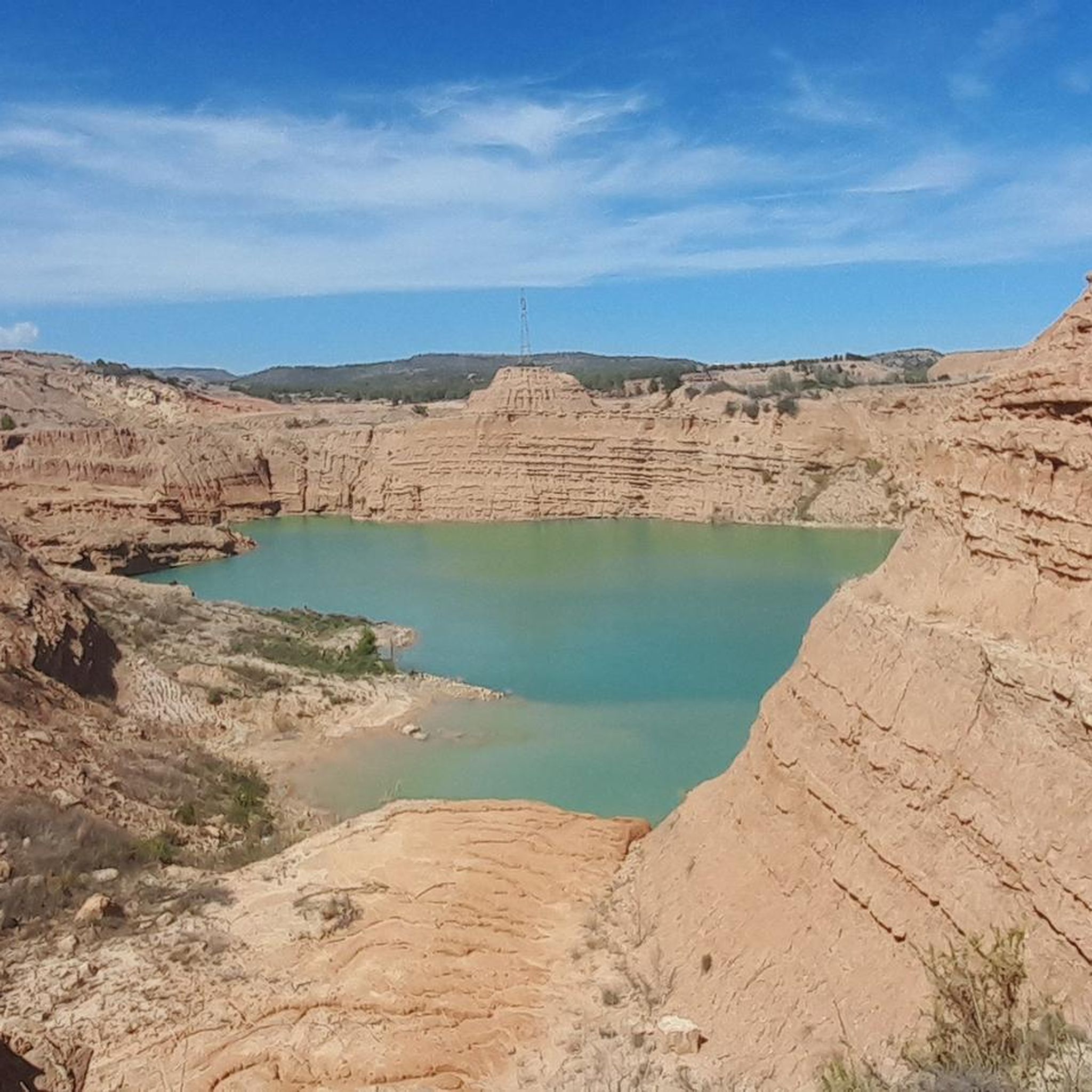
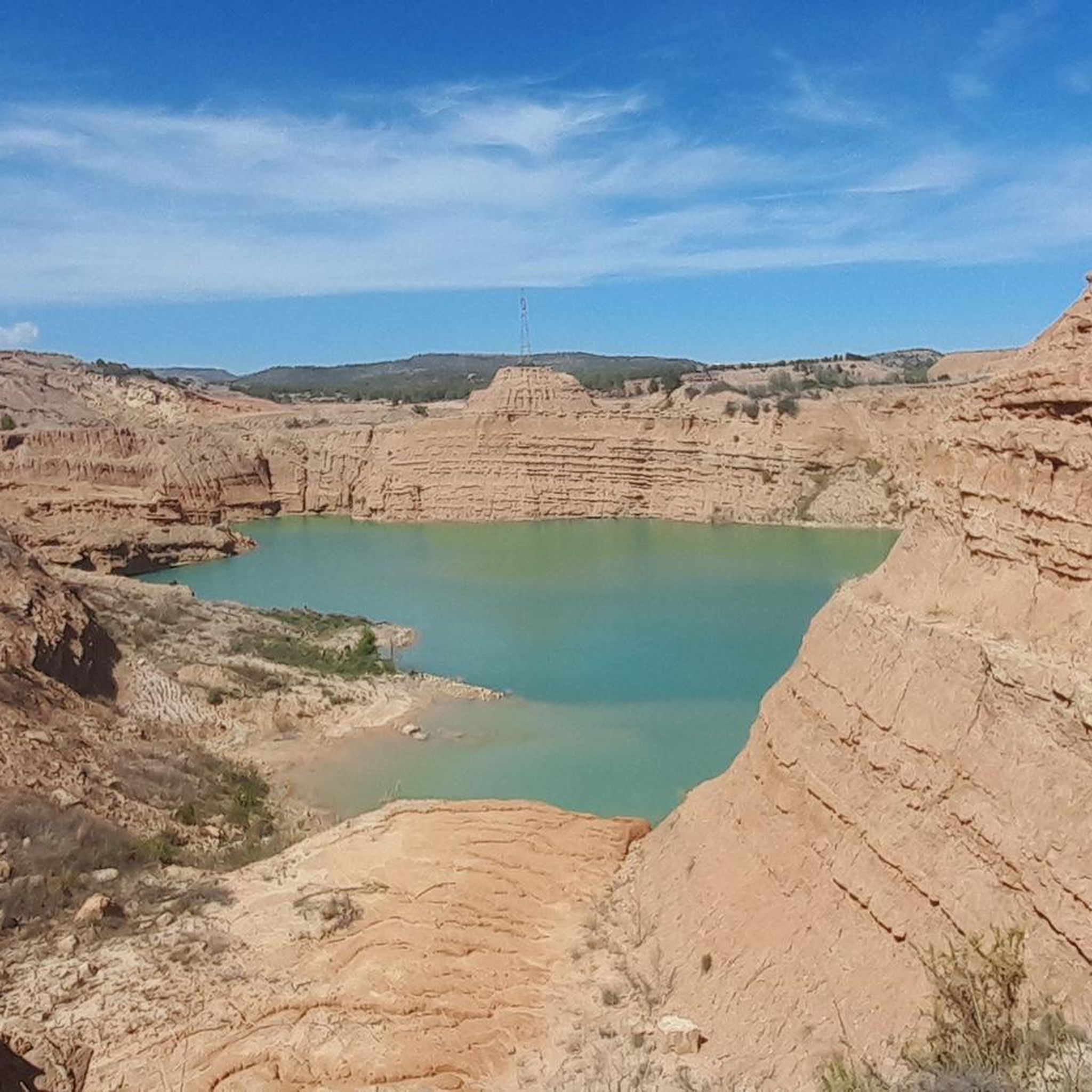
The Sichar reservoir (in Valencian, Sitjar) is located in the municipality of Onda in the province of Castellón, Spain. It was built in 1960 on the course of the Mijares river (in Valencian, riu de Millars) on an area of 317 hectares and with a capacity of 49.3 hm³. The work was built using a concrete gravity dam with a height of 58 m and a crest length of 581 m. Its water evacuation system consists of four bottom spillways with a capacity of 60 m³/s. and another two in the upper part of the dam equipped with gates with a capacity of 2,800 m³/s. It is mainly used to regulate irrigation, to control floods and to produce electricity. This dam belongs to the Júcar Hydrographic Confederation.
23
0
The María Cristina reservoir is located in the municipality of Alcora, in the province of Castellón, Spain. The works began in 1901 and ended in 1925 after several problems during its construction. It is located in the bed of the Rambla de la Viuda, on an area of 265 hectares and with a maximum capacity of 19.59 hm³. The dam is of the gravity arch type built with concrete, with a height of 59 meters and a crest length of 318 m. It has a free sheet spillway with a capacity of 597 m³/s. It is used to recharge the aquifers of the Plana Alta and Plana Baixa regions, it has a capacity of 18.4 hm³. This dam has overflowed three times due to strong flooding due to cold drops. In 1920 (during construction), 1962 and 2000, the latter caused a hole with a large leak rate in the concrete structure of the dam, and set off all the alarms. The dam belongs to the Júcar Hydrographic Confederation.
23
0
Frequently Asked Questions
What historical sites can I explore in L'Alcora?
L'Alcora boasts a rich history with several notable sites. You can visit the medieval fortress of Castell de l'Alcalatén, of Islamic origin, offering spectacular views. Explore the ruins of the 14th-century El Repés Tower within the historic streets, or discover the Parish Church of La Asunción de Nuestra Señora, which blends Gothic, Renaissance, and Baroque styles. Don't miss the Real Fábrica del Conde de Aranda, highlighting the town's ceramic heritage.
Are there any cultural attractions related to L'Alcora's ceramic tradition?
Absolutely. L'Alcora is renowned for its ceramic tradition. The L'Alcora Ceramics Museum (Museu de Ceràmica de l'Alcora) is a must-visit, showcasing nearly 1,000 ceramic pieces from the Royal Factory era to contemporary works. As you stroll through the oldest streets, you'll also find many building facades adorned with beautiful ceramic altarpieces and coats of arms, reflecting this deep connection.
What natural areas are there for relaxation and outdoor activities?
For nature lovers, the Alcora Reservoir (Embalse de María Cristina) is an excellent spot for relaxation, fishing, and enjoying the scenery. This reservoir, located within the municipality, offers signposted trails for hiking. Another popular highlight is the Sichar Reservoir, built on the Mijares river, which is also great for enjoying the outdoors.
What kind of outdoor activities can I do around L'Alcora?
L'Alcora and its surroundings are perfect for various outdoor activities. You can enjoy hiking, cycling (road cycling, MTB, gravel biking), and running. There are numerous routes available, such as those found in the Gravel biking around L'Alcora guide, the Running Trails around L'Alcora guide, and the Road Cycling Routes around L'Alcora guide.
Are there any interesting villages or settlements to visit nearby?
Yes, a notable nearby settlement is Vilafamés. This historic village is perched on a hill and is known for its Arab origins, narrow, zigzagging streets, and a castle. Its historical complex has been declared an Asset of Cultural Interest, offering a unique glimpse into the region's past.
Where can I find good views of the L'Alcora area?
For excellent panoramic views, head to El Calvario Chapel (also known as San Cristóbal Chapel), located close to the town center. From here, you can enjoy expansive vistas of L'Alcora and the Plana de Castellón. The trail leading to Castell de l'Alcalatén also provides spectacular views of the Castellón landscape.
What religious sites are worth visiting in L'Alcora?
Beyond the main Parish Church, L'Alcora has several significant religious sites. The El Salvador Fortified Chapel, situated on a hill, is an accessible historical religious site. The San Vicente Chapel, a 16th-century hermitage, is found in a pleasant recreational area. You can also explore the Hermitage of Santa Quiteria, which stands next to a medieval bridge in Almassora.
Are there any specific trails or routes for walking in L'Alcora?
Yes, L'Alcora offers marked routes for walking. The Passeig de la Vila is a 7 km route that takes visitors past fountains, hermitages, and historic gateways. Additionally, the area around Paraje Sant Vicent, with its pine forests, is perfect for walks and picnics.
What is the best time to visit L'Alcora for outdoor activities?
The region generally enjoys a Mediterranean climate, making spring and autumn ideal for outdoor activities like hiking and cycling, when temperatures are milder. Summer can be quite hot, but early mornings or late afternoons are still pleasant for exploring natural areas like the reservoirs. Winter offers cooler temperatures, suitable for those who prefer brisk walks.
What is the Onda Castle and where is it located?
The Onda Castle is a historic fortress of Muslim origin, built in the 10th century. It was once known for its numerous towers and played a crucial strategic role. While not directly in L'Alcora, it's a significant historical site nearby that can be easily visited from the area.
Are there any unique artistic or architectural features in L'Alcora?
Beyond the ceramic facades, L'Alcora features the Mural de la Placeta de la Cambra Agrària, an artistic intervention depicting daily life and traditional architecture. You can also find the Sculpture of Sant Cristòfol by local artist Joaquín Chiva Ferrer, representing the patron saint carrying the Child Jesus.
Most popular attractions around L'Alcora

Get inspired with the komoot mobile app


Explore more
Still not found the Highlight you’re looking for? See guides of the top attractions in other regions:
