Attractions and Places To See around Valdepeñas - Top 20
Best attractions and places to see around Valdepeñas include historical landmarks, cultural sites, and natural features. Valdepeñas is a city in La Mancha known for its winemaking tradition. The area features a variety of sites, from ancient Iberian settlements to Renaissance churches and natural streams. Visitors can explore the city's rich history and its connection to the local landscape.
Best attractions and places to see around Valdepeñas
- The most popular attractions is Church of the Santísimo Cristo del Valle, a religious building constructed between 1723 and 1739. This late Baroque church features a Greek cross plan and a large octagonal dome.
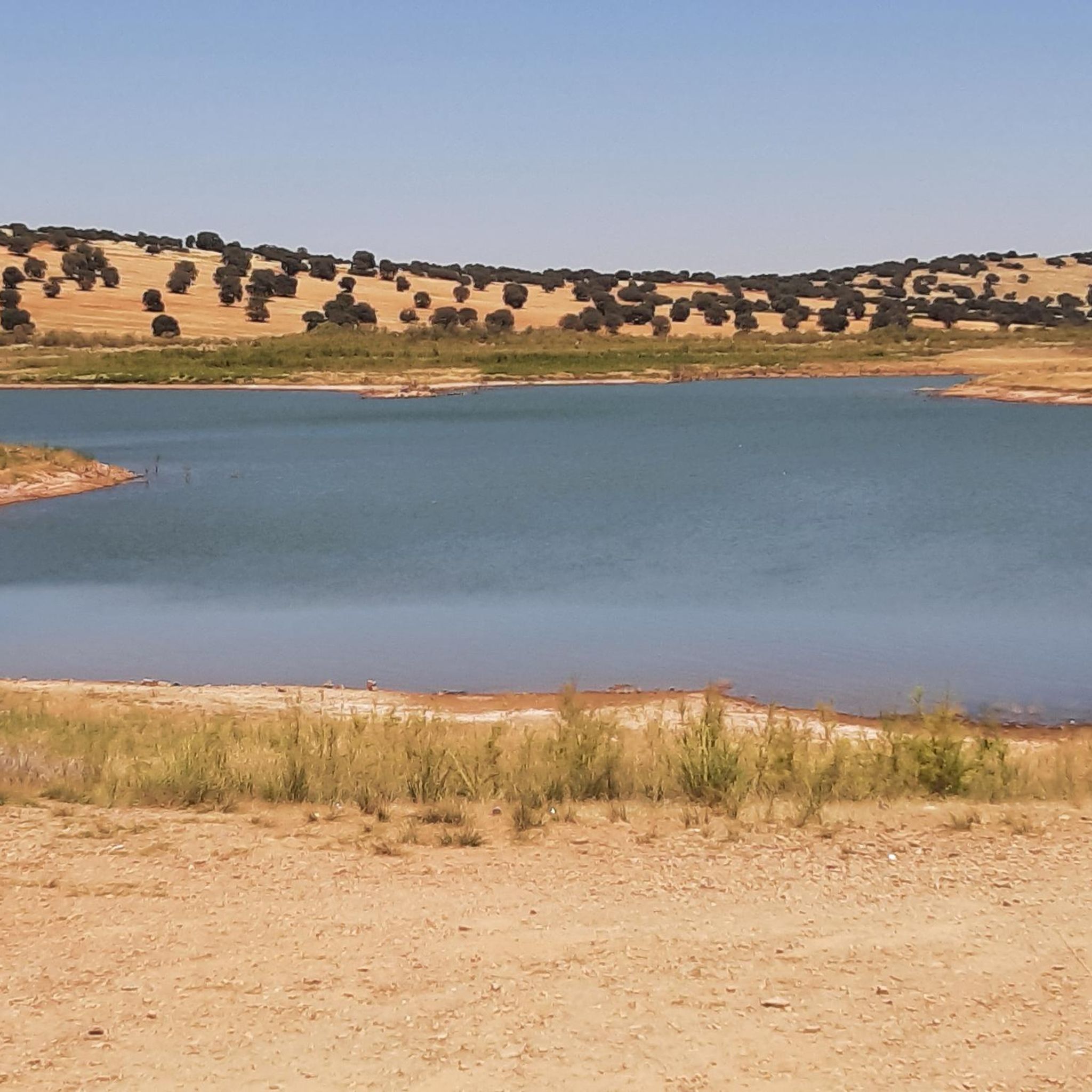
- Another must-see spot is Arroyo del Peral, a river known for its springs and historical ferruginous water baths. The surrounding area is fertile, with orchards and hiking trails to enjoy nature.
- Visitors also love Plaza España, a settlement highlight that serves as the central square of Valdepeñas. It is distinguished by its white and blue facades and an imposing fountain.
- Valdepeñas is known for its historical landmarks, cultural sites, and natural features. The region offers a variety of attractions to see and explore, from ancient archaeological sites to wine museums and natural parks.
- The attractions around Valdepeñas are appreciated by the komoot community, with 24 upvotes and 108 photos shared by visitors.
Last updated: July 21, 2026
Church of the Santísimo Cristo del Valle
Highlight • Religious Site
It has a Greek cross plan inscribed in a square, the arms are covered by half-barrel vaults supported by Tuscan pilasters with a festoon decorated with corbels, at whose intersection stands a large octagonal drum and four turrets at the corners, with iron railings. , which supports a half-orange dome decorated with pomegranates.
Translated by Google •
Tip by

Valdepeñas
Highlight • Settlement
Translated by Google •
Tip by
Sign up now to discover places like this
Get recommendations on the best single tracks, peaks, & plenty of other exciting outdoor places.
Sign up for free
Plaza España
Highlight • Settlement
In the main nave is the altarpiece, a copy of the one from 1553, destroyed in the Civil War, of which six panels are preserved that correspond to a pre-Mannerist before Correa de Vivar, which some hypotheses attribute to the School of Hernando Yánez ( disciple of Raphael). At the end of this nave, the choir stands on a segmental arch.
In the nave of San Lorenzo, a work by Gregorio Prieto with the figure of the patron saint, the Virgen de la Consolación.
Translated by Google •
Tip by
Plaza de San Carlos
Highlight • Settlement
Translated by Google •
Tip by
Arroyo del Peral
Highlight • River
The area around the stream is very fertile, with orchard lands and dry crops. In addition, it is a popular area for second homes and recreational activities. There are hiking trails that run through this area, allowing you to enjoy nature and the landscapes it offers.
Translated by Google •
Tip by
Sign up for free to discover even more attractions around Valdepeñas.
Sign up for free
Already have an account?
Start today with a free account
Your next adventure awaits.
Login or Signup

Other adventures around Valdepeñas

Tips from the Community

Built between 1713 and 1729 as part of the monumental complex that includes the Church of the Most Holy Christ of the Valley. Declared a Site of Cultural Interest in 1993. Originally conceived as a church atrium, it was transformed into a unique porticoed plaza in La Mancha.
4
0
The Valdepeñas Ornamental Fountain is located in the Plaza de España, the historic heart of the town. It is one of the city's most emblematic features and stands out for its design and symbolism: Design: A very beautiful ornamental fountain, considered a visual symbol of the square. Setting: Surrounded by historic buildings such as the Church of the Assumption and the neoclassical Town Hall. The square is characterized by traditional white and indigo arcades. In 2017, the flowerbeds were redesigned, and a permeable fixed aggregate was installed to preserve the design and reduce maintenance.
10
0
The beautiful main square was built by the same architect with the intention of being like an atrium to frame it and integrate it into the complex. The square is an enormous rectangle measuring almost 53 m long by 21 m wide: on one side, the Town Hall with a cantilevered balcony on wooden corbels; on the other, the Casa Grande de la Hospedería. It has a carriage yard with wooden galleries opening onto it. From its sides arise the brick arches that give way to the wide, straight radial streets of this town.
16
0
San Carlos del Valle opens from its splendid Plaza Mayor with an orthogonal projection and an almost round perimeter. Everything extends around a radiated origin, the centre of that circumference, the church of Santísimo Cristo del Valle, where the peak of the compass overwhelms us. It is a late baroque church, with certain influences of the neoclassical style. It is an immense cube with four towers superimposed at its corners and an enormous dome that emerges over the building. The temple has four facades, two of which have a main door of extraordinary beauty and well-deserved study in their centre.
16
0
The Arroyo del Peral is a stream that runs through the district of El Peral, belonging to Valdepeñas, in the province of Ciudad Real. This stream is known for its springs and for having given rise to the historic “baths” of ferruginous water. The area around the stream is very fertile, with orchard lands and dry crops. In addition, it is a popular area for second homes and recreational activities. There are hiking trails that run through this area, allowing you to enjoy nature and the landscapes it offers.
3
0
The church was built on an old sanctuary-hermitage between the 12th and 13th centuries. Its style is late baroque, with some neoclassical elements. It has a Greek cross plan inscribed in a square. Inside, there is the image of the miraculous Christ. The exterior façade is built of brick, with noble parts in stone. Four corner towers and a huge dome emerge above the building. The rough and grotesque human figures in the corners represent the masses who sang and danced during the town festivals. The main doorway, conceived as a gigantic altarpiece, faces the square. The enclosure is covered by a large cased dome composed of a drum, half orange and lantern on a molded ring.
9
0
Information Pinto where they will assist us very kindly and indicate places to visit in the area.
29
0
The church of Santísimo Cristo del Valle was built on the previous hermitage sanctuary of Santa Elena, where according to tradition, a miraculous Christ appeared left in a haystack by a strange walker. It was built between 1723 and 1739, and was restored on several occasions. It has a Greek cross plan inscribed in a square, the arms are covered by half-barrel vaults supported by Tuscan pilasters with a festoon decorated with corbels, at whose intersection stands a large octagonal drum and four turrets at the corners, with iron railings. , which supports a half-orange dome decorated with pomegranates.
30
0
Frequently Asked Questions
What historical sites can I explore in Valdepeñas?
Valdepeñas offers a rich history to explore. You can visit the impressive Church of the Santísimo Cristo del Valle, a late Baroque church built between 1723 and 1739. Another significant site is the Church of Nuestra Señora de la Asunción, a Renaissance church dating back to the 12th century, located in the central Plaza España. Don't miss the Cerro de las Cabezas Iberian City, a 14-hectare archaeological site showcasing an ancient Iberian city abandoned in the 3rd century BC.
Are there any cultural attractions related to Valdepeñas's famous wine?
Absolutely! Valdepeñas is renowned for its winemaking. The Valdepeñas Wine Museum, housed in an old winery, offers a deep dive into the history, culture, and process of winemaking in the region. You can also explore the "Valdepeñas Wine Route" for various wine tourism activities, including tours and tastings at local wineries.
Where can I find natural areas for outdoor activities near Valdepeñas?
For nature lovers, Arroyo del Peral is a beautiful stream known for its springs and hiking trails, offering a fertile area with orchards. Other natural spots include Baños del Peral, a 100,000 m² recreational area with abundant vegetation and a botanical path, and El Cañaveral, featuring Aleppo pines and poplars, ideal for picnics.
Are there family-friendly attractions in Valdepeñas?
Yes, several attractions are suitable for families. The central Plaza España is a vibrant hub where families can enjoy the charming architecture and fountain. Natural areas like Arroyo del Peral and Baños del Peral offer picnic areas, playgrounds, and easy walking trails, perfect for spending time outdoors with children.
What kind of hiking trails are available around Valdepeñas?
The area around Valdepeñas offers various hiking opportunities. You can find trails along the Arroyo del Peral, which provides pleasant walks through orchards and natural landscapes. For more extensive routes, explore the nearby guides for outdoor activities, such as those found in the MTB Trails around Valdepeñas guide, which also includes routes suitable for walking.
Can I go cycling or mountain biking near Valdepeñas's attractions?
Yes, Valdepeñas is a great base for cycling and mountain biking. You can find numerous routes, including those that pass through vineyards and natural areas. Check out the Gravel biking around Valdepeñas guide or the Cycling around Valdepeñas guide for detailed routes, including options like the 'Valdepeñas — circular route through the vineyards'.
What archaeological sites are there to visit in the Valdepeñas area?
The most significant archaeological site is the Cerro de las Cabezas Iberian City. Discovered in 1984, this 14-hectare site provides a unique glimpse into an original Iberian city, as it was abandoned in the 3rd century BC and not reoccupied. An Interpretation Center is available to provide context to the Iberian culture.
Are there any unique museums in Valdepeñas?
Beyond the Wine Museum, Valdepeñas hosts several unique museums. The Valdepeñas Municipal Museum, located in a 16th-century stately home, features contemporary artwork and archaeological finds from Cerro de las Cabezas. The Gregorio Prieto Foundation houses over 3,000 works of art, including pieces by Picasso, while the Museum Molino de Gregorio Prieto is set in an authentic windmill, preserving these structures and showcasing related paintings.
What is the central hub of Valdepeñas for visitors?
The central hub of Valdepeñas is undoubtedly Plaza España. This charming square is distinguished by its white and blue facades and an imposing fountain featuring a wine press. It serves as a vibrant social center and is home to the Casa Consistorial (Town Hall) and the Church of Nuestra Señora de la Asunción.
Are there any accessible attractions for visitors with mobility needs?
Many of Valdepeñas's central attractions, such as the Church of the Santísimo Cristo del Valle and the settlement of Valdepeñas itself, are noted as wheelchair accessible. The main squares and museums often provide good accessibility. It's always recommended to check specific venue details for the most up-to-date information on accessibility features.
What are some unique local products or experiences besides wine?
While wine is central, Valdepeñas also offers other unique experiences. You can visit an olive oil mill, such as COLIVAL, to learn about oil production and enjoy tastings. The region's rich agricultural heritage means you'll find local produce and traditional crafts, often available in the markets around Plaza España.
Where can I find a good viewpoint in Valdepeñas?
For panoramic views of Valdepeñas and its surroundings, head to Cerro de San Cristobal, also known as Cerro de San Blas. Located on the southern edge of the town, this emblematic hill offers a rich forest and excellent vantage points over the city and the landscape.
What do visitors particularly enjoy about the attractions in Valdepeñas?
Visitors to Valdepeñas particularly appreciate the blend of historical depth, cultural richness, and natural beauty. The community has shared 108 photos and given 24 upvotes to the attractions, highlighting the visual appeal and engaging experiences. Many enjoy the well-preserved historical buildings, the insights into winemaking, and the peaceful natural areas perfect for relaxation and gentle walks.
Most popular routes around Valdepeñas

Get inspired with the komoot mobile app


Explore more
Still not found the Highlight you’re looking for? See guides of the top attractions in other regions:
