Attractions and Places To See around Talamantes - Top 20
Best attractions and places to see around Talamantes include historical landmarks and natural landscapes. Situated at the foot of the Moncayo Natural Park, the region offers diverse ecosystems and unique geological formations. Visitors can explore ancient sites and experience the natural features of the Sierra del Moncayo. The area provides opportunities to discover cultural sites and natural points of interest.
Best attractions and places to see around Talamantes
- The most popular attractions is Monastery of Santa María de Veruela,…
Last updated: October 5, 2026
Cueva de los Pilares
Highlight • Cave
Translated by Google •
Tip by

Monastery of Santa María de Veruela
Highlight • Religious Site
Translated by Google •
Tip by
Sign up now to discover places like this
Get recommendations on the best single tracks, peaks, & plenty of other exciting outdoor places.
Cabezo de la Mata
Highlight • Viewpoint
Translated by Google •
Tip by

Majada Baja Refuge, Moncayo Natural Park
Highlight • Mountain Hut
Translated by Google •
Tip by

Soriano Water Nature Trail
Highlight • Trail
Translated by Google •
Tip by

Sign up for free to discover even more attractions around Talamantes.
Already have an account?
Start today with a free account
Your next adventure awaits.

Other adventures around Talamantes

Tips from the Community

Cabezo de la Mata is a peak located in the Sierra del Moncayo, in Aragon, Spain. With an altitude of 1,437 metres, it is one of the most accessible peaks in the area. One of the most popular routes to ascend Cabezo de la Mata begins at Fuente de los Frailes. This circular route offers spectacular views of the northeastern slope of the Sierra del Moncayo and the plain of the Ebro Valley. The route includes sections through beech and pine forests, and is suitable for all year round.
5
0

You need to be in shape, it is a climb that requires some climbing skill.
0
0

Real Monasterio de Santa María de Veruela, or "The Royal Monastery of Santa María de Veruela") is a Cistercian abbey from the 12th century. It is located near Vera de Moncayo. It was founded in 1146 by Pedro de Atarés. Source wikipedia.
1
0

The Moncayo Natural Park crossing is an itinerary for gravel bicycles of a particular design to link with the Santander Mediterráneo Natural Path in Ciria, looking for the best circular bikepacking route back to the city of Soria. The downloaded track is essential in this section, it is impossible to specify in these texts all the detours, intersections and details with the same precision that digital information offers. The mountain bike adventure begins at the Tarazona exit, at the sign for the GR-90 long-distance trail, although it then coincides in a few sections. It is important to carry provisions for the rest of the day and the next, it is not safe to find food in the towns along the way. The route follows a farm road to Grisel and then comes the first spike of the climb in the mountains where the Grisel Wind Farm is located. The hard slope is one kilometer long until you reach the mills, but the slope is steep and the loose stone surface requires extra effort. On the hill, the enormous Moncayo slope covered with pines, oaks and beech trees appears up close. And on top of that, the peaks of the massif are like unattainable islands above a sea of mysterious and impenetrable forests. The path crosses another steep slope of loose stone and begins a long climb up a hill marked with milestones of cycling and hiking routes until it crosses the Agramonte highway and connects with the paved track of the Moncayo Sanctuary. The route continues along the small mountain road, crosses the centuries-old beech forests of Fuente del Sacristán and at the Fuente de los Frailes hairpin it turns to the left to begin the final stretch of the ascent along the forest track of Collado Bellido. In the case of spending the night in the Majada Baja Refuge, where I propose, at the end of the climb, you have to carry water at the source, then there are mountain streams but depending on the season of the year they can be dry. Along the way there are several crossings and detours, generally it is always the uphill track that runs along the entire northern slope of the Moncayo massif to go to the southern face. The climb is long and constant, it leaves the forest and continues until it passes the detour to Collado Bellido, indicated with markers on the ditch of the forest track. The end of the ascent is shortly after, at the curve of the Valdealonso stream, at about 1,900 meters of altitude, the path changes slope and the descent begins. Two kilometers later is the Majada Baja Refuge, it is a natural park refuge, well maintained and available for mountaineers, cyclists, hunters, shepherds and users of the Moncayo environmental space. The place has extraordinary views and it is difficult to pass by at dusk and not stay the night.
1
0

At the Collado de la Atalaya you have to head northeast along the slope of the mountain range following a level path marked with stone markers. The path crosses the Las Hoyas de los Portillos valley and climbs halfway through the pine forest towards the wall of the Muela del Cerro Morrón. In the pine forest you have to keep climbing towards the east and at the base of the walls connect with the path coming from the north face of the mountain. The landmarks are clear between the pine trees and the mole wall, they jump a couple of small slopes near other cavities and lead to the spectacular Cueva de los Pilares, a fantastic natural rock sanctuary with arches, vaults and giant columns. The climb to the summit of the mole leaves from the cave through the canal located to the west, it is a clear and obvious climb, it has stone markers and although it seems that there is no exit with good visibility, it is a simple section along some aerial ledges without too many complications, unless the rock is wet, it cannot even be classified as a climbing step, rather technical mountain hiking. The milestones enter the large inclined molar plain and take the direction of the summit through the center of the mountain.
0
1
The third day of the cycling trip is delicious, almost all favorable terrain and very seductive landscapes until Ciria. The descent passes through the detour of the Cruz de las Heladas hill, in the beautiful pastoral meadows of El Hoyuelo. The name refers to a group of women from Beratón who were surprised by a snow blizzard and froze to death, only the cavalry survived. The lane crests the last hills of Moncayo and goes down towards Beratón. In the ravines on the left, the Isuela River is born, one of the main tributaries of the Jalón River, therefore we are still on the Mediterranean slope of the Iberian System. In Beratón we take the photo from the stone cruise and continue planning at full pedal along an impeccable track that surrounds the Sierra del Tablado and ends in Borobia, with a small hostel open all year round, it is the main refreshment point of the stage. The route runs through the karst plateaus of the Manubles River and in the Corrales de las Cabezas it descends to the limestone canyon of the Celorrio barracks, a spectacular gorge of rocky slopes that leads to the Ciria road. The landscapes along the route never cease to surprise. In the Middle Ages, the town of Ciria was a strategic step on the old borders between Arabs and Christians, it has a rock fortress and a medieval urban layout. The castle is perched on steep, isolated cliffs outside the town, watching over the course of the Manubles River. You have to walk a few minutes to reach the wall of the old fortress. In the urban area, the large volume of the Gothic church in the staggered distribution of the town draws attention. The route of the old Santander-Mediterranean railway passes in Ciria, our destination to return to the city of Soria because this section has been recovered by the Natural Trails network and offers a fantastic cycling alternative for gravel bikepacking. The link from the town to the old railway is simple through the Manubles plain and a lane that goes up to the roadbed. In the ditch there is a sign dedicated to the town of Ciria and then a small curved tunnel with automatic artificial lighting. The first section of the natural path is a gentle climb to El Pozuelo and the Tordesalas station, the entrance to the Soriano moor and the Duero basin. The rest of the trip is a flat landscape with no notable changes of pace in the immense colorful plains of the Campos de Gómara, dedicated mainly to cereal cultivation. The railway passes near the towns but never touches the urban centres, you have to detour to get water or any type of provision. We stopped at the hermitage of the Silos, near Portillo de Soria, which is next to the road, has shade and a pleasant place to take the last supplies we have left and regain strength. In the next section there are more abandoned stations, some of good size that demonstrate the commercial importance that the railway had during its time of service. The rest area of the old Martialay station announces the end of the journey. The natural path ends at the Valcorba Industrial Estate, about four kilometers before Soria. The route runs through the streets of the industrial warehouses and comes out to the roundabout of the N-234 highway that enters Soria via the Duero River. At the end of the descent there is a detour to the left that enters directly into the Soto Playa gardens, crosses the Duero over the crab pedestrian bridge and ends at the parking lot. End of the cycling adventure. The value of a trip is not measured by the distance traveled or the number of photos, but rather by the desire to start the next one.
0
0

We are in the monastery of Santa María de Veruela, a magical place in the province of Zaragoza. The monastery combines Romanesque, Gothic, Renaissance and Baroque architecture and is surrounded by a wall. We can also visit the cloister or the exhibition of the Bécquer brothers since they worked and stayed here. Admission is free for children up to 11 years old (€2 for adults) but it is totally worth it if we are interested in the whole story.
3
0
We are in the Monastery of Santa María de Veruela, a magical place in the province of Zaragoza. The monastery combines Romanesque, Gothic, Renaissance and Baroque architecture and is surrounded by a wall. We can also visit the cloister or the exhibition of the Bécquer brothers since they worked and stayed here. Admission is free up to 11 years old (€2 for adults) but it is totally worth it if we are interested in all the history.
1
0
Frequently Asked Questions
What historical and cultural sites can I visit around Talamantes?
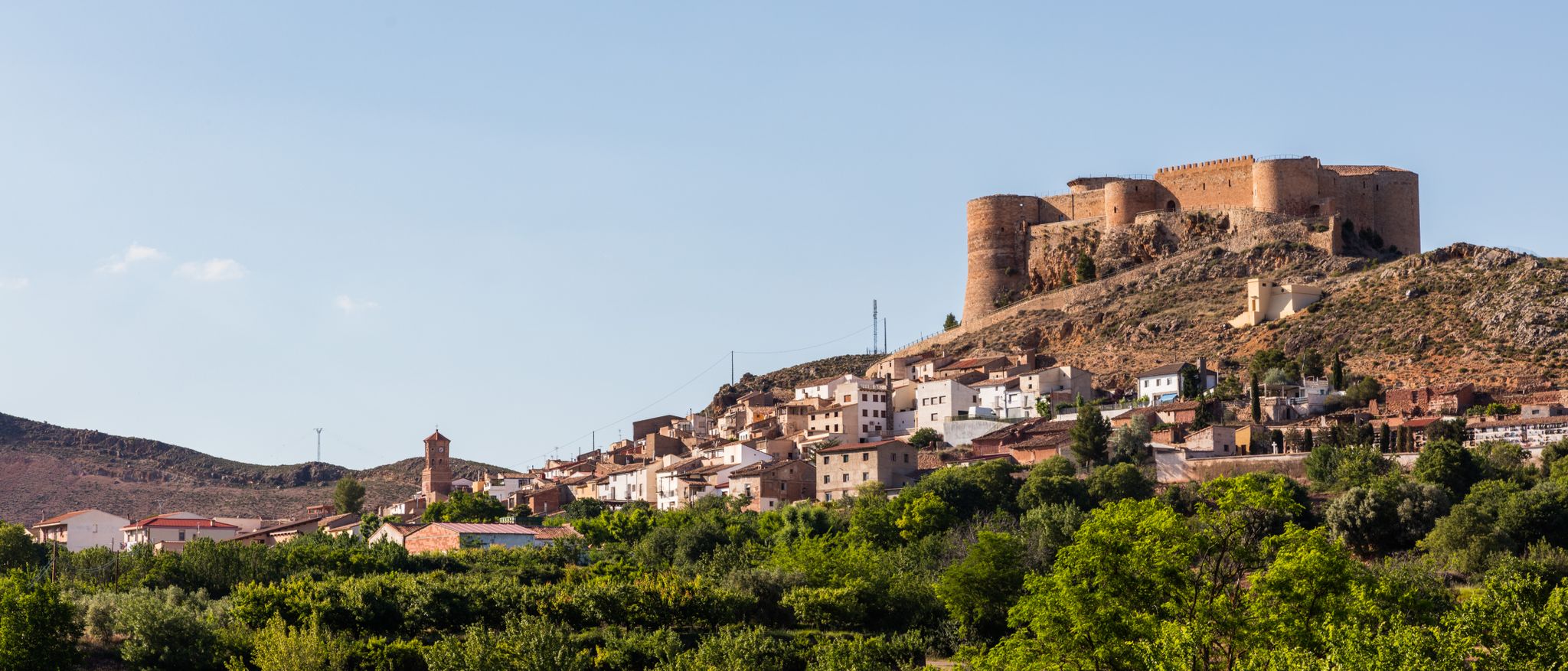
Explore the rich history of the region by visiting the Monastery of Santa María de Veruela, a Cistercian abbey showcasing Romanesque, Gothic, Renaissance, and Baroque architecture. You can also discover the legendary Trasmoz Castle, known for its association with witchcraft and its unique 'Museum of Witchery'. Don't miss the remains of the 12th-century Castle of Talamantes, once belonging to the Knights Templar, and the Church of San Pedro Apóstol in Talamantes with its Gothic mural paintings.
What natural attractions and viewpoints are there near Talamantes?
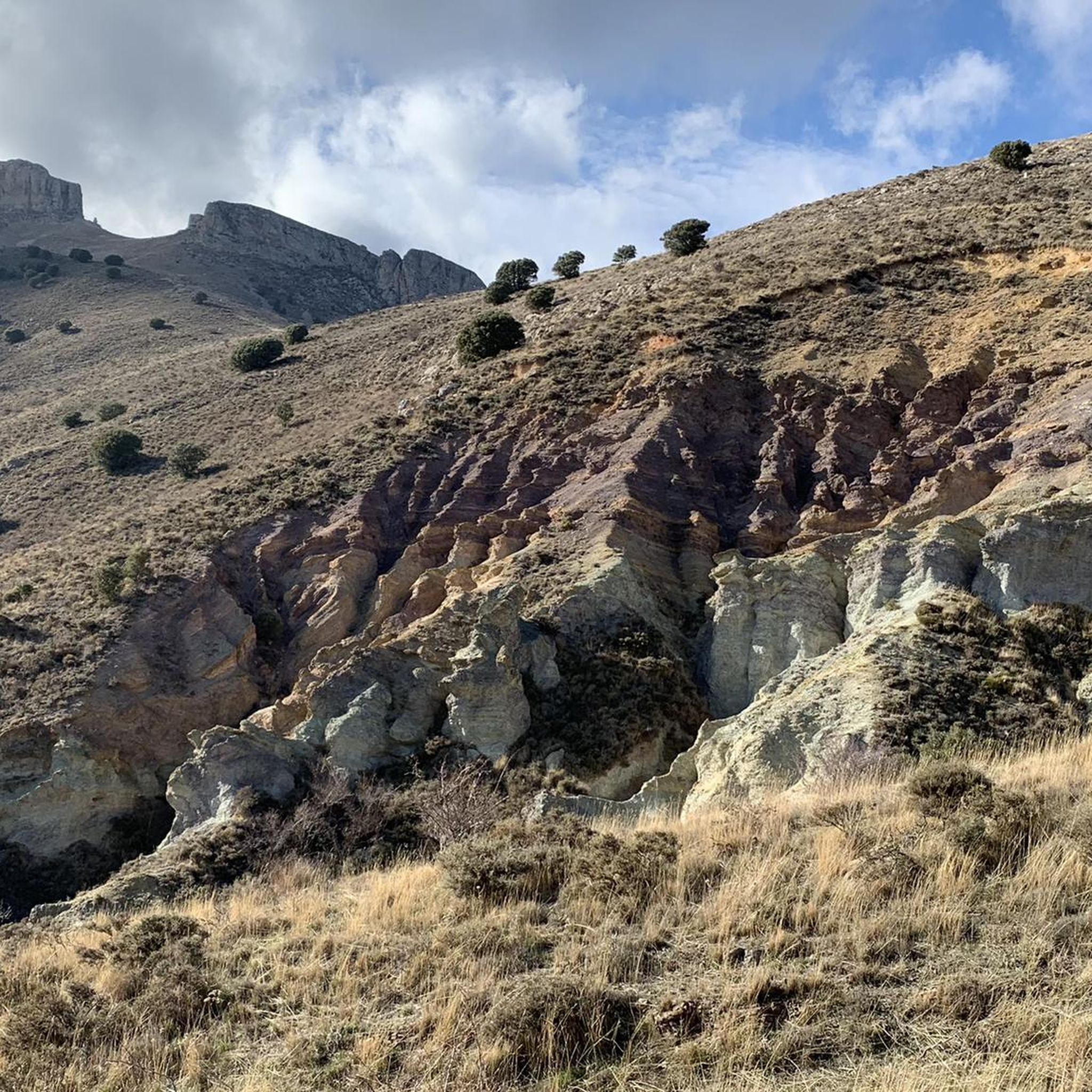
The area boasts stunning natural beauty, including the Cueva de los Pilares, a natural rock sanctuary with spectacular formations like arches and giant columns. For panoramic views, ascend Cabezo de la Mata, a peak offering extensive vistas of the Sierra del Moncayo and the Ebro Valley. Other natural highlights include the unique geological formation of Pozo de los Aines and the dramatic Peñas de Herrera rock formations within Moncayo Natural Park.
Are there family-friendly attractions in the Talamantes area?
Yes, the Monastery of Santa María de Veruela is considered family-friendly, offering free admission for children up to 11 years old. Its historical significance and architectural beauty can be engaging for all ages. Additionally, many of the natural trails in Moncayo Natural Park offer varying difficulties, making some suitable for families looking for outdoor adventures.
What hiking opportunities are available around Talamantes?
Talamantes is an excellent base for hiking, situated at the foot of Moncayo Natural Park. You can find numerous trails leading to points like Pico Moncayo, Peñas de Herrera, and the Barrancos de Talamantes. The region is also traversed by long-distance footpaths like the GR-90 Tierras del Moncayo y Sistema Ibérico and the GR-260 “Calcenada”. For more detailed routes, explore the Running Trails around Talamantes guide, which includes options for various difficulty levels.
Can I go mountain biking or road cycling near Talamantes?
Absolutely! The diverse terrain around Talamantes is perfect for cycling. You can find challenging mountain bike routes through Moncayo Natural Park, such as the Cerro Gordo MTB Route or the circular route through Tabuenca, Talamantes, and Trasobares. For road cyclists, there are scenic routes like the Moncayo Climbs Loop via Tarazona and Veruela, or the Templars' Path Loop. Discover more options in the MTB Trails around Talamantes and Road Cycling Routes around Talamantes guides.
What is the best time of year to visit Talamantes for outdoor activities?
The spring and autumn months are generally ideal for outdoor activities around Talamantes. The weather is milder, making hiking and cycling more comfortable. In spring, the landscape is lush, while autumn offers beautiful foliage. Summer can be warm, especially at lower elevations, but higher trails in Moncayo Natural Park offer cooler temperatures. Winter provides opportunities for snow activities on Pico Moncayo, though some trails may be less accessible.
Are there any facilities or refuges for hikers in Moncayo Natural Park?
Yes, within Moncayo Natural Park, you can find facilities like the Majada Baja Refuge. This well-maintained natural park refuge offers a place to rest and enjoy extraordinary views, especially for mountaineers, cyclists, and hikers exploring the Moncayo environmental space. It's advisable to carry water, as mountain streams can be dry depending on the season.
Where can I find extensive views of the Ebro Valley?
For extensive views of the Ebro Valley and the northeastern slope of the Sierra del Moncayo, head to Cabezo de la Mata. This peak, at 1,437 meters, is easily accessible from Fuente de los Frailes or the Central de la Morca car park and provides a spectacular panorama.
What unique geological features can be found in the Talamantes area?
The region is home to several unique geological features. The Cueva de los Pilares is a notable cave with impressive rock formations. Another fascinating site is the Pozo de los Aines, a doline (sinkhole) formed by the collapse of limestone and gypsum strata, known for its distinct vegetation and local legends. The Peñas de Herrera also showcase spectacular rock formations.
What do visitors enjoy most about the attractions around Talamantes?
Visitors frequently praise the blend of historical depth and natural beauty. The 'magical' atmosphere and architectural grandeur of the Monastery of Santa María de Veruela are often highlighted. The spectacular rock formations at Cueva de los Pilares and the extensive panoramic views from Cabezo de la Mata are also highly appreciated for their natural splendor.
Are there any hidden gems or less-known spots worth exploring?
Beyond the main attractions, consider exploring the Ermita Románica de San Miguel, a Romanesque hermitage nestled in a beautiful, serene spot near Talamantes. The town's urban area itself, with its steep streets and traditional buildings, offers a charming glimpse into local life. For those interested in speleology, the Sima del Tubo presents an opportunity for exploration.
Where can I find parking for trails around Talamantes?
Many hiking routes, especially those leading to Cabezo de la Mata, are accessible from designated parking areas such as Fuente de los Frailes or the Central de la Morca car park. For specific trailheads within Moncayo Natural Park, it's advisable to check the route details on komoot for recommended starting points and parking information.
Most popular attractions around Talamantes

Get inspired with the komoot mobile app


Explore more
Still not found the Highlight you’re looking for? See guides of the top attractions in other regions:
