Attractions and Places To See around Hernansancho - Top 11
Best attractions and places to see around Hernansancho are located in the province of Ávila, within the Castilla y León region of Spain. This area offers a blend of historical and cultural heritage, characterized by its flat terrain in the La Moraña plain. Visitors can explore a variety of landmarks and cultural sites that reflect the region's unique past.
Best attractions and places to see around Hernansancho
- The most popular attractions is Castle of Narros de Saldueña, a castle…
Last updated: May 4, 2026
Castle of Narros de Saldueña
Highlight • Castle
Translated by Google •
Tip by

Church of San Pedro Apóstol
Highlight • Religious Site
Translated by Google •
Tip by

Sign up now to discover places like this
Get recommendations on the best single tracks, peaks, & plenty of other exciting outdoor places.
Sign up for free
El Bohodón
Highlight • Settlement
Translated by Google •
Tip by
Mingorría
Highlight • Settlement
Translated by Google •
Tip by
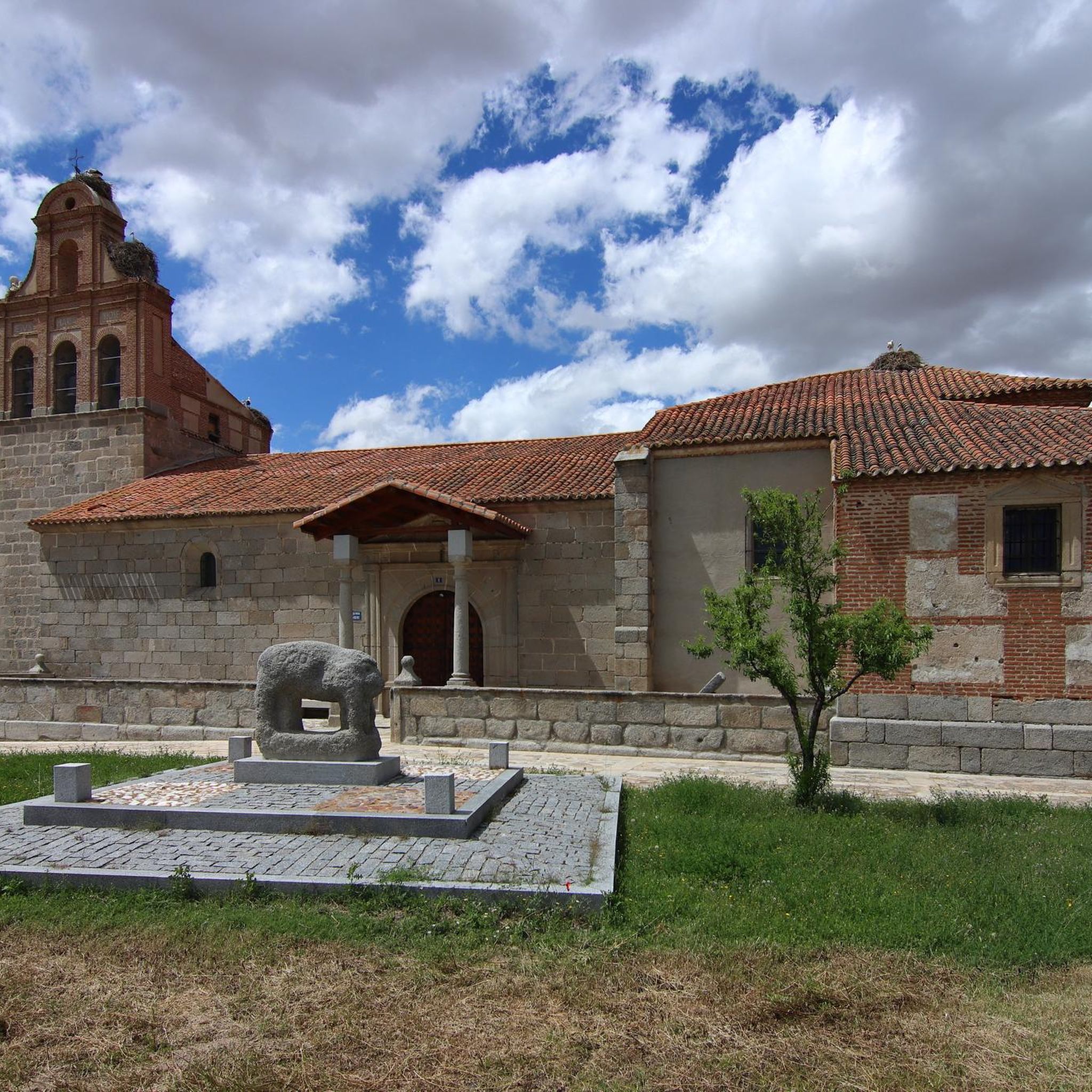
Church of San Pedro Apóstol and the Verraco Vettón (Stone Bear)
Highlight • Religious Site
Translated by Google •
Tip by
Sign up for free to discover even more attractions around Hernansancho.
Sign up for free
Already have an account?
Start today with a free account
Your next adventure awaits.
Login or Signup

Tips from the Community

Narros de Saldueña Castle, also known as the Castle of the Duke of Montellano, is one of the best-preserved fortresses in the province of Ávila. It is located in the town of Narros de Saldueña, within the town limits. Construction: Late 15th century, attributed to Rodrigo de Valderrábanos, Lord of the Saldueña Estate. Expansions: It was renovated and enlarged at the beginning of the 16th century by his successors.
4
0
The Church of San Pedro Apóstol in El Oso, Ávila, is a parish church dating back to the 16th century. It stands out for its stone architecture, with three naves separated by large semicircular arches and a 17th-century Baroque main altarpiece. ⛪😎 In front of the church, there is the Stone Bear, also known as Verraco Vettón. This stone sculpture is part of the town's Open Air Museum and has great historical and cultural importance.🐻
4
0
The Castle of the Duke of Montellano, also known as Castle of Narros de Saldueña, is located at the end of the town of Narros de Saldueña, in the heart of the La Moraña plain, in the province of Ávila, autonomous community of Castilla y León. This castle, tracing its origins to the 15th century, is a good example of a castle-palace built with brick and mud (mortar), which relates it to Mudejar architecture.
6
0
El Bohodón is a municipality in Spain belonging to the province of Ávila, in the autonomous community of Castilla y León. It is located in the La Moraña region, in the north of the province. It is located 35 kilometers from the capital and 17 kilometers from Arévalo.
5
0
The place name Mingorría retains Basque reminiscences, deriving from “mendi gorria,” which means “red mountain” or “red land.” This is observed in other cases in the province of Ávila, such as the town of Mendigorría in Navarra. In historical documents, Mingorría already appears as Ningorría, and it is believed that there was an assimilation due to the change of the liquid initials “M” to “N.” Another legend attributes the name of Mingorría to the notice that José Chinchurreta gave to monarch Felipe II, justifying the delay in the supply of granite during the works of the Monastery of El Escorial.
4
0

Beautiful castle also called the Duke of Montellano (Ávila) Well-preserved building that is worth visiting!
0
1

The castle of the Duke of Montellano dates from the s. XV and, given the use of brick and mud in its construction, it is related to Mudejar architecture. In its day it belonged to the Valderrábano family. It is listed as an Asset of Cultural Interest.
1
0
It is the church of the locality, with origin of the s. XVI. In front of it, you can see another of the stops of the Open Air Museum: the stone bear or Verraco Vettón, around which there is a whole local mythology.
2
1
Frequently Asked Questions
What historical landmarks can I explore near Hernansancho?
The region around Hernansancho is rich in history. You can visit the 15th-century Castle of Narros de Saldueña, a well-preserved example of a castle-palace. Another significant site is the Church of San Pedro Apóstol in El Oso, a Romanesque church approximately eight centuries old, known for its Mudejar apse.
Are there any examples of Mudejar architecture in the area?
Yes, Mudejar architecture is a prominent feature in the region. The Castle of Narros de Saldueña is a prime example, built with brick and mud in this distinctive style. Additionally, the Church of San Pedro Apóstol in El Oso features a notable Mudejar apse.
What natural attractions are there around Hernansancho?
While Hernansancho itself is a smaller municipality, the nearby area offers natural features like the Laguna del Oso (Lagoon of El Oso), located in the adjacent municipality of El Oso. The region is also characterized by the flat terrain of the La Moraña plain, with the Adaja and Arevalillo rivers flowing through nearby areas like El Bohodón.
What outdoor activities, such as hiking or cycling, can I do near Hernansancho?
The area around Hernansancho offers various outdoor activities. For hiking, you can explore routes like the 'Laguna de El Oso Loop' or the more challenging 'Gotarrendura and El Oso Loop'. Cyclists can enjoy routes such as 'Bike loop from Santo Domingo de las Posadas' or 'Mingorría loop from Zorita de Los Molinos'. You can find more details and routes in the dedicated guides for hiking, cycling, and road cycling around Hernansancho.
Are there any ancient artifacts or pre-Romanesque sites to see?
Yes, in front of the Church of San Pedro Apóstol in El Oso, you can find the Verraco Vettón, also known as the Stone Bear. This pre-Romanesque stone sculpture is part of the town's Open Air Museum and holds significant historical and cultural importance, with local mythology surrounding it.
What is the best time of year to visit Hernansancho for outdoor activities?
While specific weather data isn't provided, the Castilla y León region generally experiences hot, dry summers and cold winters. For outdoor activities like hiking and cycling, spring (April-June) and autumn (September-October) typically offer more pleasant temperatures and conditions, avoiding the summer heat and winter chill.
Are there any family-friendly attractions or activities in the area?
Many of the historical sites, such as the Castle of Narros de Saldueña and the Church of San Pedro Apóstol with its Stone Bear, can be engaging for families interested in history and culture. Exploring the natural landscapes and easier hiking routes, like the 'Laguna de El Oso Loop', can also be suitable for families.
Can I find dog-friendly trails or places around Hernansancho?
Many of the outdoor trails and natural areas around Hernansancho, including those near the Laguna del Oso, are generally suitable for walks with dogs, provided they are kept under control and local regulations are followed. It's always advisable to check specific rules for individual sites or protected areas.
What is the significance of the town of Mingorría?
Mingorría is a nearby town with a name that retains Basque reminiscences, deriving from “mendi gorria,” meaning “red mountain” or “red land.” It's characterized by its location close to the banks of the Adaja river and features a beautiful church in its old center, making it a point of interest for its historical and natural surroundings.
Is there any information about parking availability at attractions?
Specific parking details for each attraction are not extensively documented. However, for smaller towns and rural attractions like the Castle of Narros de Saldueña or the Church of San Pedro Apóstol, street parking in the vicinity of the villages is typically available. It's recommended to look for designated parking areas upon arrival.
What is the historical connection of Hernansancho to religious figures?
Hernansancho has a historical connection to Mariano Juan María de la Cruz García Méndez, a beatified priest of the Catholic Church. After his ordination in 1916, he served as the administrator of the parish in Hernansancho, where he was known for promoting devotion to the Virgin Mary and active participation in the Eucharist.
How long should I plan to spend visiting the attractions around Hernansancho?
To comfortably visit the main historical and natural attractions like the Castle of Narros de Saldueña, the Church of San Pedro Apóstol, and explore some of the nearby natural areas or a hiking trail, a full day or even a weekend would allow for a relaxed and comprehensive experience of the region's highlights.

Get inspired with the komoot mobile app


Explore more
Still not found the Highlight you’re looking for? See guides of the top attractions in other regions:
