Top 4 Castles around Arganza
Castles near Arganza Spain are primarily found in the surrounding El Bierzo region, a municipality in the province of León. This area is characterized by its historical significance and diverse landscapes, offering opportunities for Arganza region tourism. While Arganza itself may not host prominent castles, the nearby towns feature well-preserved historical sites. The region's geography includes valleys and hills, providing a backdrop for these historical structures.
Best castles around Arganza
- The most popular castles is Ponferrada Castle, a castle…
Last updated: August 9, 2026
Ponferrada Castle
Highlight • Castle
Translated by Google •
Tip by

Villafranca del Bierzo Castle
Highlight • Castle
Translated by Google •
Tip by

Sign up now to discover places like this
Get recommendations on the best single tracks, peaks, & plenty of other exciting outdoor places.
Sign up for free
Statue of Nazareno Lambrion Chupacandiles
Highlight • Monument
Translated by Google •
Tip by
Start today with a free account
Your next adventure awaits.
Login or Signup

Tips from the Community

The Lambrión Chupacandiles statue in Ponferrada is a bronze tribute to one of the most iconic figures of the local Semana Santa tradition. Installed in 2024 at the Church of San Andrés, the statue depicts a Nazareno in a black hooded robe, holding a bell—just as he parades through the city each year to announce the arrival of Holy Week. The figure, which originated in the 17th century, is linked to the Hermandad de Jesús Nazareno and takes its name from a legend that says he tasted wine and even oil from candlesticks along the way. Designed by Tomás Bañuelos and Soraya Triana, the sculpture has become a recognizable symbol of Ponferrada's religious heritage.
3
0

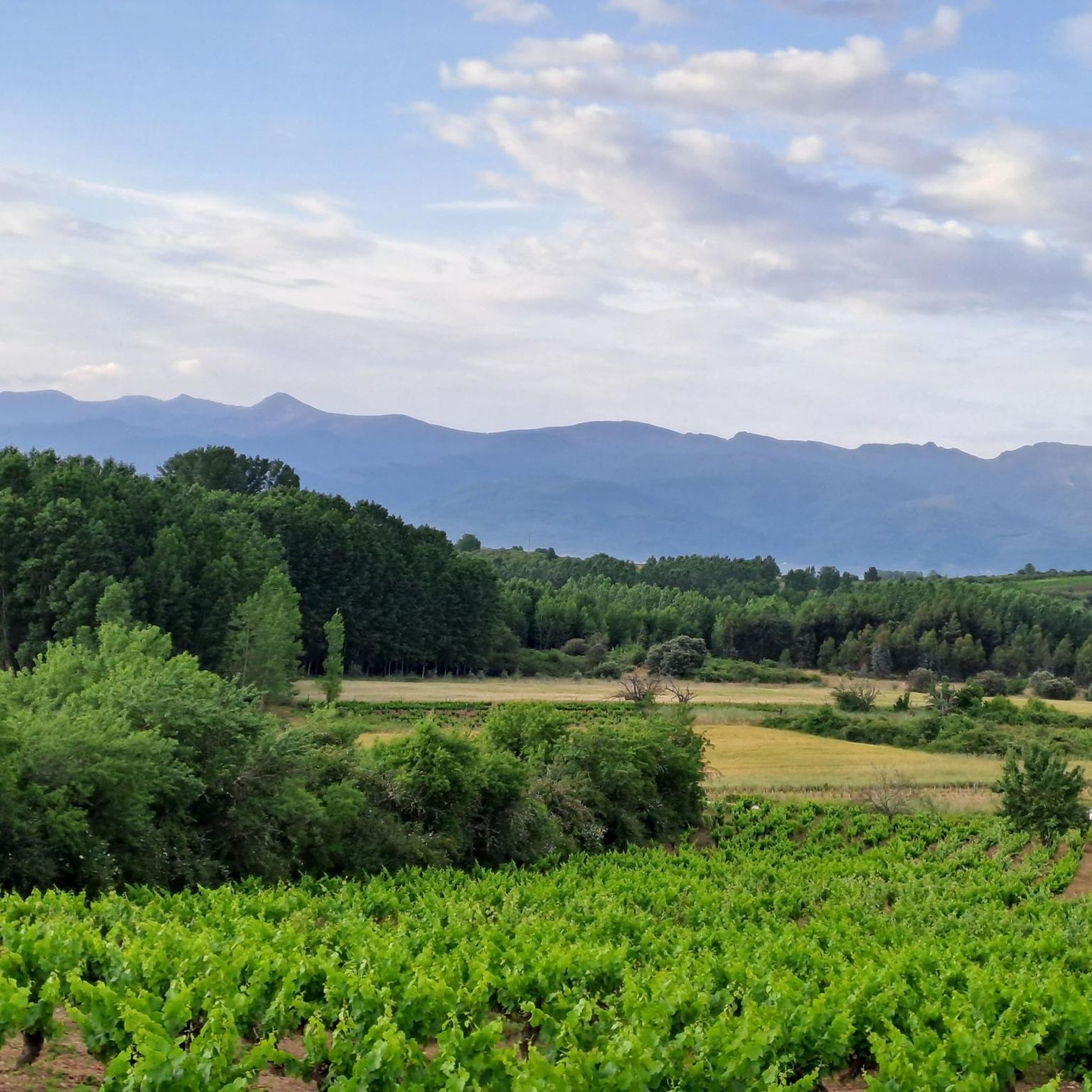
Stage of the Camino de Santiago. It goes from the vineyards of Bierzo to the green mountains of the mythical O Cebreiro pass
5
0

At the end of the 11th century, Osmundo, Bishop of Astorga, ordered the construction of a bridge (partly made of iron = pons ferrata) over the Sil for the pilgrims on the Way of St. James, near which a settlement was built. At the "pons ferrata", the iron bridge, the Knights Templar built a huge castle on a surface area of 160 x 90 m to protect the pilgrims on the Way of St. James. The medieval castle complex was inhabited by the Knights Templar from 1178 to 1312. Source: Wikipedia
5
0

The Templars' heyday from the 12th to 14th centuries led to the construction of this mighty fortress, among other things to protect the pilgrims on the Way of St. James. The rampart on the city hill stands out impressively against the mountain backdrop and absolutely conforms to the stereotypical image of a knight's castle. It is sensationally well maintained and a feast for the eyes.
6
0

The order, often referred to simply as the "Order of the Knights Templar," whose full name is "Poor Knights of Christ and of Solomon's Temple in Jerusalem," takes us mentally back to the 13th century. Founded in the Holy Land, it spread surprisingly quickly to many countries in Central Europe, and this castle complex in Ponferrada, northern Spain, was one of its numerous branches. The order gained notoriety through its dissolution in 1312 by the French king and the pope, and many of its members were burned at the stake as alleged heretics. The main reason for the dissolution, however, was not the members' human and religious misconduct (heresy), which was merely a pretext, but the legendary wealth of this order. King Philip IV of France primarily wanted to secure the treasures to bolster his coffers.
6
0

The Templar Castle of Ponferrada is a superb building. It houses the Templar Library and the Ponferrada Center for Research and Historical Studies, with over 1,400 books, including facsimiles of works by Leonardo da Vinci. It was originally a Roman camp and later a citadel. In the early 12th century, the Templars took possession of the fortress, strengthening and expanding it to serve as a residential palace and as a protection for pilgrims on their way to Santiago de Compostela. The building has an irregular square plan, and its most notable entrance is reached by crossing the moat over a drawbridge and, further on, two large crenellated towers joined by an arch. Its twelve original towers depicted the constellations.
5
0

The building, from the early 16th century, is a large square with circular cubes in the corners and palatial rooms around a central interior patio.
12
1
To this day, the impressive walls of the castle give a well-fortified impression.
5
0
Frequently Asked Questions
Where are the main castles located near Arganza?
While Arganza itself does not host prominent castles, the most notable ones are found in the surrounding El Bierzo region. Key examples include Ponferrada Castle and Villafranca del Bierzo Castle.
What makes Ponferrada Castle significant?
Ponferrada Castle was one of the largest fortresses in northwestern Spain during the Middle Ages. It features a large polygonal enclosure with double and triple defenses, including barbicans, towers, and a spacious patio. Historically, it was a Templar castle, built on what was likely a Celtic castro, and later a Roman and Visigoth site.
What can I expect when visiting Villafranca del Bierzo Castle?
Villafranca del Bierzo Castle is a 16th-century building characterized by a large square layout with circular towers at its corners and palatial rooms surrounding a central interior patio. Its impressive walls still convey a well-fortified appearance.
Are there family-friendly castles or historical sites near Arganza?
Yes, both Ponferrada Castle and Villafranca del Bierzo Castle are considered family-friendly. Additionally, the Statue of Nazareno Lambrion Chupacandiles in Ponferrada is also family-friendly and wheelchair accessible.
What kind of historical sites are there besides castles?
Beyond the castles, you can visit the Statue of Nazareno Lambrion Chupacandiles in Ponferrada. This bronze tribute depicts a Nazareno in a black hooded robe, symbolizing Ponferrada's religious heritage and its local Semana Santa tradition.
What outdoor activities can I do near these castles?
The El Bierzo region offers various outdoor activities. You can find numerous hiking trails, such as the 'Hermitage of San Blas and San Roque – Clock Tower of Camponaraya loop' or the 'Viña Los Almendros Cabin – Vineyards loop'. For more options, explore the Hiking around Arganza guide.
Are there running or cycling routes in the area?
Yes, the region around Arganza has dedicated routes for running and road cycling. Running options include the 'Cúa River in Cacabelos – Ponferrada Castle loop', while cyclists can enjoy routes like 'Villafranca del Bierzo from Cacabelos – circular by the rivers Burbia and Cùa'. You can find more details in the Running Trails around Arganza and Road Cycling Routes around Arganza guides.
What is the best time of year to visit castles near Arganza?
The El Bierzo region, where these castles are located, generally experiences pleasant weather during spring and autumn, making these seasons ideal for exploring historical sites and engaging in outdoor activities. Summers can be warm, while winters are cooler.
Are there any viewpoints near the castles?
Ponferrada Castle is also categorized as a viewpoint, offering scenic perspectives of the surrounding area from its fortifications.
What do visitors appreciate most about the castles in this region?
Visitors frequently appreciate the historical significance and preservation of sites like Ponferrada Castle and Villafranca del Bierzo Castle. The komoot community has shared over 320 photos and given more than 360 upvotes, highlighting the visual appeal and historical depth of these sites.
Is there public transport available to reach the castles?
While Arganza is a smaller municipality, the larger towns like Ponferrada and Villafranca del Bierzo, where the main castles are located, are generally well-connected by regional public transport. It's advisable to check local bus schedules for specific routes and timings to reach the castle towns.
Most popular routes around Arganza
Most popular attractions around Arganza

Get inspired with the komoot mobile app


Explore more
Looking for the best castles somewhere else? Discover other guides around Arganza:
