Attractions and Places To See around Pozoblanco - Top 20
Best attractions and places to see around Pozoblanco are found in the Sierra de Córdoba and the heart of the Los Pedroches Valley. This region is characterized by extensive dehesas, featuring oak trees used for ranching, and a blend of historical architecture with modern areas. The area is known for its Iberian products, particularly acorn-fed ham. Visitors can explore a variety of historical, cultural, and natural sites.
Best attractions and places to see around Pozoblanco
- The most popular attractions is Hermitage of the Virgen de Luna, a religious building located about 15 km from Pozoblanco in the Dehesa de la Jara. This site is deeply linked to the religious and cultural traditions of Pozoblanco and Villanueva de Córdoba.
- Another must-see spot is Alcaracejos Town Center, a settlement with a mining tradition. This town's architectural heritage was largely destroyed during the Civil War.
- Visitors also love Plaza de España in Villanueva de Córdoba, a historical site featuring an anti-aircraft shelter from the Civil War and the 16th-century Church of San Miguel Arcángel. The church facade displays a Roman trifinio, a landmark marking ancient jurisdictional terms.
- Pozoblanco is known for its historical sites, natural features like the dehesas, and cultural experiences. The region offers a variety of attractions to see and explore, from ancient churches to modern theaters.
- The attractions around Pozoblanco are appreciated by the komoot community, with more than 10 upvotes and over 10 photos shared by visitors.
Last updated: July 6, 2026
Hermitage of the Virgen de Luna
Highlight • Religious Site
At the back of the hermitage there is a public toilet.
Translated by Google •
Tip by

Malos Pasos Spring
Highlight • Natural Monument
Translated by Google •
Tip by

Sign up now to discover places like this
Get recommendations on the best single tracks, peaks, & plenty of other exciting outdoor places.
Sign up for free
Alcaracejos Town Center
Highlight • Settlement
Translated by Google •
Tip by

Plaza de España in Villanueva de Córdoba
Highlight • Historical Site
Translated by Google •
Tip by

Camino Mozarabe de Santiago
Highlight (Segment) • Trail
Translated by Google •
Tip by
Sign up for free to discover even more attractions around Pozoblanco.
Sign up for free
Already have an account?
Start today with a free account
Your next adventure awaits.
Login or Signup

Other adventures around Pozoblanco

Tips from the Community

Although the exact date of its construction is unknown, tradition indicates that it was built in the mid-15th century, possibly thanks to a woman from Los Pedroches who promoted the construction of the first hermitage. According to legend, the image of the Virgin was found by a shepherd from Pedroche in a holm oak near the sanctuary at the beginning of the 15th century.
2
0
The Sanctuary of Our Lady of Luna is one of the most emblematic sites in the Los Pedroches Valley, deeply linked to the religious and cultural traditions of Pozoblanco and Villanueva de Córdoba. The sanctuary is located in the Dehesa de la Jara, in the municipality of Navarredonda, a natural holm oak grove characteristic of Los Pedroches. It is situated 15 km from Pozoblanco and 10 km from Villanueva de Córdoba.
2
0
The Fuente de Malos Pasos is a fascinating place that is located next to the Cañada Real Soriana and the Mozárabe Camino de Santiago in Villaharta. The Fountain of Malos Pasos is a special place where history and nature intertwine. If you ever have the opportunity to visit it, enjoy its beauty and the freshness of its waters.
1
1

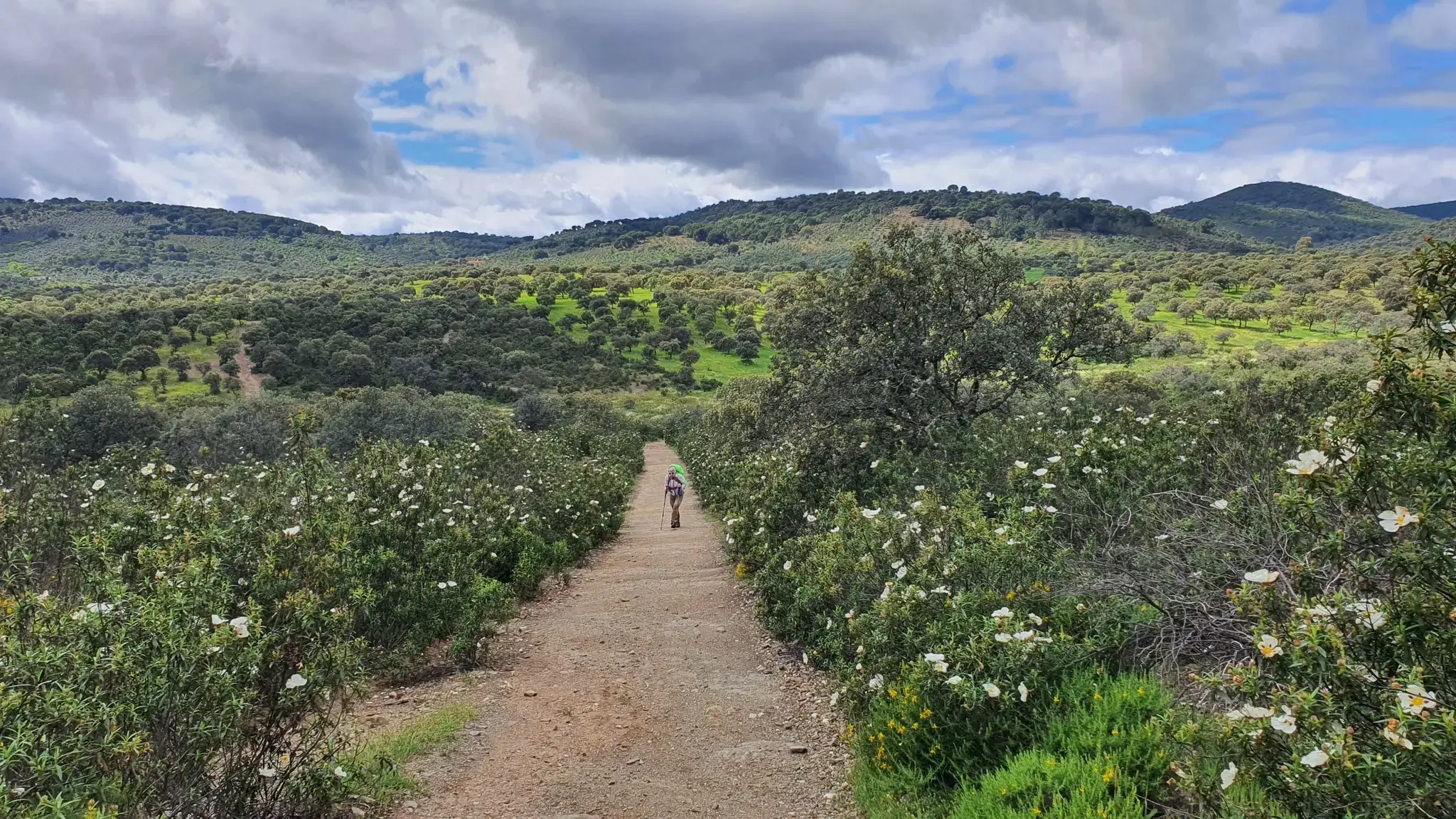
In this area of the Camino Mozarabe it is hillier again and it becomes lonelier. You should plan your milestones well.
1
0

This fountain is located on the outskirts of Villaharta, inside a small shelter whose opening is conditioned by the Espiel town hall. Its waters are considered mineral-medicinal, and for this reason four spas were built in ancient times.
3
0
The GR 48 coincides in many sections with the Mozarabic Way of Santiago, which in its longest version runs 1,420 kilometers from Almería to Santiago de Compostela.
3
0

In the central square of the town of Villanueva de Córdoba are the anti-aircraft shelter from the Civil War (it is the best preserved in the province) and the Church of San Miguel Arcángel (from the 16th century).
2
0

Alcaracejos is a town with a mining tradition that has suffered many population fluctuations throughout its history. During the Civil War its architectural heritage was almost completely destroyed.
1
1
Frequently Asked Questions
What natural features can I explore around Pozoblanco?
The region is famous for its extensive dehesas, characterized by vast meadows of oak trees, which are integral to the local food culture, especially Iberian ham. You can also visit the Hermitage of the Virgen de Luna, nestled in the Dehesa de la Jara, a beautiful natural holm oak grove. Another fascinating spot is the Malos Pasos Spring near Villaharta, known for its mineral-medicinal waters and historical significance.
Are there opportunities for hiking or cycling near Pozoblanco's attractions?
Yes, the surrounding countryside, with its oak dehesas, cereal fields, and olive groves, offers excellent opportunities for outdoor activities. You can find numerous routes for mountain biking, trail running, and hiking. For detailed routes, explore the hiking guide for Pozoblanco or the MTB trails guide, which include options like the 'Pozoblanco — round trip via the Puente Santamaría' for hikers and the 'Pozoblanco, Dos Torres – ruta circular' for mountain bikers.
What historical sites can I visit in Pozoblanco?
Pozoblanco and its surroundings are rich in history. You can explore the Iglesia de Santa Catalina, a prominent church with origins dating back to the late 15th century, or the historic Plaza de Toros "Coso de los Llanos". The Casa de la Viga in the old town showcases traditional architecture and hosts exhibitions. Don't miss the Plaza de España in Villanueva de Córdoba, featuring a 16th-century church and a Roman trifinio, or the Alcaracejos Town Center, a town with a mining tradition.
Are there any unique cultural experiences in Pozoblanco?
Pozoblanco offers several cultural highlights. The El Silo Theater is a modern performance space created from a converted grain silo. You can also experience the vibrant Semana Santa (Holy Week) Celebrations, which have been declared a Fiesta de Interés Turístico in Andalusia. The Casa de la Viga also features an exhibition dedicated to the renowned baritone Marcos Redondo, a native of Pozoblanco.
Are there family-friendly attractions around Pozoblanco?
Many attractions cater to families. The Hermitage of the Virgen de Luna is a popular site for cultural and religious traditions, often visited by families. The Plaza de España in Villanueva de Córdoba and the Plaza Mayor De la Villa de Dos Torres are also noted as family-friendly historical sites, offering charming environments to explore.
What is the best time of year for outdoor activities in Pozoblanco?
The spring and autumn months are generally ideal for outdoor activities in Pozoblanco. During these seasons, the weather is milder, making hiking, cycling, and exploring the dehesas more comfortable. Summers can be very hot, while winters are cooler but still offer pleasant days for walks.
Where can I see traditional architecture in the region?
For a glimpse into traditional architecture, visit the old town of Pozoblanco with its white houses and granite constructions. The village of Dos Torres, particularly its Plaza Mayor De la Villa de Dos Torres, is renowned for its unique arcaded square and well-preserved traditional architecture of lime, granite, and wrought iron, reflecting Castilian and Extremaduran influences.
Are there any golf courses in the area?
Yes, Pozoblanco is home to the Pozoblanco Golf Club, which holds the distinction of being the first municipal golf course in Spain. It offers an affordable and enjoyable golfing experience set within the beautiful dehesa landscape.
What do visitors particularly enjoy about the attractions near Pozoblanco?
Visitors appreciate the blend of historical richness and natural beauty. The Hermitage of the Virgen de Luna is loved for its cultural significance and beautiful holm oak surroundings. The Malos Pasos Spring is noted for its fascinating history and refreshing waters. Towns like Dos Torres are praised for their charming, authentic atmosphere and rich architectural heritage.
Are there any wheelchair-accessible attractions?
Yes, the Alcaracejos Town Center is noted as being wheelchair-accessible, allowing visitors to explore its historical and cultural aspects comfortably.
Can I find archaeological sites around Pozoblanco?
The area has a rich archaeological past, particularly tied to mining. Sites like Almaden de Pozoblanco reveal evidence of ancient metalworking, especially copper. The discovery of the Los Almadenes Treasure, including fibulae, torques, and coins, indicates the presence of wealthy groups during Iberian and Roman times. The Pedric Monastery is also near ancient Roman gold mines.
Most popular routes around Pozoblanco
Most popular attractions around Pozoblanco

Get inspired with the komoot mobile app


Explore more
Still not found the Highlight you’re looking for? See guides of the top attractions in other regions:
