The best cycling routes around Siete Iglesias De Trabancos
4.5
(3)
44
riders
9
rides
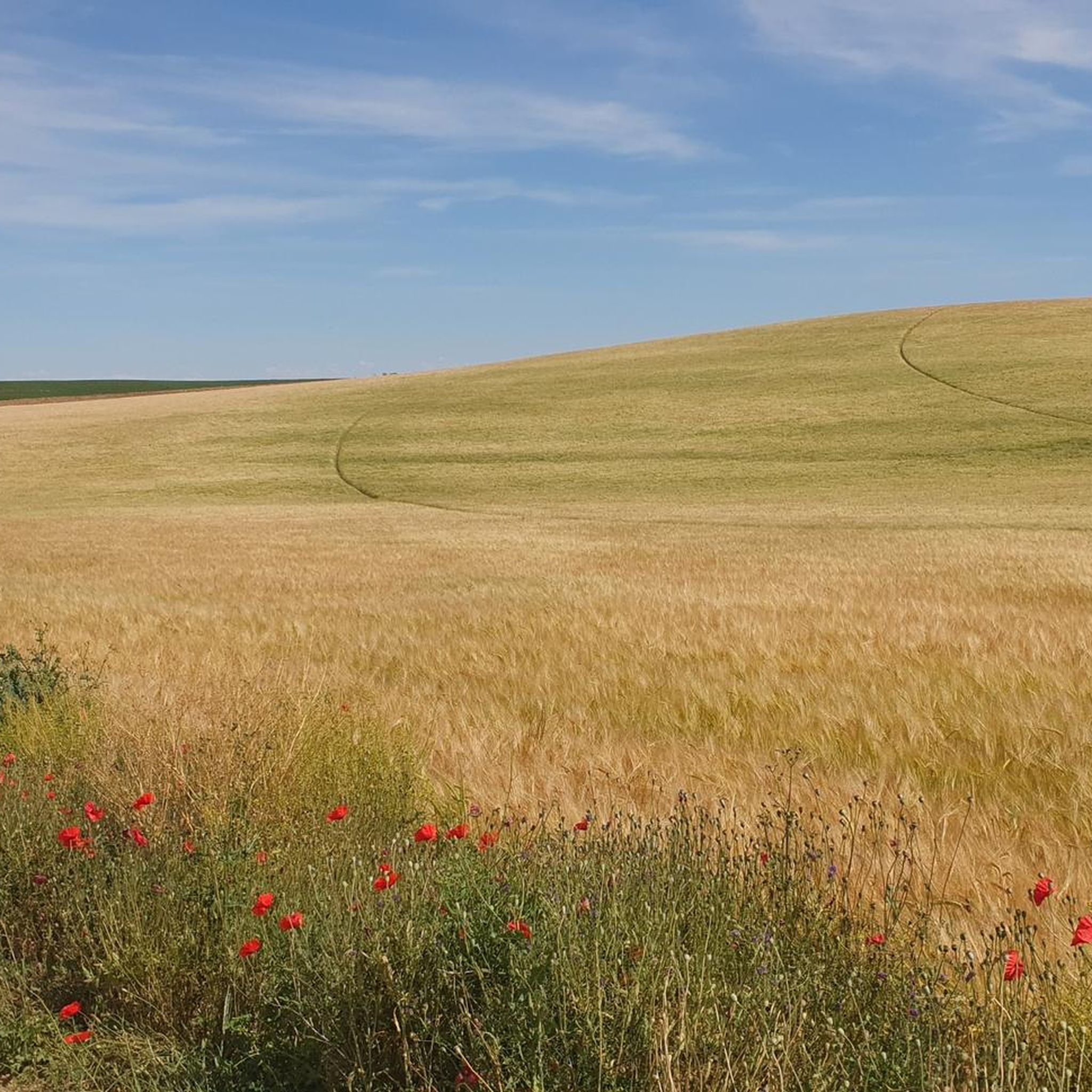
Touring cycling around Siete Iglesias de Trabancos offers routes through the distinctive Castilian landscapes of Valladolid, Spain. The area is characterized by extensive agricultural plains, including vineyards, and the meandering River Trabancos. Terrain is generally flat, making it suitable for touring cyclists. The region's natural features and historical sites provide varied scenery for outdoor activities.
Best touring cycling routes around Siete Iglesias de Trabancos
- The most popular touring cycling route is Historic Center of Tordesillas – Tordesillas Historic Center loop…
Last updated: May 20, 2026
5.0
(2)
16
riders
Moderate bike ride. Good fitness required. Mostly paved surfaces. Suitable for all skill levels.
12
riders
Moderate bike ride. Good fitness required. Mostly paved surfaces. Suitable for all skill levels.

Sign up for free
7
riders
45.1km
03:42
190m
190m
Moderate bike ride. Good fitness required. Mostly paved surfaces. Suitable for all skill levels.
4.0
(1)
5
riders
49.8km
04:11
390m
390m
Moderate bike ride. Good fitness required. Mostly paved surfaces. Suitable for all skill levels.
5
riders
40.8km
03:29
230m
230m
Hard bike ride. Good fitness required. You may need to push your bike for some segments of this route.
Get access to more routes and recommendations from other explorers.
Sign up for free
Already have an account?
Our route recommendations are based on thousands of hikes, rides, and runs completed by other people on komoot.
Start today with a free account
Your next adventure awaits.
Login or Signup
Popular around Siete Iglesias De Trabancos

Tips from the Community

Declared a Site of Cultural Interest (BIC) on December 7, 1983, this church is located in the heart of Tordesillas (Valladolid), one of the town's most iconic landmarks and the largest in the entire municipality. It is believed to have been built on the site of the former Tordesillas mosque. The main construction took place between the 16th and 17th centuries, with additions continuing into the 18th century. The church combines Gothic elements (the apse and the lower sections of the tower) with Neoclassical renovations inspired by El Escorial. Today, it serves as the headquarters for several Holy Week brotherhoods, housing processional floats such as the Virgin of Solitude and the Christ of Mercy.
5
0
It was built between the late 12th and early 13th centuries by Commander Fernán (Hernán) Rodríguez de Valbuena, becoming a funerary chapel for the Order. For centuries, it served as a fortified church overlooking the Duero River, and was linked to the now-vanished castle and other medieval chapels in the town. It suffered several collapses in the 19th and 20th centuries, until the original ruins had practically disappeared; the current structure is the one dedicated to Santa María del Castillo (Saint Mary of the Castle).
4
0
Hermitage of Santa María del Castillo (also known as the Hermitage of Santo Cristo or the Church of the Order of Saint John) in Castronuño: Located on Alto de la Muela, on the banks of the Duero River in Castronuño (Valladolid). A medieval building originally linked to the Military and Hospitaller Order of Saint John of Jerusalem, which established a commandery here.
4
0
Church of San Juan in Nava del Rey (Valladolid): Built between the 16th and 18th centuries, it incorporates the work of several architects: Juan Campero (apse and side chapels, early 16th century) and Rodrigo Gil de Hontañón (from 1560). After the tower collapsed in 1663, destroying the rear section, choir, and organ, it was rebuilt, and Juan de Revilla completed the new tower in 1702.
2
0

The building, constructed between the 16th and 18th centuries, began in the Gothic style and finished in the Neoclassical. Another striking feature is its tower, the tallest in the city. The Baroque-era organ is considered one of the finest in the region, both for its design and its state of preservation.
6
0
The Alcázar of Toro is a historic fortification located in the town of Toro (Zamora, Castile and León), with great heritage and scenic value. It was built in the 10th century during the Christian repopulation, as part of the defensive system against Muslim incursions. It was reinforced in subsequent centuries, especially in the Middle Ages, when Toro acquired strategic importance in the Kingdom of León and later in Castile. It played a prominent role in the War of the Castilian Succession (1475), in the famous Battle of Toro between supporters of Isabella I of Castile and Joanna la Beltraneja.
2
0
The medieval bridge over the Duero River, with its perfectly aligned arches, connects the historic center to the opposite bank. The monumental skyline of Tordesillas, highlighting the Plaza Mayor, the Casas del Tratado (Houses of the Treaty), and the Monastery of Santa Clara, all framed by reddish rooftops and the silhouette of the Church of San Antolín. The Duero River winds beneath the bridge, its reflections shifting with the changing light, creating a highly photogenic scene. Natural surroundings: riverside vegetation and, in autumn, golden hues that enhance the scenery.
6
0
The view of the Stone Bridge and Tordesillas from the viewpoint on Avenida de Portugal is considered one of the most beautiful panoramas of the town.
6
0
Frequently Asked Questions
What kind of terrain can I expect when touring cycling around Siete Iglesias de Trabancos?
The terrain around Siete Iglesias de Trabancos is generally flat, characterized by extensive agricultural plains and vineyards. You'll also find tranquil riverside landscapes along the River Trabancos. This makes the area highly suitable for touring cyclists looking for gentle gradients and scenic views across the Castilian countryside.
Are there touring cycling routes suitable for different skill levels?
Yes, the Siete Iglesias de Trabancos area offers a variety of touring cycling routes catering to different abilities. You can find options ranging from moderate to difficult. For example, routes like the Historic Center of Tordesillas – Tordesillas Historic Center loop from Pollos are rated as moderate, while others might present more challenging sections.
What natural features can I see along the touring cycling routes?
Many routes will take you through the distinctive agricultural plains and vineyards that define the 'Tierra del Vino' region. You can also expect to see the meandering River Trabancos and its tranquil riverside landscapes. The proximity to the Duero River means some routes offer views of its significant meanders and the San José Dam, particularly on routes originating from Castronuño.
What historical landmarks or points of interest can I explore while cycling?
Beyond the natural beauty, you can discover several historical points of interest. In Siete Iglesias de Trabancos itself, the 17th-century Baroque Iglesia de San Pelayo is a notable landmark. Routes near Castronuño might lead you to the Ermita del Santo Cristo, offering panoramic views of the Duero River. The region also has traditional architecture and even ruins of ancient fortresses like 'El Torrejón'.
Are there any circular touring cycling routes in the area?
Yes, many of the touring cycling routes around Siete Iglesias de Trabancos are designed as loops, allowing you to start and finish in the same location. An example is the Viewpoint – San José Dam loop from Castronuño, which offers river scenery and viewpoints.
What is the best time of year for touring cycling in Siete Iglesias de Trabancos?
The region experiences a Castilian climate, making spring and autumn generally the most pleasant seasons for touring cycling. During these times, temperatures are milder, and the landscapes of vineyards and agricultural fields are particularly scenic. Summers can be hot, and winters can be cold, so plan accordingly.
How many touring cycling routes are available around Siete Iglesias de Trabancos?
There are approximately 9 touring cycling routes available for exploration around Siete Iglesias de Trabancos, offering a good selection for various preferences and skill levels.
What do other touring cyclists say about the routes in Siete Iglesias de Trabancos?
The touring cycling routes in Siete Iglesias de Trabancos are highly rated by the komoot community, with an average score of 4.5 stars from 4 reviews. Cyclists often appreciate the tranquil landscapes, the gentle gradients, and the opportunity to explore the region's unique blend of natural beauty and historical sites.
Are there any routes that pass by the San José Dam?
Yes, several routes offer views of or pass near the San José Dam. For instance, the San José Dam – Plaza Mayor de Toro loop from Castronuño specifically features views of the dam and leads towards the historic Plaza Mayor de Toro.
Can I find routes that explore nearby towns or villages?
Absolutely. The touring cycling network extends to nearby areas, allowing you to visit charming towns. For example, the Town center of Nava del Rey loop from Nava del Rey takes you through the town center of Nava del Rey, offering a glimpse into local life and architecture.
What kind of architecture can I expect to see in the villages along the routes?
The villages in the region, including Siete Iglesias de Trabancos, retain their charm with traditional houses often featuring cellars, adobe, wood, and tile construction. You might also spot impressive 18th-century stately homes, such as those found in the Plaza del Arrabal Grande.
Most popular routes around Siete Iglesias De Trabancos
Most popular attractions around Siete Iglesias De Trabancos

Get inspired with the komoot mobile app


Explore more
Browse the best Cycling routes in other regions.
