Attractions and Places To See around Caldes D'Estrac - Top 20
Best attractions and places to see around Caldes D'Estrac, also known as Caldetes, is a coastal town in Catalonia, Spain, recognized for its thermal waters and historical significance. The region features diverse attractions, including historical landmarks, natural features, and cultural sites. Visitors can explore ancient structures, enjoy pristine beaches, and discover the therapeutic thermal springs. These landmarks, viewpoints, and natural features offer a range of experiences for those exploring the area.
Best attractions and places to see around Caldes D'Estrac
- The most popular attractions is Corredor Sanctuary, a religious building located within the Montnegre y el Corredor natural park. This late Gothic structure from the 16th century offers a quiet setting surrounded by nature.
- Another must-see spot is Ice Well of Canyamars, a man-made monument. This 17th-18th century construction was used to preserve ice until summer for commercial purposes.
- Visitors also love Dolmen de Pedra Gentil, a historical site. This megalithic structure, believed to be a chamber tomb from 3500-2000 B.C., is formed by 7 vertical megaliths supporting a large horizontal block.
- Caldes D'Estrac is known for its historical sites, natural features like beaches and thermal waters, and cultural points of interest. The area offers a variety of attractions to see and explore, from ancient monuments to scenic coastal views.
- The attractions around Caldes D'Estrac are appreciated by the komoot community, with over 180 upvotes and more than 110 photos shared.
Last updated: October 5, 2026
Rupit Cross
Highlight • Monument
Geographically, the Creu de Rupit is the hill that separates the basins of the Sobirans and Canyamars streams, an important crossroads that leads to different places in the Vallès and the Maresme. Furthermore, at this point of Rupit there has always been a cross; It is an emblematic element that constitutes a landmark within the landscape of the Rupit environment.
The landscape up here combines open spaces, such as the Rupit plain, with spaces with dense forests of pines, holm oaks and cork oaks.
Translated by Google •
Tip by

Ice Well of Canyamars
Highlight • Monument
Translated by Google •
Tip by
Sign up now to discover places like this
Get recommendations on the best single tracks, peaks, & plenty of other exciting outdoor places.
Dolmen de Pedra Gentil
Highlight • Historical Site
Translated by Google •
Tip by

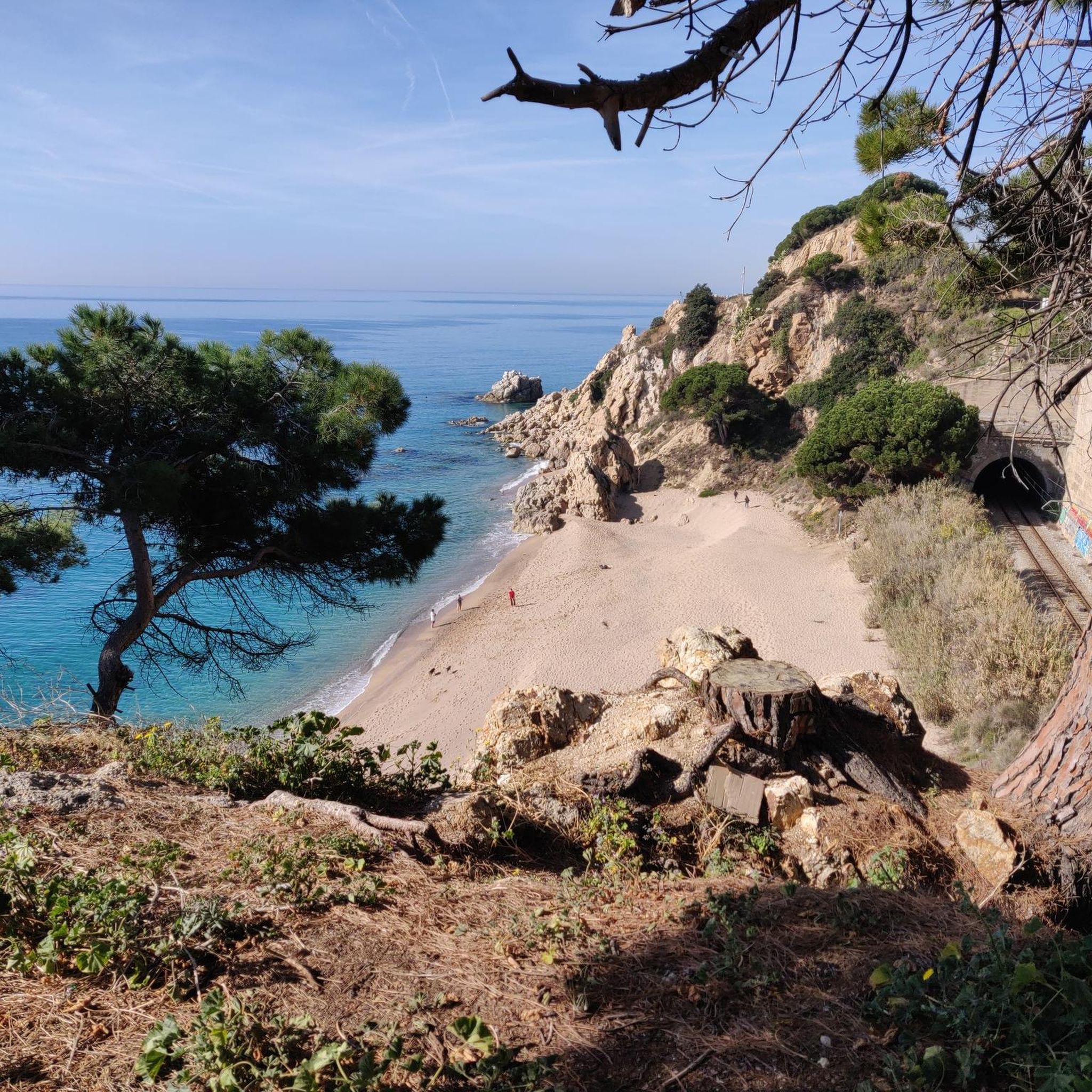
La Musclera Beach
Highlight • Beach
If you want to get there quickly and without getting lost, either by RENFE or by car, the best thing to do is get off, or get off the highway, at Caldes d'Estrac. The train station is just down the road.
La Musclera Beach is above all a place for families and since it is mixed it works very well because if you want to be accompanied by people who, at most, stay in slips or topless, they don't feel out of place seeing people naked. It has areas more secluded by the rocks where the gay atmosphere is usually found while the rest is more familiar.
It is common for the police to patrol this beach.
Translated by Google •
Tip by
Dolmen de Ca l'Arenes
Highlight • Historical Site
Translated by Google •
Tip by

Sign up for free to discover even more attractions around Caldes D'Estrac.
Already have an account?
Start today with a free account
Your next adventure awaits.

Tips from the Community

This place has it all: 5,000 years of history, witches, and even a 19th-century reconstruction that nobody really knows how closely it resembles the original. For centuries, the legend said that the witches of the region used to meet here for their covens. What we do know is that in 1855, Josep Pradell decided to restore the dolmen and replaced the enormous top slab. It was, none other than, the first known restoration of a dolmen in Catalonia. So when you arrive by bike and see that kind of enormous stone table in the middle of the forest, stop for a moment. Prehistory, legends, and a good deal of mystery concentrated in a few meters. And if you arrive at dusk and see someone circling the stones... I wouldn't ask. I'd keep cycling.
1
0

Del s.XVII. Construcció cilíndrica, limitada amb gruixuts murs de paredat que tenien la funció de mantenir la temperatura constant. Coberta amb volta de pedra de mitja taronja i teula àrab amb ràfec. Al costat nord hi ha tres contraforts de paredat i la boca de sortida del gel. Aquest es feia en un passadís-mina, que va desaparèixer en ser remodelat l’entorn i el camí. Font: Ajuntament de Dosrius
1
0

It's a megalithic tomb, approximately 5,000 years old, discovered in 1997 and restored in 2006-2007. Located in the heart of the Montnegre i el Corredor Natural Park, it's easy to miss, but it has a history: it belonged to a Neolithic community that used it as a collective grave. Interestingly, remains of the tumulus that covered it are still preserved, which is unusual, and its orientation seems related to astronomical events, like other dolmens in the area. It's an archaeological rarity in the middle of a prime cycling area, perfect for stopping and reflecting that humans once walked this path... but without helmets.
2
0

They've now built a staircase to access the Dolmen... With this staircase, just a few meters long... It seems they'll save the site from erosion... Sometimes the conservation and environmental councils are pitiful... It seems the only ones degrading the paths... are hikers and bikers... When we're fed up with seeing how the water destroys the paths to the point where we can't pass... 🙃
1
0


One of the best preserved ice wells in the country and of considerable size. It preserves the pond where water was accumulated to make ice and transfer it to the well.
1
0
Megalithic structure Rebuilt in 1855, Where the original structure was a 4000 year old DOLMEN, which served As a chamber tomb Simple...🧐
1
0
Frequently Asked Questions
What historical sites can I explore around Caldes D'Estrac?
Caldes D'Estrac is rich in history. You can visit the 16th-century Corredor Sanctuary, a late Gothic religious building nestled within the Montnegre i el Corredor natural park. Another significant historical site is the Ice Well of Canyamars, a 17th-18th century construction used for ice preservation. Don't miss the ancient Dolmen de Pedra Gentil, a megalithic structure believed to be a chamber tomb from 3500-2000 B.C. The town also features the historic Sant Vicenç Church and the 19th-century Municipal Thermal Baths, which are the only publicly owned thermal baths in Catalonia.
Are there any natural attractions or features to see?
Absolutely. Caldes D'Estrac is known for its healing thermal waters, emerging at 38 degrees Celsius. The town also boasts beautiful beaches like Caldes Beach, Sant Vicenç Beach, and Platja dels Tres Micos. For a unique coastal experience, La Musclera Beach is a semi-urban nudist beach with calm waves and protected native vegetation. Inland, the Montnegre i el Corredor Natural Park offers diverse landscapes ideal for exploration.
What cultural experiences does Caldes D'Estrac offer?
The town is a hub for culture. The Fundació Palau is a key cultural landmark, housing Catalan art, including works by Pablo Picasso, and hosting exhibitions, literary events, and music festivals. You can also explore the town's history and literary connections through self-guided Tourist and Cultural Routes, such as 'Caldes de Estrac Poets, characters and legends'. Throughout the year, local festivities and traditions, like the Festival Poesia i+, add to the vibrant cultural scene.
Are there family-friendly attractions in the area?
Yes, several attractions are suitable for families. The Corredor Sanctuary and Rupit Cross are both listed as family-friendly highlights, offering natural settings and historical interest. The Ice Well of Canyamars provides an interesting historical insight for all ages. Additionally, La Musclera Beach is described as having a family atmosphere, despite being a nudist beach, and offers disabled access.
What kind of outdoor activities can I do near these attractions?
The region around Caldes D'Estrac is excellent for outdoor activities. You can find numerous routes for running, cycling, and gravel biking. For running, consider routes like the 'Port Balís Marina loop' or 'The Creu de Rupit – Viewpoint loop'. Cyclists can explore routes such as 'Balí Beach – Pla de Forn loop' or 'Canet de Mar Beach – Balí Beach loop'. Gravel biking options include 'Three Borders Cross loop' or 'Rupit Cross – Arenys de Munt loop'. You can find more details and specific routes in the Running Trails around Caldes D'Estrac, Cycling around Caldes D'Estrac, and Gravel biking around Caldes D'Estrac guides.
Are there good viewpoints to enjoy the scenery?
Yes, several attractions offer scenic viewpoints. The Corredor Sanctuary is located near the summit of the Corredor mountain range, providing a spectacular natural setting. The Rupit Cross is also a viewpoint, offering a combination of open spaces and dense forests. Additionally, the beaches, such as La Musclera Beach, provide beautiful coastal views.
What is the Passeig dels Anglesos?
The Passeig dels Anglesos, or Promenade of the English, is an iconic promenade in Caldes D'Estrac. It is lined with stately 19th-century mansions that once served as summer residences for Barcelona's aristocracy. These buildings showcase beautiful modernist and neoclassical designs, adding to the town's timeless charm and offering a glimpse into its past.
Can I access the beaches easily, and are there facilities?
Beaches like La Musclera Beach offer good access, with parking available close by. If arriving by train, it's typically a short walk from the station. Many beaches are semi-urban and may feature amenities such as showers, cleaning services, and beach bars. La Musclera Beach specifically notes disabled access.
What is the significance of the thermal waters in Caldes D'Estrac?
The town's name, 'Caldes,' comes from the Latin 'Aquae Calidae' (hot waters), highlighting the historical importance of its thermal springs. These mineral-medicinal waters emerge from a depth of 2,800 meters at approximately 38 degrees Celsius and have been revered since Roman times for their healing properties, particularly for rheumatic and respiratory conditions. The 19th-century Municipal Thermal Baths are a central feature, being the only publicly owned thermal baths in Catalonia.
Are there any unique architectural sites to visit?
Beyond the historical landmarks, Caldes D'Estrac boasts valuable architectural heritage. Casa Ugalde, a modernist work by architect Coderch, and Torre Verda are notable examples. The Passeig dels Anglesos also showcases impressive 19th-century mansions with modernist and neoclassical designs, reflecting the town's aristocratic past.
What do visitors enjoy most about the attractions around Caldes D'Estrac?
Visitors appreciate the diverse range of experiences, from the quiet, natural setting of the Corredor Sanctuary with its restaurant options, to the historical intrigue of the Ice Well of Canyamars and the ancient Dolmen de Pedra Gentil. The beaches, especially La Musclera Beach, are valued for their accessibility and family-friendly atmosphere. The komoot community has shown strong appreciation, with over 180 upvotes and more than 110 photos shared across the attractions.
Most popular routes around Caldes D'Estrac
Most popular attractions around Caldes D'Estrac

Get inspired with the komoot mobile app


Explore more
Still not found the Highlight you’re looking for? See guides of the top attractions in other regions:
