The best cycling routes around Orly
4.3
(2528)
20,698
riders
598
rides
Touring cycling routes around Orly primarily follow the course of the Seine River and its tributaries, offering relatively flat terrain suitable for various skill levels. The landscape features a mix of urban green spaces, riverside paths, and tree-lined avenues. This area is characterized by its accessible waterways and parks, providing a network of paths for cycling. The region's topography is generally gentle, with minimal elevation changes, making it conducive to relaxed touring cycling.
Best touring cycling routes around Orly
- The…
Last updated: November 17, 2026
4.2
(12)
65
riders
63.3km
03:50
190m
190m
Moderate bike ride. Good fitness required. Mostly paved surfaces.
3.7
(11)
61
riders
Moderate bike ride. Good fitness required. Mostly paved surfaces.

4.5
(2)
41
riders
58.1km
04:22
530m
530m
Hard bike ride. Very good fitness required. You may need to push your bike for some segments of this route.
4.2
(10)
57
riders
Easy bike ride. Mostly paved surfaces.
4.3
(6)
26
riders
65.4km
03:55
270m
270m
Moderate bike ride. Good fitness required. Mostly paved surfaces.
Get access to more routes and recommendations from other explorers.
Already have an account?
Our route recommendations are based on thousands of hikes, rides, and runs completed by other people on komoot.
Start today with a free account
Your next adventure awaits.

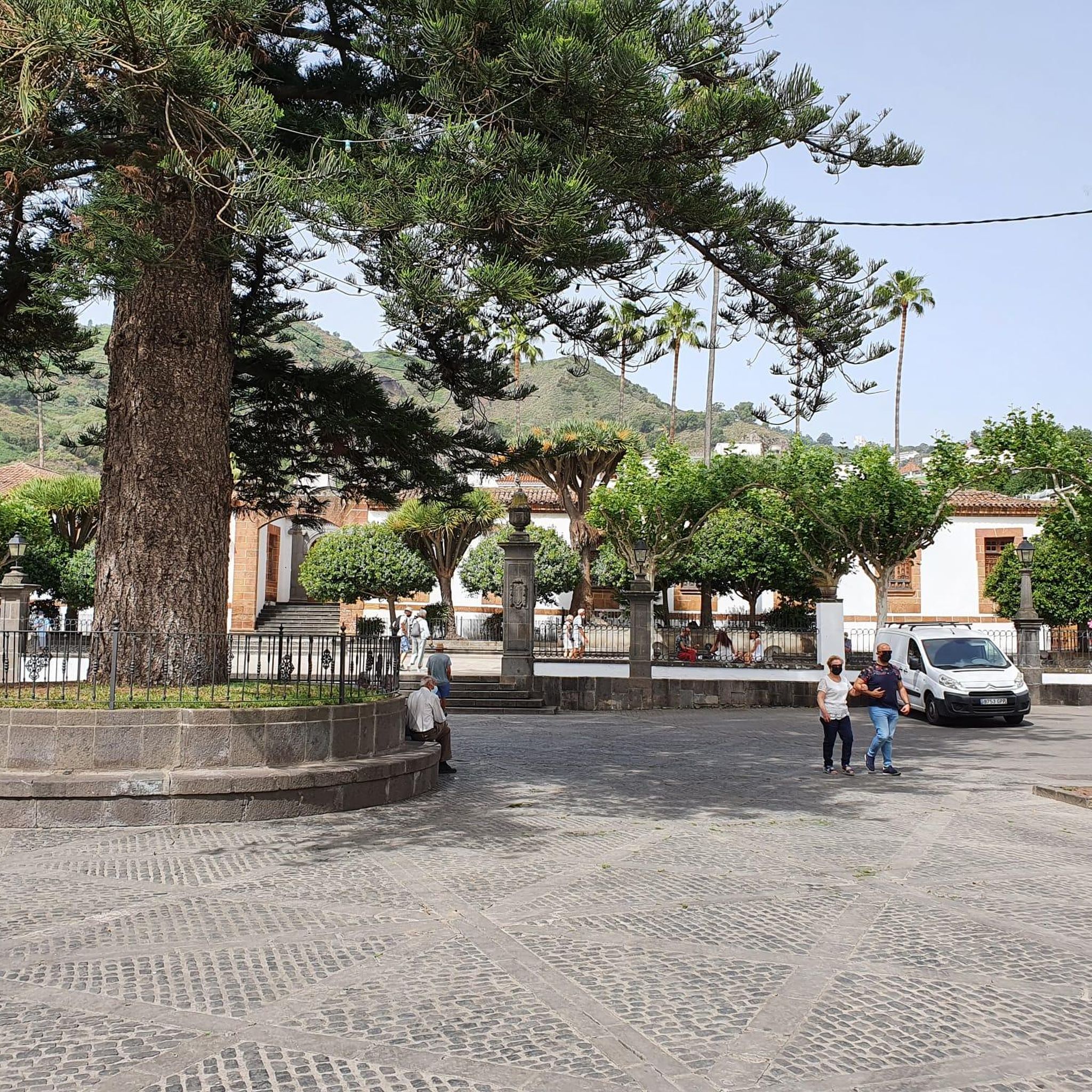
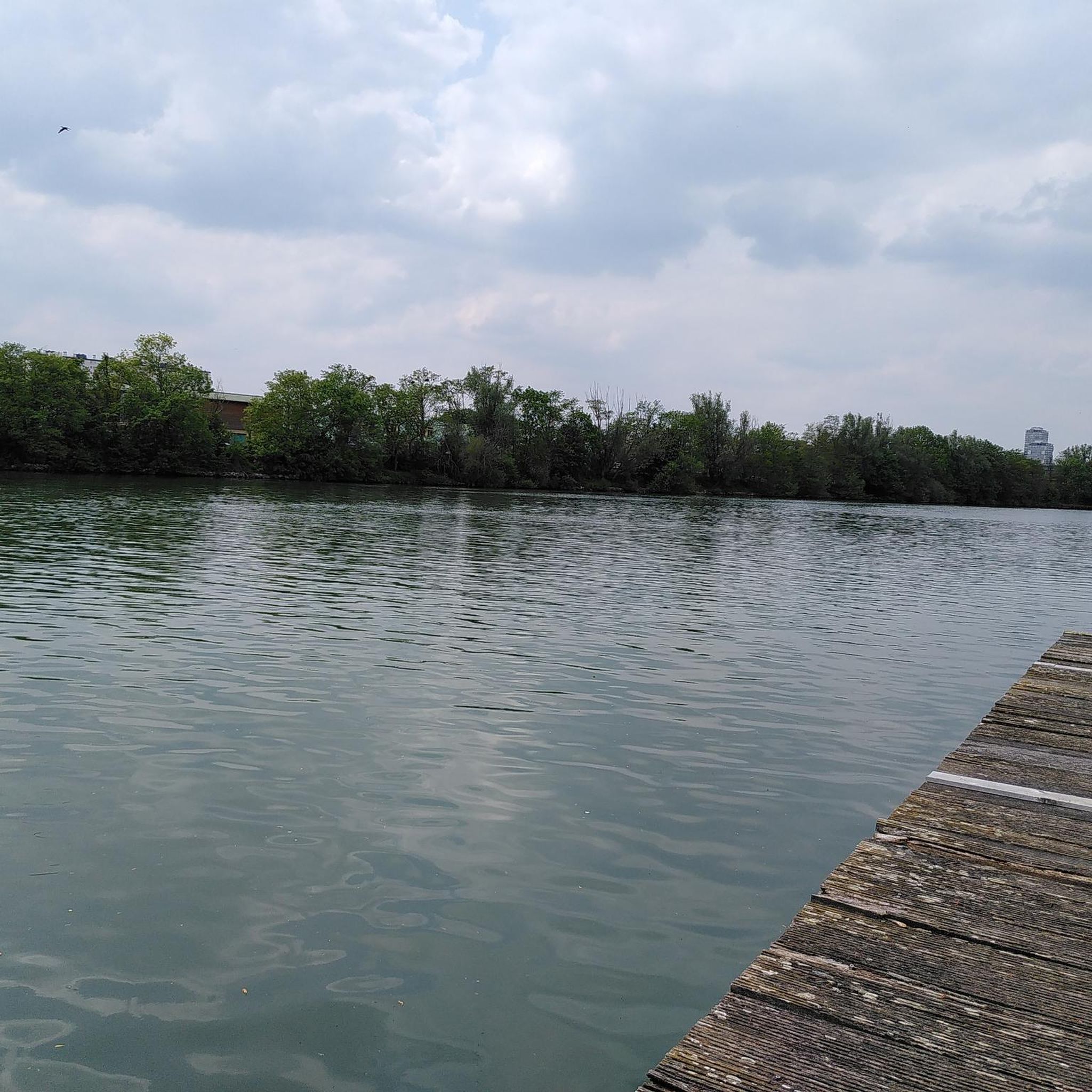
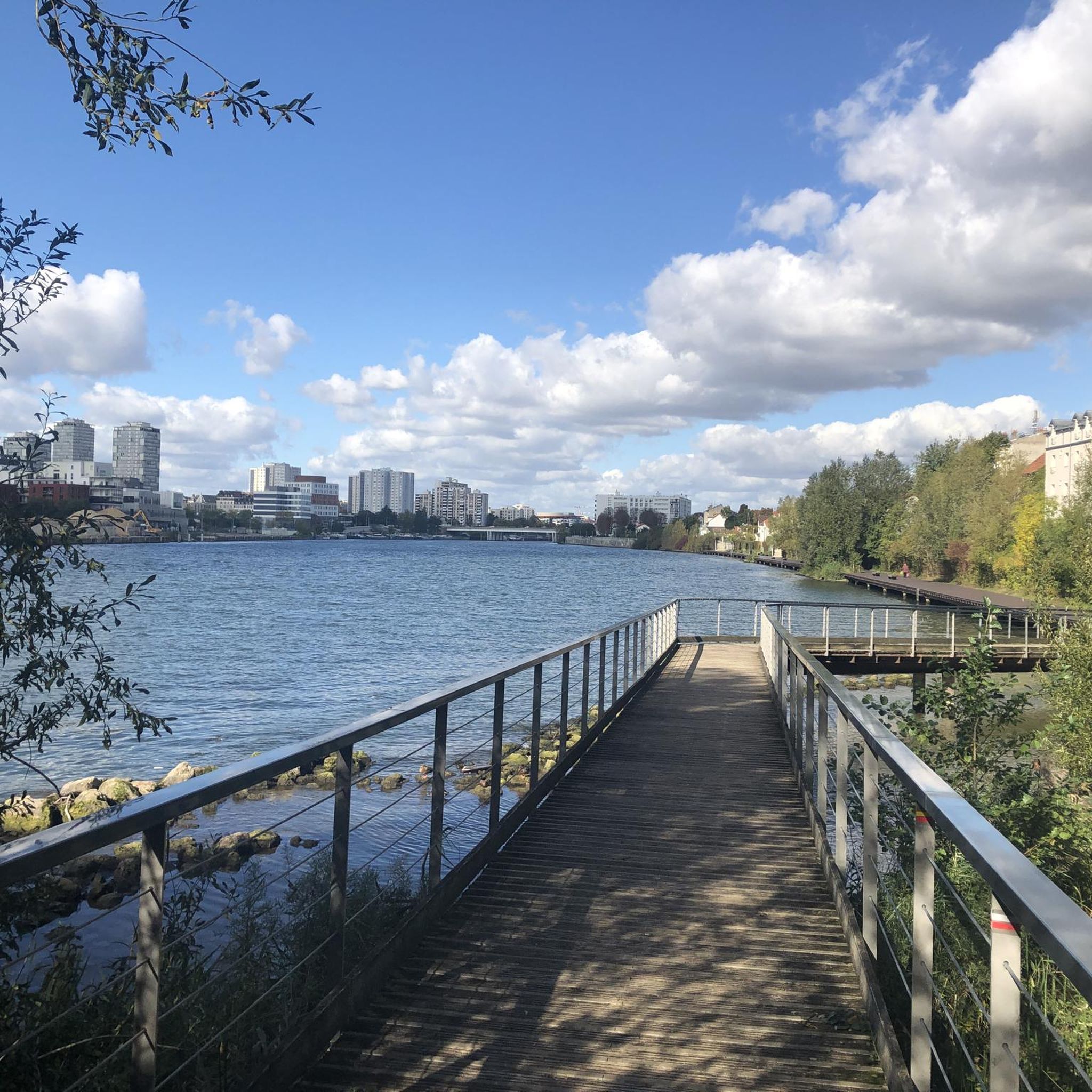
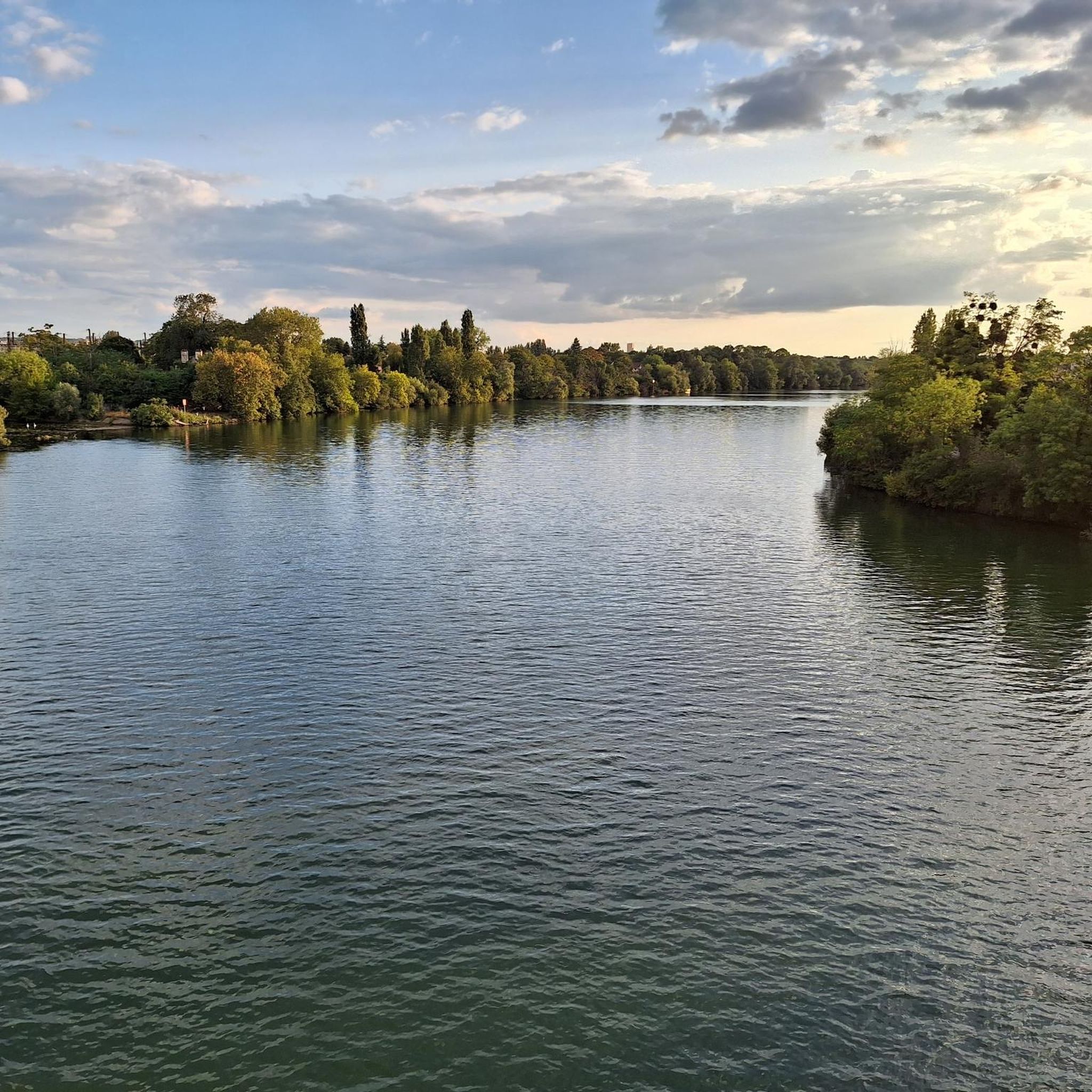
Tips from the Community

📚 The two arches, as well as the vertical connecting elements and the anchoring struts are welded solid web profiles. The substructure of the walkways is formed by a secondary structure. The lateral connections are independent of the main supporting structure. Single-span beams with a span of approx. 35 m bridge the roadways. The supporting structure consists of the compression chord at the deck level, which is under-tensioned by tie rods. The materials The deck surface is made of oak wood. Slip resistance is ensured by epoxy resin inclusions with silex scattering in the wood. The railings are formed by a prestressed stainless steel net. The railing is transparent and at the same time present enough to convey the necessary sense of security. The lighting is integrated into the handrail made of extruded aluminum. It emphasizes the unique silhouette of the bridge. The footbridge, with its innovative construction, takes up the tradition of Parisian bridges, which express the latest technologies of their time - innovation as tradition. https://www.nextroom.at/building.php?id=600 🌐
1
0
📚 It is directly accessible from both the lower street level and the two upper levels of the library and Parc de Bercy. Additionally, there is a glass elevator on each side of the river, providing access for people with physical disabilities. The construction of the main span is formed by two compression arches and two tension bands, arranged in two vertical planes. The distance between the planes is 5.20 meters. The two supporting elements work together and stabilize each other. This structure was chosen for its spatial potential and static efficiency. It allows for maximum stability with simultaneous maximum lightness and elegance. The arch and tension band are connected by elements arranged radially to the arch geometry – four steel tubes converging at one point, so-called “obelisks” – which are clamped into the arch cross-section and form a half Vierendeel girder. The main structure is clamped at the riverbanks in the support area. The arch and tension band cross at the quarter point of the span. A massive cast part creates the continuous connection between the arch and tension band at the crossing point. The static system is similar to a Gerber girder, which allows for a reduction of the span moment. The anchors are formed by 2 compression struts and 2 vertical tension elements. Through the shape of the compression strut, a distribution of forces is achieved: one part is directed to the foundations, one part to the compression arch. Massive steel bands with a width of 100cm and a thickness of 10cm (in the lens area) or 15cm (in the side areas) form the tension bands. https://www.nextroom.at/building.php?id=600 🌐
1
0
📚 The pedestrian is offered a variety of possibilities for crossing the bridge with different perspectives. 3 paths accompany curve and counter-curve. The middle path leads along the pressure arch with an unobstructed view of Notre Dame and historic Paris. The counter-curve, along the tension band, leads close to the water. The superposition of the force lines corresponds to the networking of the paths. In the central area of the bridge, the superposition of the arch and the tension band creates a volume in the shape of a lens. It forms a unique public space over the river, which becomes a grandstand for events on the water. The lower part of the lens forms a square with a length of 65 m and a width of 12 m. Temporary kiosks and cafés are planned here, which are covered by the middle band and thus protected from sun and rain. The square invites the stroller to linger halfway. At the same time, the lens forms the stabilizing element in the urban space through its symmetrical distance from the banks. The supporting structure The bridge consists of three parts – the central main span, which spans the Seine, and two side walkways, which bridge the embankment roads and form the connections to the Bibliothèque de France and the Parc de Bercy. https://www.nextroom.at/building.php?id=600
1
0
📚 The pedestrian bridge, with a total length of 304 m, connects the new eastern districts of Paris, Bercy and Tolbiac, as well as the new French National Library and the Parc de Bercy. The bridge spans the Seine and the adjacent, heavily trafficked riverside roads. Here, too, the Seine plays a central role in the urban space, similar to the centre of Paris. The riverbed of the Seine, compared to its otherwise average width of 100 metres in the city area, is 150 metres wide at this point. The two existing bridges, 700 metres apart, border the « Bassin de Bercy ». To preserve this basin, unique to Paris, in its entirety and to ensure the greatest possible freedom for activities planned on the water, the new bridge is column-free and spans the basin in one go.The footbridge inextricably links architecture and structure. Two curves create the geometry of the bridge, whose soft form is understood as a response to the strictly geometric environment. These curves are simultaneously structure and guidance. They form a wide-span arch and a tension band. The interplay of the two elements allows for a clear span of 194 m. https://www.nextroom.at/building.php?id=600 🌐
1
0

When will it reopen and while we wait for a duly signposted diversion?
0
0

Perfect place to train mindlessly, whatever the time or season
0
1

It's great that there are real training routes (without potholes and therefore also suitable for leisurely riders like me)
0
0

superb industrial bridge used for street art
0
0
Frequently Asked Questions
What kind of terrain can I expect on touring cycling routes around Orly?
The touring cycling routes around Orly are generally flat, following the Seine River and its tributaries. You'll find a mix of urban green spaces, pleasant riverside paths, and tree-lined avenues, with minimal elevation changes, making for relaxed cycling.
Are there many touring cycling routes available near Orly?
Yes, there are over 600 touring cycling routes around Orly. This includes a wide variety of options, with more than 300 routes considered easy, and nearly 200 moderate, catering to different skill levels.
Are there any easy or beginner-friendly touring cycling routes in the Orly area?
Absolutely. The region is well-suited for beginners, with over 300 easy routes. A great option is the Pont du Port-à-l’Anglais – Rolling road to Paris loop from Choisy-le-Roi, an 8.3-mile (13.4 km) path that offers a gentle ride towards Paris, often alongside the river.
Can I find circular touring cycling routes around Orly?
Yes, many routes in the Orly area are designed as loops, allowing you to start and finish at the same point. For example, the Mariners' Promenade – Houseboats in Choisy-le-Roi loop from Choisy-le-Roi is an 11.3-mile (18.1 km) circular trail offering views of houseboats.
What are some scenic viewpoints or natural attractions along the touring cycling routes?
The routes often pass by beautiful natural spots. You can enjoy views like the View of the Château de Sceaux, or cycle near serene bodies of water such as Lake Gravelle and Rut Pond. The Vallée-aux-Loups Arboretum also offers a lovely natural setting.
Are there any longer touring cycling routes for more experienced cyclists?
For those seeking a longer challenge, routes like the Concorde 02 – Templars' Bridge loop from Orly 4 offer a more demanding experience. This difficult route spans 36.2 miles (58.3 km) and includes more significant elevation changes.
What do other touring cyclists say about the routes around Orly?
The touring cycling routes around Orly are highly regarded by the komoot community, with an average rating of 4.3 stars from over 2,100 reviews. Cyclists often praise the accessible riverbank paths, urban green spaces, and the variety of tree-lined routes.
Is it possible to access touring cycling routes near Orly using public transport?
Yes, many routes in the Orly area are accessible via public transport, particularly those starting from towns like Choisy-le-Roi, which are well-connected. This allows for convenient access to the riverside paths and urban green spaces.
Are there family-friendly touring cycling routes around Orly?
The generally flat terrain and numerous easy routes make the Orly area very suitable for family cycling. Many paths along the Seine and its tributaries are traffic-free or have dedicated cycle lanes, providing a safe environment for families.
What is the best time of year for touring cycling around Orly?
Spring and autumn generally offer the most pleasant conditions for touring cycling around Orly, with mild temperatures and beautiful scenery. Summer can also be enjoyable, especially along the shaded riverside paths, while winter cycling is possible but may require more preparation for colder weather.
Can I find routes that pass by lakes or other water features?
Yes, the region is characterized by its accessible waterways. Many routes follow the Seine and its tributaries, and you can also find paths that lead to lakes such as Lake Daumesnil or the Grand Canal, offering picturesque views.
Are there any routes that offer a 'hidden gem' experience away from the main paths?
While many routes are popular, exploring the smaller paths branching off the main river trails can lead to quieter, less-trafficked areas. The Bike loop from Choisy-le-Roi, for instance, offers a pleasant, easy ride that can reveal charming local spots.
Most popular attractions around Orly

Get inspired with the komoot mobile app


Explore more
Browse the best Cycling routes in other regions.
