The best walks and hikes around Raillencourt-Sainte-Olle
4.4
(446)
1,347
hikers
124
hikes
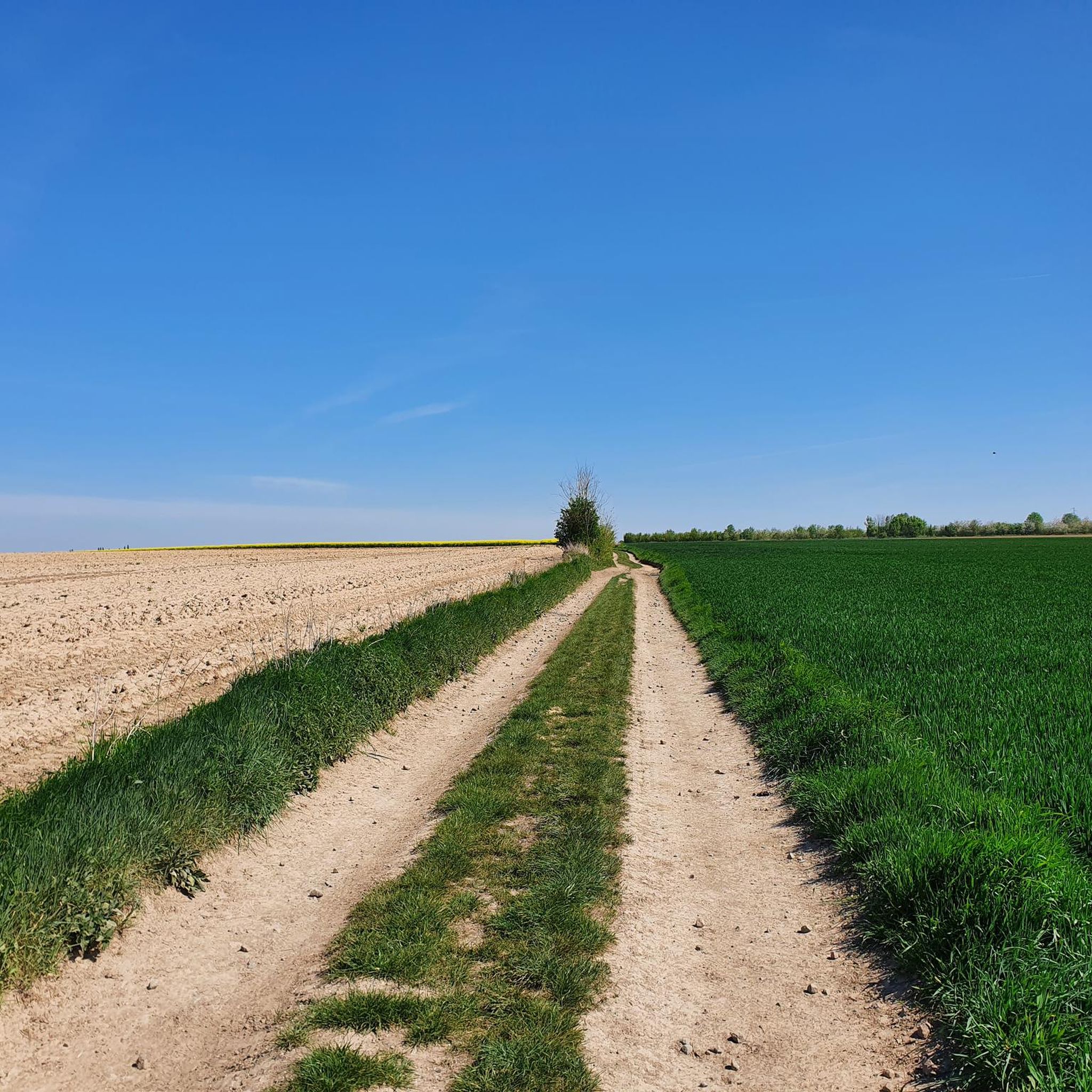
Hiking around Raillencourt-Sainte-Olle offers exploration of a tranquil rural landscape in the Nord department of France. The region is characterized by a gentle topography, with altitudes ranging from 45 to 86 meters, making it suitable for easy to moderate walks. Hikers will find open fields, charming countryside, and developing green spaces. Canal-side paths are also a feature, particularly in areas near Cambrai.
Best hiking trails around Raillencourt-Sainte-Olle
- The most popular hiking route is Tour of the Fortifications of Cambrai,…
Last updated: May 18, 2026
4.0
(1)
5
hikers
3.87km
01:00
20m
20m
Explore the historical Gates of Cambrai on this easy 2.4-mile (3.9 km) loop, featuring urban scenery and notable landmarks.
4.3
(3)
68
hikers
8.02km
02:03
20m
30m
Moderate hike. Good fitness required. Easily-accessible paths. Suitable for all skill levels.

Sign up for free
29
hikers
7.78km
01:58
10m
10m
Easy hike. Great for any fitness level. Easily-accessible paths. Suitable for all skill levels.
4.5
(2)
29
hikers
7.99km
02:01
20m
20m
Moderate hike. Good fitness required. Easily-accessible paths. Suitable for all skill levels.
38
hikers
5.76km
01:28
20m
20m
Easy hike. Great for any fitness level. Easily-accessible paths. Suitable for all skill levels.
Get access to more routes and recommendations from other explorers.
Sign up for free
Already have an account?
Our route recommendations are based on thousands of hikes, rides, and runs completed by other people on komoot.
Start today with a free account
Your next adventure awaits.
Login or Signup


Tips from the Community

Beautiful traffic-free footpath along the Scheldt. Depending on the light, the buildings on the other side reflect beautifully in the water. The row of trees along the roadway, but above the footpath, also creates atmosphere.
6
0
The Canalised Scheldt is a section of the River Escaut that was developed to facilitate navigation and river transport. This canalised section extends for approximately 63 km, from Cambrai to Mortagne-du-Nord, on the French-Belgian border. The canalisation of the Scheldt began between Cambrai and Bruay-sur-l'Escaut between 1772 and 1784. The Canal de l'Escaut connects to the Canal de Saint-Quentin in Cambrai, which allows a continuous river link to the Paris Basin via the Seine. This infrastructure played a crucial role in the economic development of the region, facilitating the transport of goods and supporting the industrialisation of the towns along its route. Today, the Canalised Scheldt continues to be used for both commercial transport and recreational activities, contributing to the local economy and tourism.
7
0
The Écluse de Cantimpré in Cambrai is a historic lock that played an important role in the development of the region's waterways. It was built in 1900 as part of the modernisation of the regional waterway network, as required by the Charles Freycinet law in 1879. The lock is equipped with two lock chambers, each 38 metres long and 5 metres wide, making it accessible to Flemish peniches and facilitating shipping. The lock is located at the junction of the canalised Scheldt and the Saint-Quentin Canal, and was part of the important port of Cantimpré, which was built in 1862. Today, the port of Cantimpré is mainly a pleasure port, but in the past it was a busy trading post with more than a hundred ships passing through every day.
7
0
The Écluse de Selles in Cambrai is a historic lock located on the Scheldt River. This lock dates back to the 18th century and is one of many locks in the region that were built to manage the waterways and facilitate navigation. The lock is located near the Château de Selles, a medieval castle originally built in the 13th century and later modified and expanded. The castle and lock are important historical monuments in Cambrai and attract many visitors interested in the history and heritage of the region.
2
0
Opposite it was once the Saint-Julien hospital, now transformed into a theatre and a conservatory of music and dramatic art. This hospital foundation dating back to the 11th century operated until 1862. It covered an entire district. A few buildings still remain, including an 18th-century chapel, the current foyer of the theatre. This theatre was built after the First World War, in an Art Deco style, by the architect Pierre Leprince-Ringuet. Made of brick and cement, imitating stone, it fits in perfectly with the rest of the older buildings. Its façade, pierced by three high bays, is a fairly unusual model found in England. This particularity qualifies it as an open-air theatre. The interior was restored in 2001 by the architect Vincent Brossy, who managed to reconcile modernity and heritage. This 750-seat Italian-style theatre can host all kinds of shows thanks to its modular stage. Boasting a varied programme, it is one of the most attractive cultural centres in the city. During the first half of July, the Juventus classical music festival allows the most talented young European virtuosos to perform there.
7
0
The Hôtel de la Woestine, located on Rue de l'Épée (19) in Cambrai, was built in 17661. This beautiful building is an example of the classical architecture of the time, with a facade of natural stone and an impressive gate with rustic details. The hotel was owned by François Maximilien de la Woestine , the third Marquis of Becelaere. He was a prominent figure in the region and a great of Spain. Unfortunately, he was executed in Cambrai during the French Revolution in 1794.
7
0
The Musée Diocésain d'Art Sacré in Cambrai has an interesting history. The museum is housed in the former Cambrai Seminary, a building dating back to the 18th century. The museum was created to preserve and exhibit the religious heritage of the Diocese of Cambrai. The museum's collection includes a wide range of religious artworks, including paintings, sculptures, liturgical objects and textiles. Many of these pieces come from churches and chapels in the region that have been closed or renovated. The museum offers visitors a unique opportunity to discover the rich religious history and art of the region.
9
0
The Jesuits arrived in Cambrai in 1562 to fight against the spread of Protestantism and founded a college there. Thanks to a legacy from Monsignor Vanderburch, they had their chapel rebuilt between 1678 and 1694 according to the principles of the Counter-Reformation, based on plans drawn up by the architect Jean du Blocq. The architectural rhythm, the play of polychromy and the abundance of sculpted decoration make this building a masterpiece of northern Baroque art. This ornamental richness is found inside in the profusion of high and low reliefs in the choir and the nave. Its decoration is completed by a series of paintings by the painter Arnoult de Vuez, representing scenes from the life of Christ. (Cambrai Tourist Office).
10
0
Frequently Asked Questions
How many hiking trails are available in Raillencourt-Sainte-Olle?
There are over 120 hiking routes available around Raillencourt-Sainte-Olle. The majority, about 65, are rated as easy, with another 58 considered moderate, and a few more challenging options for experienced hikers.
What is the general difficulty level of hikes in this area?
The region features a relatively flat to gently undulating landscape, with altitudes ranging from 45 to 86 meters. This makes most hikes easy to moderate, suitable for various fitness levels. You'll find plenty of options for relaxed exploration.
Are there any easy hikes suitable for beginners or families?
Yes, Raillencourt-Sainte-Olle offers numerous easy trails perfect for beginners or families. For instance, the Tour of the Fortifications of Cambrai is an easy 2.4-mile (3.9 km) route that explores historical fortifications and urban green spaces, taking about an hour to complete.
Can I find circular hiking routes around Raillencourt-Sainte-Olle?
Yes, many routes in the area are designed as loops, allowing you to start and end in the same location. An example is the Belfry of Cambrai – Cantimpré Lock loop from Cambrai, a moderate 5.0-mile (8.0 km) path that offers waterside sections and views of local landmarks.
Are the trails in Raillencourt-Sainte-Olle suitable for dogs?
While specific dog regulations can vary, the tranquil rural landscapes and open fields of Raillencourt-Sainte-Olle generally offer pleasant environments for walks with dogs. It's always recommended to keep your dog on a leash and clean up after them to respect local guidelines and other hikers.
What kind of landscapes can I expect to see while hiking here?
You can expect to see peaceful, bucolic countryside with open fields and charming villages. Many routes also feature picturesque canal-side paths, particularly around nearby Cambrai, offering waterside strolls along rivers like the Escaut. The commune is also developing new wooded areas for accessible natural spaces.
Are there any notable landmarks or attractions along the hiking routes?
Yes, several routes incorporate local landmarks. For example, the Belfry of Cambrai – Cantimpré Lock loop from Cambrai offers views of the Belfry of Cambrai. Other nearby attractions include the Porte Notre-Dame de Cambrai and historical sites like The Big Rock.
Is there public transport access to the trailheads?
Raillencourt-Sainte-Olle is a commune in the Nord department, and while specific public transport links directly to every trailhead might be limited, its proximity to Cambrai means that many routes are accessible from or near urban centers that are served by public transport. Planning your route in advance will help identify the best access points.
Where can I park when visiting the hiking trails?
Given the rural nature of the area and its focus on accessible green spaces, parking is generally available in or near the villages and at designated starting points for trails. Many routes that begin in or near Cambrai will have urban parking options. Look for local signage or consult route details for specific parking recommendations.
What do other hikers say about the trails in Raillencourt-Sainte-Olle?
The trails in Raillencourt-Sainte-Olle are highly regarded by the komoot community, with an average rating of 4.4 stars from over 400 reviews. Hikers often praise the peaceful countryside, well-maintained paths, and the opportunity to explore both natural and historical elements of the region.
Are there any routes that follow canals or rivers?
Yes, canal-side paths are a notable feature of hiking in this area, especially near Cambrai. Routes like the Cantaing-sur-Escaut Lock loop from Cambrai lead through rural paths and along the Escaut river, offering picturesque waterside strolls.
What is the best time of year to go hiking in Raillencourt-Sainte-Olle?
The gentle topography and rural charm of Raillencourt-Sainte-Olle make it suitable for hiking throughout much of the year. Spring and autumn offer pleasant temperatures and beautiful scenery, while summer provides longer daylight hours. Even in winter, the relatively flat terrain can be enjoyable for walks, though conditions may vary.
Are there any longer routes for more experienced hikers?
While the region is known for its easy to moderate trails, there are longer options available. For example, the Belfry of Cambrai – Cantimpré Lock loop from Cambrai and the Cantaing-sur-Escaut Lock loop from Cambrai are both around 5 miles (8 km) and offer a good duration for a moderate hike.
Can I combine hiking with exploring nearby towns?
Absolutely. Raillencourt-Sainte-Olle's location near Cambrai means that many hiking opportunities extend to include a mix of natural and cultural exploration. Trails might lead through rural paths to urban areas, allowing hikers to experience both the tranquility of the countryside and the historical ambiance of nearby towns like Cambrai.
Most popular routes around Raillencourt-Sainte-Olle
Most popular attractions around Raillencourt-Sainte-Olle

Get inspired with the komoot mobile app


Explore more
Browse the best Hikes in other regions.
