Attractions and Places To See around Sainghin-En-Weppes - Top 20
Attractions and places to see around Sainghin-En-Weppes, a commune in the Nord department of France, offer a mix of local landmarks and natural features. The area is situated in the Artois-Picardie basin, drained by waterways such as the Rigole du Nord, the Libaude, and the Canal de la Deûle. Visitors can explore local points of interest within the town and access several attractions in the surrounding region. The landscape includes green spaces, preserved meadows, and small forests, providing opportunities for…
Last updated: May 21, 2026
Canteraine Park
Highlight • Other
Translated by Google •
Tip by

Australian Memorial Park Fromelles
Highlight • Monument
Translated by Google •
Tip by
Sign up now to discover places like this
Get recommendations on the best single tracks, peaks, & plenty of other exciting outdoor places.
Sign up for free
Le Trou Aid Post Cemetery
Highlight • Other
Translated by Google •
Tip by
Relais Nature of the Parc de la Deûle
Highlight • Other
Translated by Google •
Tip by
Canal de la Deûle
Highlight • River
Translated by Google •
Tip by
Sign up for free to discover even more attractions around Sainghin-En-Weppes.
Sign up for free
Already have an account?
Start today with a free account
Your next adventure awaits.
Login or Signup

Tips from the Community

The battle of Fromelles on 19 July 1916 was a bloody initiation for Australian soldiers to warfare on the Western Front. Soldiers of the newly arrived 5th Australian Division, together with the British 61st Division, were ordered to attack strongly fortified German front line positions near the Aubers Ridge in French Flanders. The attack was intended as a feint to hold German reserves from moving south to the Somme where a large Allied offensive had begun on 1 July. The feint was a disastrous failure. Australian and British soldiers assaulted over open ground in broad daylight and under direct observation and heavy fire from the German lines. Over 5,500 Australians became casualties. Almost 2,000 of them were killed in action or died of wounds and some 400 were captured. This is believed to be the greatest loss by a single division in 24 hours during the entire First World War. Some consider Fromelles the most tragic event in Australia’s history. https://www.awm.gov.au/articles/encyclopedia/fromelles
0
0

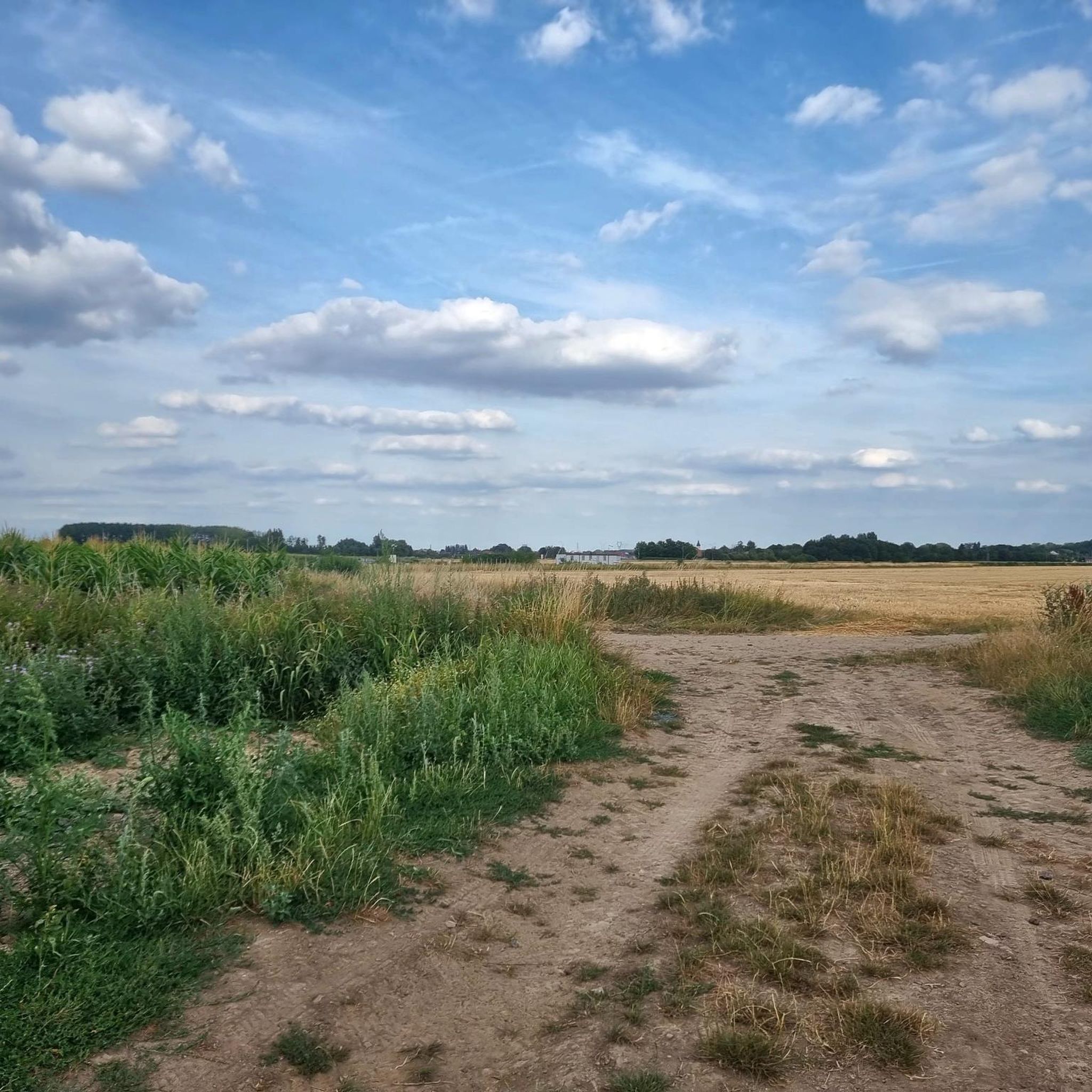
Very rolling, doable by mountain bike.
3
0

Near the front line in 1916, a fierce battle was fought between the British (Australians) and the Germans. To commemorate 'la bataille' and the wounded who were brought back from the battlefield, a monument/statue was erected here.
1
0

Anecdote: During the battle, Sergeant Simon Fraser heard a wounded soldier cry out, "Don't forget me, cobber!" Despite the danger, Fraser returned to the battlefield to save the man, an act of bravery that was later immortalized in the statue. This event emphasizes the sacrifice and strong bond between soldiers during the horrors of war.
7
0
The Cobbers Australian Memorial is located in the Australian Memorial Park near Fromelles. This memorial commemorates the Australian soldiers who died during the Battle of Fromelles on 19-20 July 1916. The statue, designed by Peter Corlett, shows Sergeant Simon Fraser carrying a wounded comrade out of no man's land. The name "Cobbers" comes from a letter Fraser wrote, describing the bravery and camaraderie of the soldiers.
7
0
Le Trou Aid Post Cemetery was established in October 1914 by British soldiers of the 19th Infantry Brigade during the First Battle of Ypres. The cemetery initially contained 123 graves, but was expanded after the war. It now contains over 350 graves, of which over 200 are unknown. The cemetery commemorates soldiers who died in a number of battles, including Le Maisnil (October 1914), Aubers Ridge (May 1915), Loos (September–October 1915), and Fromelles (July 1916). A special feature of the cemetery is its rural setting, surrounded by a narrow moat and sheltered by a grove of weeping willows. Visitors reach the cemetery via a footbridge and enter through a delicate cottage-style gate.
7
0

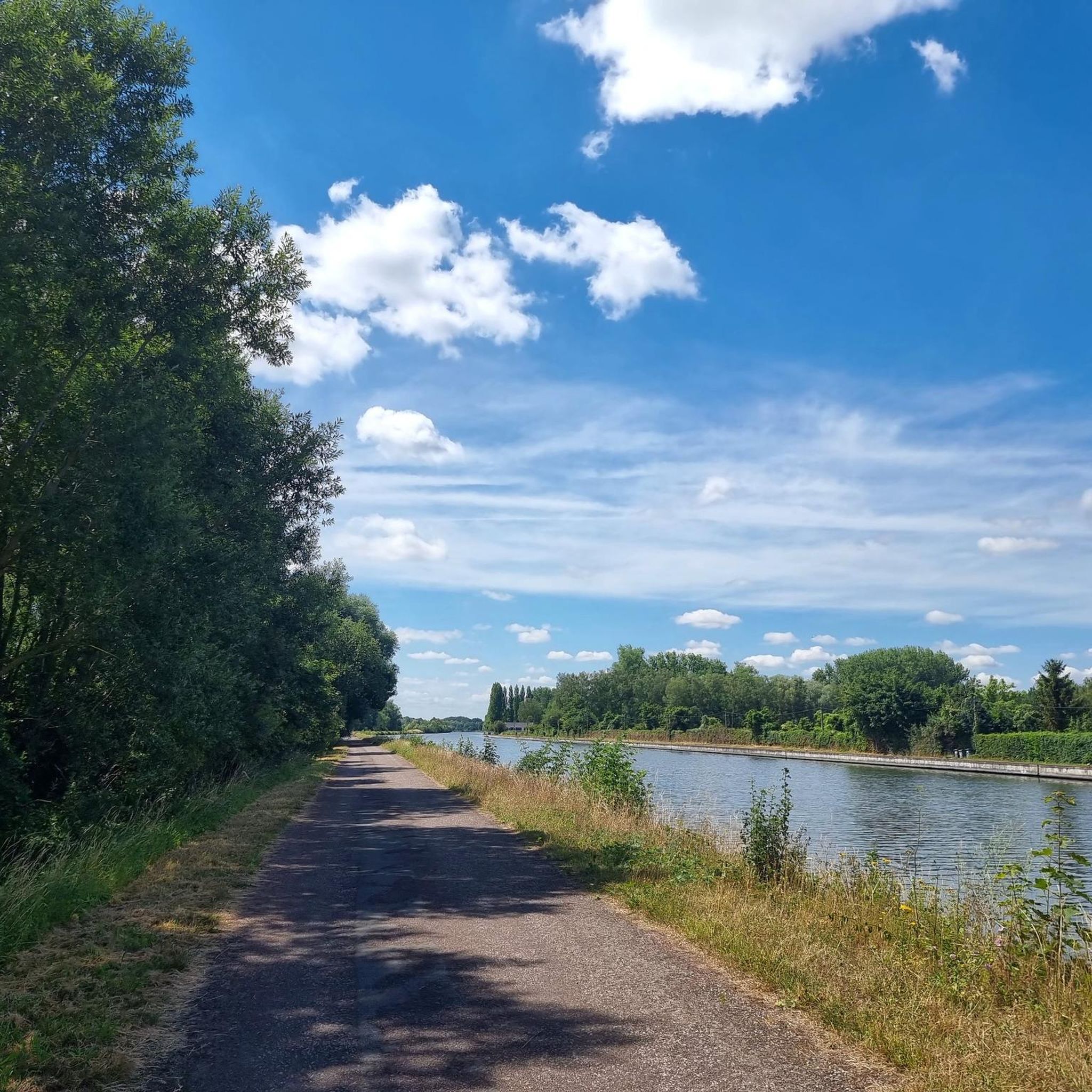
Most of the path is very smooth and you can enjoy the few birds and (rarely) the sun reflecting in the water. Unfortunately it is very often spoiled by the discharges from factories or sewers which often bring a foul smell, especially when the water is stirred up by the few barges that pass by.
0
0

Amidst the quiet roads of western Lille lies this listed cemetery, which is the final resting place of hundreds of Commonwealth soldiers from the First World War.
0
0
Frequently Asked Questions
What historical sites can I visit around Sainghin-En-Weppes?
The region offers several significant historical sites. You can visit the Australian Memorial Park Fromelles, which commemorates Australian soldiers from the Battle of Fromelles in 1916. Nearby, you'll find the Le Trou Aid Post Cemetery, a moving military cemetery from WWI. The town itself features the notable Saint-Pierre Church with its distinctive red brick architecture. Additionally, the Museum of the Battle of Fromelles provides deeper insights into the historical events.
Where can I find natural green spaces for relaxation or walks?
For green spaces, explore Canteraine Park, known for its preserved meadows, small forests, and diverse flora and fauna. Within Sainghin-en-Weppes, Parc Les Jardins Du Théâtre offers 2.5 hectares of landscaped space with play areas and picnic spots. L'Île aux Tresors is a smaller urban park designed for children with a sea-themed play area.
Are there any significant waterways or canals to explore?
Yes, the commune is situated in the Artois-Picardie basin and is drained by several waterways. The Canal de la Deûle forms part of its southern border and is popular for cycling and walking. Other local waterways include the Rigole du Nord and the Libaude, offering pleasant village walks.
What outdoor activities can I do near these attractions?
The area around Sainghin-En-Weppes is excellent for various outdoor activities. You can enjoy gravel biking, cycling, and running. For gravel biking, consider routes like the 'Canteraine Park – Deûle Canal loop' from nearby towns. Cycling enthusiasts can explore routes such as the 'Canteraine Park – Deûle Canal loop from Don - Sainghin'. Running trails include 'Between Sainghin and the canal – Parc de la Deule loop'. You can find more details on these activities in the dedicated guides for gravel biking, cycling, and running trails.
Are there family-friendly attractions in the area?
Absolutely. The Australian Memorial Park Fromelles is categorized as family-friendly, offering an educational experience. The Canal de la Deûle provides easy paths suitable for family walks and bike rides. For younger children, L'Île aux Tresors is a dedicated urban park with a sea-themed play area, and Parc Les Jardins Du Théâtre also features play areas.
What do visitors enjoy most about the attractions around Sainghin-En-Weppes?
Visitors particularly appreciate the natural beauty and tranquility of places like Canteraine Park, often describing it as 'very nice for walking or riding a gravel/mountain bike.' The historical sites, such as the Le Trou Aid Post Cemetery, are noted for being 'very beautiful, very moving.' The Canal de la Deûle is praised for its 'pretty road' and smooth paths, ideal for enjoying the scenery.
Are there any nature interpretation centers nearby?
Yes, the Relais Nature of the Parc de la Deûle in Santes is a nature interpretation center housed in a former laundry transformed into a farm. It offers a range of activities for nature lovers of all ages, with interactive installations and a 'Jardin des expériences' to discover local flora and fauna.
What are some unique day trips or nearby cities worth visiting from Sainghin-En-Weppes?
For unique day trips, consider visiting Lille, approximately 14 km away, which offers attractions like Vieux-Lille, Lille Zoo, and Grand'Place. Douai, about 24 km from Sainghin-en-Weppes, boasts a pleasant old town and an impressive belfry. Several historic belfries, recognized as UNESCO World Heritage sites, are also within a 10-20 km radius, including those in Loos, Armentières, and Béthune.
Can I find places for cycling or mountain biking in the area?
Definitely. The region is well-suited for cycling and mountain biking. Canteraine Park is a popular spot for both, with visitors noting it's 'top in gravel.' The paths along the Canal de la Deûle also offer smooth surfaces for enjoyable rides. You can find specific routes and their difficulty levels in the gravel biking and cycling guides for the area.
What kind of wildlife can I spot in the natural areas?
In natural areas like Canteraine Park, you can expect to see diverse flora and fauna, including various amphibian species. The park is particularly known as a 'paradise for frogs.' Along the Canal de la Deûle, you might spot various birds, especially when the water is calm.
Are there any specific landmarks within Sainghin-en-Weppes itself?
Within the town, the Saint-Pierre Church is a notable landmark, recognized for its distinctive red brick architecture and monumental belfry. The Gare de Don-Sainghin train station is another significant local landmark. You can also appreciate the traditional architecture of the houses in the town while enjoying village walks.
Most popular routes around Sainghin-En-Weppes
Most popular attractions around Sainghin-En-Weppes

Get inspired with the komoot mobile app


Explore more
Still not found the Highlight you’re looking for? See guides of the top attractions in other regions:
