The best cycling routes around Linxe
4.4
(2389)
14,538
riders
19
rides
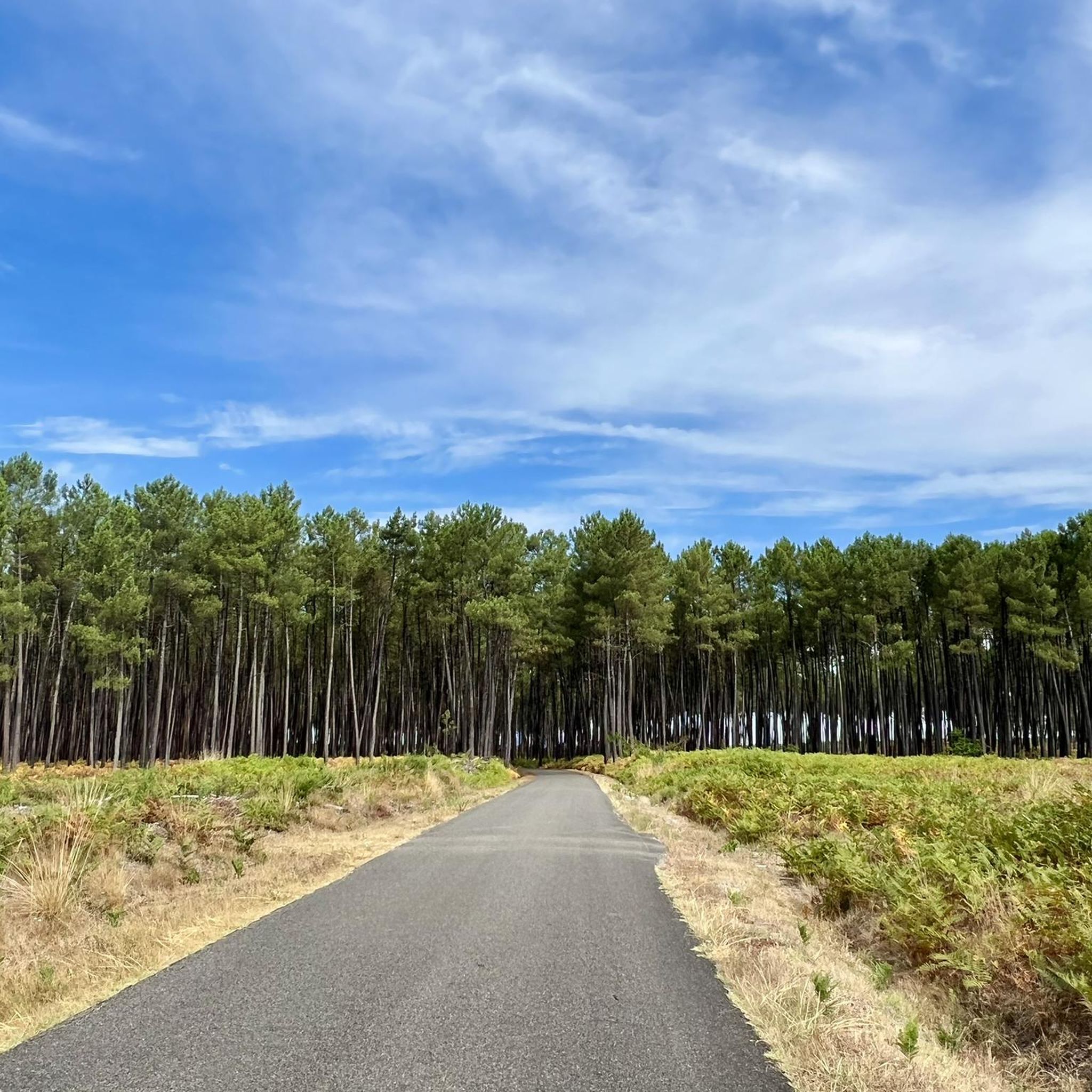
Touring cycling around Linxe is characterized by its flat terrain and lush natural environment, situated between forests and streams in the Landes region of France. The area offers well-developed cycling routes that connect to diverse landscapes, including the Atlantic coast and Lake Léon. Cyclists can explore serene forest paths, open countryside, and routes leading to coastal beaches, with minimal elevation changes.
Best touring cycling routes around Linxe
- The most popular touring cycling route is Saint-Girons Beach – Beautiful bike path…
Last updated: October 11, 2026
4.8
(28)
148
riders
33.4km
02:06
140m
140m
Moderate bike ride. Good fitness required. Mostly paved surfaces. Suitable for all skill levels.
4.8
(15)
80
riders
19.5km
01:07
60m
60m
Easy bike ride. Great for any fitness level. Mostly paved surfaces. Suitable for all skill levels.

4.6
(8)
75
riders
Easy bike ride. Great for any fitness level. Mostly paved surfaces. Suitable for all skill levels.
4.0
(2)
23
riders
18.4km
01:06
120m
120m
Easy bike ride. Great for any fitness level. Mostly paved surfaces. Suitable for all skill levels.
4.3
(4)
14
riders
48.5km
02:51
190m
190m
Moderate bike ride. Good fitness required. Mostly paved surfaces. Suitable for all skill levels.
Get access to more routes and recommendations from other explorers.
Already have an account?
Our route recommendations are based on thousands of hikes, rides, and runs completed by other people on komoot.
Start today with a free account
Your next adventure awaits.


Tips from the Community

Location and classification The estate lies exactly on the border between the municipal areas, in the dense pine forest of the Landes, not far from the watercourse Courant de la Prade. It is located slightly set back from the road on the left side when coming from Linxe. Background and architecture The name: The term „Maoucout“ derives from the regional Gascon dialect (often historically used for a rough, difficult-to-access or low-lying forest area). Architectural style: It is not a classic medieval fortress castle, but a so-called Maison de Maître (or bourgeois château). These stately estates were built in the 18th and 19th centuries by wealthy landowners, forest barons, or manufacturers in the middle of the vast pine forests. They are usually characterized by a symmetrical, noble facade, high windows, and often small turrets or decorative dormers. The grounds: Like the Château Belle Époque, this building is also located in the middle of a spacious, private park with ancient trees. Present-day use In contrast to the Château Belle Époque, which is fully integrated into tourism as a large holiday center, the Maoucout château is largely privately owned and not regularly accessible to the public or for visits. However, parts of the surrounding historical farm buildings and lands have been used in the past for agricultural purposes, forestry, or as private holiday accommodations on a case-by-case basis. For those driving by, it is primarily a beautiful, mystical eye-catcher amidst the typical forest landscape of the Landes.
14
0
Here is a beautiful linden avenue in the village
13
0
This historic, castle-like estate originally dates back to the 18th century and is nestled within a spacious, approximately 3.7 to 4-hectare wooded park, characterized by old trees and its own idyllic pond. The historic main building is distinguished by its stately architecture. This also includes striking architectural details such as the free-standing round tower (La Tour Ronde). Current use and facilities The stately estate is now used as an exclusive and charming holiday resort: Accommodation: The estate combines classic guest rooms directly in the castle (Chambres d'Hôtes) with several independent holiday homes and gîtes (such as La Sellerie or La Serre), which have been set up in the historic outbuildings and annexes. Leisure facilities: On the extensive, enclosed grounds, there is a large outdoor pool, a private tennis court, and playgrounds for children.
14
0
6 WebsitesIn the French municipality of Linxe (Département Landes) stands a modern wooden market hall (Halle de plein vent), inaugurated in the summer of 2024, which was built as a versatile meeting place directly in the village center on the Place des Muletiers.The structure, designed by the architectural firm WEEK architecture, covers an area of approximately 380 square meters and cost around 423,000 euros net. The special feature of the open hall is its sustainable construction made from regional, recycled wood, crafted by local artisans. Among other things, historical oak beams from a neighboring building were reused. The architecture was designed in such a way that the existing trees on the square were preserved and that the surrounding historical buildings – such as the library, the town hall (Salle des Fêtes), and the tourist information center – are not visually dominated. In the center of the hall, there is also a ground-level structure that can be flexibly used as seating or as a stage.The hall primarily serves the local supply and social life:Weekly market: Every Friday morning (and seasonally also on Tuesdays), the hall protects the market stalls for fresh, regional products from the weather.Cultural events: Due to its open design, it is regularly used for local festivals, barbecues (Soirée grillades), and traditional events.
15
0
Here you can ride beautifully on the beach
15
0
10 WebsitesThe old stone pillar that you discovered in Saint-Girons (part of the municipality of Vielle-Saint-Girons) is a historically significant and fascinating 11th-century monument: a so-called Colonne de Sauveté (or Borne de Sauveté, meaning "sanctuary pillar" or "refuge marker").The pillar is actually the oldest structure in the entire region. Since stone was an extreme luxury good in the sandy coastal landscape of the Landes in the Middle Ages, this monument underscores the importance of the place at that time.Its function in the Middle Ages: A divine sanctuaryIn the 11th and 12th centuries, such protected areas (Sauvetés) were negotiated and established in southern France by the Catholic Church and local lords. The five-meter-high white stone pillar, which today stands at the edge of the village on Rue des Chênes, was one of originally four pillars that delimited a sacred area in a square around the church of the time. Of these four markers, only two still exist today.
0
0
The old church, located in Vielle on the main street parallel to the lakes, is the historic Église Saint-Girons (occasionally also referred to historically as Église Saint-Girons du Camp). It is situated directly on the Route des Lacs (D652) and shapes the quiet, inland village center of the municipality of Vielle-Saint-Girons. Architecture and History The church building belongs to the parish of Saint-Paul du Marensin and looks back on a centuries-old history. Architecturally, it is characterized by the whitewashed masonry typical of the region and a steeply pitched red tiled roof, above which the square bell tower rises. The structure combines simple, robust church elements that are optimally adapted to the sometimes harsh weather conditions near the Atlantic coast. Directly in front of the church is also the historical war memorial (Monument aux morts) of the municipality. Points of Interest Inside In contrast to the simple exterior facade, the interior of the church houses some artistic, historical treasures: The Chancel: The altar area is traditionally designed and illuminated by warm wood tones and colorful stained glass windows (Vitraux), which cast a special play of light into the nave when sunlight streams in. The Gallery: Above the entrance area is a classic wooden gallery, offering additional space for the congregation and emphasizing the rustic charm of the coastal churches.
9
0
Frequently Asked Questions
How many touring cycling routes are available around Linxe?
There are over 20 touring cycling routes around Linxe, offering a variety of options for exploration. The komoot community has rated these routes highly, with an average score of 4.5 stars.
What is the general difficulty level of touring cycling routes in Linxe?
The touring cycling routes in Linxe are predominantly easy, with 16 out of 20 routes classified as such. There are also 4 moderate routes available for those seeking a slightly greater challenge. The terrain is generally flat, characterized by minimal elevation changes.
What kind of terrain can I expect on touring cycling routes near Linxe?
You can expect a diverse and scenic terrain. Routes often wind through lush pine forests, alongside tranquil streams, and offer access to the Atlantic beaches and Lake Léon. The area is known for its flat landscape, making it ideal for touring cyclists.
What natural attractions can I explore while cycling around Linxe?
While cycling, you can discover several natural highlights. The Courant d'Huchet Nature Reserve, often called 'the Landes Amazon,' offers lush vegetation and unique ecosystems. You can also cycle near Léon Lake Trail, a Natura 2000 site known for its diverse flora and fauna. The Marais de la Pipe Observatory provides opportunities for birdwatching.
Are there any historical or cultural landmarks to see in Linxe?
Yes, Linxe offers charming cultural stops. The 18th-century Château Belle Epoque, with its park and unique stables designed by Gustave Eiffel, is a notable landmark. The village itself features picturesque streets with half-timbered houses and an Art Deco village hall, reflecting the local architectural heritage. You can also visit the local market on Tuesday and Friday mornings for a taste of local life.
Are there family-friendly cycling routes in Linxe?
Absolutely. Many of Linxe's routes are suitable for families due to their easy difficulty and flat terrain. For example, the Lac de Léon – Camin de Hé: Vielle - Linxe loop from Linxe is an easy 10.2-mile (16.4 km) path that explores the area around Lake Léon and utilizes the dedicated Camin de Hé cycle path, perfect for a family outing.
Can I bring my dog on the cycling trails in Linxe?
While many natural areas in France are dog-friendly, it's always best to check specific regulations for nature reserves like the Courant d'Huchet or Lake Léon, as rules can vary (e.g., dogs on leash, restricted areas). Generally, on public cycle paths through forests and countryside, dogs on a leash are often permitted.
Where can I find parking for touring cycling routes in Linxe?
Linxe, being a hub for outdoor activities, typically offers parking facilities within the village or near popular trailheads. Specific parking information can often be found on local tourism websites or by checking the starting points of individual routes on komoot.
Are there places to eat or drink along the cycling paths in Linxe?
Yes, you can find options for refreshments. Linxe village itself has local markets and potentially cafes. Along some routes, especially near Lake Léon, you might find establishments like La Guinguette Whypot. It's advisable to check opening times, especially outside peak season.
What do other touring cyclists say about the routes in Linxe?
The routes in Linxe are highly regarded by the komoot community, with an average score of 4.5 stars from over 395 reviews. More than 2100 touring cyclists have explored the area using komoot, often praising the serene forest paths, the well-maintained cycle routes like the Camin de Hé, and the beautiful natural environment that connects to the coast and Lake Léon.
Are there any circular touring cycling routes in Linxe?
Yes, Linxe offers several circular touring cycling routes. An excellent option is the Camin de Hé: Vielle - Linxe – Linxe–Léon Cycle Path loop from Linxe, a 14.5-mile (23.3 km) trail that takes you through forests and alongside the Linxe–Léon Cycle Path, providing a complete loop experience.
How can I reach the cycling trailheads in Linxe using public transport?
Public transport options to Linxe and its trailheads may be limited, as it is a smaller village in the Landes region. It's recommended to check local bus schedules or regional transport services for connections to Linxe. Many visitors opt for personal vehicles to reach the starting points of the cycling routes.
What is the best season for cycling in Linxe?
The best season for cycling in Linxe is generally spring and autumn when the weather is mild and pleasant. Summers can be warm, but the shaded forest paths offer a refreshing escape. The lush natural environment is beautiful year-round, but avoiding the hottest summer days or potential winter rains will enhance your cycling experience.
Most popular attractions around Linxe

Get inspired with the komoot mobile app


Explore more
Browse the best Cycling routes in other regions.
