Attractions and Places To See around Habas - Top 12
Best attractions and places to see around Habas include a mix of historical sites, cultural venues, and scenic routes. This region, situated in the Landes department of France, offers opportunities to explore local heritage and enjoy outdoor activities. Visitors can discover a variety of points of interest, from ancient abbeys to repurposed railway lines. The area provides a glimpse into local history and natural landscapes.
Best attractions and places to see around Habas
- The most popular attractions is Salies‑de‑Béarn Greenway…
Last updated: May 17, 2026
Tunnel
Highlight (Segment) • Other
Translated by Google •
Tip by

Salies‑de‑Béarn Greenway
Highlight (Segment) • Cycleway
Translated by Google •
Tip by

Sign up now to discover places like this
Get recommendations on the best single tracks, peaks, & plenty of other exciting outdoor places.
Sign up for free
Bourg-Neuf Washhouse Fountain
Highlight (Segment) • Monument
Its construction is linked to the Bourgneuf district which developed to the west of the medieval enclosure. The houses are connected to Chemin du Lavoir by …
Translated by Google •
Tip by

Abbaye de Sordes
Highlight • Religious Site
Showing Translation
Tip by

Abbaye de Cagnotte
Highlight • Religious Site
Translated by Google •
Tip by
Sign up for free to discover even more attractions around Habas.
Sign up for free
Already have an account?
Start today with a free account
Your next adventure awaits.
Login or Signup


Tips from the Community

## The tunnel The tunnel, located between the Puyoô and Salies-de-Béarn stations, is one of the significant structures on line n° 662.000 connecting Puyoô to Mauléon. It is a single-track tunnel 848.5 m long and 5.00 m wide between the abutments. The height under the crown is 6.00 m. It is a multi-radius arch. The structure is generally oriented North-South, with a curve of R400 m for the first 250 meters on the North side, then a straight section to the South end. The longitudinal profile has a constant gradient of 0.01 m/m from the North. A central aqueduct equips the structure along its entire route. The maximum cover is 49 m. The tunnel is built in the Campanian flysch (Upper Cretaceous). The construction of the tunnel (1879-1883) was carried out from two headings via shafts approximately 35 m deep, located at PM219 and PM632. The shafts were retained as ventilation shafts. The masonry thicknesses (limestone rubble set in lime mortar) vary from 0.50 m to 1.20 m. The length of the tunnel, initially projected at 400 m, was increased to 787 m following the decision to lower the profile (from 20‰ to 16‰). During construction, ground instabilities encountered during the excavation of access trenches led to a further extension of the structure, which finally reached a length of 848.5 m. Numerous ground instabilities (landslides) caused significant delays in the progress of the work. The tunnel was electrified in 1930 and the overhead line equipment was removed in 1971.
0
0

A really beautiful cycle path on an old railway line. It is completely asphalted and is therefore a wonderful ride and there are one or two bridge highlights to admire along the way.
2
0

THE FOUNTAIN-WASHBOARD OF BOURG-NEUF Its construction is linked to the Bourgneuf district which developed to the west of the medieval enclosure. The houses are connected to Chemin du Lavoir by stairs built on the old ramparts. They were taken down to fetch water from the fountain and do laundry chores. The washhouse is made up of two basins and flat stones or boards on which the washerwomen soaped or beat the linen. This fountain-washhouse is mentioned in the municipal registers in 1609 under the name of Cappellade fountain and was, until the mid-1960s, before water supply, the nerve center of the Bourgneuf district. Here is the testimony of a resident who remembers this recent past: “This Bourgneuf fountain was very famous because the water was very fresh and most of the women of Sordes came at midday with their jug to collect water. They waited sitting on the stones of the washhouse and that's where we learned the stories of the village. It was the housewives' meeting. » (Source: Pays d’Orthe Cultural Center)
0
0
Cagnotte Abbey, located in the Landes in France, is a Benedictine and then Cistercian abbey founded in the 9th century. It was founded by Salvius and his servant Mauricius, who were assigned by the bishop of Dax to guard the tomb of Maria Corfedia. In the 11th century, the monastery moved temporarily seven kilometers to the east and in 1097 built a new abbey church. Returning to Cagnotte following a raid by the Normans, the community there adopted Cistercian rule in 1141. All that remains of the abbey is a part of the abbey dwelling which has become a barn and the small parish church reduced to the sanctuary, the choir bay, the side and cross chapels of the transept of the former Notre Dame de Corheta abbey church. This church houses the tombs of the Viscounts of Orthe and Adelaide of Anjou. The abbey experienced a slow decline from the Wars of Religion until the Revolution. In 1776, Louis XV authorized the demolition of the monastery. Source: Wikipedia, Cagnotte Town Hall, Festival des Abbayes
0
0


An old railway line rehabilitated as a greenway, very pleasant to enter Salies-de-Béarn.
3
0

Superb abbey! Please note the cryptoporticus is under construction (November 2022). Beautiful presentation of the restoration work and suitable for all
1
0

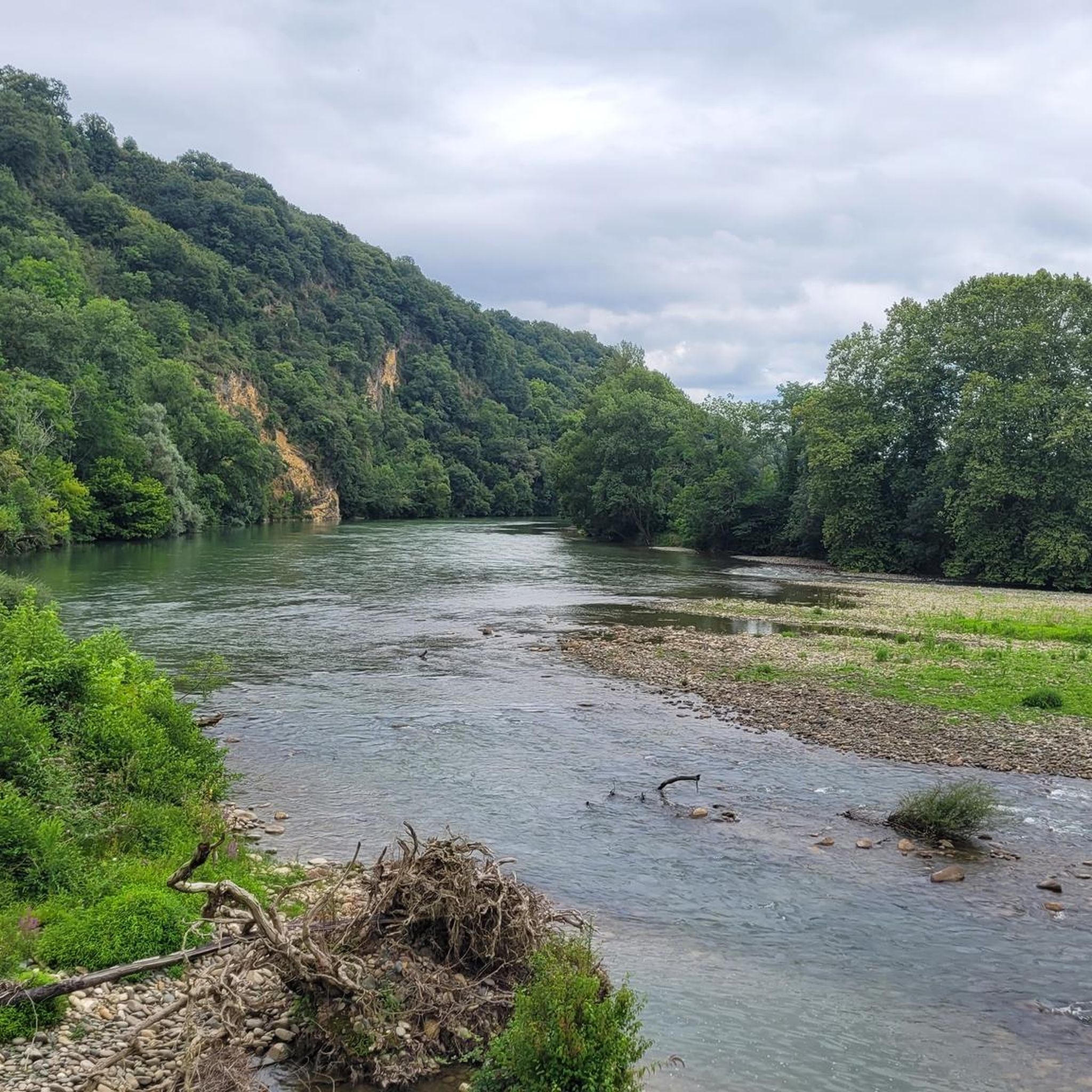
The abbey of Sordes, in the commune of Sorde-l'Abbaye, is a Benedictine abbey from the 10th century. Located on the banks of the Gave river, it is part of a remarkable heritage site, marked by its remains and its history linked to the paths of Santiago de Compostela.
1
0
Frequently Asked Questions
What are some popular attractions to visit around Habas?
The area around Habas offers a mix of historical sites and scenic routes. Highly recommended spots include the Salies‑de‑Béarn Greenway, a pleasant cycle path on an old railway line, and the historic Abbaye de Sordes, a 10th-century Benedictine abbey. Visitors also appreciate the Bourg-Neuf Washhouse Fountain, a significant historical monument.
What do visitors particularly enjoy about the attractions near Habas?
Visitors frequently praise the tranquility and scenic beauty of the Salies‑de‑Béarn Greenway, noting its smooth asphalt and charming bridge highlights. The historical depth of sites like Abbaye de Sordes and the cultural insight offered by the Bourg-Neuf Washhouse Fountain are also highly appreciated.
Are there historical sites or cultural venues to explore near Habas?
Yes, the region is rich in history. You can visit the 10th-century Abbaye de Sordes, a Benedictine abbey, or the Bourg-Neuf Washhouse Fountain, which served as a community hub since 1609. Another notable site is the Pomarez Arenas, one of France's first completely covered arenas, hosting traditional Landes bullfighting events.
Can I learn about local heritage in the Habas area?
Absolutely. Sites like the Bourg-Neuf Washhouse Fountain offer a glimpse into daily life and community gatherings from centuries past. The Abbaye de Sordes and Abbaye de Cagnotte also provide deep insights into the region's religious and architectural history.
What kind of outdoor activities can I do around Habas?
The area around Habas is excellent for outdoor enthusiasts. You can enjoy cycling on the Salies‑de‑Béarn Greenway, or explore numerous hiking and mountain biking trails. For more detailed routes, check out the guides for Hiking around Habas, MTB Trails around Habas, and Cycling around Habas.
Are there good hiking trails near Habas?
Yes, there are several hiking opportunities. You can find easy trails like the 'Salies-de-Béarn loop' or the 'Grotte des Fées loop from Saint-Cricq-du-Gave', as well as moderate options such as the 'Panoramic View of the Pyrenees loop'. For a comprehensive list, refer to the Hiking around Habas guide.
Where can I go cycling around Habas?
Cycling is a popular activity. The Salies‑de‑Béarn Greenway, an asphalted former railway line, offers a very pleasant ride. Additionally, there are various touring bicycle routes, including moderate and difficult options like the 'Pont Vieux of Orthez – Château de Bellocq loop' or the 'Tunnel – Voie Verte loop'. More routes are available in the Cycling around Habas guide.
Are there family-friendly attractions or activities near Habas?
The Bourg-Neuf Washhouse Fountain is categorized as family-friendly, offering an interesting historical stop. The greenways and easier hiking trails also provide gentle outdoor experiences suitable for families.
Are there any wheelchair accessible attractions near Habas?
While specific accessibility details for all attractions are not extensively documented, the Salies‑de‑Béarn Greenway, being an asphalted former railway line, may offer sections suitable for wheelchairs, depending on the specific entry points and surrounding terrain.
What is the best time to visit attractions around Habas?
The region is generally pleasant during spring and summer for outdoor activities like cycling and hiking, when the weather is milder and nature is in full bloom. For specific events at places like the Pomarez Arenas, it's best to check their schedule, as major events often occur during the summer months.
Are there any hidden gems or lesser-known spots worth visiting near Habas?
Beyond the main highlights, exploring the smaller villages and their local heritage sites, such as the remnants of the Abbaye de Cagnotte, can reveal charming and less-crowded experiences. These spots often offer a deeper connection to the local history and culture.
Can I find places to eat or stay near the attractions in Habas?
While specific cafes, pubs, or accommodations are not detailed within the attraction data, the towns and villages surrounding Habas, such as Salies-de-Béarn and Sorde-l'Abbaye, are likely to offer local eateries and lodging options for visitors exploring the nearby attractions.

Get inspired with the komoot mobile app


Explore more
Still not found the Highlight you’re looking for? See guides of the top attractions in other regions:
