The best road cycling routes around Heidweiler
4.6
(236)
4,945
riders
279
rides
Road cycling routes around Heidweiler benefit from the village's location within the diverse Eifel and Mosel regions of Germany. The area features scenic river valleys, such as the Mosel and Nims, often with cycle paths along former railway lines. Cyclists encounter varied topography, including volcanic hills and extensive forests, providing both challenging climbs and panoramic views. Vineyards are also a common sight, particularly towards the Mosel.
Best road cycling routes around Heidweiler
- The most popular road cycling route is Eglingen…
Last updated: October 6, 2026
5.0
(2)
165
riders
112km
05:06
1,210m
1,210m
Hard road ride. Very good fitness required. Some segments of this route may be unpaved and difficult to ride.
5.0
(1)
55
riders
106km
04:56
1,220m
1,220m
Hard road ride. Very good fitness required. Mostly well-paved surfaces and easy to ride.

5.0
(7)
128
riders
Easy road ride. Great for any fitness level. Mostly well-paved surfaces and easy to ride.
30
riders
66.7km
02:49
390m
390m
Moderate road ride. Good fitness required. Mostly well-paved surfaces and easy to ride.
28
riders
19.5km
00:47
80m
80m
Easy road ride. Great for any fitness level. Mostly well-paved surfaces and easy to ride.
Get access to more routes and recommendations from other explorers.
Already have an account?
Our route recommendations are based on thousands of hikes, rides, and runs completed by other people on komoot.
Start today with a free account
Your next adventure awaits.

Tips from the Community

Of the three sides of the Ballon d'Alsace, this is clearly the most difficult (the only one with gradients of 9-10%)... but it is certainly the most beautiful! The hairpin bends at the start of the climb before the Alfeld lake are sublime. The road then evolves along the mountainside, unfortunately no more hairpin bends, this section can seem long for some, the gradient remains between 8 and 9%. It decreases when you reach the Langenberg... you have done the difficult part, there are still 4 km to the top. After that, there is a mix of flat sections and climbs with a natural clearing 1 km from the top, from where you have a panoramic view of the valley.
3
0
Een schilderachtig stuwmeer langs de beklimming van de Ballon d'Alsace, omringd door de beboste hellingen van de Vogezen. 🚴⛰️🌲
4
0
A spectacular hairpin bend on the climb to the Ballon d'Alsace. As the road winds its way up the slope, beautiful views open up over the wooded valley of the Vosges.
3
0
A picturesque mountain lake at the foot of the Ballon d'Alsace, surrounded by forests and steep slopes. 🚴♂️🏞️⛰️
3
0

René Pottier was the first participant to cross a pass by bicycle. The first pass of the Tour de France was the Ballon d'Alsace.
2
0

The Ballon d’Alsace or the Vosges was the first mountain tour of the third edition of the Tour de France from July 9 to 30, 1905, in the second, 299 km long stage between Nancy and Besançon. Also in the fourth edition of the Tour de France the following year, from July 4 to 29, 1906, the route, also on the second stage, this time 400 km, went from Douai to Nancy via the Ballon d’Alsace.
1
0

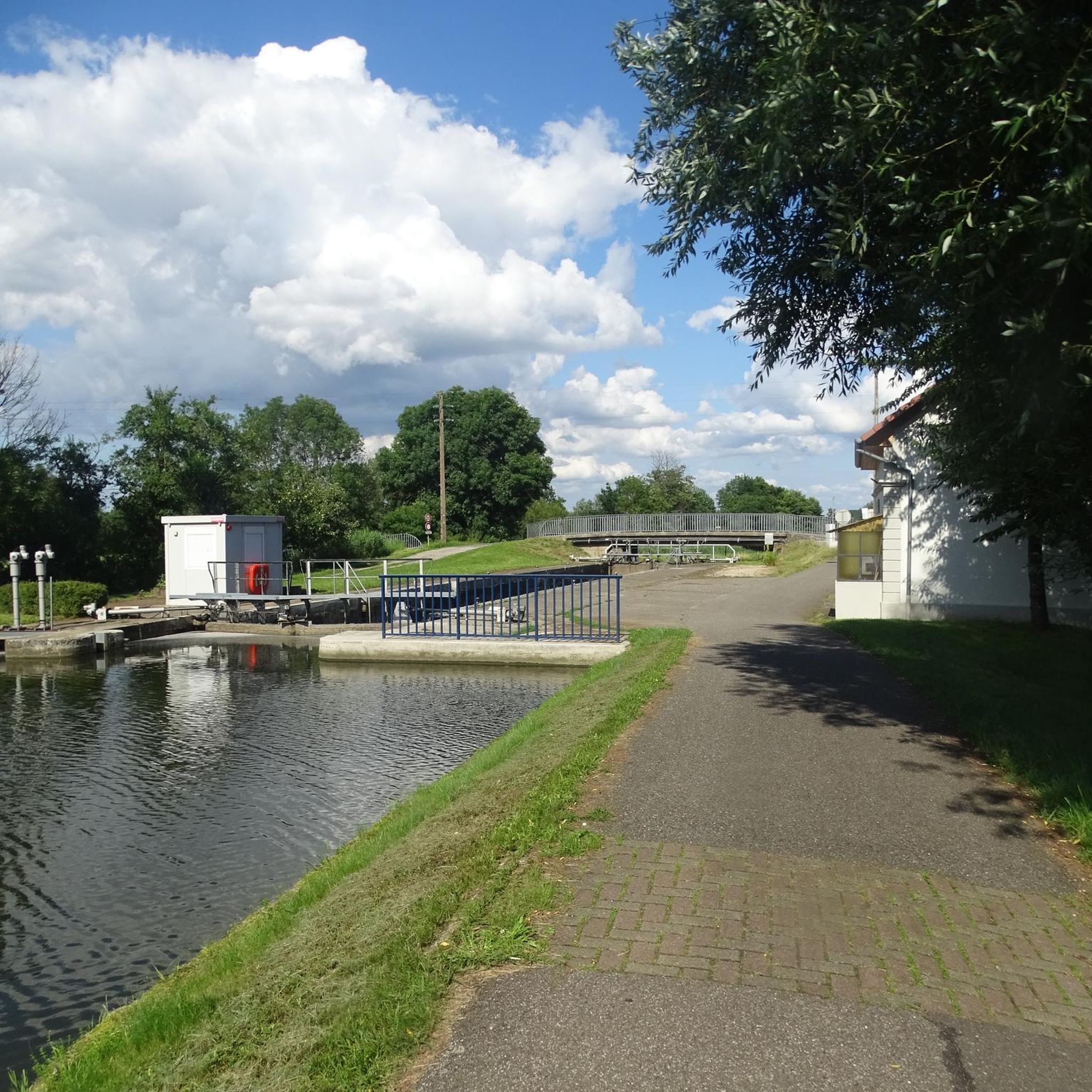
Every lock along the route provides for an unusual background and a good memory of your bike trip. A lot of these locks have a bridge going over them, take the time to branch off the bridge and discover some of the nice villages along the canal.
0
0
The French and European National Cycleway is a great cycleway winding along side of the Rhine Rhone Canal with very little climbing, for those who do not like to climb. However those who are climbing shy, must be aware of the wind in this area. A lot of the locks still have the former lock man’s house which adds a bit of charm to every lock. One is never alone on this route as there is a constant passing of bicycles, both leisure and racing bikes.
0
0
Frequently Asked Questions
How many road cycling routes are available around Heidweiler?
There are over 270 road cycling routes available around Heidweiler, catering to various skill levels. You'll find a good mix of easy, moderate, and challenging options to explore the Eifel and Mosel regions.
What kind of terrain can I expect on road cycling routes near Heidweiler?
The region offers diverse terrain. You can expect tranquil paths through river valleys like the Mosel and Nims, often along former railway lines with gentle gradients. The volcanic Eifel also provides hilly sections with challenging climbs and descents, rewarding cyclists with panoramic views. Extensive forests and vineyards add to the scenic variety.
Are there options for both easy and challenging road cycling?
Yes, the routes around Heidweiler cater to all abilities. There are 65 easy routes, many following converted railway lines, perfect for a relaxed ride. For those seeking a challenge, 47 difficult routes feature more significant climbs and descents through the volcanic Eifel landscape.
What historical or natural landmarks can I see while road cycling around Heidweiler?
While cycling, you can encounter various points of interest. Notable man-made structures include the Port of Dannemarie and the Eglingen Lock. The broader Eifel region is also known for its volcanic maars and rugged rock formations, offering natural spectacles.
What makes road cycling in the Heidweiler region unique?
Road cycling around Heidweiler is unique due to its blend of landscapes. You'll experience the tranquil beauty of river valleys, the rolling hills of the volcanic Eifel, and the charm of vineyards, especially towards the Mosel. Many routes utilize former railway lines, providing smooth, low-gradient paths through tunnels and over viaducts, offering a distinct cycling experience.
What is the best time of year for road cycling in the Heidweiler region?
The spring and autumn months generally offer the most pleasant conditions for road cycling in the Eifel and Mosel regions. Temperatures are milder, and the landscapes are particularly beautiful with blooming flowers or vibrant fall foliage. Summer can also be good, but be prepared for potentially warmer weather, especially in the river valleys.
Are there family-friendly road cycling routes suitable for all ages?
Yes, the region offers family-friendly options, particularly along the river valleys and former railway lines. These paths typically have minimal gradients and are often away from heavy traffic, making them suitable for cyclists of all ages and abilities. The Mosel Valley, for instance, is renowned for its tranquil, family-friendly cycle paths.
Is parking available for road cyclists in Heidweiler?
While specific parking for Heidweiler routes isn't detailed, the broader Eifel and Mosel regions, being popular cycling destinations, generally offer parking facilities in towns and at trailheads. It's advisable to check local signage or use navigation apps for designated parking areas near your chosen starting point.
How accessible are the road cycling routes by public transport?
The Eifel and Mosel regions have some public transport options that can assist cyclists. Many cycle paths, especially those along former railway lines, connect towns that may have train or bus services. However, direct public transport to every trailhead in Heidweiler might be limited, so planning your route and transport connections in advance is recommended.
What do other road cyclists enjoy the most about road cycling in Heidweiler?
The area is highly rated by the komoot community, with an average score of 4.5 stars from over 170 reviews. Reviewers often praise the varied terrain, from scenic river valleys to challenging volcanic hills, and the well-maintained paths, including those on former railway lines, that offer a unique and enjoyable cycling experience.
Can I find circular road cycling routes in the area?
Yes, many road cycling routes around Heidweiler are designed as loops, allowing you to start and finish in the same location. Examples include the Eglingen Lock – Port of Dannemarie loop from Tagolsheim and the Port of Dannemarie – Eglingen Lock loop from Heidwiller, which take you through scenic river valleys.
Are there opportunities for coffee and cake stops along the routes?
Yes, the region, like much of Germany, has good infrastructure for cyclists, including opportunities for 'Kaffee & Kuchen' (coffee and cake) stops. Charming villages along the Mosel and in the Eifel often feature cafes and bakeries where you can refuel and relax during your ride.
Most popular routes around Heidweiler
Most popular attractions around Heidweiler

Get inspired with the komoot mobile app


Explore more
Browse the best Road cycling routes in other regions.
