Attractions and Places To See around Steenbecque - Top 20
Best attractions and places to see around Steenbecque include a charming Flemish village in the Nord department of France, offering a glimpse into its rich history and cultural heritage. Its name, "Steenbecque," is derived from a stream flowing over a stony bed, highlighting its natural origins. The village is known for its well-preserved Flemish identity and is situated in a rural area between Hazebrouck and Aire-sur-la-Lys.
Best attractions and places to see around Steenbecque
- The most popular attractions is The…
Last updated: July 15, 2026
Saint-Pierre Collegiate Church of Aire-sur-la-Lys
Highlight • Religious Site
Translated by Google •
Tip by

Aire-sur-la-Lys Belfry
Highlight • Historical Site
Translated by Google •
Tip by
Sign up now to discover places like this
Get recommendations on the best single tracks, peaks, & plenty of other exciting outdoor places.
Sign up for free
Moulin des Invalides
Highlight • Other
Translated by Google •
Tip by
View from the Thiennes bridge
Highlight • Bridge
Showing Translation
Tip by
Canal de Neufossé
Highlight • Other
Translated by Google •
Tip by
Sign up for free to discover even more attractions around Steenbecque.
Sign up for free
Already have an account?
Start today with a free account
Your next adventure awaits.
Login or Signup


Tips from the Community

The belfry of Aire-sur-la-Lys (in Dutch: Ariën-aan-de-Leie) is a historic, baroque belfry in the French department of Pas-de-Calais that has been on the UNESCO World Heritage list since 2005. The striking tower is attached to the town hall and dominates the skyline of the historic town.
0
0

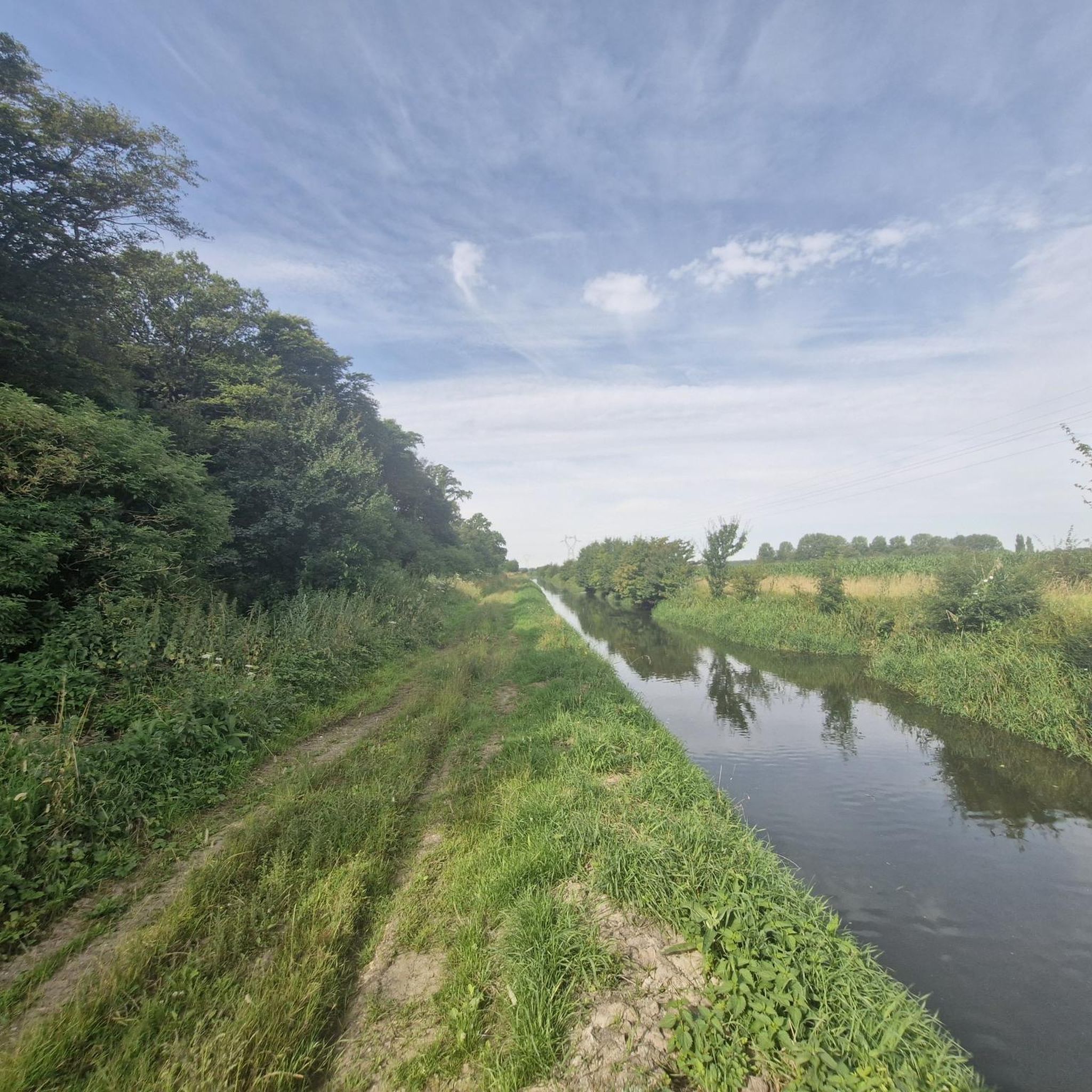
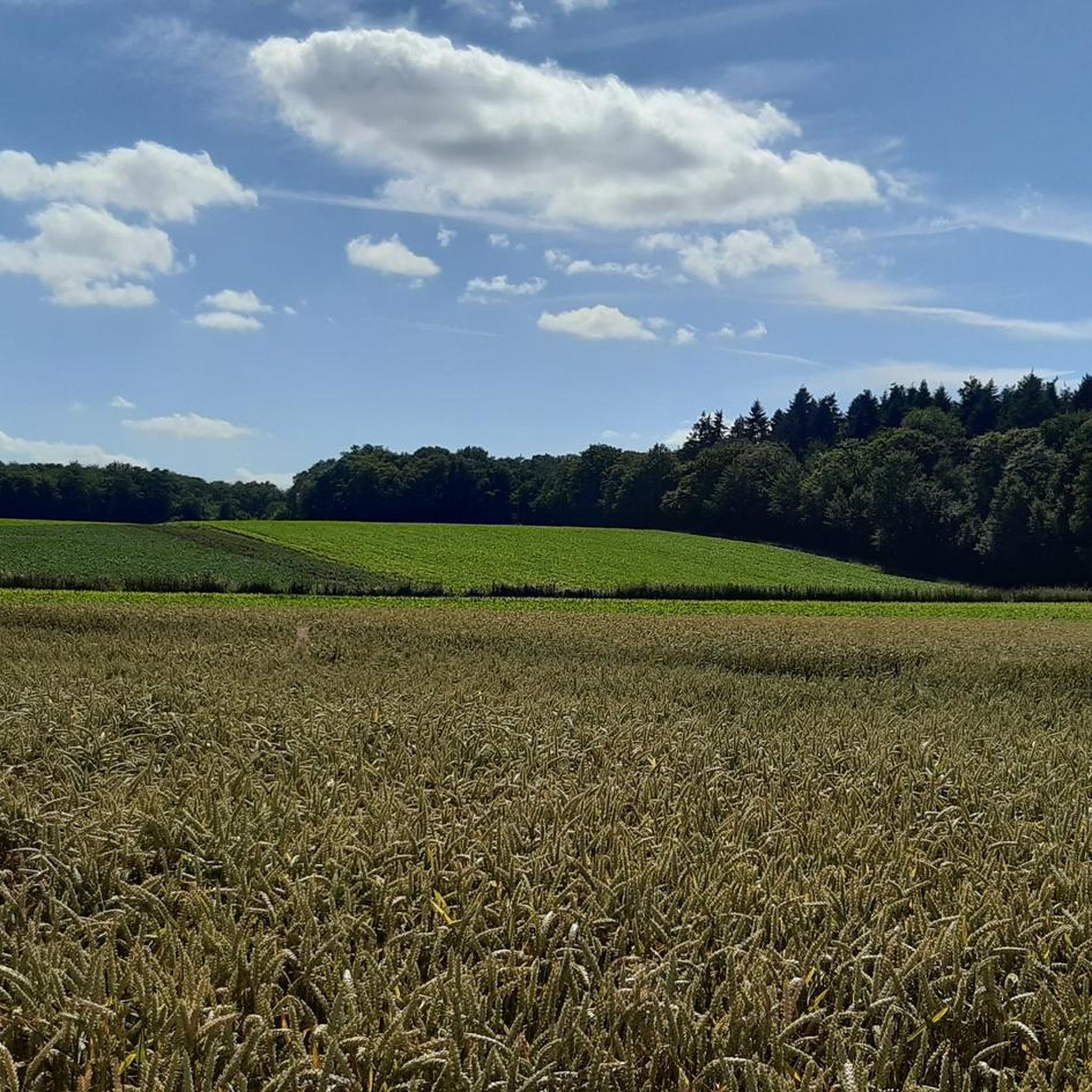
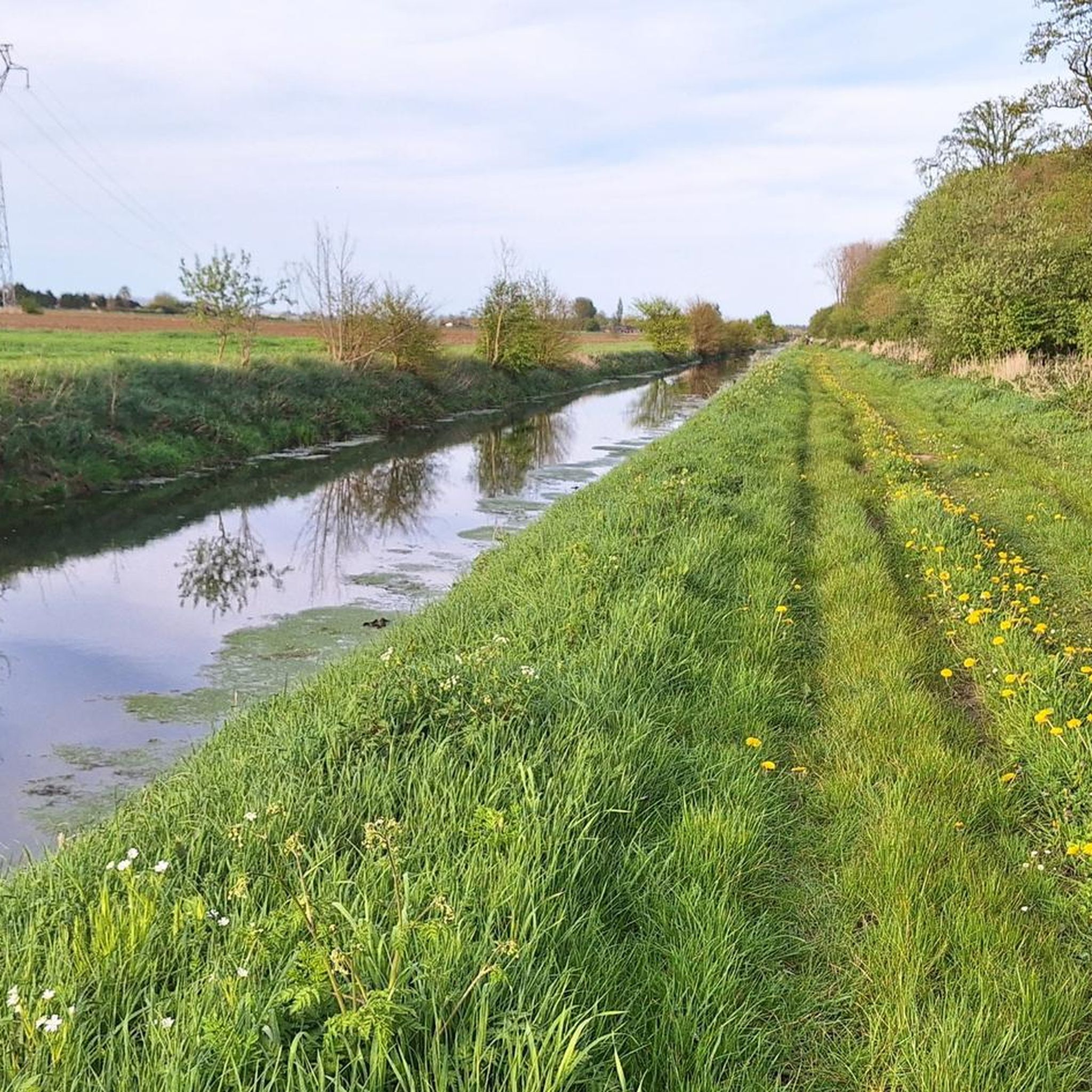
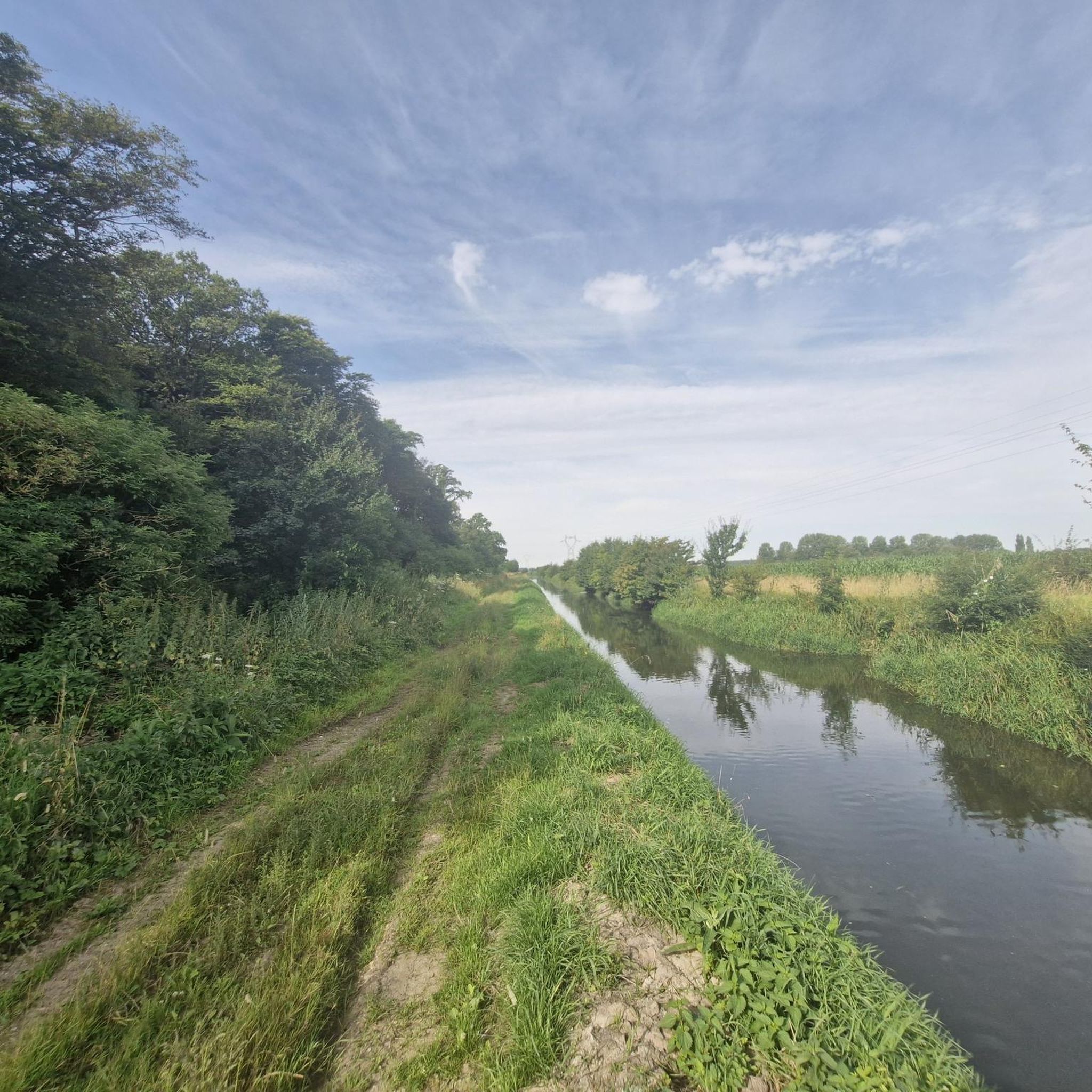
Beautiful cycle path along the canal.
0
0

Many centuries ago, our ancestors discovered the possibility of harnessing the power of the elements—which, on the one hand, were helpful and useful, but on the other hand, as untamed forces of nature, could also be a threat—for various purposes, thus eliminating the need for human or animal muscle power. Mills such as these are a good example of the human engineering skills of earlier generations: The heavy millstones used to grind grain or press oil, for example, could be powered by wind or—as in this case—water.
1
0

The Pont de Thiennes is a traffic bridge located on the Leie, connecting the municipalities of Thiennes and Aire-sur-la-Lys. The bridge was inaugurated in 2014. It is built of Soignies granite and was financed by the state (33.9%) for war damage, by the department of Pas-de-Calais (33.05%) and by the department of Nord (33.05%). The bridge is equipped with a lifting system to allow the passage of boats.
7
0
The Canal de Neufossé is an artificial canal located in the north of France, between the River Aa in Arques and the Canal d'Aire in Aire-sur-la-Lys. The canal is part of the Dunkerque-Escaut Canal and is approximately 18 kilometers long. The canal was built in 1760 to connect the Lys River with the Aa, giving Lille and other inland cities a French route to the sea. The canal has a maximum height of 19 meters and a minimum height of 3 meters. The canal has a number of historic features, including three locks from the eighteenth century and a double lock from 1887 called the ascenseur des Fontinettes.
11
0
The Beffroi d'Aire-sur-la-Lys is a monument that is part of the heritage of Aire-sur-la-Lys. It was first built in 1355 and rebuilt between 1716 and 1724 by the architect Hérogue. It has been listed as a historic monument since 1947 together with the adjacent town hall1. The beffroi is 45 meters high and rests on four large pillars of brick and stone, two meters thick, which demarcate an interior space of six meters wide. It is of Baroque style and is part of the list of 23 belfries inscribed on the UNESCO World Heritage List in 2005 as part of the list of "Belfries of Belgium and France".
10
0
This is one of the finest examples of the Flamboyant Gothic and Renaissance in French Flanders. The imposing tower (62m) resembles that of Notre-Dame in Saint-Omer. Inside, the pattern of the ribs of the vaults has been transferred to the floor. The choir is closed by a beautiful rood screen; on the left is the gilded statue of Notre-Dame Panetière. The oak organ case comes from the abbey church of Clamarais. Choir and apse suffered from a bombardment in 1944. In the back you can see a beautiful Virgin and Child (15th century)
9
0
The Moulin des Invalides is a watermill on the Laquette, located in the city of Aire-sur-la-Lys, part of the French department of Pas-de-Calais. The mill functioned as a flour mill. The mill was built in 1682 for Count De Robelin, who was an engineer for the French king. The builders were soldiers who were no longer fit for military service due to their injuries. In 1790 it was reported that the mill had two paddle wheels, but the current was too weak to turn both wheels. In 1840 the mill was partly rebuilt and enlarged. A winch was also installed to hoist the bags of grain. Mechanization followed in the course of the 19th century and the current building was erected in 1878. Electric propulsion arrived in the 20th century. In 1979 the company was closed down. In 1996 a new water wheel was installed, which had the same diameter of 5.2 meters as in 1790.
11
0
Frequently Asked Questions
What historical sites can I explore in and around Steenbecque?
Steenbecque and its surroundings are rich in history. Within the village, you can visit the impressive 12th-century Saint-Pierre Church, known for its artistic interior and historical furnishings, as well as the Calvary of 1821 and various chapels. Nearby, don't miss the Saint-Pierre Collegiate Church of Aire-sur-la-Lys, a significant Flamboyant and Renaissance monument, and the historic Moulin des Invalides, a watermill built in 1682.
Are there any natural attractions or scenic spots near Steenbecque?
Yes, Steenbecque is surrounded by natural beauty. The village itself is named after the Steen Becque River, a 10 km long stream. You can also find remnants of historical woodlands nearby, such as Bois des Huit-Rues, Bois de la Fanque, and Bois de la Cruysabeele. For a scenic experience, consider exploring the Canal de Neufossé, which offers beautiful paths for cycling and walking.
What outdoor activities can I do near Steenbecque's attractions?
The area around Steenbecque is excellent for various outdoor activities. You can find numerous routes for running, cycling, and mountain biking. For instance, there are several running loops like the 'Running loop from Steenbecque' (9.3 km) or the 'Run'in Morbecque loop' (11.2 km). Cyclists can enjoy routes such as 'The Thiennes Bridge loop from Thiennes' (12.4 km) or the longer 'Drève du Milieu – To reach the Lys loop' (45.4 km). Mountain bikers have options like 'The Thiennes Bridge – Passerelle de la Lys loop' (71.4 km). You can find more details and routes on the Running Trails around Steenbecque, Cycling around Steenbecque, and MTB Trails around Steenbecque guide pages.
Are there family-friendly attractions around Steenbecque?
Absolutely! The The Thiennes Bridge is a great option, as it's noted for being family-friendly and even wheelchair accessible. Its lifting system for boats can be interesting for children. Additionally, the scenic paths along the Canal de Neufossé are suitable for family walks or bike rides, offering a pleasant outdoor experience.
What is the significance of Steenbecque's Flemish heritage?
Steenbecque has a strong Flemish identity, with its inhabitants historically speaking Flemish exclusively until the early 20th century. This heritage is reflected in its architecture, such as The Flemish House (a former school), and its cultural landmarks. The village's name itself, 'Steenbecque,' is of Flemish origin, meaning 'stream flowing over a stony bed,' highlighting its natural and linguistic roots.
Can I find any unique architectural landmarks in the area?
Yes, the region boasts unique architectural landmarks. The Saint-Pierre Church in Steenbecque is a rare example of a *hallekerque* (hall church) with elements from various centuries. The Saint-Pierre Collegiate Church of Aire-sur-la-Lys is another impressive example, showcasing Flamboyant Gothic and Renaissance styles. You can also see the Saint-Venant Town Hall, a historical building dating back to 1776.
What are some lesser-known historical points of interest in Steenbecque?
Beyond the main church, Steenbecque offers several lesser-known historical points. You can discover various chapels and oratories scattered along the roads, with one of the most famous dedicated to Sainte Pharaïlde. The village also features the historical Former Hospice and the Monument Roucou, each telling a part of Steenbecque's past.
Are there any bridges or waterways worth visiting?
Definitely. The The Thiennes Bridge is a notable modern landmark, a 200-meter-long road bridge built of Soignies granite with a lifting system for boats. The Canal de Neufossé is also a significant waterway, part of the Dunkerque-Escaut Canal, featuring historic locks and popular cycle paths.
What do visitors enjoy most about the attractions around Steenbecque?
Visitors appreciate the blend of historical significance and natural beauty. The The Thiennes Bridge is noted for its impressive structure and scenic location. The Saint-Pierre Collegiate Church of Aire-sur-la-Lys is admired for its grand architecture and rich history. The Moulin des Invalides offers a glimpse into historical engineering. Overall, the community enjoys the diverse range of sites, from ancient churches and traditional mills to canals and bridges, often highlighted by beautiful photos and positive feedback.
What kind of routes are available for cycling around Steenbecque?
Cyclists can enjoy a variety of routes around Steenbecque, ranging from easy to difficult. Options include 'The Thiennes Bridge loop from Thiennes' (12.4 km, easy), 'A marvel of nature – Balastières Pond loop from Thiennes' (19.5 km, easy), and longer, more challenging routes like 'Drève du Milieu – To reach the Lys loop from Thiennes' (45.4 km, difficult). Many routes offer scenic views along canals and through rural landscapes. Explore more cycling options on the Cycling around Steenbecque guide page.
Are there any specific monuments commemorating past events in Steenbecque?
Yes, Steenbecque, like many French villages, has a War Memorial dedicated to local residents lost in conflicts. Additionally, the Monument Roucou is another noted monument within the commune, though its specific commemoration is less detailed in available information.
What is the best way to experience the Steen Becque River?
The Steen Becque River, from which the village gets its name, is a charming natural feature. While there aren't specific guided tours of the river itself, you can experience its presence by exploring the local paths and roads that run alongside it. Its 10 km length makes it an integral part of the local landscape, perfect for a leisurely walk to appreciate the natural origins of Steenbecque.
Most popular routes around Steenbecque

Get inspired with the komoot mobile app


Explore more
Still not found the Highlight you’re looking for? See guides of the top attractions in other regions:
