The best road cycling routes around Saint-Benoît-La-Forêt
4.5
(75)
1,988
riders
232
rides
Road cycling around Saint-Benoît-La-Forêt features routes through the scenic Loire Valley, characterized by its river landscapes and historic châteaux. The region is primarily defined by the extensive Forêt Domaniale de Chinon, offering shaded routes and varied ecosystems. The terrain is generally gentle, with modest elevation changes, making it suitable for various cycling abilities. Most surfaces are paved, providing a comfortable ride through open countryside and small villages.
Best road cycling routes around Saint-Benoît-La-Forêt
- The most popular road cycling route is…
Last updated: May 23, 2026
5.0
(1)
50
riders
54.8km
02:20
330m
330m
Moderate road ride. Good fitness required. Mostly well-paved surfaces and easy to ride.
42
riders
Moderate road ride. Good fitness required. Some segments of this route may be unpaved and difficult to ride.

Sign up for free
18
riders
64.6km
03:01
420m
420m
Moderate road ride. Good fitness required. Some segments of this route may be unpaved and difficult to ride.
16
riders
86.6km
03:32
370m
370m
Moderate road ride. Good fitness required. Some segments of this route may be unpaved and difficult to ride.
10
riders
Moderate road ride. Good fitness required. Some segments of this route may be unpaved and difficult to ride.
Get access to more routes and recommendations from other explorers.
Sign up for free
Already have an account?
Our route recommendations are based on thousands of hikes, rides, and runs completed by other people on komoot.
Start today with a free account
Your next adventure awaits.
Login or Signup

Tips from the Community

The Clock Tower is the emblematic gateway to the Château du Milieu, which it defended in the Middle Ages with a drawbridge and portcullis. These defensive elements have now disappeared. Slender and slender, it rises over five levels and is crowned by a patrol path.
0
0

Magnificent approach to the Château de Rigny Ussé from the Loire embankment
0
0

Crissay-sur-Manse is one of the most beautiful villages in France. The Manse River, which gives the village its name, flows through the southern part of the municipality. Sights: - Saint-Maurice Church (early 16th century) - Houses from the 15th and 16th centuries - Castle ruins (15th century)
0
0

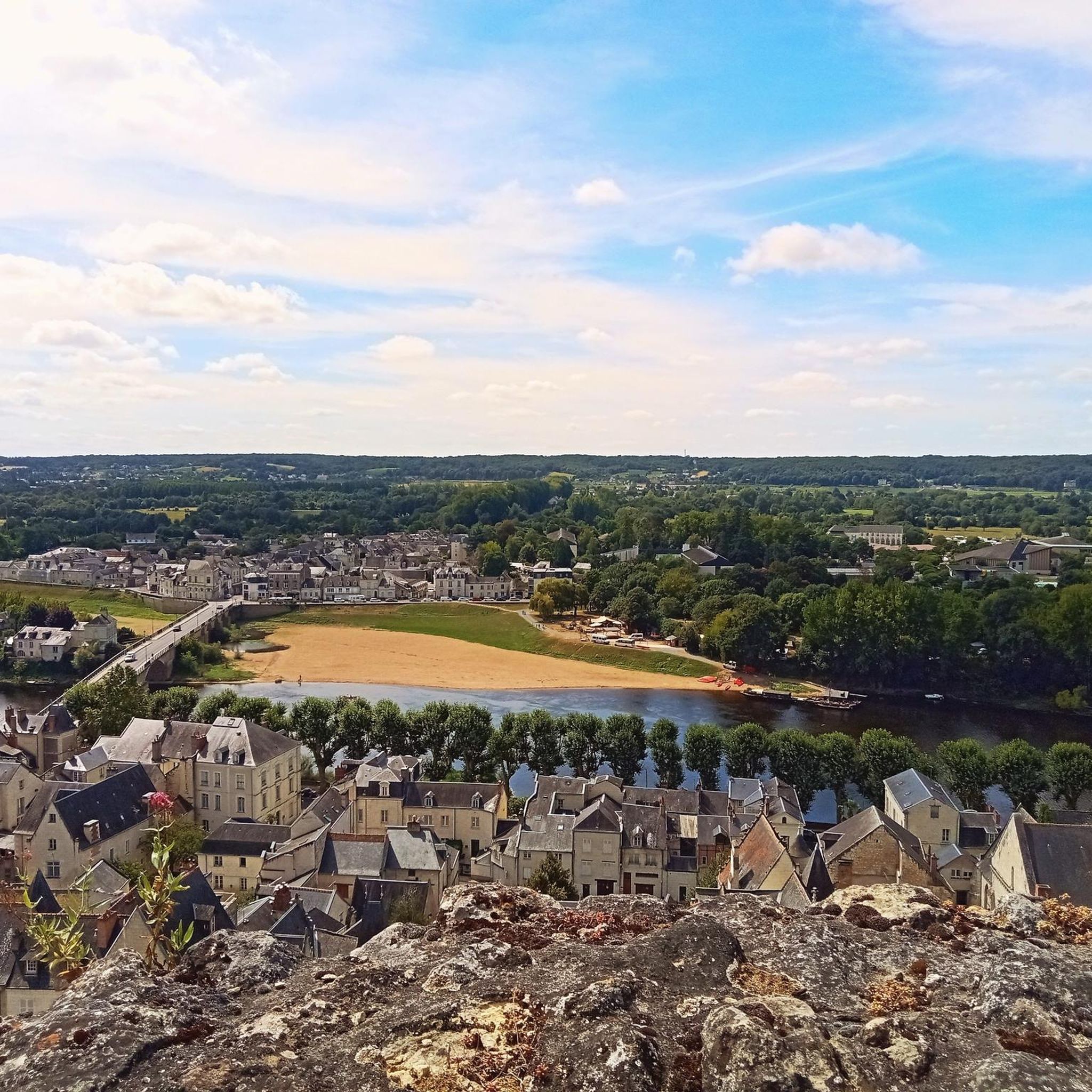
History in brief Antiquity: the site is strategically located on a promontory and has been inhabited for 3,000 years. It was not fortified until the end of the Roman Empire. Middle Ages: in 1154, the new King of England, Henry II Plantagenet, became ruler of an empire stretching from Scotland to the Pyrenees and made Chinon his continental capital. He had a large palace built next to the fortress, which has now disappeared. In 1189, abandoned by his sons, Richard the Lionheart and John Lackland, and fleeing from the King of France, he eventually died there. Philippe Auguste had the defensive Tour du Coudray built there after the siege of 1205. Renaissance: in 1454, the fortress became the main residence of Queen Marie d'Anjou, who lived there without her husband. She spent lavishly on decorating the house to her taste. From the 16th century onwards, the fortress was gradually abandoned and fell into disrepair. Despite the dangerous nature of the terrain, it became a public promenade in 1824 and was listed as a monument in 1840. The restoration of the estate began in 1854 thanks to the efforts of the writer Prosper Mérimée. Source: https://loirelovers.fr/en/visit-royal-fort-chinon/
6
0

nice village, with a nice restaurant near the church
0
0
This impressive suspension bridge spans the Loire between La Chapelle-aux-Naux and Langeais and was originally completed in 1849. The bridge has been repaired and rebuilt many times and has a two-lane road over the Loire. On the Langeais side, a walk along the banks of the Loire, on both sides of the bridge, is highly recommended. The Langeais bridge is a stubborn bridge. It has been rebuilt five times! The story begins in 1848, the year in which King Louis Philippe authorised the construction of a "wire bridge", as it was then called (bridge 1). But wires are excellent lightning conductors! And 10 years after its opening in 1859, the bridge collapsed into the Loire after a heavy storm, its deck and suspension elements. Two years later in 1861, the bridge was repaired and operational again as a toll bridge (bridge 2). But shortly afterwards, in 1870, war broke out and the advance of the Prussian enemy had to be slowed down. Boom! Bridge was blown up (bridge 3) The fourth was completed in 1914, but then came the... car! They were heavy, they came and went! The bridge therefore had to be extensively rebuilt to bear the weight of modernity. This happened in the 1930s, and the opportunity was taken to decorate the bridge with its very special Gothic pillars, which reflected the Gothic style of the castle; the two form a mirror image. Bridge 4 was built! All is well, all is well... but then it is June 1940. And this time it is the Germans who have to be stopped. To stop the invader, the bridge was blown up again. After first using a ferry and then a temporary footbridge, the inhabitants waited until 1949 for a bridge over the Loire (bridge 5). The bridge of Langeais is the only bridge between Tours and Port Boulet. It is now a rather imposing bridge with a turbulent history.
2
0
View of the Vienne and the village of Candes Saint Martin
0
0
Magnificent view of the Loire. Possible stopover (picnic, meal, bar)
0
0
Frequently Asked Questions
How many road cycling routes are available around Saint-Benoît-La-Forêt?
There are over 220 road cycling routes around Saint-Benoît-La-Forêt, offering a wide range of options for different skill levels and preferences. The komoot community has explored these routes over 1800 times.
Are there easy road cycling routes suitable for beginners or families in Saint-Benoît-La-Forêt?
Yes, Saint-Benoît-La-Forêt offers 53 easy road cycling routes, perfect for beginners or families looking for a relaxed ride. These routes typically feature flat to gently rolling terrain. An example is the View of the Loire at Bréhémont – View of Ussé Castle loop from Huismes, which is 24.1 miles (38.9 km) long.
What kind of terrain can I expect on road cycling routes in the Saint-Benoît-La-Forêt region?
The terrain around Saint-Benoît-La-Forêt is generally flat to gently rolling, characteristic of the Loire Valley. While most routes are accessible, some moderate ascents can be found, particularly on routes that venture slightly away from the immediate riverbanks. The region offers a mix of open countryside, river views, and passages through charming villages.
Are there challenging road cycling routes for experienced cyclists?
While the region is known for its generally gentle terrain, there are a few challenging routes available for experienced cyclists. These routes often cover longer distances and may include more sustained climbs. For example, the Villandry – Langeais Bridge loop from Rivarennes is a difficult 79.2 miles (127.5 km) route with over 400 meters of elevation gain.
What are the best seasons for road cycling in Saint-Benoît-La-Forêt?
The best seasons for road cycling in Saint-Benoît-La-Forêt are typically spring (April to June) and autumn (September to October). During these months, the weather is usually mild and pleasant, with less heat than summer and fewer crowds. Summer (July and August) is also popular, but can be warmer, especially in the afternoon.
What can I see along the road cycling routes in Saint-Benoît-La-Forêt?
Many routes offer stunning views of the Loire River and pass by historic châteaux. You can explore landmarks such as Ussé Castle, the Royal Fortress of Chinon, and L'Islette Castle. Some routes also traverse the Chinon State Forest, offering a change of scenery.
Are there road cycling routes that pass through vineyards in the region?
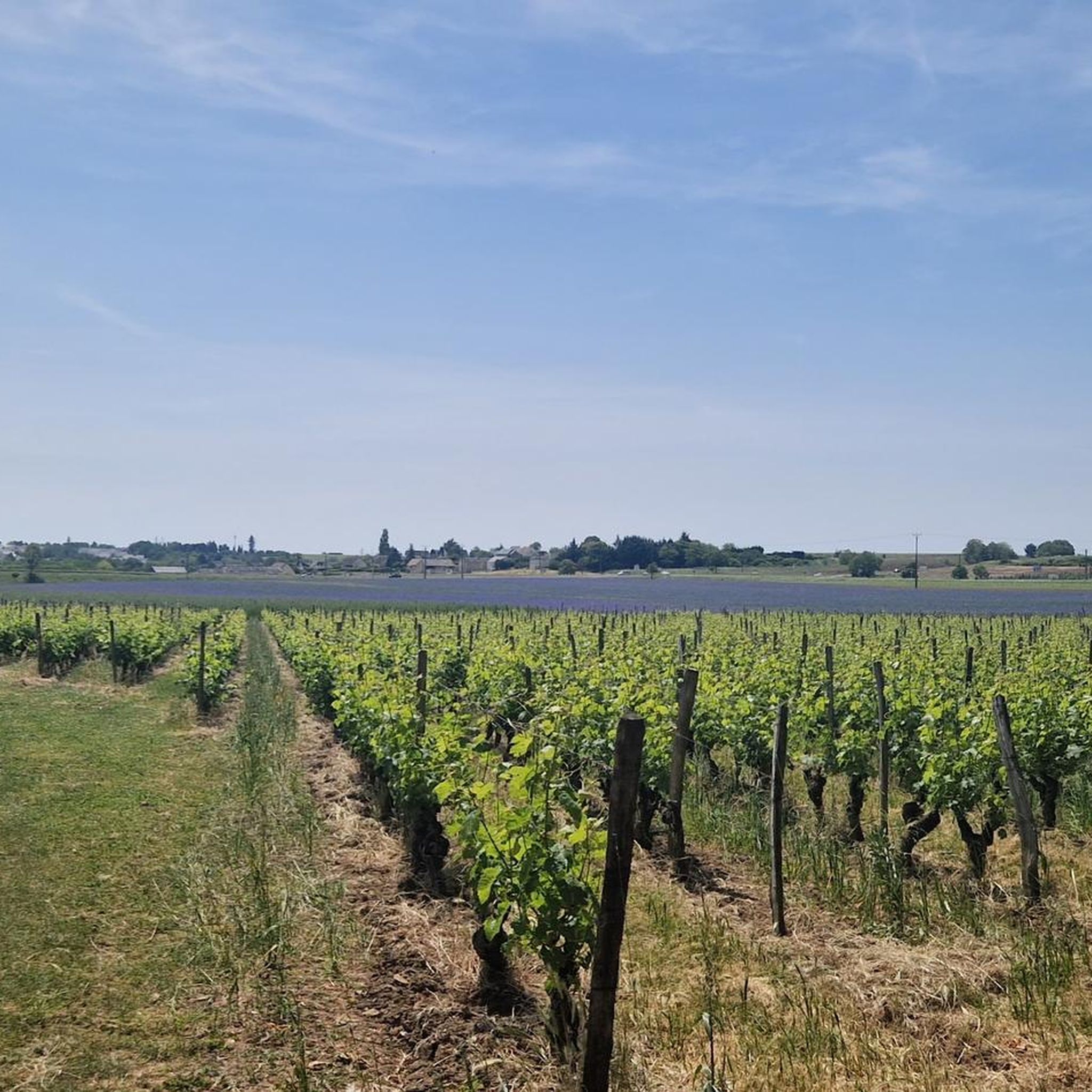
Yes, the Loire Valley is renowned for its vineyards, and many road cycling routes around Saint-Benoît-La-Forêt will take you through picturesque wine-growing areas. While specific routes aren't explicitly named for vineyards in the data, the general regional characteristic means you'll encounter them, especially around areas like Chinon.
Are the road cycling routes around Saint-Benoît-La-Forêt typically circular?
Many of the popular road cycling routes in the Saint-Benoît-La-Forêt area are designed as loops, allowing you to start and finish at the same point. Examples include the View of the Loire at Bréhémont – Langeais Bridge loop from Rigny-Ussé and the Azay-le-Rideau – View of the Loire at Bréhémont loop from Saint-Benoît-la-Forêt.
What do other road cyclists enjoy most about road cycling in Saint-Benoît-La-Forêt?
The area is highly rated by the komoot community, with an average score of 4.4 stars from over 70 reviews. Cyclists often praise the scenic views of the Loire River, the historic châteaux along the way, and the generally quiet countryside roads that make for a pleasant riding experience.
Are there places to stop for refreshments or cafes along the road cycling routes?
Given the routes often pass through small villages and towns like Azay-le-Rideau, Langeais, and Chinon, you will find opportunities for cafes, bakeries, and restaurants to refuel. It's always a good idea to check opening hours, especially in smaller communities.
Where can I find parking for road cycling routes in Saint-Benoît-La-Forêt?
Parking is generally available in the towns and villages where routes often start, such as Saint-Benoît-la-Forêt itself, Rigny-Ussé, Huismes, or Chinon. Look for public parking areas, often near town centers or local attractions. Always ensure you park responsibly and check for any local restrictions.
Most popular routes around Saint-Benoît-La-Forêt
Most popular attractions around Saint-Benoît-La-Forêt

Get inspired with the komoot mobile app


Explore more
Browse the best Road cycling routes in other regions.
