The best road cycling routes around Amanlis
4.3
(159)
4,319
riders
557
rides
Road cycling routes around Amanlis traverse a landscape characterized by gently rolling hills and rural roads, offering varied terrain for cyclists. The region features a mix of open countryside, small villages, and historical points of interest, with elevations generally remaining under 200 meters. Road cyclists can expect routes that wind through agricultural areas and past local landmarks, providing a pleasant cycling experience.
Best road cycling routes around Amanlis
- The most popular road cycling route is Châteaugiron Castle – View of…
Last updated: October 5, 2026
23
riders
50.0km
02:05
340m
340m
Moderate road ride. Good fitness required. Mostly well-paved surfaces and easy to ride.
15
riders
41.0km
01:46
230m
230m
Moderate road ride. Great for any fitness level. Some segments of this route may be unpaved and difficult to ride.

11
riders
37.6km
01:35
250m
250m
Easy road ride. Great for any fitness level. Mostly well-paved surfaces and easy to ride.
9
riders
29.9km
01:18
190m
190m
Easy road ride. Great for any fitness level. Mostly well-paved surfaces and easy to ride.
9
riders
32.8km
01:34
200m
200m
Easy road ride. Great for any fitness level. Mostly well-paved surfaces and easy to ride.
Get access to more routes and recommendations from other explorers.
Already have an account?
Our route recommendations are based on thousands of hikes, rides, and runs completed by other people on komoot.
Start today with a free account
Your next adventure awaits.




Tips from the Community

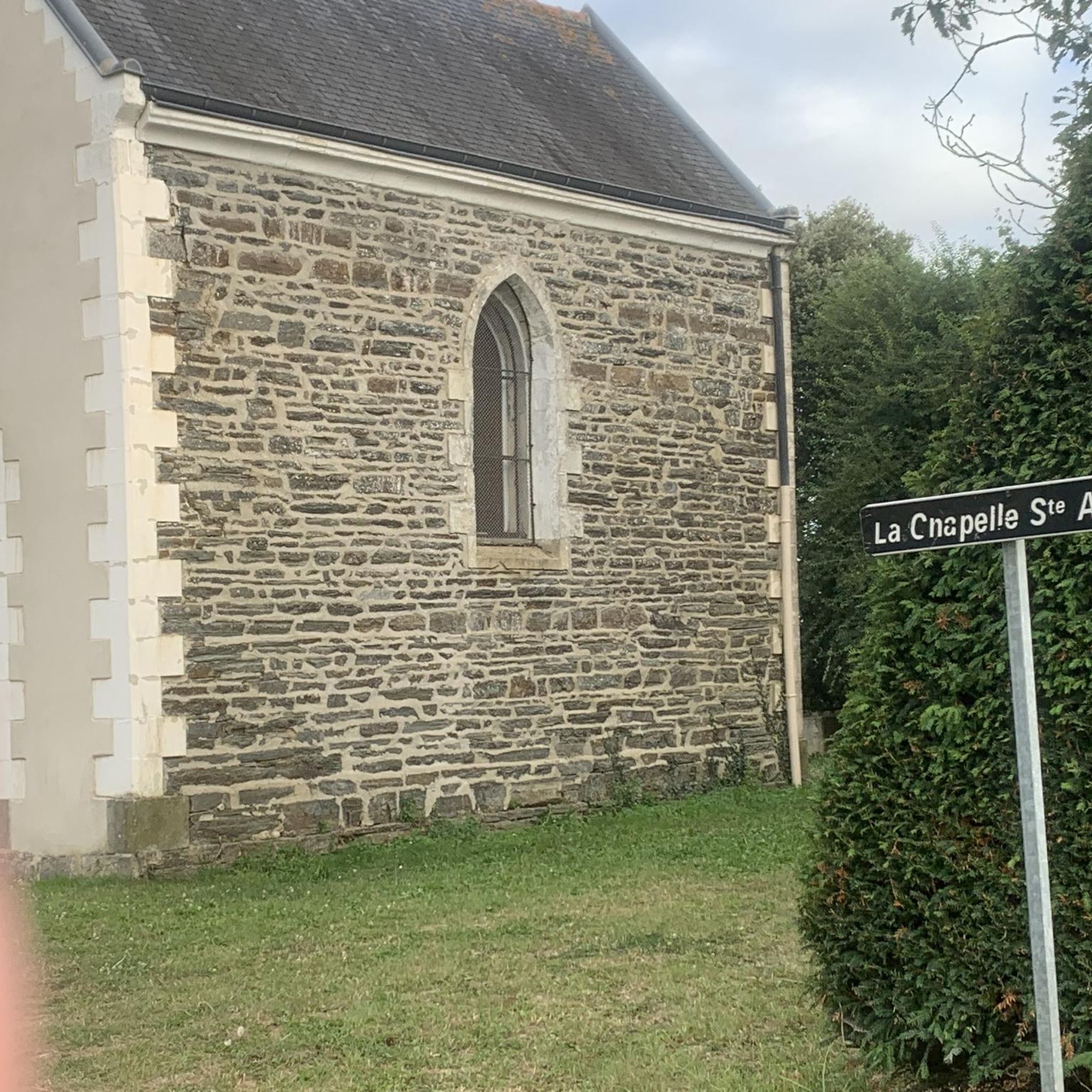
The Sainte-Marie-Madeleine church was built in the 19th century in a neo-Gothic style by Aristide Tourneux, an architect from Castelgiron. With a touch of humor, the town's priest in 1912 wanted to give "cats to the girons": Arthur Regnault, a sculptor, therefore sculpted cats at the four corners of the bell tower. Having collapsed in 1998 following a severe storm, the bell tower was rebuilt identically in 2000.
0
0
Church attested in the 12th century. Nave flanked by a north aisle, built between 1540 and 1549 (date of consecration by the bishop of Rennes), and by a south aisle, built between 1603 and 1605 (dates inscribed). Inscription on the south door: ESTANT NOBLE ET DISCRET PRESTRE : RENE DE L'ESPINAY RECTEUR DE PIRE : SIEUR DE LA GUAYE FUT CESTE EDIF : CE COMMENCE. SA (NC) TE DEUS SA (NC) TE FORTIS SA (NC) TE IMORTALIS MISERERE NOBIS SA (NC) TE PETRE ORA P (RO) NOBIS : TOUT EST A Dieu 1603. The choir was first rebuilt in 1627, then surmounted by a dome struck by lightning in 1741, then again between 1752 and 1775, flanked by side sacristies. Bell tower at the top of the nave rebuilt in 1669. In 1874, architect Aristide Tourneux had a bay added to the north of the nave and a porch-tower surmounted by a spire built. Stained glass windows signed and dated: Claudius Lavergne 1882, and also stained glass windows from the Rault workshops and the Carmel of Le Mans. South wall of the enclosure redone in the 19th century with a monumental corner staircase.
0
0
Old church mentioned as early as 1160 and rebuilt in the 16th and 17th centuries (old tower dated 1582). The current church was entirely built to the plans of Arthur Regnault in 1904 (date and attribution by source). He uses the model of the so-called Plantagenet vaulted ceiling for the covering of the nave and aisles, but for the bell tower, he draws inspiration from Cornish bell walls. Two windows from the late 15th and 16th centuries of the old church were reused on the south side of the nave. This church, rebuilt in the Breton flamboyant style, is representative of the architect's style during this period.
0
0
The Saint-Pierre church was built between 1885 and 1888. The plans were drawn up by the architect Michel Gelly. Due to a lack of financial resources, the building never received a spire.
0
0
The church of Saint-Sulpice (17th century). Dedicated to Saint Sulpice, bishop of Bourges, the church of Ossé consists of a single nave ending in a straight chancel, to which two chapels have been added, forming the transepts. It has no style and may partly date back to the 16th century, as indicated by the ogival window of its chancel, now walled up. The North chapel, dedicated to the Virgin Mary, and originally reserved for the lord of Charot, was built in 1611. The other chapel, dedicated to Saint Nicholas, also seems to be from the 17th century. Le Plessix d'Ossé was the manor house of the parish. In 1440, Duke Jean V settled a dispute concerning the right of burial in the church of Ossé between the sieur du Pan, lord of Plessix, and the sieur de Montbeille, lord of Grées. The ecclesiastical superiority belonged to Ossé to the baron de Châteaugiron, but the lord of Plessix enjoyed the rights of founder and patron; this was declared in 1694 by Gabrielle Glé, marquise de la Vallière and lady of Plessix (National Archives, P. 1721). Jacques Le Prestre, baron de Châteaugiron, having acquired Plessix in 1744, took possession of all these honorary rights and had his coat of arms placed in the choir and on the high altar of the church of Ossé. As for the lord of Charot, he had his tomb, his pew, and his coat of arms in his reserved chapel. The bell tower dates from 1899. The altarpiece of the Holy Trinity dates from the 17th century.
0
0

Very nice place, very friendly! I recommend !
0
0

The first castle of Châteaugiron was built in the middle of the 11th century by Anquetil, a Norman knight, who had received the lands from Alan III, Duke of Brittany. The oldest part of the current castle is the castle's Romanesque chapel dating from the 12th century. Probably in the 13th century, Châteaugiron castle was rebuilt as a stone fortress. Currently the Château de Châteaugiron fulfills several functions; its main body is used as a town hall, the other parts are used as offices and the independent keep is used for exhibitions. You can book your tickets online here: https://www.tourisme-paysdechateaugiron.bzh/activites/chateau-de-chateaugiron/
0
0

The route is not up to date: almost only the road, not paths but sidewalks. Very beautiful castle
0
0
Frequently Asked Questions
How many road cycling routes are there in Amanlis?
There are over 560 road cycling routes available around Amanlis, offering a wide variety of options for cyclists of all levels. These routes traverse a landscape characterized by gently rolling hills and rural roads.
What do other road cyclists enjoy the most about road cycling in Amanlis?
The road cycling routes around Amanlis are highly rated by the komoot community, with an average score of 4.2 stars from over 130 reviews. Cyclists often praise the varied terrain, the mix of open countryside, and the charming small villages encountered along the way.
What is the best time of year for road cycling in Amanlis?
Road cycling in Amanlis is generally pleasant throughout the warmer months, from spring to early autumn. The region's gently rolling hills and rural roads are enjoyable when the weather is mild, allowing for comfortable rides through agricultural areas and past local landmarks.
Are there road cycling routes suitable for beginners in Amanlis?
Yes, Amanlis offers several road cycling routes suitable for beginners. For example, the Single sympa loop from Janzé is an easy 18.5-mile (29.7 km) trail that leads through pleasant rural surroundings, perfect for those new to road cycling.
Are there challenging road cycling routes or climbs around Amanlis?
While the region is characterized by gently rolling hills with elevations generally under 200 meters, some routes offer more significant climbs. For a moderate challenge, consider the Fathers' Castle – Saint-Maximilien-Kolbé Church loop from Châteaugiron, which covers 68.5 km with over 500 meters of elevation gain.
Can I find long-distance road cycling routes near Amanlis?
Yes, there are several longer road cycling routes available. The Saint-Marse Church of Bais – Miniatures Henri Chesnais loop from Châteaugiron is a moderate 55.8 km route, offering a good option for those looking for a longer ride through the countryside.
Are there circular road cycling routes available in Amanlis?
Many of the road cycling routes around Amanlis are designed as loops, allowing you to start and end at the same point. A popular example is the Châteaugiron Castle – View of Acigné Mill loop from Châteaugiron, a 50.6 km route that offers views of historical sites and rural scenery.
What historical sites or landmarks can I see along road cycling routes in Amanlis?
Road cycling routes in Amanlis often pass by interesting historical sites. You can explore landmarks such as Châteaugiron Castle, which is featured on routes like the Châteaugiron Castle – Hôtel de Ville loop from Châteaugiron. Other notable points of interest in the wider region include the La Roche-aux-Fées Dolmen and the Saint-Maximilien-Kolbé Church.
Where can I find parking for road cycling routes in Amanlis?
Many road cycling routes around Amanlis start from towns and villages like Châteaugiron or Janzé, where public parking is generally available. It's advisable to check local parking options in these starting points before your ride.
Are there road cycling routes in Amanlis that include cafe stops?
The routes often wind through small villages and towns, providing opportunities for cafe stops. While specific cafes are not always marked on every route, planning your ride through larger settlements like Châteaugiron or Janzé will increase your chances of finding places to refresh.
What are the typical road conditions for cycling in Amanlis?
The road cycling routes in Amanlis primarily use rural roads, which are generally well-maintained. Cyclists can expect a mix of open countryside roads and passages through villages. Always be mindful of local traffic, especially in and around settlements.
Are there family-friendly road cycling options in Amanlis?
For families, the easier, shorter loop routes are generally the most suitable. The region's gently rolling terrain means there are fewer steep climbs, making it more accessible for cyclists of varying abilities, including families with children who are comfortable on roads.
Are there any hidden gem road cycling routes in Amanlis?
With over 560 routes, Amanlis offers many lesser-known paths that provide a tranquil cycling experience away from more frequented areas. Exploring the extensive network of rural roads often reveals charming, quiet stretches through the agricultural landscape and past local historical points, offering a sense of discovery.
Most popular attractions around Amanlis

Get inspired with the komoot mobile app


Explore more
Browse the best Road cycling routes in other regions.
