Attractions and Places To See around Vindelle - Top 20
Best attractions and places to see around Vindelle offer a blend of natural beauty and historical sites within the Charente department of Nouvelle-Aquitaine, France. Situated along the Charente River, the area features limestone plateaus and provides opportunities for walks and cycling. Vindelle serves as a base for exploring the wider Angoulême region, which is rich in history and culture. Visitors can discover various natural features and historical points of interest.
Best attractions and places to see around Vindelle
- The most popular attractions is Saint-Pierre d'Angoulême Cathedral, a man-made monument and majestic Romanesque masterpiece. Its west facade is decorated with more than 70 sculptures, depicting many images of everyday life.
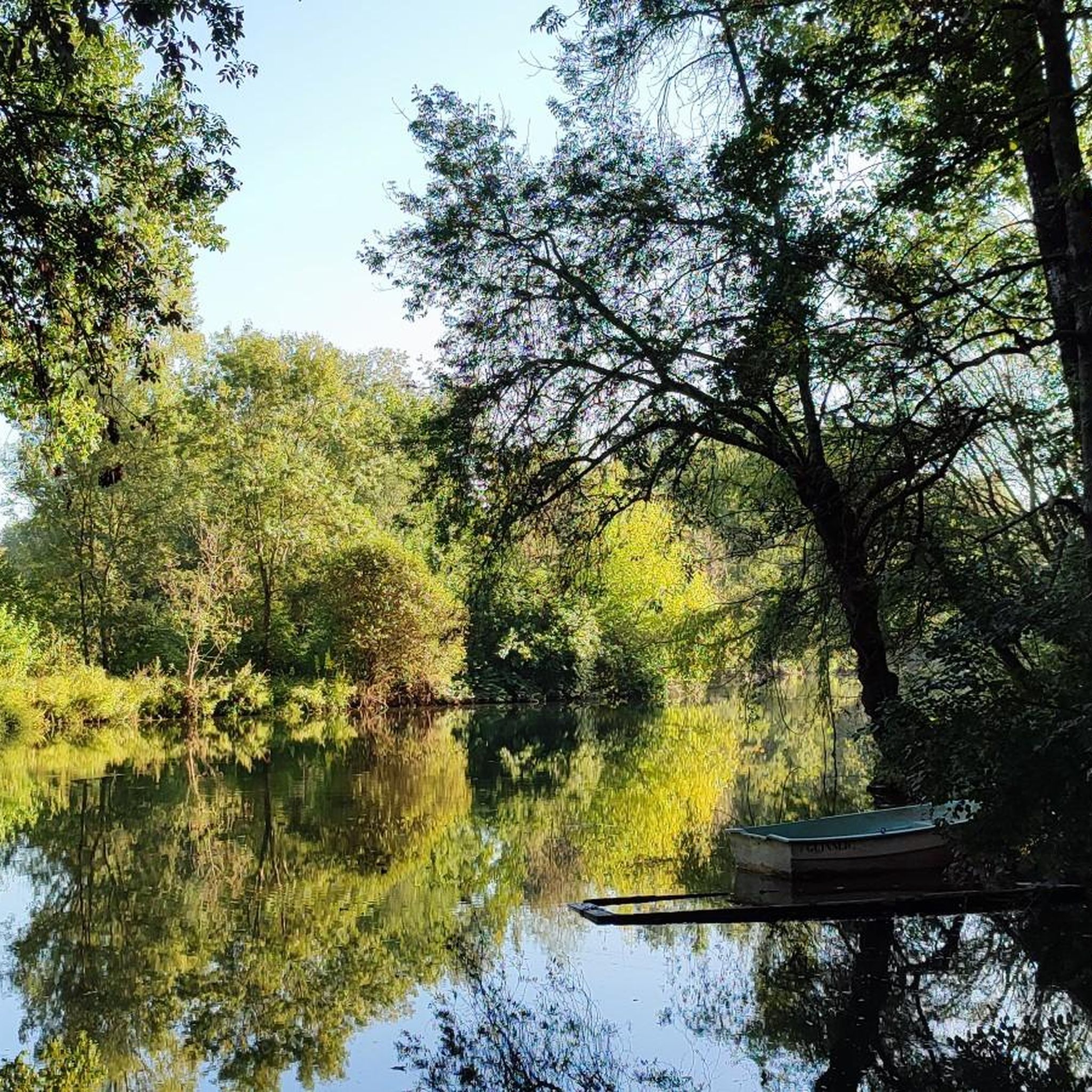
- Another must-see spot is Fleurac Islands, a popular area for walkers and families. These islands are connected by wooden walkways and offer a place for breaks in the shade of trees.
- Visitors also love Church of Notre-Dame de Trois-Palis, a 12th-century Romanesque church nestled in the heart of the village. It was listed as a historical monument in 1886, and its facade features eye-catching sculptures.
- Vindelle is known for historical sites, natural river paths, and religious buildings. The region offers a variety of attractions to see and explore, from ancient churches to riverside trails.
- The attractions around Vindelle are appreciated by the komoot community, with 106 upvotes and 37 photos shared by visitors.
Last updated: May 4, 2026
Church of Notre-Dame de Trois-Palis
Highlight • Religious Site
Translated by Google •
Tip by

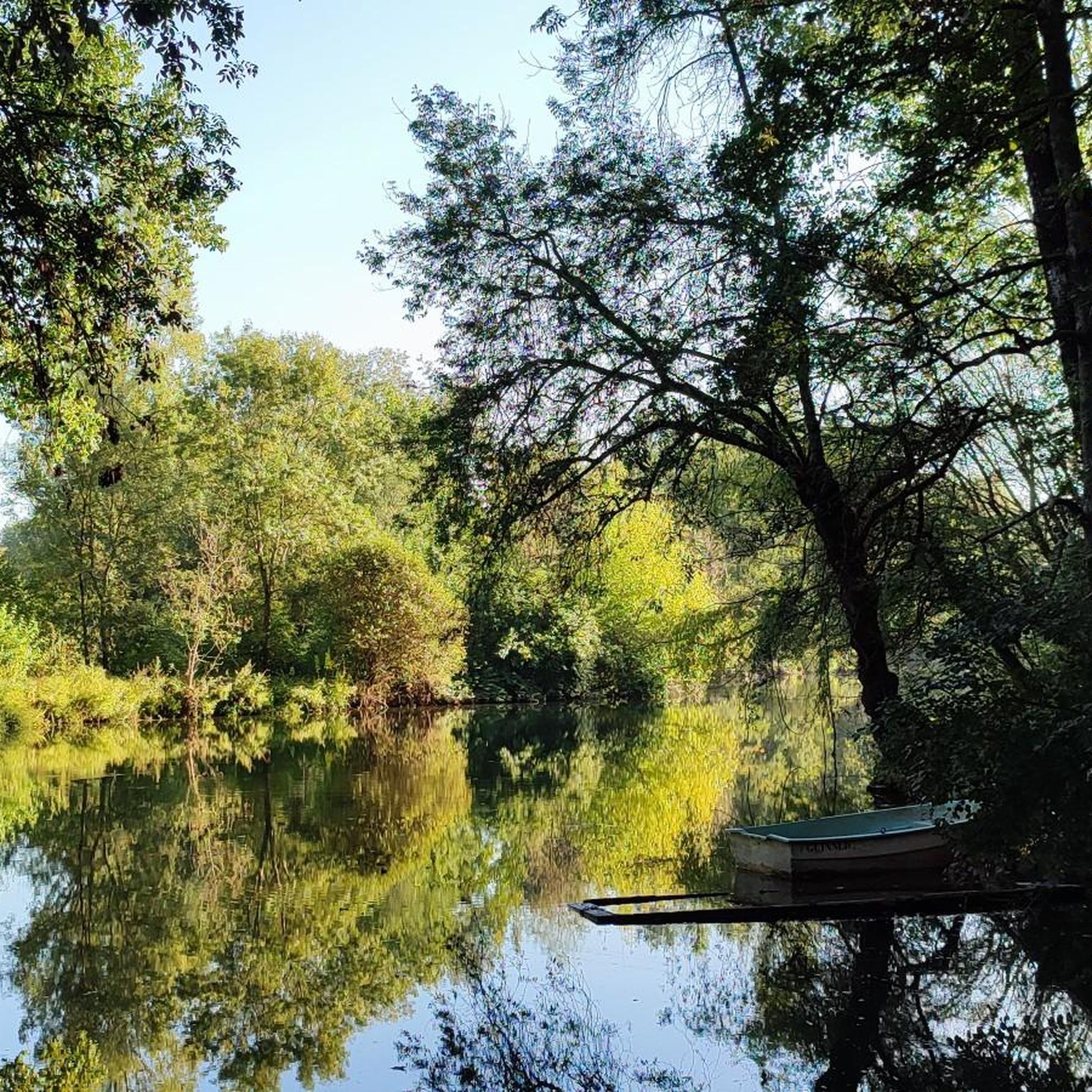
Charente Riverside Path at La Meure
Highlight (Segment) • Trail
Translated by Google •
Tip by

Sign up now to discover places like this
Get recommendations on the best single tracks, peaks, & plenty of other exciting outdoor places.
Sign up for free
Fleurac Islands
Highlight • Other
Very easy to reach by bike from Angoulême, including for children. Ideal destination for families - with young children - looking for a short cycling adventure from the center of Angoulême.
Possibility of crossing the Charente and joining Saint-Michel further south.
Translated by Google •
Tip by
Saint-Pierre d'Angoulême Cathedral
Highlight • Monument
The construction of a replacement church was started around 1110; it was expanded, partially destroyed, and restored over time, adding the two towers.
The west facade is decorated with more than 70 sculptures, depicting many images of everyday life.
Translated by Google •
Tip by

Towpath of the Coulée Verte
Highlight • Trail
Translated by Google •
Tip by
Sign up for free to discover even more attractions around Vindelle.
Sign up for free
Already have an account?
Start today with a free account
Your next adventure awaits.
Login or Signup

Tips from the Community

Its location, near the city walls and an old city gate, corresponds to that of a primitive sanctuary, predating Christianity, probably a temple dedicated to Jupiter. A first cathedral was built during the 4th century, dedicated to Saint Saturninus. The building disappeared when Clovis captured Angoulême in 508, after he drove out the Visigoths following the victory at Vouillé in 507. Clovis and then King Charibert ordered the cathedral's reconstruction in honor of Saint Peter.[2] This second cathedral was consecrated in 566 by Saint Germain, Bishop of Paris, and Saint Euphronius, Bishop of Tours, and is mentioned in Gregory of Tours' History of the Franks.[Note 1] It was burned down, probably by the Normans. The third cathedral was the work of Grimoard of Mussidan, Bishop of Angoulême (991-1018). He was also Abbot of Brantôme in Périgord and used the abbey's revenues to finance its construction. Begun around 991 and consecrated in 1015, it lasted only a century, its dimensions being too small. Only the north wall remains in the second and third bays of the nave, beneath the windows.
0
0


The biblical accounts of the New Testament, which describe the events in the life of Jesus and his disciples, paint a very nuanced picture of the Apostle Peter (Saint-Pierre), to whom the church of Angoulême is dedicated: On the one hand, he is a convinced and determined disciple of Jesus, but also not free from human weakness and fear. In the Garden of Gethsemane, he falls asleep (like the other disciples) when Jesus turns to God the Father after the Last Supper and asks the disciples to pray as well; and after Jesus' arrest, Peter denies three times that he even knows him. But he also weeps over his weakness and, upon encountering the risen Christ, professes his love and loyalty to him. His real name is Simon, but Jesus gives him the name Peter (which means rock), upon which the church is to be built, and he gives him—according to the account of the Evangelist Matthew—the "keys to the kingdom of heaven."
0
0
It's still very beautiful
0
0
Beautiful little town center
0
0

Path that is part of the Coulée Verte. Pleasant to follow.
0
0
The parish church of Notre-Dame is Romanesque and dates from the 12th century. It has a Romanesque bell tower with two floors of arched bays and a conical spire. A dome is at the crossing and the capitals are decorated with sculptures. On the gable of the façade, bas-reliefs depict Christ between evangelical symbols. Its façade was damaged during the Revolution, and heavily restored in the 19th century10. It was classified as a historic monument on July 12, 1886 https://www.angouleme-tourisme.com/patrimoine-culturel/eglise-notre-dame-de-trois-palis/ A little history of the town of Trois Palis by following this link: http://trois-palis.fr/histoire-et-patrimoine/
0
0
Notre Dame de Trois-Palis is a small church located in the center of the town of Trois-Palis. From the Romanesque period, it was listed as a historic monument in 1886. The conical spire covered with pine cone scales that rises above the square bell tower can be seen from afar. It dominates a small Romanesque building located in the heart of the town. Its façade is divided into three floors: At the top, in the triangular gable wall, Christ in Majesty is surrounded by the tetramorph (set of four symbolic representations of the evangelists: the bull of Saint Luke; the eagle of Saint John; the lion of Saint Mark; the angel of Saint Matthew). This theme is directly inspired by the Saint-Pierre cathedral in Angoulême. The central space, between the gable and the portal, is occupied by modern high reliefs representing Christ surrounded by the Virgin and Saint John. On the ground floor, the sculpture made of foliage and animals is present on the arches of the portal. Restored in 1891 century, the small church of Notre-Dame has undergone major modifications. A semicircular apse replaced a flat chevet and the nave was vaulted. Inside, the building consists of a single nave, split into three bays. The walls of the nave are clad with large pointed arches. The south wall of the nave is pierced by three bays, while the north wall is blind. In the extension of the nave, a bay under a bell tower deserves attention. The columns arranged in this space are all endowed with a rich sculpted program that develops in the capitals. They are all historiated and represent the themes frequently deployed near the sanctuary: original sin and the fight between Good and Evil. The semicircular apse replaced a flat chevet in the 19th century. It has a cul-de-four vault. Listed as a Historic Monument in 1886. Open every day from 9 a.m. to 5:30 p.m.
1
0
Frequently Asked Questions
What historical sites can I explore in and around Vindelle?
Vindelle and its surroundings are rich in history. You can visit the 10th-century Church of Notre-Dame de Trois-Palis, a Romanesque masterpiece, or the Saint-Pierre d'Angoulême Cathedral, known for its intricate facade. Within Vindelle itself, explore the foundations of the Benedictine Priory of Vindelle, the historic Fountain of Tonne, or the Logis de Vindelle. The nearby GrandAngoulême area also features the Angoulême Town Hall, formerly a strong castle.
Are there natural areas for walking or cycling near Vindelle?
Absolutely. The region is characterized by the Charente River and limestone plateaus, offering numerous paths. The Charente Riverside Path at La Meure is a tranquil dirt track perfect for pedestrians and cyclists. You can also explore the Towpath of the Coulée Verte or the Charente Flower Circuit, which provides scenic views of the valley and passes by the historic Guissalle Mill and Coursac Bridge.
What family-friendly activities are available around Vindelle?
Families will enjoy the Fleurac Islands, a popular spot for walks and picnics with wooden walkways connecting the islands. The Bathing Area (Baignade de Vindelle) along the Charente river offers free swimming, picnicking, and rentals for canoe-kayaks, pedal boats, and paddles during summer months. Many historical sites like the Saint-Pierre d'Angoulême Cathedral are also considered family-friendly.
Where can I go hiking or cycling around Vindelle?
Vindelle is an excellent base for outdoor activities. For hiking, consider the 'Circuit of the Flowers of the Charente' or the 'Méronne Ford Crossing – Vindelle Swimming Area loop'. Cyclists can explore routes like the 'Vindelle Dam – Comic Book Museum loop' or the 'Vindelle Swimming Area loop'. You can find more detailed routes and guides for hiking, road cycling, and general cycling around Vindelle.
What are some unique cultural attractions near Vindelle?
Beyond the main historical sites, you can visit the Musée de la Seconde Guerre Mondiale, a private museum in Vindelle dedicated to World War II artifacts. In nearby Angoulême, the Musée de la Bande Dessinée (Comic Book Museum) is a significant cultural site, and the Musée d'Angoulême offers insights into the town's history.
When is the best time to visit Vindelle for outdoor activities?
The area around Vindelle is particularly pleasant in spring, when the Charente Flower Circuit comes alive with fritillary flowers, marsh marigolds, and meadow cress. The Bathing Area is typically open from July to August, making summer ideal for water activities. Generally, spring and summer offer the best weather for walking, cycling, and enjoying the natural beauty of the Charente riverbanks.
Are there any viewpoints or scenic spots in the Vindelle area?
Yes, the Charente Flower Circuit offers breathtaking views of the valley from higher ground. The ramparts of the Old City Center of Angoulême also provide panoramic views of the city and the Charente valley. Additionally, the Charente Riverside Path at La Meure and the Towpath of the Coulée Verte offer picturesque river views.
Can I find any historical mills or bridges in the area?
Yes, the Charente Flower Circuit passes by the historic Guissalle Mill. You'll also encounter the Coursac Bridge, built in 1874, which replaced a chain ferry and has a plaque detailing its historical significance. The Fleurac Islands also feature a mill to the south.
What is the significance of the Priory of Vindelle?
The Priory of Vindelle has foundations dating back to the early 10th century, established by Count Guillaume IV Taillefer of Angoulême. Its church, dedicated to Saint Christopher, was classified as a historical monument in 1995, featuring a portal with sculptures on its west facade, a square tower, and a north transept arm.
Are there any notable castles or abbeys near Vindelle?
Yes, about 20 km east of Vindelle, you can visit the grand Renaissance Château de La Rochefoucauld, considered the most important in Charente. Additionally, the fortified Romanesque Saint-Amant-de-Boixe Abbey is about 20 minutes from Vindelle, offering historical insights and scenic views from its surrounding paths.
What are the highlights of the Old City Center of Angoulême?
The Old City Center of Angoulême, located approximately 6 km from Vindelle, is a charming area with small, cobblestone streets. You can discover medieval architecture, unique shops, and restaurants. The ramparts surrounding the old city offer excellent panoramic views of Angoulême and the Charente valley.
Is there a place for swimming in Vindelle?
Yes, the Bathing Area (Baignade de Vindelle) along the Charente river provides a free and pleasant setting for swimming. It's typically open from July to August and also offers amenities like a petanque court, volleyball court, and watercraft rentals.
Most popular routes around Vindelle

Get inspired with the komoot mobile app


Explore more
Still not found the Highlight you’re looking for? See guides of the top attractions in other regions:
