The best road cycling routes around Chancé
4.6
(98)
2,299
riders
345
rides
Road cycling routes around Chancé traverse a landscape characterized by gently rolling hills and a mix of agricultural land and scattered woodlands. The region features moderate elevation changes, with routes often including climbs up to 500 meters over longer distances. Cyclists can expect to encounter a network of quiet country roads connecting small villages and historical sites. The terrain is suitable for road bikes, offering varied surfaces and scenic views of the rural French countryside.
Best road cycling routes around Chancé
- The most popular road cycling route is Notre-Dame Church – Vitré Castle loop from Louvigné-de-Bais, a 30.5 miles (49.1 km) trail that takes 2 hours 11 minutes to complete. This route connects historical landmarks through the rural landscape.
- Another top favourite among local road cyclists is La Guerche-de-Bretagne – Chapelle du Pinel loop from Louvigné-de-Bais, a moderate 35.2 miles (56.7 km) path. This route offers views of the countryside and passes by a notable chapel.
- Local road cyclists also love the Château de Vitré loop from Louvigné-de-Bais, a 40.9 miles (65.8 km) trail leading through varied rural terrain, often completed in about 2 hours 52 minutes.
- Road cycling around Chancé is defined by rolling hills, agricultural fields, and historical points of interest. The network offers options for different ability levels, from moderate loops to longer, more challenging rides.
- The routes in Chancé are highly rated by the komoot community with an average score of 4.5 stars from over 90 reviews. More than 2,000 road cyclists have used komoot to explore Chancé's varied terrain.
Last updated: November 18, 2026
5.0
(1)
17
riders
49.1km
02:11
370m
370m
Moderate road ride. Good fitness required. Mostly well-paved surfaces and easy to ride.
8
riders
54.5km
02:20
330m
330m
Moderate road ride. Good fitness required. Mostly well-paved surfaces and easy to ride.

9
riders
36.4km
01:34
200m
200m
Easy road ride. Mostly well-paved surfaces and easy to ride.
10
riders
42.9km
01:53
360m
360m
Moderate road ride. Good fitness required. Mostly well-paved surfaces and easy to ride.
4
riders
49.8km
02:12
370m
370m
Moderate road ride. Good fitness required. Mostly well-paved surfaces and easy to ride.
Get access to more routes and recommendations from other explorers.
Already have an account?
Our route recommendations are based on thousands of hikes, rides, and runs completed by other people on komoot.
Start today with a free account
Your next adventure awaits.




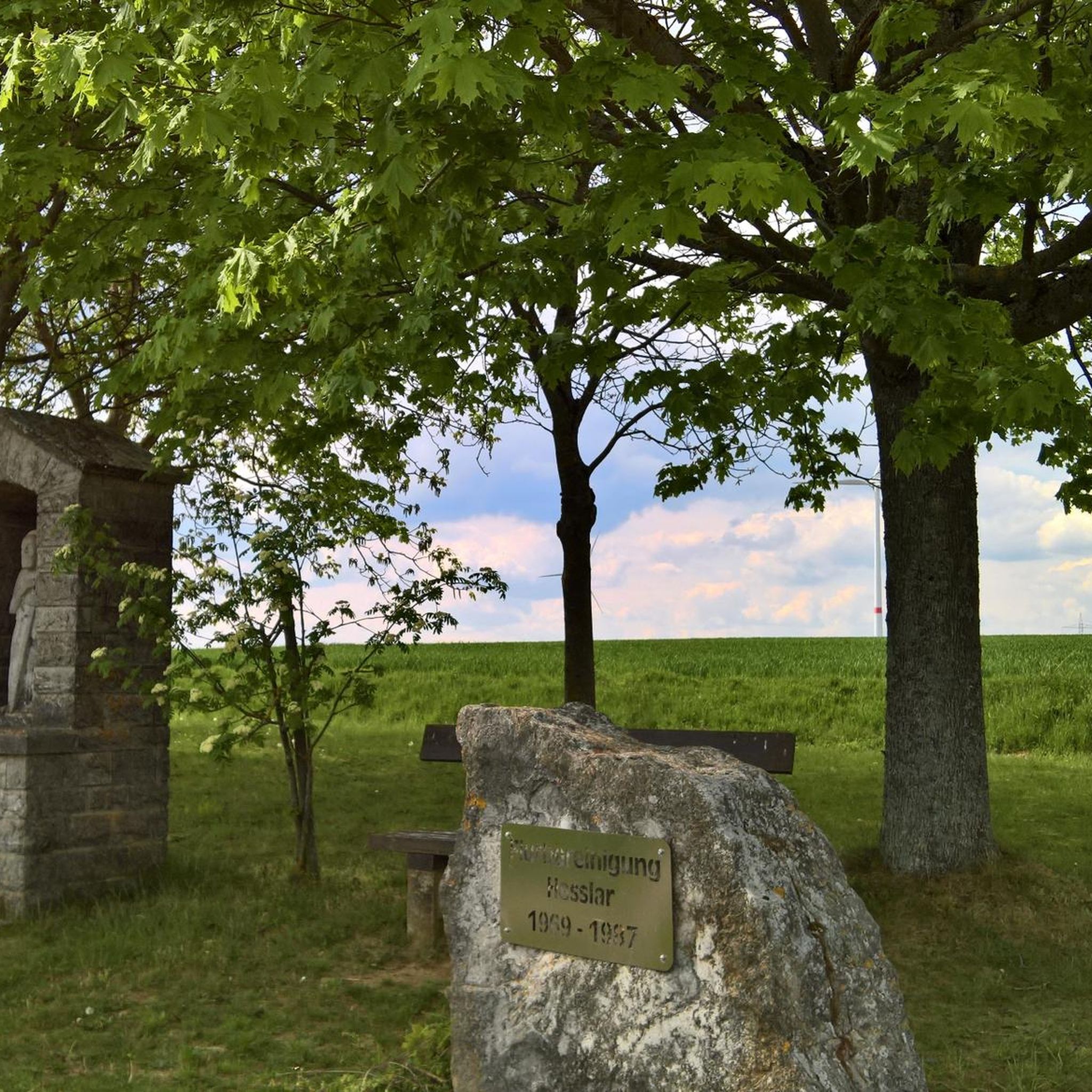
Tips from the Community

Numerous half-timbered houses in the district around the basilica. A very pleasant visit.
0
0

The Sainte-Marie-Madeleine church was built in the 19th century in a neo-Gothic style by Aristide Tourneux, an architect from Castelgiron. With a touch of humor, the town's priest in 1912 wanted to give "cats to the girons": Arthur Regnault, a sculptor, therefore sculpted cats at the four corners of the bell tower. Having collapsed in 1998 following a severe storm, the bell tower was rebuilt identically in 2000.
0
0
Church built in the 15th century, from that period only the choir and the chapel to the north, which became the sacristy, currently remain. The nave and transept were rebuilt in 1851 (inscription: MR. RUPIN MAIRE ET LES PAROISSIENS 1851). The tower is dated 1859, it was built by Guyon, an entrepreneur from Vitré.
0
0
The old Romanesque church, rebuilt in the 16th and 17th centuries, bore the date 1546 on its south facade, and an inscription on the buttress of the north facade: "Pihier et Renoult" 1639. The tower attached to the north facade was dated 1609. The central bell tower rebuilt in 1711 had two superimposed octagonal bell towers topped by a slate spire. . Burned down in 1891, the church was rebuilt between 1892 and 1901 by the contractor Legeay of Châtillon-en-Vendelais, according to the plans of the architect Arthur Regnault.
0
0
The bell tower is visible from afar and has long dominated the town and its surroundings. The Saint-Pierre church has retained its impact on the local landscape for over a century. It was indeed in 1888 that the Fabrique Council decided to entrust Arthur Régnault, the diocese's architect, with the project for a new construction. His plan was accepted and work began in October 1889, before the blessing of the first stone on March 13, 1890. As an anecdote, the stones are extracted from the quarry of La Bouëxière. Quickly, the inhabitants discovered its citadel-like appearance, Arthur Régnault having wanted to honor the city of Châteaubourg which had not had a castle for a long time! The structural work was completed on March 28, 1893, but due to lack of funds, the bells would wait until 1894. The work on the woodwork and the construction of the high altar took place in 1911, the church being due to host the important Eucharistic congress of 1913. Maintenance work continued over the years, the church having become the property of the municipality since 1905. During the bombings of the summer of 1944, the church was spared. The inhabitants would not forget it: on May 9, 1945, the day after the armistice, the men carried Notre Dame de Boulogne in procession and paraded barefoot through the streets. The centenary was celebrated in 1992 with the decision to install the current organ. The church of Châteaubourg has thus traversed local history from the 15th century – the date of construction of the previous, much smaller church – to that designed by Arthur Régnault.
0
0
The sacristy and tower of the current church were built in 1628 and 1632. A chapel was dedicated to Saint Nicholas in 1643. As for the nave, it dates from 1856. It contains a carved wooden altarpiece, bearing the coat of arms of Brignon, one of the church's financiers.
0
0
It originally consisted of a simple nave built in the 15th and 16th centuries, and whose straight chancel was rebuilt in 1700. The church, thus restored, was solemnly blessed by the rector on August 2, 1761. In 1806, a chapel dedicated to Saint Margaret was added to the south, and in 1818, to the north, the tower was partly redone, with at its base the chapel of the Virgin Mary. The lord Du Val, at Saint-Didier, has in the church of Saint-Jean-Baptiste a tomb where Jean de La Porte, lord Du Val, was buried in 1618, and in 1761 Suzanne Marion, daughter of lord Du Val and widow of Charles Du Boispéan. M. de Guersans, vicar general, erected the confraternity of the Holy Spirit at Saint-Jean-sur-Vilaine on June 25, 1746. Several foundations exist in this church: that of Le Poirier, that of La Bâte, that of La Porte. Jeanne Guyot, lady of La Hamonais, founded an annuity of 36 livres for the maintenance of candles during the octave of the Blessed Sacrament.
0
0
The Saint-Pierre church was built between 1885 and 1888. The plans were drawn up by the architect Michel Gelly. Due to a lack of financial resources, the building never received a spire.
0
0
Frequently Asked Questions
How many road cycling routes are available around Chancé?
There are over 350 road cycling routes around Chancé, offering a wide variety of options for different skill levels and preferences.
What kind of terrain can I expect on road cycling routes in Chancé?
The region around Chancé is characterized by gently rolling hills, a mix of agricultural land, and scattered woodlands. You'll encounter moderate elevation changes, with some routes featuring climbs up to 500 meters over longer distances, providing varied surfaces and scenic views of the rural French countryside.
Are there road cycling routes suitable for beginners in Chancé?
Yes, Chancé offers over 100 easy road cycling routes. These trails typically feature gentler gradients and shorter distances, making them ideal for those new to road cycling or looking for a more relaxed ride.
Are there challenging road cycling routes for experienced cyclists in Chancé?
For experienced cyclists seeking a challenge, Chancé has several routes with more significant elevation gains. While most of the 244 moderate routes offer a good workout, there are also 5 difficult routes that provide more demanding climbs and longer distances, with some routes featuring over 500 meters of ascent.
What are some notable historical sites or landmarks I can see while road cycling in Chancé?
Many routes in Chancé pass by historical points of interest. For example, the Notre-Dame Church – Vitré Castle loop from Louvigné-de-Bais connects historical landmarks. You might also encounter sights like Châteaugiron Castle or the Miniatures Henri Chesnais, which are along routes such as the Châteaugiron Castle – Miniatures Henri Chesnais loop from Chancé.
Are there circular road cycling routes available in Chancé?
Yes, many of the road cycling routes in Chancé are designed as loops, allowing you to start and end your ride in the same location. Examples include the La Guerche-de-Bretagne – Chapelle du Pinel loop from Louvigné-de-Bais and the Château de Vitré loop from Louvigné-de-Bais.
What do other road cyclists enjoy the most about road cycling in Chancé?
The area is highly rated by the komoot community, with an average score of 4.5 stars from over 90 reviews. Reviewers often praise the network of quiet country roads, the scenic views of the rural French countryside, and the varied terrain that caters to different ability levels.
Are there any castles or notable architectural sites to explore near the road cycling routes?
Absolutely. The region is home to several impressive sites. You can find Châteaugiron Castle and the Fathers' Castle. Some routes, like the Belair Castle – Chapelle du Pinel loop from Louvigné-de-Bais, even incorporate these historical structures into the ride.
How long do road cycling routes in Chancé typically take to complete?
Route durations vary significantly based on distance and difficulty. For instance, the Notre-Dame Church – Vitré Castle loop from Louvigné-de-Bais, at 49.1 km, typically takes about 2 hours and 11 minutes. Longer routes, such as the 65.8 km Château de Vitré loop from Louvigné-de-Bais, can take around 2 hours and 52 minutes.
What are the general characteristics of the roads used for cycling in Chancé?
Road cycling in Chancé primarily utilizes a network of quiet country roads. These roads connect small villages and historical sites, offering varied surfaces suitable for road bikes and providing a pleasant experience through the rural landscape.
Can I find routes that offer views of chapels or other religious landmarks?
Yes, several routes pass by notable chapels. For example, the La Guerche-de-Bretagne – Chapelle du Pinel loop from Louvigné-de-Bais offers views of the countryside and passes by a significant chapel. Another route, the Belair Castle – Chapelle du Pinel loop from Louvigné-de-Bais, also includes a chapel along its path.
Most popular attractions around Chancé

Get inspired with the komoot mobile app


Explore more
Browse the best Road cycling routes in other regions.
