The best cycling routes around Gimeux
4.1
(164)
1,107
riders
120
rides
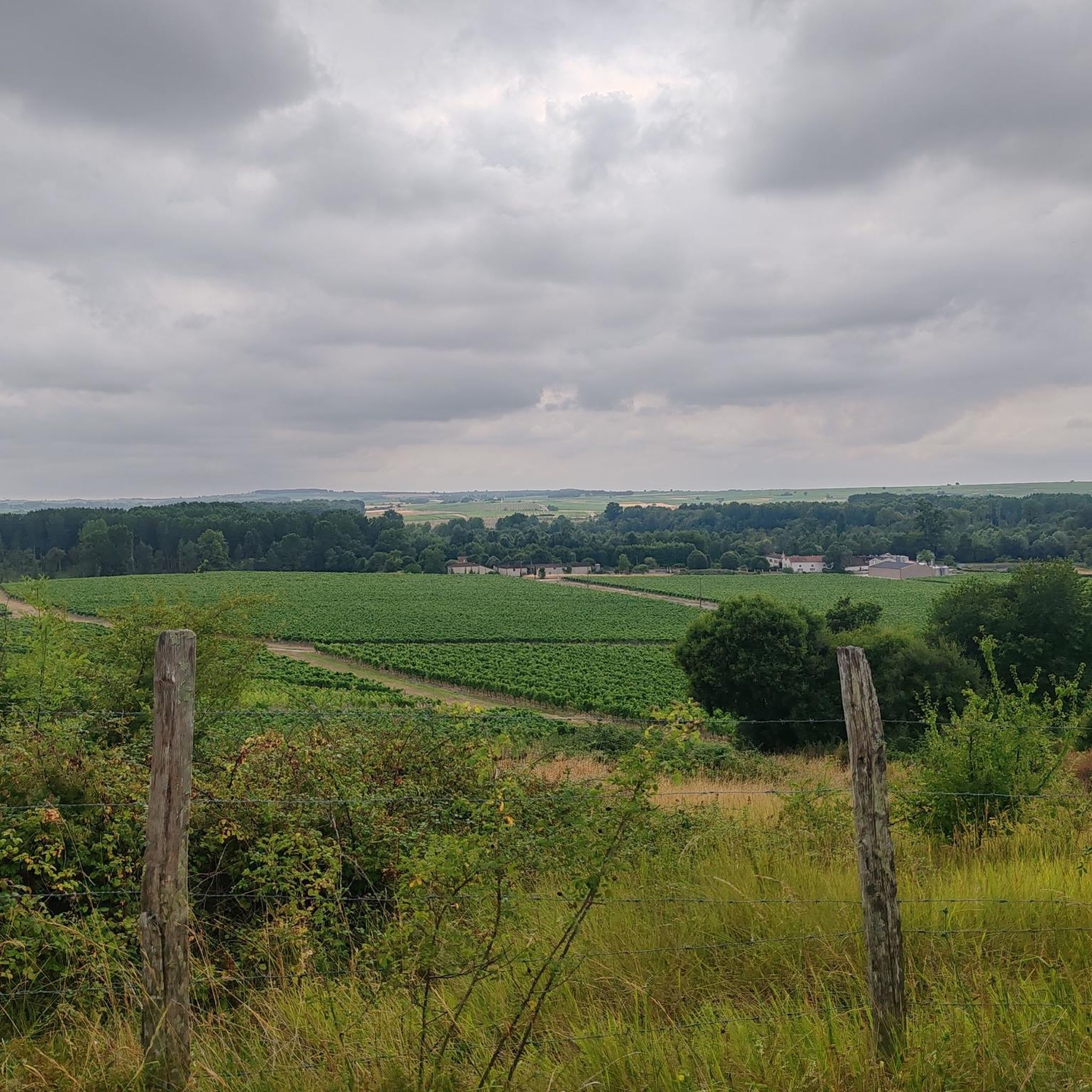
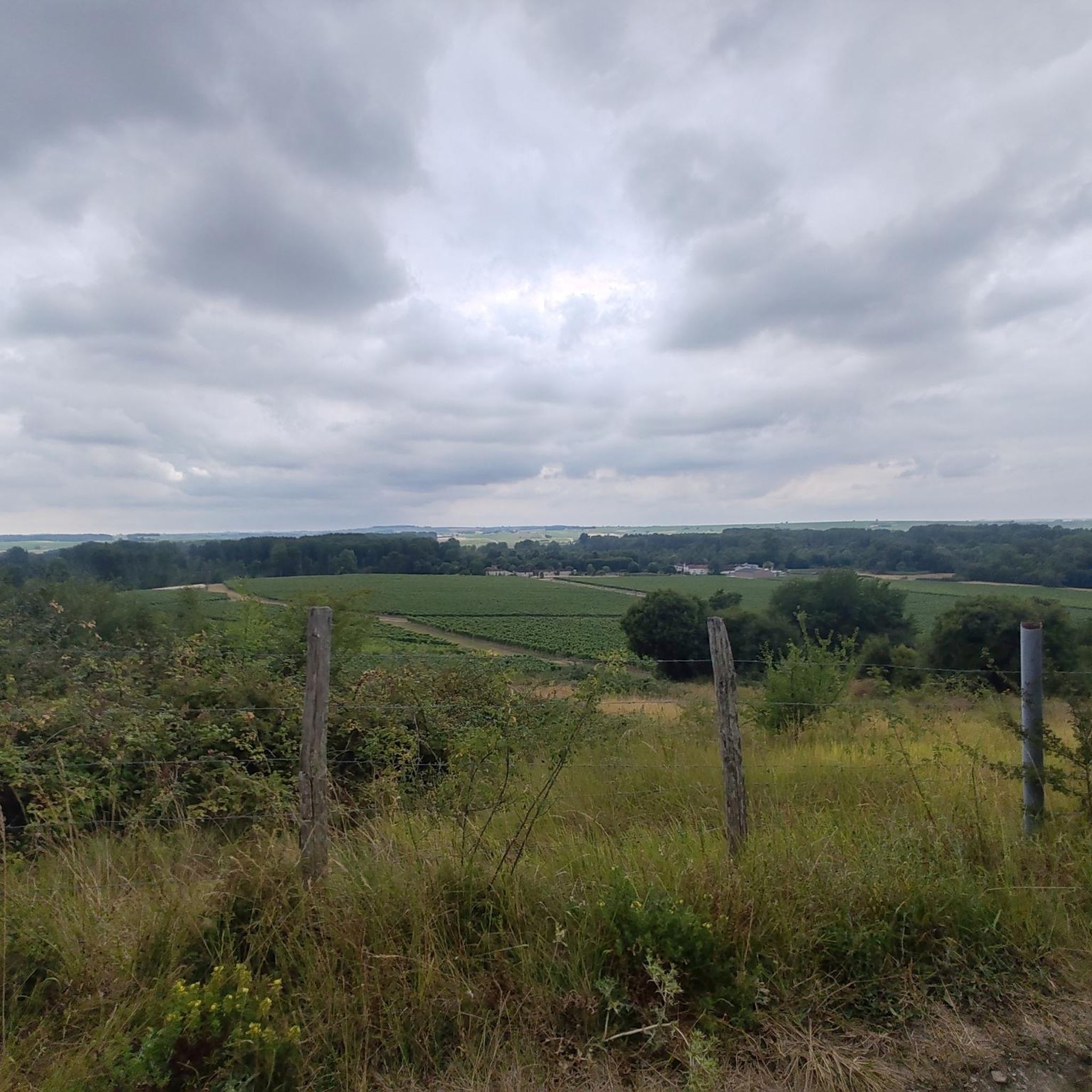
Touring cycling routes around Gimeux traverse the rolling countryside of the Charente department in Nouvelle-Aquitaine, France. The region is characterized by extensive vineyards, particularly within the Grande Champagne appellation, and river valleys, including the River Né and the Charente River. Gimeux itself is situated on a hillside, offering views over the surrounding landscape of meadows and cereal fields.
Best touring cycling routes around Gimeux
- The most popular touring cycling route is La Flow Vélo: Cognac Loop, a 30.6 miles…
Last updated: November 24, 2026
3.7
(6)
8
riders
49.3km
03:10
310m
310m
Moderate bike ride. Good fitness required. Mostly paved surfaces.
4.4
(73)
352
riders
62.0km
04:43
140m
140m
Moderate bike ride. Good fitness required. Mostly paved surfaces.

4.6
(22)
234
riders
33.7km
02:29
150m
150m
Moderate bike ride. Good fitness required. Mostly paved surfaces.
4.8
(4)
68
riders
19.0km
01:12
90m
90m
Easy bike ride. Mostly paved surfaces.
4.6
(10)
62
riders
109km
07:56
360m
360m
Hard bike ride. Very good fitness required. Mostly paved surfaces.
Get access to more routes and recommendations from other explorers.
Already have an account?
Our route recommendations are based on thousands of hikes, rides, and runs completed by other people on komoot.
Start today with a free account
Your next adventure awaits.


Tips from the Community

The Chaniers ferry (Charente-Maritime) is one of the last traditional river ferries still in operation in France. It allows crossing the Charente River between Chaniers and Courcoury, a few kilometers downstream from Saintes. A crossing used for centuries History of the Chaniers ferry The ferry crossing at Chaniers is very old: it dates back to the Middle Ages. In the mid-17th century, it was already an important crossing point on the Charente. It was not only used to cross the river: it also allowed residents to access the meadows on the other side, particularly for agricultural activities. In the early 20th century, the Chaniers ferry was part of a much larger network of crossings on the Charente. In 1909, thirteen ferries were still recorded in Charente-Inférieure, including the one in Chaniers. Ferries were essential at the time before the proliferation of bridges. Why "chain ferry"? The principle consists of holding the ferry on a chain connecting the two banks. The ferryman uses this chain to move the boat forward and keep it on its course despite the current. In Chaniers, the current ferry is motorized, unlike the ferry in Dompierre-sur-Charente, which is operated manually. The Tourist Office, however, still describes it as a "chain ferry," and the municipality as the traditional crossing method connecting Chaniers to Courcoury. The ferry today The crossing takes place between Le Communal in Chaniers and the Courcoury bank. It is free and can transport pedestrians, cyclists, and motorized vehicles. Its operation depends in particular on the flow of the Charente River. The municipality of Chaniers officially presents "the port of Chaniers and its chain ferry" as an element of its local heritage. Important point: I am correcting my previous message: the Chaniers ferry is not simply a "19th-century ferry." The crossing has been attested since the Middle Ages; it is its mode of operation and its equipment that have evolved over the centuries.
0
0


Courcoury is a natural island surrounded by the Charente and Seugne rivers, giving it a unique landscape setting between marshes and waterways, conducive to biodiversity and outdoor activities. It is also the only village in Charente-Maritime to have been awarded 4 stars by the "Villes et villages étoilés" label, recognizing its efforts to reduce light pollution through intelligent and environmentally friendly public lighting.
1
0

I really enjoyed this ride. I’m 46, I did it on a 40 year old road bike, it’s more suited to a cyclocross bike!
1
0

The original construction of the bridge was carried out from 1876 to 1878 by the contractors Chaumont and Bonnamy; the bridge was rebuilt in concrete in the second half of the 19th century
0
0

The Church of Saint-Martin de Coucoury was built around the 11th century. It is a pretty example of a Romanesque church.
1
0
A washhouse that was once used to wash clothes. While it is no longer really used for its primary purpose, you can stop there for a cool break and refill your water bottles.
0
0
A small bridge over the Etier de Rousson which leads to La Charente. It is on the V92 cycle path.
2
0
Frequently Asked Questions
How many touring cycling routes are available around Gimeux?
There are over 100 touring cycling routes available around Gimeux, offering a wide range of options for different skill levels and preferences. The komoot community has explored these routes over 1200 times.
What are the difficulty levels of touring cycling routes in Gimeux?
The routes around Gimeux cater to all abilities. You'll find approximately 35 easy routes, 60 moderate routes, and 8 more challenging routes. The Charente department categorizes its cycle loops into 'Family circuits' (4-10 km, easy), 'Discovery circuits' (20-40 km), and 'Exploration circuits' (40-70 km, more challenging).
Are there any family-friendly touring cycling routes near Gimeux?
Yes, the region offers several family-friendly options. The Charente department specifically designates 'Family circuits' which are typically 4-10 km long and are designed to be easy and enjoyable for all ages. These routes are clearly marked with signs featuring small black bicycles.
What kind of landscapes can I expect to see while touring cycling around Gimeux?
Touring cycling around Gimeux immerses you in picturesque and varied landscapes. You'll ride through rolling countryside, extensive vineyards (especially within the Grande Champagne appellation), and river valleys, including the River Né and the Charente River. The area is also known for its charming meadows, cereal fields, and quiet back roads, ensuring a peaceful experience.
What are some notable landmarks or attractions I can visit along touring cycling routes near Gimeux?
Many routes offer access to historical and cultural sites. You can explore the Saint-Brice Castle, or the Gademoulin Castle in Gensac-la-Pallue. The Historic Center of Cognac is also easily accessible from many routes, offering a glimpse into the region's famous brandy production and heritage.
Are there any long-distance touring cycling routes accessible from Gimeux?
Yes, Gimeux is close to the Flow Vélo, a major 400 km long cycle route that connects Sarlat-la-Canéda to the island of Aix. A specific section, the La Flow Vélo: Cognac Loop, offers a moderate 49.3 km ride exploring vineyards and the Charente River. For a longer challenge, consider the difficult The Jarnac Quays – Vinade-Bassac bridge loop from Cognac, which spans over 114 km.
What is the best time of year for touring cycling in Gimeux?
The Charente region is known for having a high number of sunny days, making it an excellent destination for outdoor activities. Spring and autumn generally offer pleasant temperatures for cycling, with fewer crowds than peak summer. However, the favorable weather conditions mean touring cycling is enjoyable for much of the year.
Can I find circular touring cycling routes around Gimeux?
Yes, the Charente department is well-equipped with 37 distinct 'cycle loops' that are circular in nature. These loops are clearly marked and vary in length and difficulty, ensuring you can find a circular route that suits your preferences without needing to retrace your steps.
What do other touring cyclists enjoy most about cycling in Gimeux?
The area is highly rated by the komoot community, with an average score of 4.3 stars from over 160 reviews. Reviewers often praise the picturesque vineyards, the peacefulness of the quiet back roads, and the scenic routes along the Charente River, such as the Saint-Brice Castle – The Jarnac Quays loop from Cognac.
Are there opportunities to explore the Cognac region by bike from Gimeux?
Absolutely. Gimeux is just 7 km from Cognac, making it an ideal base for exploring the famous brandy region. Many routes, like the Port of the Lys – Chaniers chain bin loop from Cognac, pass through vineyards and offer opportunities to visit Cognac houses, châteaux, and museums in the town itself.
Are there any routes that follow the Charente River?
Yes, the Charente River is a significant natural feature in the region, and many cycling routes run alongside it. For example, the La Flow Vélo: Cognac Loop includes sections that follow the river, offering scenic views and a tranquil cycling experience.
Most popular attractions around Gimeux

Get inspired with the komoot mobile app


Explore more
Browse the best Cycling routes in other regions.
