The best cycling routes around Dignac
4.6
(87)
602
riders
88
rides
Touring cycling around Dignac offers routes through the unspoiled natural landscape of the Nouvelle-Aquitaine region. The area is characterized by rolling green hills, dense forests such as the Massif de Dignac and the Forest of Horte, and peaceful rivers meandering through the Tardoire valley. Cyclists can explore varied terrain, from low-gradient paths along riverbanks to more demanding routes through wooded areas. This diverse geography provides a range of touring cycling experiences.
Best touring cycling routes around Dignac
- The most popular…
Last updated: May 17, 2026
13
riders
43.4km
03:27
580m
580m
Hard bike ride. Very good fitness required. Mostly paved surfaces. Suitable for all skill levels.
5.0
(1)
9
riders
38.9km
02:31
330m
330m
Moderate bike ride. Good fitness required. Mostly paved surfaces. Suitable for all skill levels.

Sign up for free
4.0
(1)
6
riders
25.7km
02:09
280m
280m
Moderate bike ride. Good fitness required. Mostly paved surfaces. Suitable for all skill levels.
5.0
(1)
4
riders
Hard bike ride. Very good fitness required. You may need to push your bike for some segments of this route.
4.0
(1)
3
riders
39.2km
02:22
270m
270m
Moderate bike ride. Good fitness required. Mostly paved surfaces. Suitable for all skill levels.
Get access to more routes and recommendations from other explorers.
Sign up for free
Already have an account?
Our route recommendations are based on thousands of hikes, rides, and runs completed by other people on komoot.
Start today with a free account
Your next adventure awaits.
Login or Signup
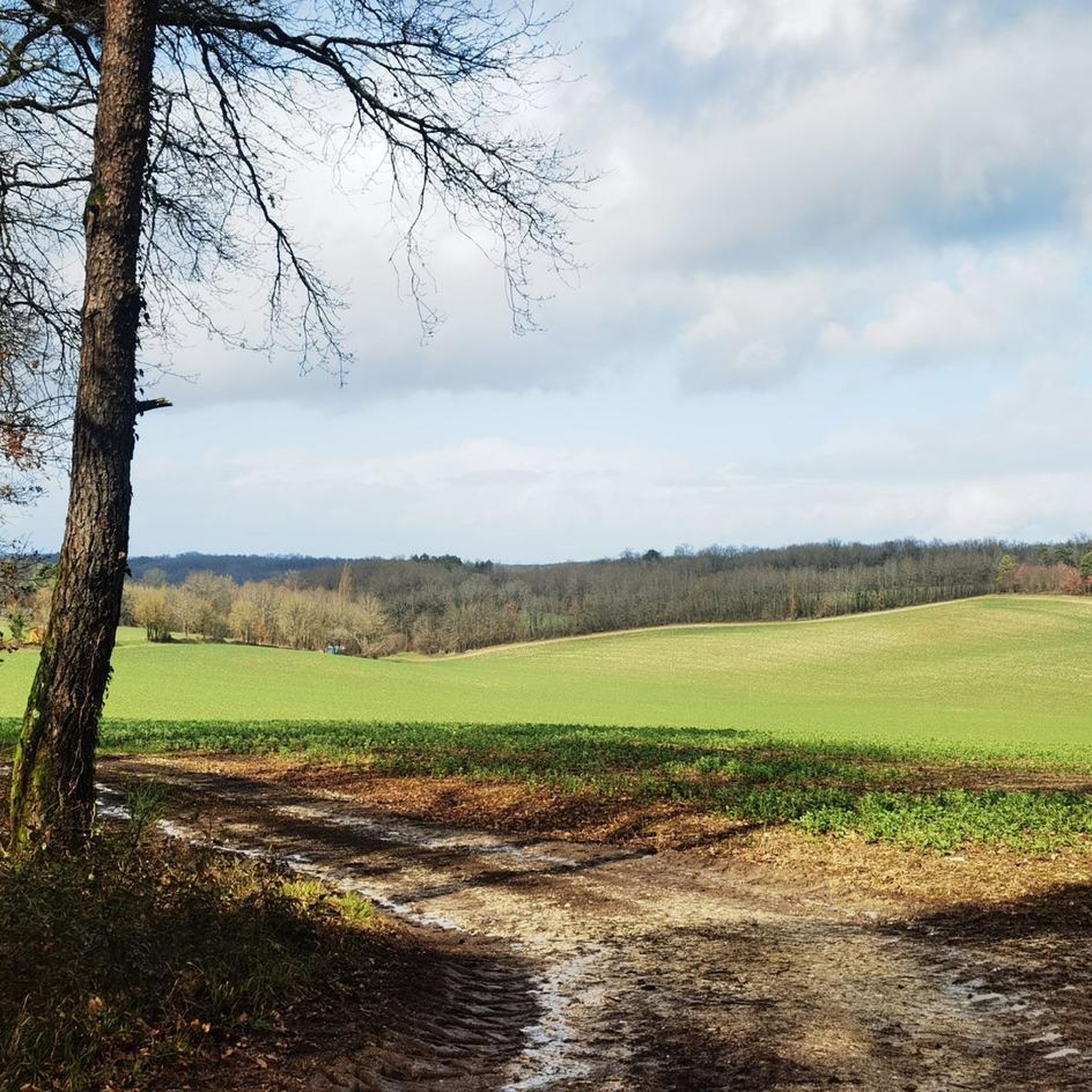

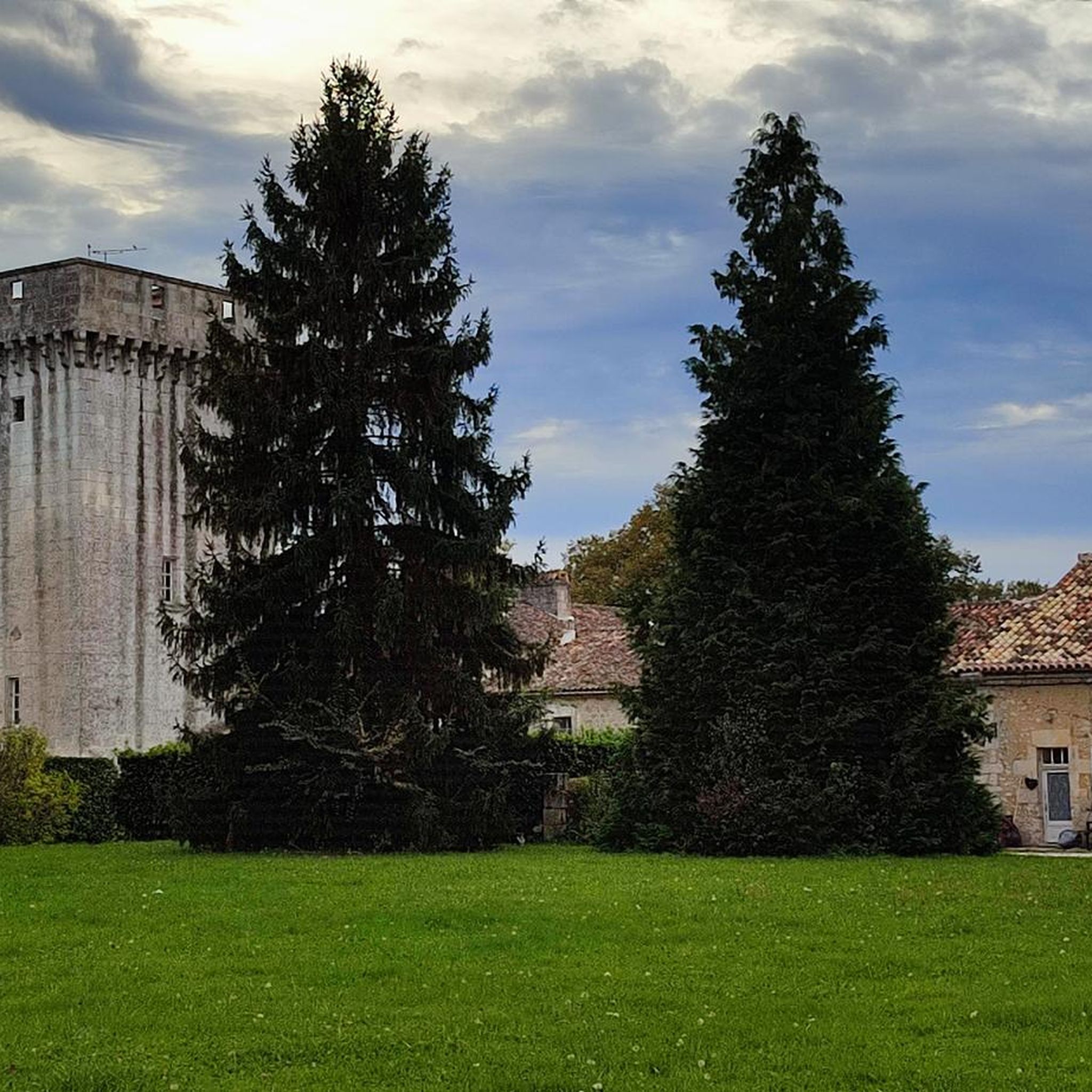


Tips from the Community

Its location, near the city walls and an old city gate, corresponds to that of a primitive sanctuary, predating Christianity, probably a temple dedicated to Jupiter. A first cathedral was built during the 4th century, dedicated to Saint Saturninus. The building disappeared when Clovis captured Angoulême in 508, after he drove out the Visigoths following the victory at Vouillé in 507. Clovis and then King Charibert ordered the cathedral's reconstruction in honor of Saint Peter.[2] This second cathedral was consecrated in 566 by Saint Germain, Bishop of Paris, and Saint Euphronius, Bishop of Tours, and is mentioned in Gregory of Tours' History of the Franks.[Note 1] It was burned down, probably by the Normans. The third cathedral was the work of Grimoard of Mussidan, Bishop of Angoulême (991-1018). He was also Abbot of Brantôme in Périgord and used the abbey's revenues to finance its construction. Begun around 991 and consecrated in 1015, it lasted only a century, its dimensions being too small. Only the north wall remains in the second and third bays of the nave, beneath the windows.
0
0

Here, as over 1,200 km, from the Swiss border to the Spanish border, the Demarcation Line separated France into two unequal parts between June 1940 and November 1942.
0
0

The biblical accounts of the New Testament, which describe the events in the life of Jesus and his disciples, paint a very nuanced picture of the Apostle Peter (Saint-Pierre), to whom the church of Angoulême is dedicated: On the one hand, he is a convinced and determined disciple of Jesus, but also not free from human weakness and fear. In the Garden of Gethsemane, he falls asleep (like the other disciples) when Jesus turns to God the Father after the Last Supper and asks the disciples to pray as well; and after Jesus' arrest, Peter denies three times that he even knows him. But he also weeps over his weakness and, upon encountering the risen Christ, professes his love and loyalty to him. His real name is Simon, but Jesus gives him the name Peter (which means rock), upon which the church is to be built, and he gives him—according to the account of the Evangelist Matthew—the "keys to the kingdom of heaven."
0
0

This is a wayside cross located on the Route des Menots, at the southern exit of Fouquebrune,
0
0
The building, constructed in the 12th century, was enlarged in the 15th century by the north and south aisles dedicated to the Virgin and Saint John the Baptist. It was restored in 1875-1876. It has a basilica plan with a single nave, on which is grafted to the east a false square surmounted by a dome on pendentives and which ends in a vaulted apse. Side chapels with flat chevet were added, to the north and south, in the 15th century. The facade is pierced by a door with a triple projection and an open window. The building was fortified at the time of the Hundred Years' War. The whole is surmounted, to the east, at the level of the dome, by a square bell tower on two levels. The base is decorated with three blind arcades; The upper floor is decorated, on each side, with three semicircular arches mounted on small columns, highlighted by a circular stringcourse and enclosing twin bay windows. https://www.dignac.fr/histoire-et-patrimoine/ https://monumentum.fr/monument-historique/pa00104355/dignac-eglise-saint-cybard
0
0
The architecture of this church is modeled on the Greek temples popular in the early 19th century. This neoclassical architecture is the work of Paul Abadie Père. https://www.angouleme-tourisme.com/patrimoine-culturel/eglise-saint-jacques-de-lhoumeau/
0
0

Frequently Asked Questions
What kind of terrain can I expect on touring cycling routes around Dignac?
The Dignac area offers a diverse landscape for touring cyclists. You'll find routes winding through rolling green hills, dense forests like the Massif de Dignac and the Forest of Horte, and peaceful riverbanks along the Tardoire valley. The terrain varies from low-gradient paths suitable for leisurely rides to more demanding routes with varied elevations through wooded areas.
Are there touring cycling routes suitable for families with children?
Yes, Dignac offers routes with low gradients that are perfectly signposted and suitable for families. These routes often follow the banks of the Tardoire River, providing a pleasant and safe cycling experience for all ages.
What are some notable natural features or landmarks I can see while cycling in Dignac?
While cycling around Dignac, you can explore the unspoiled natural landscape, including the Tardoire Valley and the extensive forests of Horte and Dirac. You might also encounter historical landmarks such as the 12th-century church of Saint-Pierre-de-Dignac. Additionally, nearby attractions include the Vallée des Eaux claires and several castles like Château de la Rochandry and Château de la Tranchade.
Are there any circular touring cycling routes in the Dignac area?
Yes, many touring cycling routes around Dignac are designed as loops, allowing you to start and end at the same point. For example, the Foulpougne Viaduct – Comic Book Museum loop from Dirac and the Saint-Martial Church loop from Dirac are popular circular options.
What is the best time of year to go touring cycling in Dignac?
The Nouvelle-Aquitaine region generally offers pleasant cycling conditions for much of the year. Spring and autumn are often ideal, with milder temperatures and beautiful scenery. Summer can also be enjoyable, though it's advisable to cycle in the mornings or late afternoons to avoid the midday heat.
What do other touring cyclists enjoy most about cycling in Dignac?
The touring cycling routes in Dignac are highly rated by the komoot community, with an average score of 4.8 stars from over 80 reviews. Cyclists often praise the diverse landscapes, the peaceful rural scenery, and the variety of routes that cater to different skill levels, from gentle riverbank paths to more challenging forest trails.
Are there options for different difficulty levels for touring cyclists?
Absolutely. Dignac caters to all levels. You can find easy routes with low gradients, such as those along the Tardoire Valley, which are perfect for beginners or a relaxed ride. There are also moderate and difficult routes that venture into the rolling hills and forests, offering more challenging climbs and varied terrain for experienced cyclists.
Can I find cafes or restaurants along the touring cycling routes in Dignac?
While specific amenities vary by route, the Dignac area features picturesque villages where you can often find local cafes and restaurants. Planning your route in advance and checking for points of interest can help you locate suitable stops for refreshments.
How many touring cycling routes are available in the Dignac area?
There are over 90 touring cycling routes documented around Dignac, offering a wide selection for various preferences and skill levels.
Are there any routes that feature castles or historic sites?
Yes, several routes pass by or near historic sites. For instance, the Château de Villebois-Lavalette – Villebois-Lavalette Castle loop from Torsac takes you past a notable castle. You can also explore routes that lead to highlights like Château de la Mercerie or the historic Saint-Martial Church.
What is the longest touring cycling route available in Dignac?
One of the longer and more challenging routes is the Château de Villebois-Lavalette – Villebois-Lavalette Castle loop from Torsac, which covers approximately 28.5 miles (45.8 km) and features significant elevation gain.
Is it possible to access touring cycling routes in Dignac using public transport?
While Dignac is a rural commune, public transport options in the wider Nouvelle-Aquitaine region may connect to nearby towns. It's recommended to check local bus or train schedules for connections to Dignac or surrounding villages, and then plan your cycling route from there.
Most popular attractions around Dignac

Get inspired with the komoot mobile app


Explore more
Browse the best Cycling routes in other regions.
