The best cycling routes around Cherves-Richemont
4.3
(286)
1,851
riders
123
rides
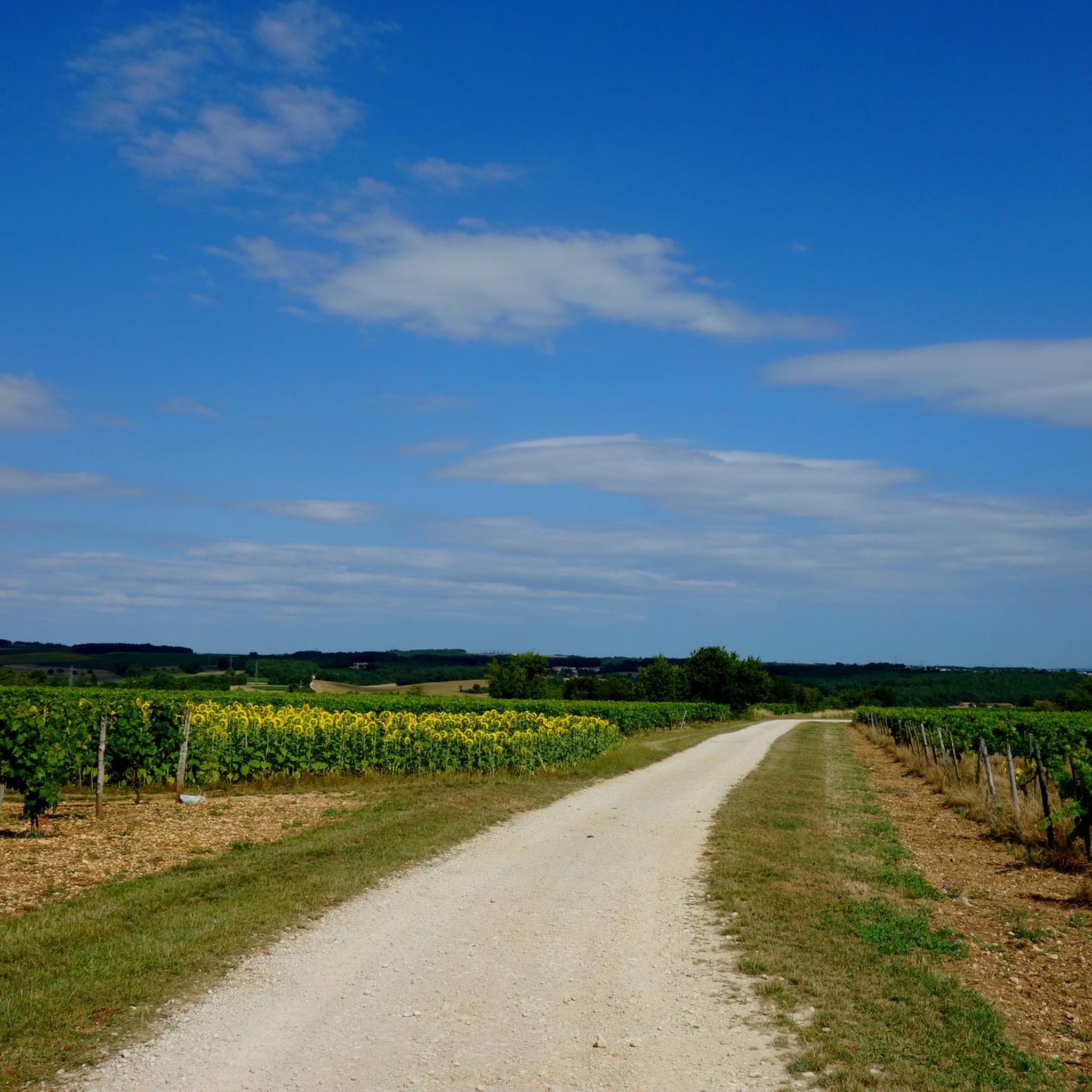
Touring cycling around Cherves-Richemont offers routes through a rolling countryside characterized by Cognac vineyards, fields, and picturesque villages. The region features varied terrain, from the limestone plateau to river valleys carved by the Antenne and Charente rivers. Altitudes range from 5 meters near the Charente River to 73 meters at higher points, providing gentle slopes suitable for touring cyclists. Many paths follow the peaceful waters of the Charente and Seugnes rivers, which form green corridors.
Best touring cycling routes around…
Last updated: October 28, 2026
4.8
(12)
84
riders
96.9km
06:53
470m
470m
Hard bike ride. Very good fitness required. Mostly paved surfaces.
5.0
(2)
48
riders
15.6km
00:59
70m
70m
Easy bike ride. Mostly paved surfaces.

5.0
(2)
31
riders
Easy bike ride. Mostly paved surfaces.
3.3
(3)
19
riders
25.3km
01:37
260m
260m
Moderate bike ride. Good fitness required. Mostly paved surfaces.
3.3
(3)
19
riders
24.8km
01:37
270m
270m
Moderate bike ride. Good fitness required. Mostly paved surfaces.
Get access to more routes and recommendations from other explorers.
Already have an account?
Our route recommendations are based on thousands of hikes, rides, and runs completed by other people on komoot.
Start today with a free account
Your next adventure awaits.


Tips from the Community

🏛️ Construction: 18-19 AD The arch was built around 18-19 AD, during the reign of Emperor Tiberius. It stood at the entrance to the Roman bridge crossing the Charente, at the outlet of the Via Agrippa, which connected Lyon to Saintes. It is therefore not truly a "triumphal arch": it was both a road monument and a monumental gate marking the entrance to Mediolanum Santonum, the capital of Roman Aquitaine. 👤 Who had it built? The arch was financed by Caius Julius Rufus, a Romanized notable from Saintonge. He dedicated it to Tiberius as well as his nephew Germanicus. The inscriptions engraved on the entablature still allow us today to know the figures to whom it was dedicated. The name "Arch of Germanicus" therefore comes from this dedication, and not from the fact that Germanicus personally had the arch built or crossed it. 🏗️ A rather exceptional monument The arch has two bays, likely allowing for the differentiation of traffic flows. It measures approximately 15 m high by 16 m wide. Its Corinthian and composite capitals bear witness to particularly meticulous Roman architecture. It constituted a true demonstration of the power and Romanization of Saintes. ⚠️ The moment the arch almost disappeared This is probably the most interesting episode in its history. For centuries, the arch was always located at the level of the Roman bridge and then the medieval bridge, on the right bank of the Charente. In the 19th century, the old bridge had become dilapidated. When it was decided to demolish it, around 1843, the arch was also threatened with destruction. It was then that Prosper Mérimée, Inspector General of Historical Monuments, intervened. He advocated for its preservation and arranged for its dismantling, relocation, and reassembly on the new bank. Another figure is also associated with this preservation: Victor Hugo, who stayed in Saintes in September 1843 and intervened in favor of the monument's conservation with Mérimée. 📍 Why is the arch no longer exactly in its ancient location? The arch we see today, on Place Bassompierre, is therefore no longer in its original location. It was moved a few dozen meters during the transformation of the quays and the disappearance of the old bridge. It was dismantled stone by stone and then reassembled in order to preserve it. It is now located in the immediate vicinity of the ancient Roman bridge crossing. 🏛️ Protection The Arch of Germanicus was finally classified as a historical monument in July 1905. An interesting detail The Crazannes quarries, located near Saintes, supplied a limestone widely used in the region's ancient constructions. Crazannes stone was notably used for monuments such as the Arch of Germanicus. In summary: 18-19 → construction of the arch at the entrance to the Roman bridge ↓ Antiquity → Middle Ages → the arch remains associated with the crossing of the Charente ↓ 1843 → demolition of the old bridge and threat to the arch ↓ 1843-1844 → Mérimée's intervention and relocation of the arch ↓ 1905 → classified as a Historical Monument
0
0


The original construction of the bridge was carried out from 1876 to 1878 by the contractors Chaumont and Bonnamy; the bridge was rebuilt in concrete in the second half of the 19th century
0
0

Cognac is a beautiful, wealthy town where the future François 1st was born (hence the house of the same name). This wealth comes mainly from the pineau and cognac trade… It was in the 15th century that this distillation process appeared to better preserve these wines which were sent throughout Europe and in particular to the countries of the Hanseatic League where this "burnt wine", brandevin or brandy is very appreciated, most often cut off from water. In Cognac, the Henessy, Rémy Martin, Courvoisier and Martell houses have numerous buildings. I also passed in a town next to an old building used as a cellar, a very pleasant smell emanated from it.
2
0

A small bridge over the Etier de Rousson which leads to La Charente. It is on the V92 cycle path.
2
0

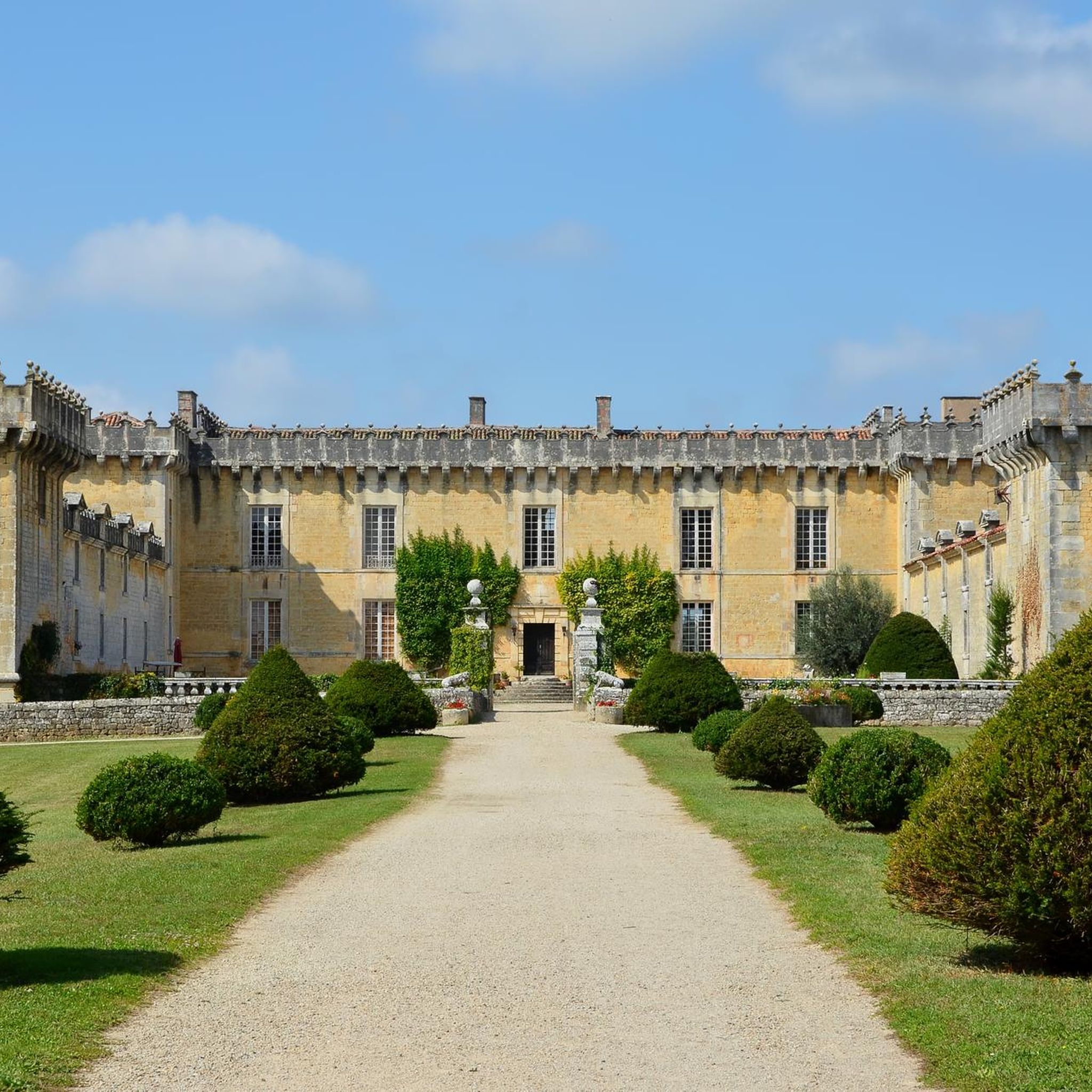
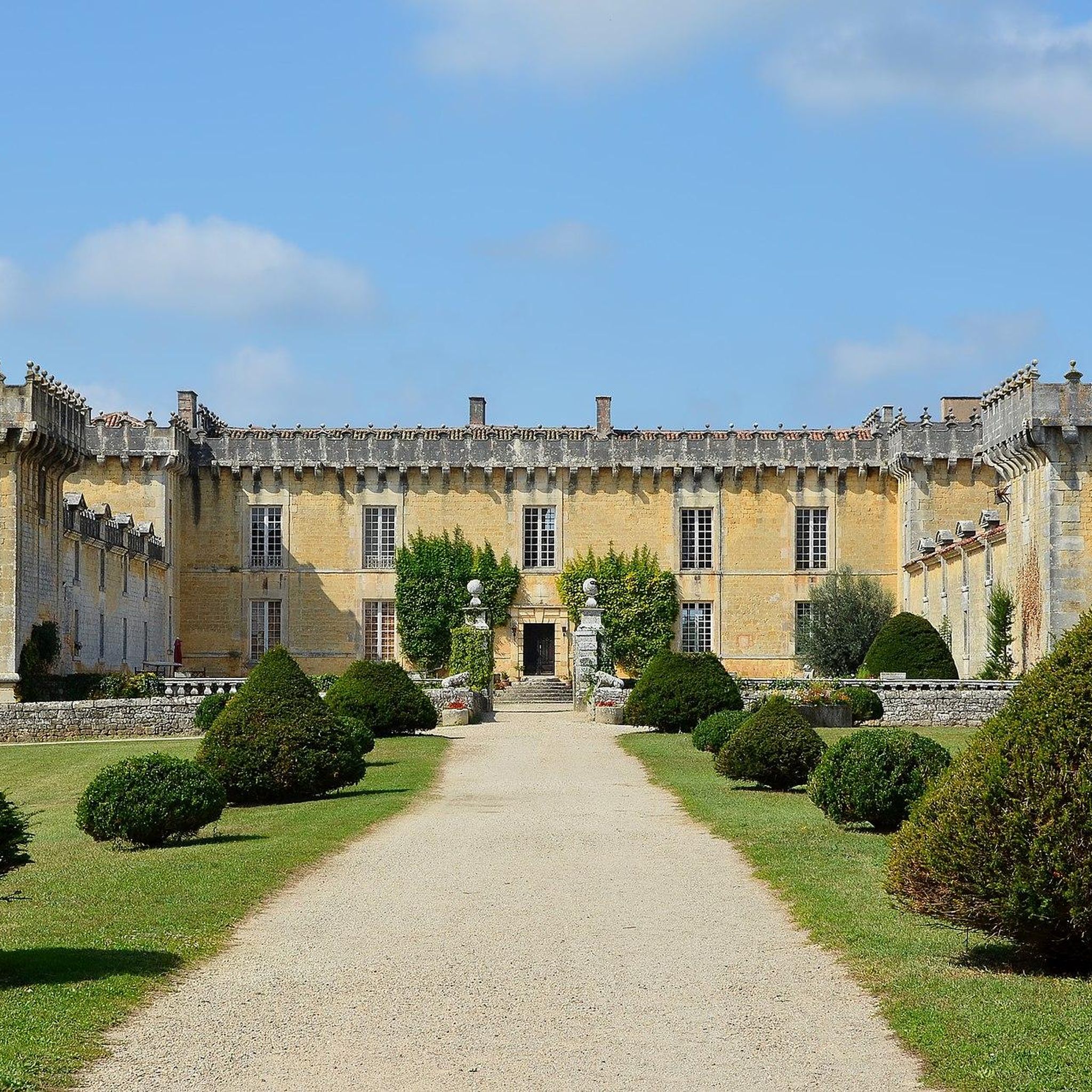
Bourg-Charente castle is a 17th century mansion. Nestled on a rocky promontory, it is located a few kilometers from Cognac. It also houses the remains of a medieval fortress. Acquired in the 20th century, this château houses cellars for producing Grand Marnier. It can be visited from Monday to Friday from 8 a.m. to 5 p.m.
0
0
Saintes is a city that shines with its millennial heritage and its Gallo-Roman monuments. As unusual as they are well preserved, these nuggets will take you on a real journey through time.
1
0

It is in this castle that the cognac cellars of the Marnier-Lapostolle family are located, used for the production of Grand Marnier cognac.
4
0
Frequently Asked Questions
How many touring cycling routes are available around Cherves-Richemont?
There are over 100 touring cycling routes around Cherves-Richemont, offering a wide variety of options for exploring the region. These routes are highly rated by the komoot community, with an average score of 4.4 stars from over 280 reviews.
What historical sites or landmarks can I see along the cycling routes?
The region is rich in history. You can encounter several notable sites, such as the 17th-century Bourg-Charente Castle, the ancient Abbaye de Fontdouce, and the Romanesque Saint-Césaire Church. Many routes also pass by vineyards and châteaux, offering glimpses into the local heritage.
Are there routes suitable for families or beginners?
Yes, Cherves-Richemont offers many easy routes perfect for families and beginners. For example, the Saint-Brice Castle – Bourg-Charente Campsite loop from Boutiers-Saint-Trojan is an easy 12.3-mile (19.8 km) trail with gentle elevation changes. The region's gentle slopes and numerous greenways make it particularly enjoyable for less experienced cyclists.
What natural features can I explore while cycling in Cherves-Richemont?
The landscape is characterized by rolling countryside, Cognac vineyards, and fields of sunflowers. Many paths follow the peaceful waters of the Charente and Seugnes rivers, which form green corridors. You'll also find forested areas and the distinctive limestone plateau, offering varied scenery throughout your ride. The area is also part of a Natura 2000 zone, highlighting its ecological importance.
Are there options for different difficulty levels?
Absolutely. Cherves-Richemont caters to all abilities, with 41 easy routes, 66 moderate routes, and 12 more challenging options. For a more demanding ride, consider the Pont de L'Antenne loop from Richemont, which is 20.3 miles (32.6 km) long and features more significant elevation changes.
What do other touring cyclists enjoy about cycling in Cherves-Richemont?
The area is highly rated by the komoot community, with an average score of 4.4 stars. Cyclists often praise the picturesque landscapes, the tranquility of the river paths, and the charm of cycling through the Cognac vineyards and traditional villages. The variety of routes, from easy family circuits to longer exploration options, is also frequently highlighted.
Can I bring my dog on the cycling routes?
While many outdoor areas in France are dog-friendly, it's always best to check local regulations for specific paths, especially those passing through private vineyards or protected natural areas. Generally, dogs on a leash are welcome on public paths, but ensure they are well-behaved and that you clean up after them.
Is there parking available near the cycling routes?
Yes, parking is generally available in and around the villages and towns that serve as starting points for many routes, such as Boutiers-Saint-Trojan or Cognac. Look for designated public parking areas, especially near popular attractions or trailheads.
How can I reach the cycling routes using public transport?
While specific public transport options directly to every trailhead might be limited, the town of Cognac, which is very close to Cherves-Richemont, is well-connected by regional transport. From there, you might find local bus services or taxis to reach specific starting points. It's advisable to check local transport schedules and bicycle policies in advance.
What is the best time of year for touring cycling in Cherves-Richemont?
The spring and autumn months are generally ideal for touring cycling in Cherves-Richemont. During these seasons, the weather is typically mild, and the landscapes are particularly beautiful, with blooming fields in spring and vibrant colors in autumn. Summer can also be pleasant, but it's advisable to cycle in the mornings or late afternoons to avoid the midday heat.
Are there any circular touring cycling routes?
Yes, many of the touring cycling routes in Cherves-Richemont are designed as loops, allowing you to start and end at the same point. Examples include the Cognac Castle – Saint-Brice Castle loop from Cognac and the Cognac Castle – Hennessy Distillery loop from Boutiers-Saint-Trojan, which offer convenient circular journeys.
Are there places to stop for refreshments or accommodation along the routes?
Given the region's focus on tourism and the Cognac industry, you'll find numerous opportunities for refreshments. Many villages along the routes offer cafes, restaurants, and local producers where you can sample regional products. For accommodation, there are various gîtes, chambres d'hôtes, and hotels in the area, particularly in towns like Cognac and surrounding villages.
Most popular routes around Cherves-Richemont
Most popular attractions around Cherves-Richemont

Get inspired with the komoot mobile app


Explore more
Browse the best Cycling routes in other regions.
