The best MTB trails around Bingen
4.8
(21)
147
riders
28
rides
Mountain biking around Bingen offers diverse landscapes, with trails winding through river valleys, hills, and vineyards. The region is characterized by the Rhine River at its heart, flanked by extensive forests like the Bingen Forest. This area, part of the Middle Rhine Valley UNESCO World Heritage Site, provides varied terrain for mountain bikers. Bingen is also situated at the confluence of the Nahe River with the Rhine, adding to its natural features.
Best mountain bike trails around Bingen
- The most…
Last updated: October 7, 2026
4.6
(5)
35
riders
39.5km
02:29
440m
440m
Moderate mountain bike ride. Good fitness required. Advanced riding skills necessary.
5.0
(3)
14
riders
156km
11:04
1,800m
1,800m
Hard mountain bike ride. Very good fitness required. Advanced riding skills necessary.

4.7
(3)
16
riders
35.3km
02:04
210m
210m
Moderate mountain bike ride. Good fitness required. Advanced riding skills necessary.
5.0
(2)
10
riders
Moderate mountain bike ride. Good fitness required. Suitable for all skill levels.
5
riders
21.4km
01:33
280m
280m
Easy mountain bike ride. Great for any fitness level. Suitable for all skill levels.
Get access to more routes and recommendations from other explorers.
Already have an account?
Our route recommendations are based on thousands of hikes, rides, and runs completed by other people on komoot.
Start today with a free account
Your next adventure awaits.
Tips from the Community

In high summer, the Lauchert still has enough water, unlike other rivers, and the hike through the Bittelschiessertäle is highly recommended.
6
0

great Danube valley near Tuttlingen
0
0
super cycle path along the Danube
0
0

The Hohenzollern Castle Sigmaringen was first mentioned in documents in the year 1077 and originally originated as a medieval castle on a rock above the Danube. Over the centuries, the complex was expanded several times and developed into a representative residence of the Princes of Hohenzollern-Sigmaringen. After a devastating fire in 1893, large parts of the castle were rebuilt in the historicist style. The castle was the political and cultural center of the Principality of Hohenzollern-Sigmaringen for many generations. Today, it houses significant art, furniture, and weapons collections and is one of the region's most famous attractions.
1
0

The Bittelschießer Täle is a canyon-like, densely wooded breakthrough valley in the lower reaches of the Lauchert, west of Bingen in the Sigmaringen district of Baden-Württemberg. The canyon is only about 400 meters long, 20–60 m wide and up to 30 m high (another 24 m of river sediments down to the rock floor). It is a scenically attractive part of the "Flächenalb" and also a geologically particularly significant Quaternary geotop. From the Middle Ages to the 19th century, the canyon and the Lauchert were also economically and as manorial property significant. The narrow valley is just as popular with hikers and cyclists from far and wide as it is for walks and local recreation for the residents of the surrounding villages. Until the Mindel glaciation (~1 Ma), the Lauchert used its current riverbed, but flowed into the then Upper Danube about five kilometers earlier at "Rückhau", between Hitzkofen and Heudorf, which at that time followed a more northerly route from Scheer to Riedlingen. At the end of the Mindel glaciation, about 900,000 years ago, an ancient Danube broke through the small pass near "Bahnhof Hanfertal" (today part of Sigmaringen-Nord). It shortened its route to Riedlingen by using the Lauchert bed to then continue its then more northerly route to Riedlingen. In the middle Riss glaciation, about 200,000 years ago, glacial masses from the Alpine Rhine Glacier advanced northwards in the area around Sigmaringen in two cold phases via the then Upper Danube. The glacier fan reached its maximum advance in its second cold phase ("Vilsingen-Stand II", location still south of the present-day Danube) near "Hertenstein, Lauchert", Billafingen, Langenenslingen and Riedlingen. The glacial sediments were so thick that the Upper Danube and the Lauchert were dammed. The backwater of the Upper Danube reached at least as far as Tuttlingen, that of the Lauchert probably as far as Hausen an der Lauchert. The Lauchert valley between "Hanfertal" station and Hitzkofen, used by the Upper Danube before the Riss glaciation and further deepened by it, and then completely blocked by moraine debris by the glacial advances, was again freed and used by the Lauchert from glacial debris – with one exception: a large mass limestone rock of the "Liegenden Bankkalk" formation standing in the direct path was not bypassed as before (as, incidentally, also previously by an ancient Danube), .... Source: https://de.wikipedia.org/wiki/Bittelschie%C3%9Fer_T%C3%A4le
0
1
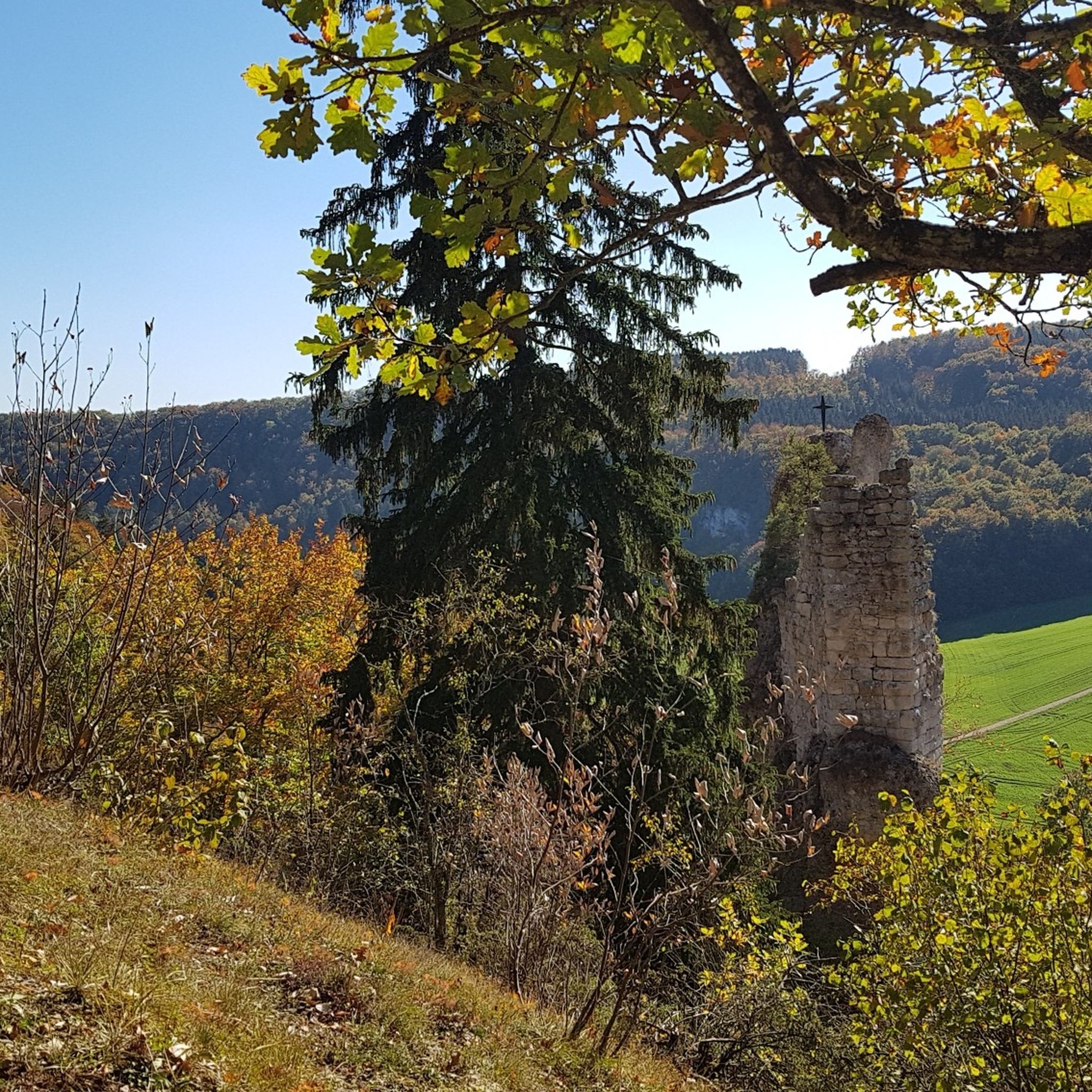
Hornstein Castle is the ruin of a hilltop castle on a spur-like rocky ridge above the Lauchert river at around 630 m above sea level, near the Bingen district of Hornstein in the Sigmaringen district of Baden-Württemberg. It was first mentioned in 1244. The castle was the property of imperial knights, its first documentary mention dates back to 1244. Before that, the Lords of Hornstein, mentioned as early as the 11th century, probably resided in a castle in the Hornstein area. As the ancestral seat of the noble family of the same name, the von Hornstein family, the castle went through several phases of construction until it was converted into a stately Baroque palace around 1700. In 1787, the Hornsteins sold their property to the Princes of Hohenzollern-Sigmaringen. In 1818, the Prince of Hohenzollern-Sigmaringen decreed that a Hohenzollern "house of correction and reformatory" should be established in the castle. After the conversion was completed, the institution began operations on December 14, 1818. The institution's regulations also stipulated that the insane were to be admitted. In 1850, the Hohenzollern principalities were incorporated into Prussia. The Prussian state continued to operate the institution, and in 1859 it became a penal and correctional facility for men. The female inmates were transferred to Habsthal at the time. The institution was closed in 1869. In 1873, the complex was sold for demolition, the buildings were torn down, and the walls were left to decay. Only the castle chapel, a Baroque gem where the Christian liturgical year is celebrated, was preserved. From 1947 to 1962, the ruin was used as an open-air stage. Source: https://de.wikipedia.org/wiki/Ruine_Hornstein_(Bingen)
2
0
The Werdenberg Castle, also called Werdenbergschloss, is a Renaissance castle of the Counts of Werdenberg in Trochtelfingen in the Reutlingen district. It is not to be confused with the ancestral seat of the Werdenbergs, Werdenberg Castle. Source: Wikipedia
0
0

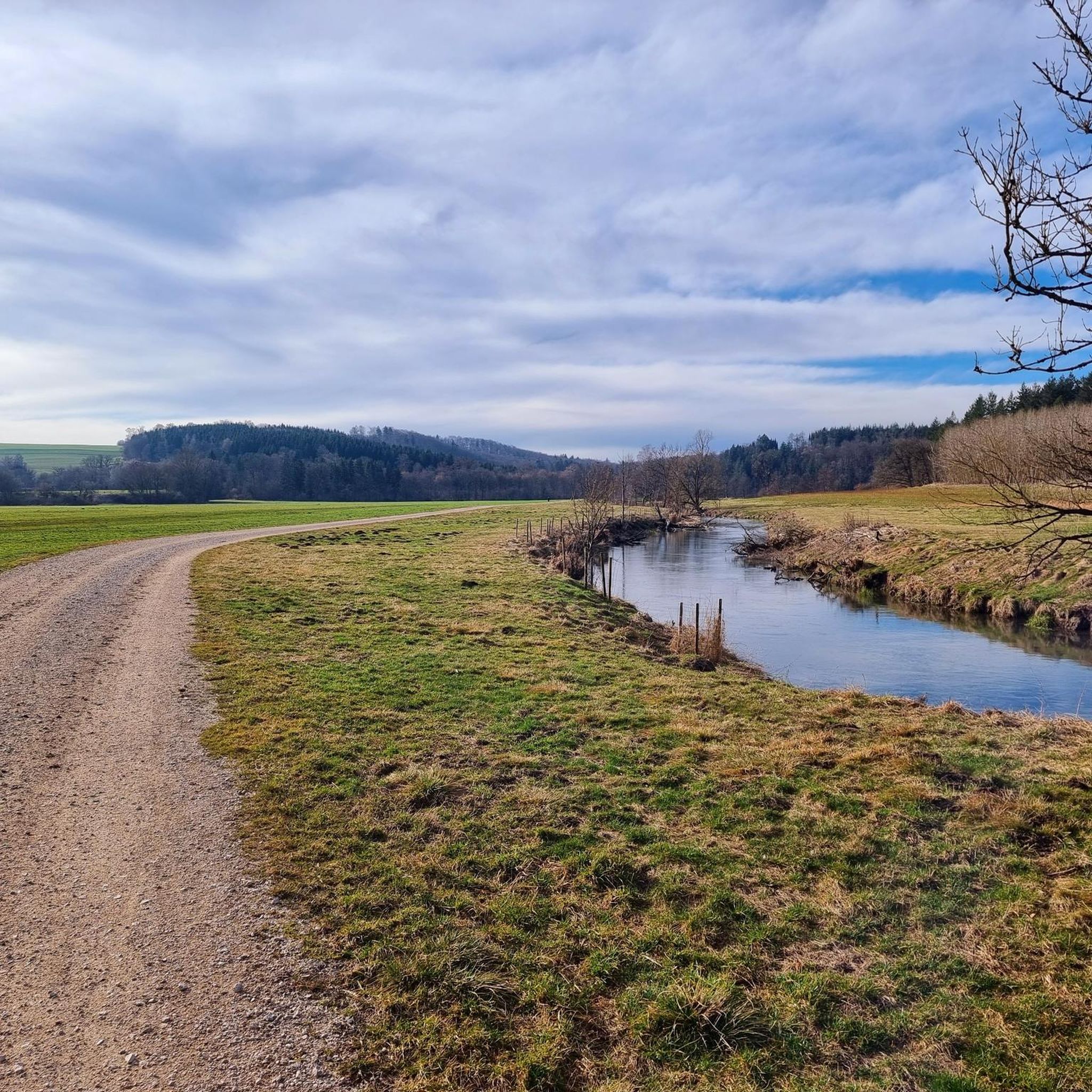
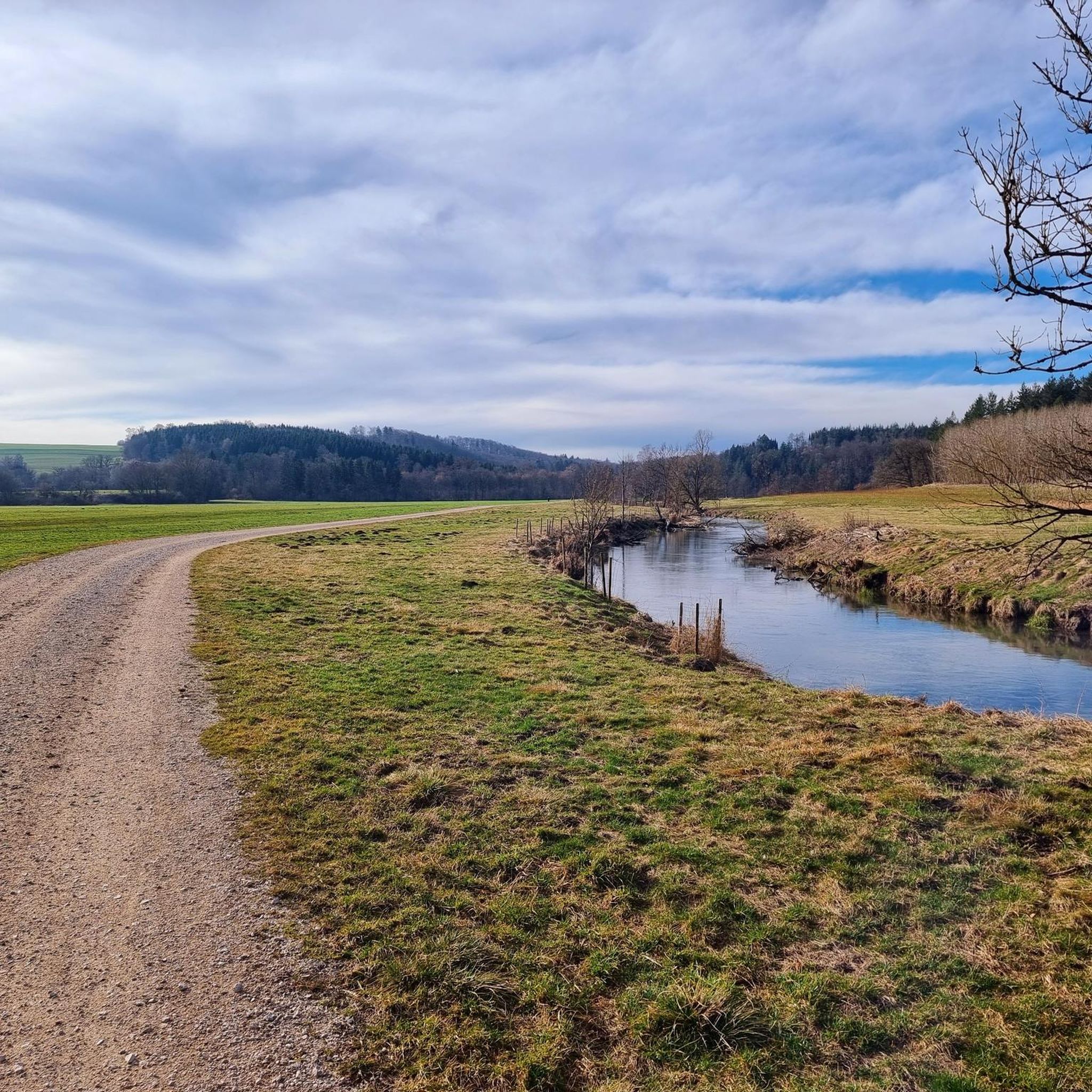
The Lauchertal is a gentle meadow valley in which the Lauchert meanders strongly. I find it so calming, soothing in its seclusion and "peacefulness" every time. Peaceful and simple bike route without big climbs
0
1
Frequently Asked Questions
How many mountain bike trails are available in Bingen?
There are over 30 mountain bike trails around Bingen listed on komoot, offering a variety of experiences for different skill levels.
What are the typical difficulty levels for mountain bike trails in Bingen?
The trails around Bingen range from easy to moderate. You'll find 12 easy routes, such as the Scheer Riverside Trail – Scheer Castle loop from Bingen, and 19 moderate routes, like the Sigmaringen Castle – Schmeietal Valley Trail loop from Bingen. The region's diverse landscape, including river valleys, hills, and vineyards, provides varied terrain.
What kind of terrain can I expect on mountain bike trails around Bingen?
Mountain biking in Bingen offers a mix of terrain. You can expect trails winding through picturesque river valleys, rolling hills, and extensive vineyards, particularly in regions like Rheinhessen. Dense forests, such as the Bingen Forest, also provide varied paths. The region is part of the Middle Rhine Valley, a UNESCO World Heritage Site, known for its dramatic landscapes.
What is the best time of year for mountain biking in Bingen?
Spring and autumn are generally considered the best seasons for mountain biking in Bingen, offering mild temperatures and vibrant natural scenery. During summer, early morning or evening rides are recommended due to potentially high temperatures.
Are there any family-friendly mountain bike trails in Bingen?
Yes, Bingen offers several easy mountain bike routes suitable for families. For example, the Sigmaringen Castle – Sigmaringen Castle loop from Bingen is an easy 23.5 km trail that leads through forested areas and open landscapes. Additionally, the Bingen Forest features an adventure trail with 46 stations, which can be a fun complement to a family outing.
What natural features or landmarks can I see while mountain biking in Bingen?
Bingen is rich in natural beauty and historical landmarks. You can ride along the Rhine River, through vineyards, and past historic castles. Notable attractions include the Danube Valley in the Upper Danube Nature Park, the Inzigkofer caves and rock gate, and the Schmeie Valley. The iconic Mouse Tower on the Rhine is also a prominent sight.
Are there any specific trails for advanced mountain bikers in Bingen?
While komoot lists trails up to moderate difficulty in Bingen, the wider Mainz-Bingen region offers more challenging options. For instance, the "Rhine-Nahe view – Mouse Tower on the Rhine loop from Bingen-Gaulsheim" is a hard 47.2 km ride with significant elevation gain, requiring very good fitness and advanced riding skills. Dedicated facilities like the Flowtrail Stromberg, near Mainz, also provide specially designed bike parks for all skill levels, including advanced sections.
What do other mountain bikers enjoy most about mountain biking in Bingen?
The mountain bike routes in Bingen are highly rated by the komoot community, with an average score of 4.9 stars from over 30 reviews. Reviewers often praise the diverse landscapes, including river views, vineyards, and forests, as well as the variety of trails suitable for different abilities.
Are there any circular mountain bike routes in Bingen?
Yes, many mountain bike routes in Bingen are designed as loops. Examples include the Hornstein Castle Ruins – Hornstein Castle Ruins loop from Hochberg, a moderate 25 km route, and the Hornstein Castle Ruins – Lauchert Lake (Mägerkingen) loop from Bingen (Hohenz) Hp, a longer moderate route of over 70 km.
Are there places to stop for refreshments or shelter along the trails?
Yes, the region around Bingen offers various spots for breaks. You can find shelters and barbecue areas like the Teufelslochhütte Shelter and Grill Area or the Veringer Hut Shelter and Barbecue Area. The Kachelhalde Pavilion also provides a place to rest.
Can I find less crowded mountain bike trails in Bingen?
While some trails are popular, Bingen's extensive network of routes through forests and vineyards means you can often find quieter paths. Exploring some of the moderate difficulty routes or those slightly further from the immediate town center might offer a more secluded experience.
What are some notable gorges or valleys to explore by mountain bike near Bingen?
The region is known for its picturesque valleys and gorges. You can explore areas like the Danube Valley in the Upper Danube Nature Park or the Schmeie Valley, which offer scenic routes and natural beauty. Bingen itself is situated at the confluence of the Nahe River with the Rhine, adding to the dramatic landscape.
Most popular routes around Bingen
Most popular attractions around Bingen

Get inspired with the komoot mobile app


Explore more
Browse the best MTB trails in other regions.
