The best road cycling routes around Médis
4.0
(212)
6,172
riders
312
rides
Road cycling around Médis features a landscape characterized by its proximity to the Atlantic coast and the Seudre estuary, offering mostly flat to gently rolling terrain. The region includes rural roads, coastal paths, and areas around waterways, making it suitable for various road cycling experiences. Elevation gains are generally low, providing accessible routes for many riders. The area's composition of agricultural land and coastal stretches defines the riding environment.
Best road cycling routes around Médis
- The most popular road cycling…
Last updated: November 3, 2026
24
riders
56.0km
02:25
360m
360m
Moderate road ride. Good fitness required. Mostly well-paved surfaces and easy to ride.
16
riders
Moderate road ride. Good fitness required. Mostly well-paved surfaces and easy to ride.

6
riders
34.4km
01:22
120m
130m
Easy road ride. Mostly well-paved surfaces and easy to ride.
8
riders
56.9km
02:27
210m
210m
Moderate road ride. Good fitness required. Mostly well-paved surfaces and easy to ride.
5
riders
36.6km
01:30
150m
150m
Easy road ride. Mostly well-paved surfaces and easy to ride.
Get access to more routes and recommendations from other explorers.
Already have an account?
Our route recommendations are based on thousands of hikes, rides, and runs completed by other people on komoot.
Start today with a free account
Your next adventure awaits.

Tips from the Community

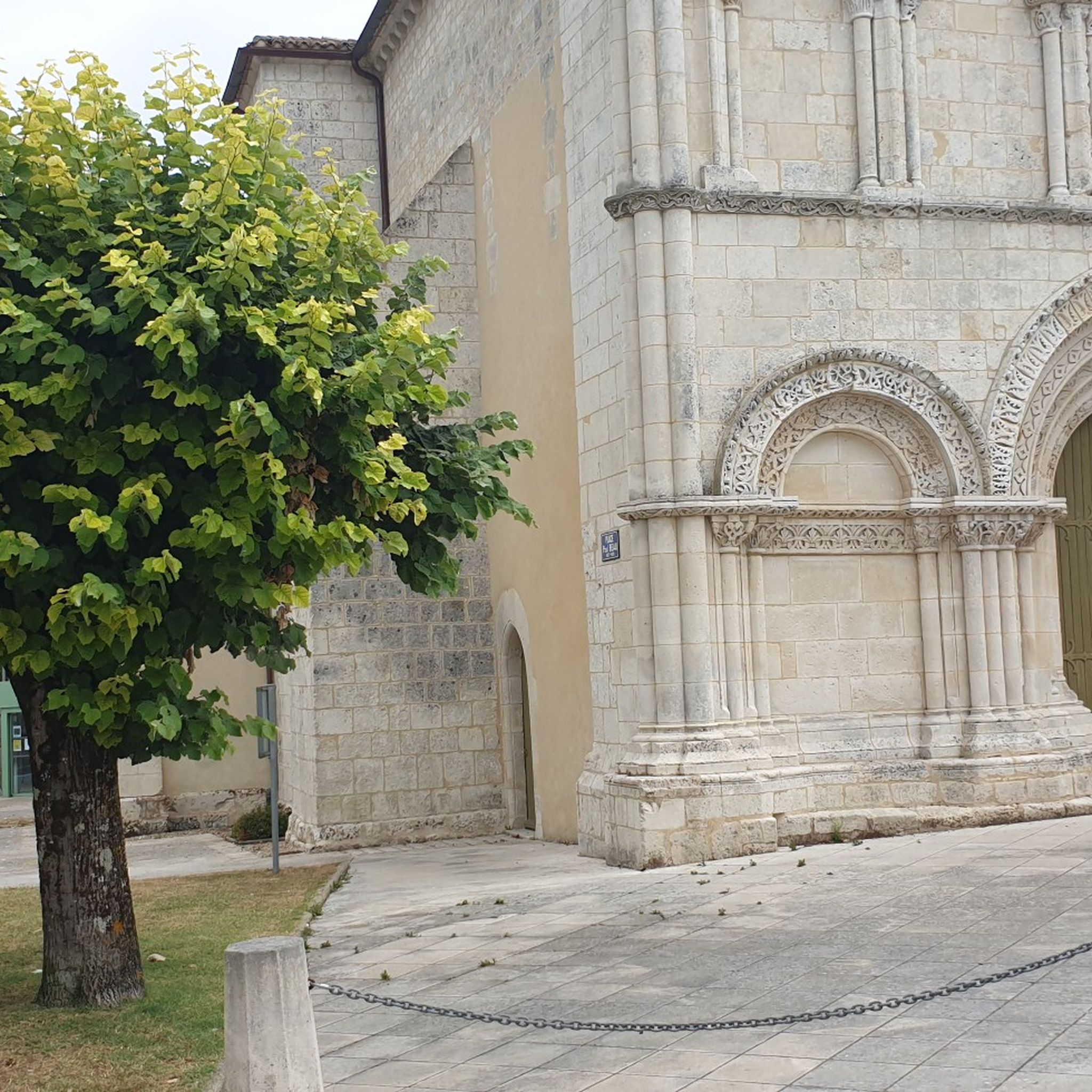
The Saint-Laurent church has a remarkable feature: its medieval Romanesque bell tower survived the destruction, while the church was rebuilt around it. 1. The origins: 1047 The first known mention of the church dates back to 1047. In a charter, Geoffroy Martel, Count of Anjou, ceded the churches of Saint-Laurent du Gua and Saint-Martin de Sanzillac (an old name associated with Saint-Martin du Gua) to the Abbaye aux Dames in Saintes, along with their parishes, lands, and revenues. This donation testifies to the religious importance of the territory as early as the 11th century. 2. The Romanesque church and its fortified bell tower The original church was a Romanesque building, of which the bell tower is today the main remnant. During the Hundred Years' War, the bell tower was adapted for defensive purposes. One can notably distinguish: -Two levels of Romanesque arcades and bays. -A wall walk for surveillance. -A fortified upper part. -A timber spire covered with slate, added at the beginning of the 16th century. This bell tower is particularly interesting because it combines Romanesque religious architecture with military adaptations. 3. The Wars of Religion and the destruction In the 16th century, the church suffered severe damage during the Wars of Religion. A fire destroyed a large part of the building. The bell tower itself was partially razed, then transformed into a fortified tower. The large Romanesque church thus almost entirely disappeared. 4. The reconstruction around 1800 Around 1800, the old church was considered too dilapidated and dangerous. It was decided to build a new sanctuary while preserving the medieval bell tower. An important architectural feature: the new church was built with a different orientation than the old one. The current facade presents a neoclassical style, with: -Pilasters. -A triangular pediment. -A monumental entrance reminiscent of a triumphal arch. 5. Treasures to discover inside Several elements deserve special attention. -The stained glass windows They date from the 19th and 20th centuries. Some represent episodes from the life and martyrdom of Saint Laurent, the patron saint of the church, as well as Saint Thérèse. -The high altar It comes from the old church of Dercie, a village that today belongs to the commune of Le Gua. -The maritime ex-voto It is a particularly interesting piece: a model of a three-masted ship, dating from the 19th century. It measures: 65 cm in height; 75 cm in length. Its hull is carved from a single block of wood. It represents a three-master with twelve gun ports depicted in black paint. 6. Classification as a Historic Monument -The bell tower is classified as a Historic Monument, but be careful: this classification concerns the bell tower and not the entire church. -The maritime ex-voto was classified as a Historic Monument on November 10, 1980. 7. A recent archaeological discovery: 2019 This is probably the most exciting aspect of the monument's history. During sanitation and redevelopment work on the Place de Verdun, archaeologists intervened around the church. They found: -Remains of the north wall of the original Romanesque nave. -Buried architectural elements. -Old circulation levels inside the church. -Graves. -Traces of medieval constructions nearby. These researches showed that the remains of the old church were much better preserved than previously thought. You can consult the official report from the Ministry of Culture: Archaeological report 2019 – Le Gua, pages 80 and 81 (PDF).
0
0
It can always come in handy ...... for those who don't have a hand pump or a battery-powered inflator!!!
0
0

Located on the commune of St-Palais-sur-Mer, at the tip of Terre-Nègre, it is intended to mark the southern passage of the Gironde estuary and to signal the presence of a dangerous sandbank, the la barre à l'Anglais.
0
0
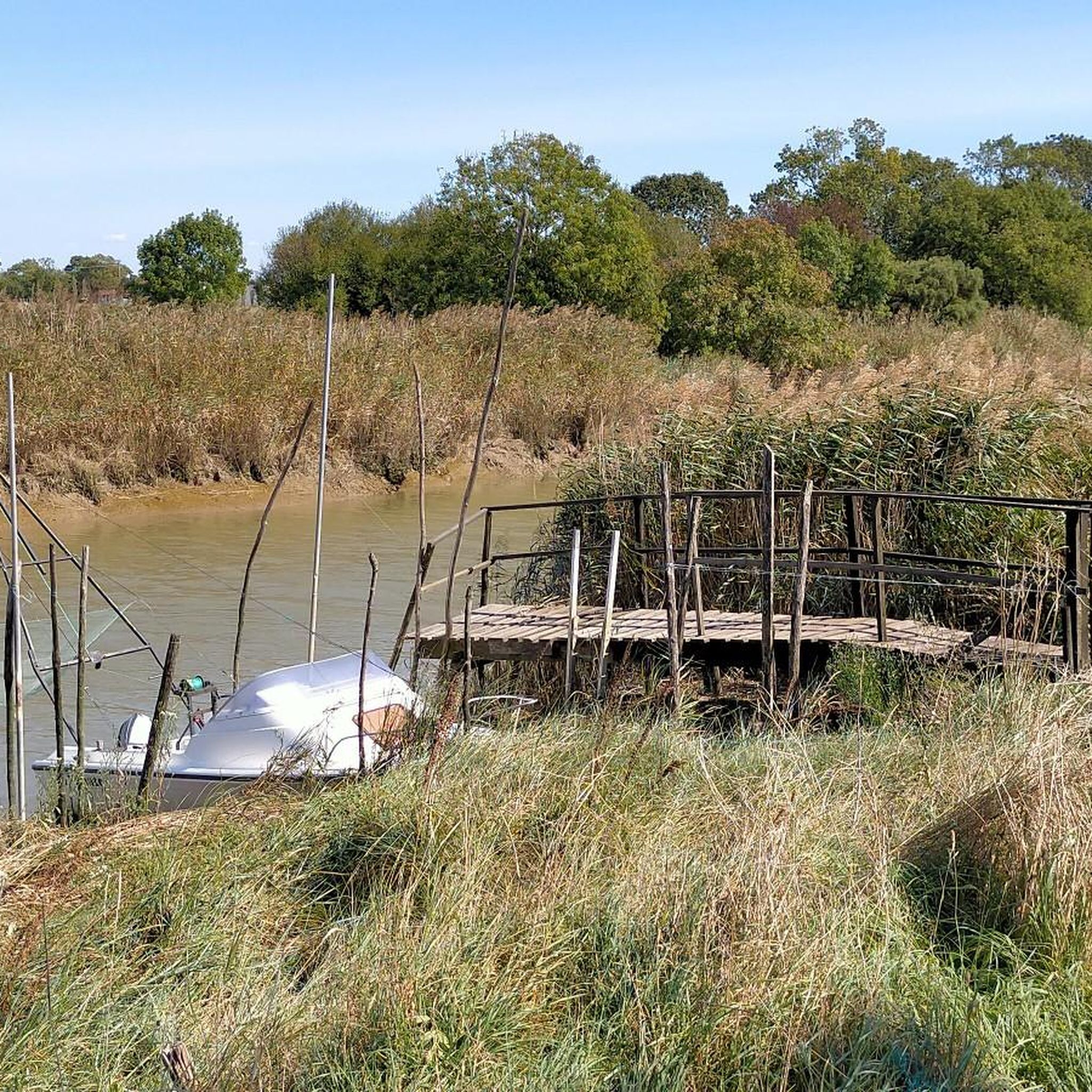
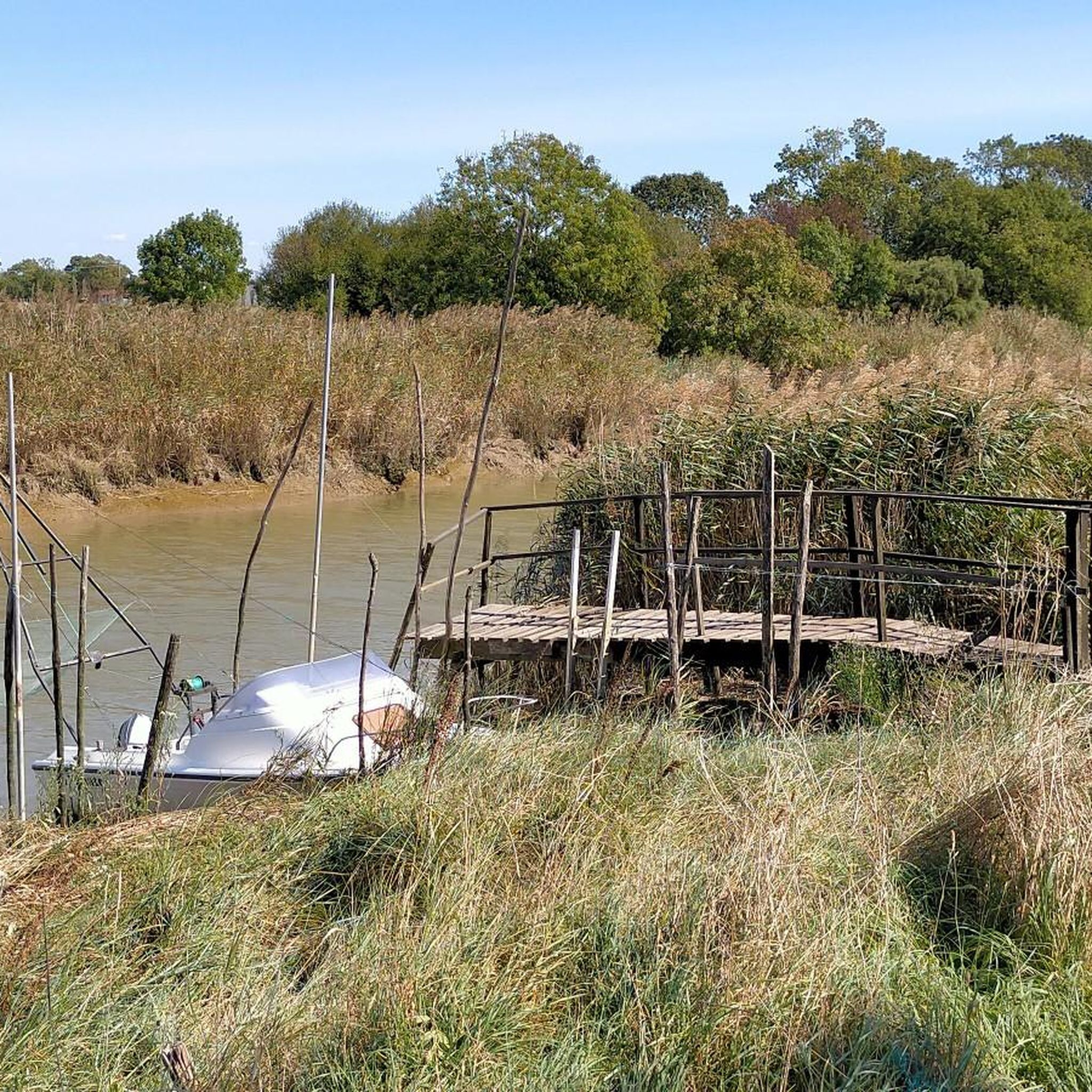
The carrelets of Saint-Palais-sur-Mer are among the most emblematic elements of the Charente coastline. Their history blends traditional fishing, tourist development, and local heritage. 🐟 Origin of the carrelets Originally, the word "carrelet" referred to a square fishing net used since the 17th century. A precise description can be found as early as 1769, in the writings of the scholar Henri-Louis Duhamel du Monceau, who mentioned this type of fishing on the Saintonge coast. 👉 At that time, these were not yet the current huts, but simply a net operated from rudimentary structures. ⚓ Artisanal fishing structures The first local carrelets were simple wooden platforms, built by the fishermen themselves to stand above the water. They were mainly used to catch shrimp, fish, and crabs near the shore, without going out to sea. 👉 It was a family and coastal fishery, less dangerous than sea fishing. 🏖️ 19th – early 20th century: transition to a leisure activity At the turn of the 20th century, with the rise of seaside resorts like Saint-Palais, the carrelets evolved. Holidaymakers and notable figures adopted this practice: construction of fixed jetties, appearance of huts on stilts. The carrelets then became places for relaxation as much as for fishing. 👉 They already contributed to the postcard image of the coast. 🪵 After 1945: democratization and multiplication After the Second World War, the number of carrelets increased sharply. They became a symbol of popular leisure and conviviality. The transition was gradually made from a means of subsistence to a recreational activity. 🌊 Storms and reconstruction The carrelets are fragile in the face of storms: 1999: massive destruction (up to 90% in some areas) 2010 (Xynthia storm): new damage Many have been rebuilt identically, respecting tradition. 🏛️ Today: protected heritage In Charente-Maritime, there are about 400 carrelets. They are: integrated into the public maritime domain allocated by administrative authorization (often renewed every 5 years) Since 2018, they have been recognized as cultural heritage of the department. 👉 In Saint-Palais, they can be observed in particular: at Pont du Diable at the conche du Concié at the Puits de l’Auture
0
0

Here you'll find a romantic little lighthouse, and behind it lies a garden with a bench overlooking the sea, a lovely place to stop for a break. Afterwards, you can continue along the cliff to the right until you reach Euro Velo 1 again.
0
0

Easily accessible place, only the last meters are prohibited for cyclists.
0
0

Perfect beachside bike trail along the boulevard, with several rest stops with seating and beach acces.
0
0
Notre Dame de Nazareth Middle School is a private Catholic school under a state partnership agreement...and on a human scale, with 142 students and seven classes (two sixth-form, two fifth-form, one fourth-form, and two ninth-form), whose main focuses are student support and monitoring, valuing all achievements, and welcoming all. Depending on the families' schedules and needs, two statuses exist at Notre Dame de Nazareth Middle School: - Status 1: Children enter and exit NDN according to the school's hours: 8:55 a.m. - 5:10 p.m. They cannot enter later or leave earlier. - Status 2: Children can enter and leave the school at the first and last class times on their schedule. They have the option of entering later and leaving earlier than the school's hours, particularly in the event of a teacher's absence during the first and/or last class times of the day. 1865 The school was founded by three nuns from the Congregation of the Holy Family of Bordeaux at the "Château" in Sorlut. 1873 The sisters purchased land on the Route de Talmont in the hope of constructing a building there. 1875 The Château de Sorlut was put up for sale, and the school was relocated near the church on Rue Traversière. 1878 The building on the Route de Talmont was constructed, and the school was relocated there. 1902-1905 Despite the new secularization laws, the sisters continued their mission. 1914 The Red Cross flag flew over the school. 1923 The house was put up for sale by the estates. With some friends of the school, Father du Boulet placed a bid of 100 francs; no one else came forward, and the school was saved! 1940 The Red Cross flag flies over the house again, and the sisters carry out charitable works there. 1958 The school welcomes 70 children. 1959 The school is named "Our Lady of Nazareth." 1960 First expansion, installation of prefabricated classrooms, and opening of a complementary course. The school has 120 students. 1965 With 180 students, the school expands its enrollment to the surrounding towns: Cravans, Tesson, Montpellier, Corme Ecluse, Saint André de Lidon, etc. The classrooms and dormitories are modernized, and a refectory and a covered playground are built. 1983 The nuns hand over management to lay people while retaining supervision. 1987 A new building replacing the prefabricated buildings was constructed for the middle school students, with classrooms, a science laboratory, a technology room, and a computer room. The old building was completely renovated: the administrative area and a primary classroom were housed on the ground floor; the primary classrooms were housed on the first floor; and the library and chapel were located on the second floor. The entire school building, including the classrooms, courtyards, and grounds, underwent a complete renovation. 1989 Construction and development of the dining area: kitchen and refectories. 2008 Expansion of the middle school: new restrooms, 3 classrooms, and 1 study room. 2010 Creation of a nap and motor skills room for kindergarten students. 2012 Expansion of the refectory and construction of 3 additional classrooms at the middle school. 2015-2016 Nazareth celebrates its 150th anniversary! 2020 Opening of the flexible timetable (CHA) football classes, in partnership with the Cozes club. 2021 Interior renovation of the administrative building 2022 Opening of the CHA dance and table tennis classes Summer 2023 Renovation of the chapel and meeting room. Attic insulation. March 2025 Restoration underway
0
0
Frequently Asked Questions
How many road cycling routes are available around Médis?
Médis offers a wide selection of road cycling routes, with over 290 options available. These routes cater to various skill levels, including easy, moderate, and a few more challenging rides.
What is the best time of year for road cycling in Médis?
The region around Médis, with its coastal and estuary climate, is generally pleasant for road cycling from spring through autumn. The mild weather during these seasons makes for comfortable riding conditions, allowing you to fully enjoy the coastal paths and rural roads.
Are there road cycling routes suitable for beginners or families in Médis?
Yes, Médis has numerous easy road cycling routes, with over 60 options designed for less experienced riders or families. These routes typically feature flat to gently rolling terrain, making them accessible and enjoyable for a relaxed ride. Many follow the quiet rural roads or coastal paths.
What kind of terrain can I expect on road cycling routes around Médis?
Road cycling around Médis is characterized by mostly flat to gently rolling terrain. You'll find routes along the Atlantic coast, through rural agricultural lands, and beside the Seudre estuary. Elevation gains are generally low, providing an accessible experience for most cyclists.
Are there any challenging road cycling routes for advanced riders?
While the region is largely flat, there are a few routes that offer more challenge. Médis features 8 difficult road cycling routes, which may include longer distances or slightly more varied terrain compared to the predominantly flat options. These routes provide a good test for advanced cyclists looking for a longer endurance ride.
What can I see along the road cycling routes in Médis?
Many routes offer scenic views of the Atlantic coast and the Seudre estuary. You can pass by beautiful beaches like Saint-Georges-de-Didonne Beach or Chay Beach. Some routes also take you through charming villages and past natural landmarks such as the Suzac Forest or the Caillaud cliff at Talmont sur Gironde.
Are there any loop trails for road cycling in Médis?
Yes, many of the road cycling routes in Médis are designed as loops, allowing you to start and finish at the same point. For example, the Seudre Bridge – Mornac-sur-Seudre loop from Saujon is a popular option, offering a circular journey through the estuary landscape.
What are some popular longer road cycling routes in the area?
For longer rides, consider routes like the Coubre Lighthouse – Notre-Dame Church, Royan loop from Saujon, which covers nearly 90 km and explores the Atlantic coast, or the Notre-Dame Church, Royan – Mornac-sur-Seudre loop from Saujon, a 65 km route with coastal views.
What do other road cyclists enjoy most about road cycling in Médis?
The road cycling experience in Médis is highly rated by the komoot community, with an average score of 4.1 stars from over 190 reviews. Cyclists often praise the region's diverse scenery, from coastal paths to tranquil rural roads, and the generally low elevation gain that makes routes accessible and enjoyable.
Are there any specific attractions or natural monuments to look out for?
Absolutely. Beyond the beaches, you might encounter unique natural formations like the Grottes de Matata, a series of caves, or the picturesque Conche de Gilet. The Marsh Cycle Path in Meschers-sur-Gironde also offers a distinct cycling experience through wetland landscapes.
Can I find routes that combine coastal views with rural landscapes?
Yes, many routes in Médis offer a blend of coastal and rural scenery. For instance, the Mornac-sur-Seudre – A beautiful route loop from Le Train des Mouettes - Saujon takes you through both rural landscapes and areas near the coast, providing a varied and engaging ride.
Most popular attractions around Médis

Get inspired with the komoot mobile app


Explore more
Browse the best Road cycling routes in other regions.
