The best MTB trails around Saint-Sornin
4.5
(131)
484
riders
42
rides
Mountain biking around Saint-Sornin offers diverse terrain, from coastal paths and marshes to forested areas. The region is characterized by varied landscapes, including the Mornac-sur-Seudre Marshes and nearby forests such as Forêt domaniale de la Coubre. Elevation gains vary, providing options for different fitness and skill levels. These natural features contribute to a range of mountain bike trails suitable for exploration.
Best mountain bike trails around Saint-Sornin
- The most popular mountain bike trail is The market halls in Mornac-sur-Seudre –…
Last updated: November 10, 2026
4.6
(18)
117
riders
Moderate mountain bike ride. Good fitness required. Advanced riding skills necessary.
4.6
(5)
20
riders
Moderate mountain bike ride. Good fitness required. Advanced riding skills necessary.

4.3
(6)
17
riders
41.4km
02:50
180m
180m
Moderate mountain bike ride. Good fitness required. Advanced riding skills necessary.
4.0
(3)
11
riders
Moderate mountain bike ride. Good fitness required.
4.3
(4)
11
riders
Moderate mountain bike ride. Good fitness required. Advanced riding skills necessary.
Get access to more routes and recommendations from other explorers.
Already have an account?
Our route recommendations are based on thousands of hikes, rides, and runs completed by other people on komoot.
Start today with a free account
Your next adventure awaits.
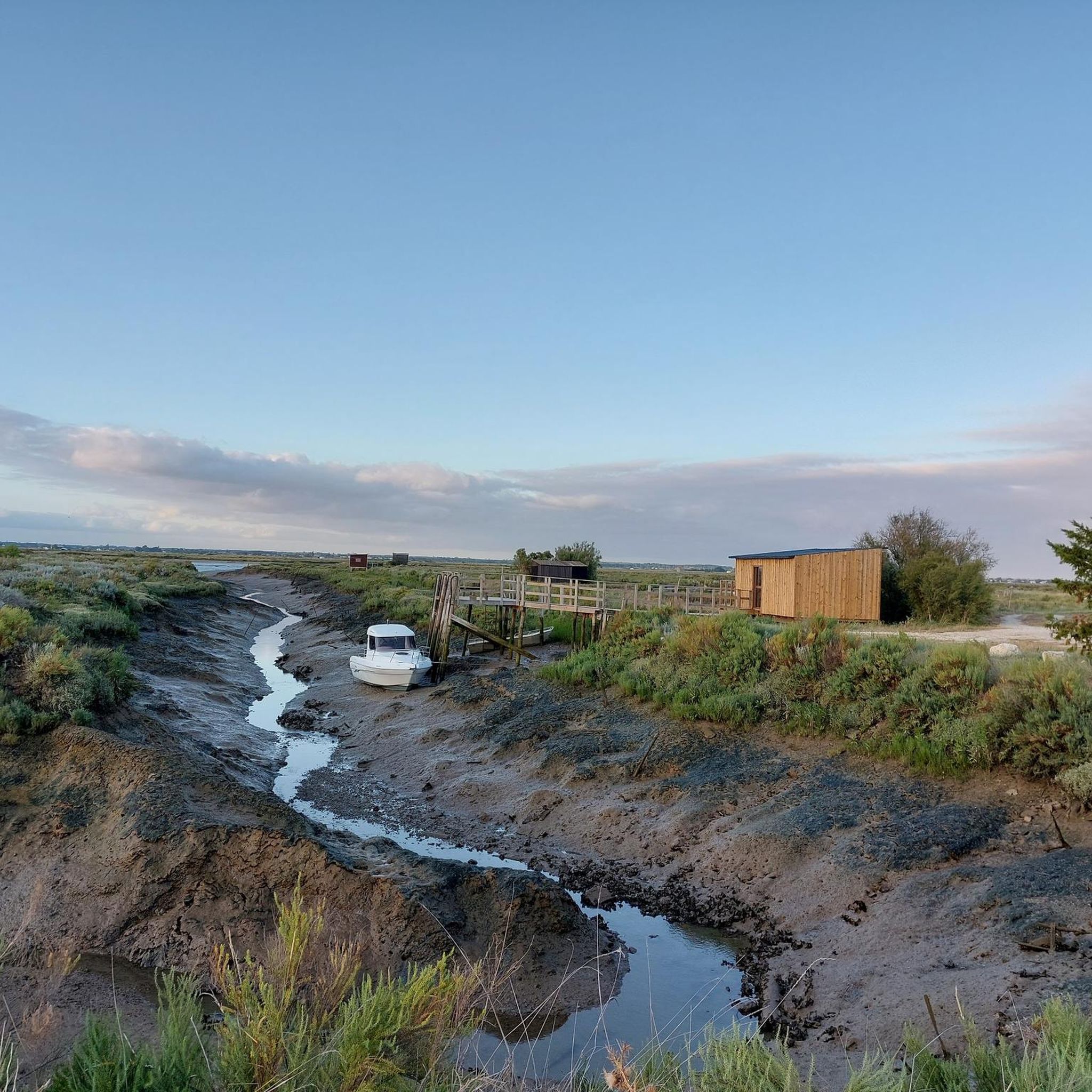
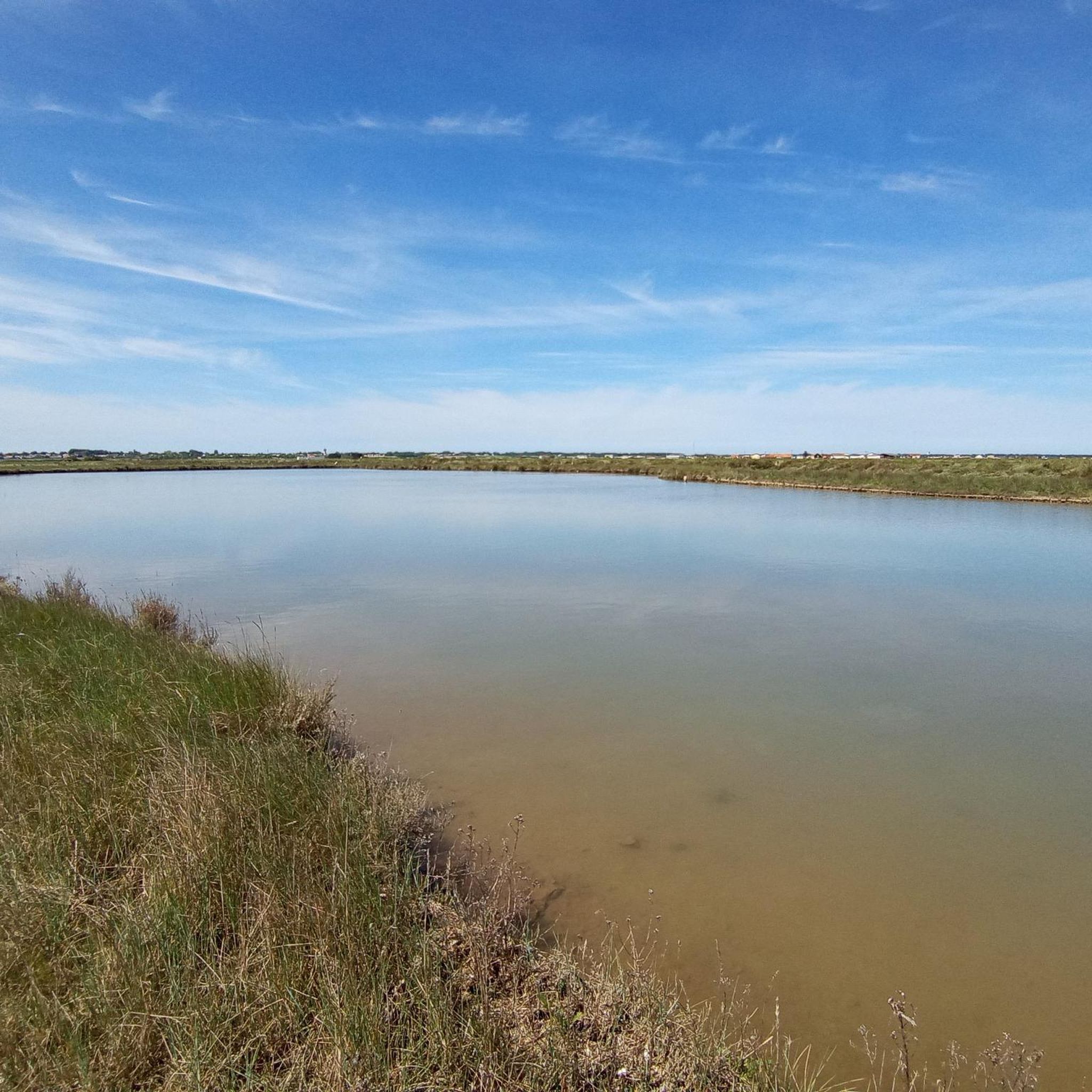
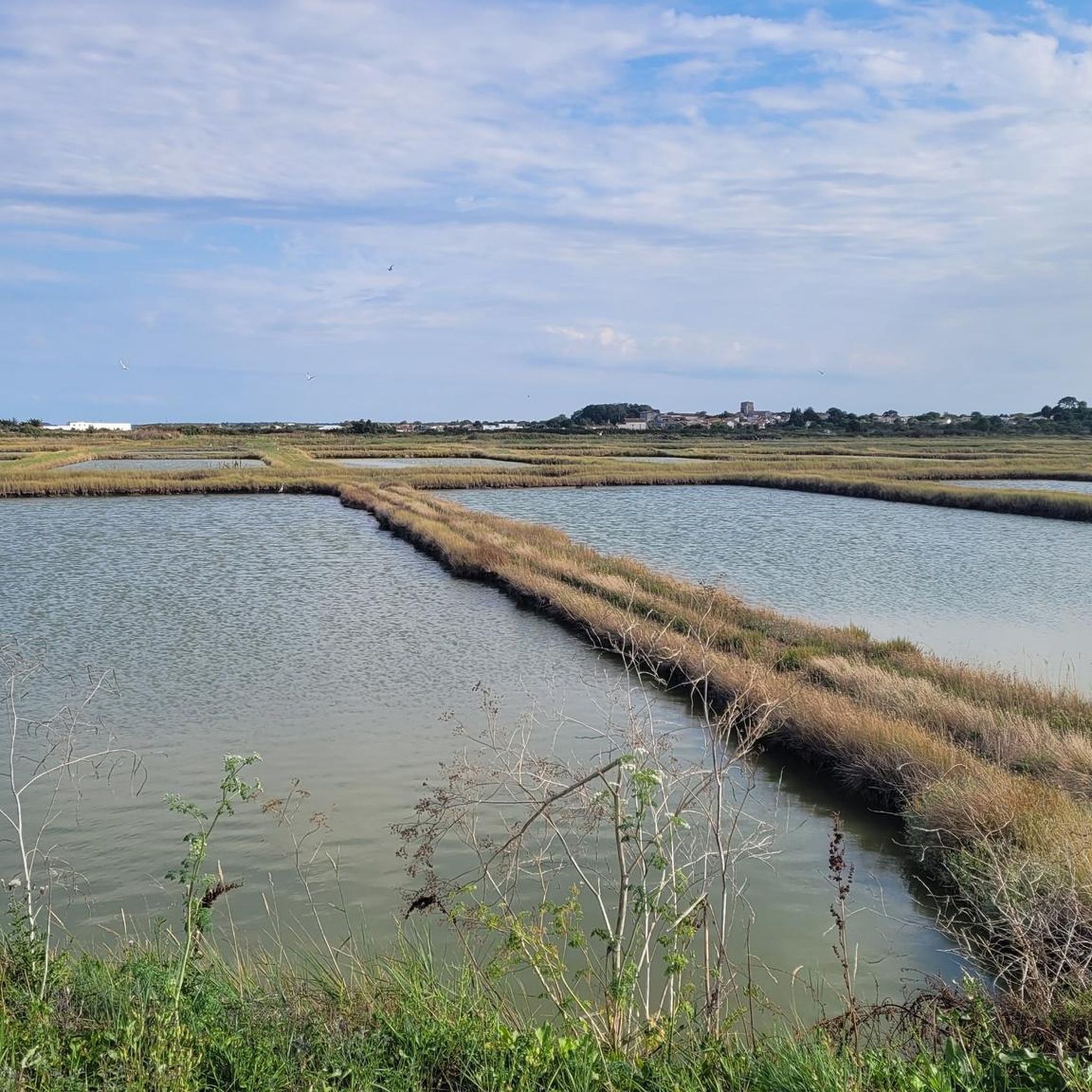


Tips from the Community

The Saint-Laurent church has a remarkable feature: its medieval Romanesque bell tower survived the destruction, while the church was rebuilt around it. 1. The origins: 1047 The first known mention of the church dates back to 1047. In a charter, Geoffroy Martel, Count of Anjou, ceded the churches of Saint-Laurent du Gua and Saint-Martin de Sanzillac (an old name associated with Saint-Martin du Gua) to the Abbaye aux Dames in Saintes, along with their parishes, lands, and revenues. This donation testifies to the religious importance of the territory as early as the 11th century. 2. The Romanesque church and its fortified bell tower The original church was a Romanesque building, of which the bell tower is today the main remnant. During the Hundred Years' War, the bell tower was adapted for defensive purposes. One can notably distinguish: -Two levels of Romanesque arcades and bays. -A wall walk for surveillance. -A fortified upper part. -A timber spire covered with slate, added at the beginning of the 16th century. This bell tower is particularly interesting because it combines Romanesque religious architecture with military adaptations. 3. The Wars of Religion and the destruction In the 16th century, the church suffered severe damage during the Wars of Religion. A fire destroyed a large part of the building. The bell tower itself was partially razed, then transformed into a fortified tower. The large Romanesque church thus almost entirely disappeared. 4. The reconstruction around 1800 Around 1800, the old church was considered too dilapidated and dangerous. It was decided to build a new sanctuary while preserving the medieval bell tower. An important architectural feature: the new church was built with a different orientation than the old one. The current facade presents a neoclassical style, with: -Pilasters. -A triangular pediment. -A monumental entrance reminiscent of a triumphal arch. 5. Treasures to discover inside Several elements deserve special attention. -The stained glass windows They date from the 19th and 20th centuries. Some represent episodes from the life and martyrdom of Saint Laurent, the patron saint of the church, as well as Saint Thérèse. -The high altar It comes from the old church of Dercie, a village that today belongs to the commune of Le Gua. -The maritime ex-voto It is a particularly interesting piece: a model of a three-masted ship, dating from the 19th century. It measures: 65 cm in height; 75 cm in length. Its hull is carved from a single block of wood. It represents a three-master with twelve gun ports depicted in black paint. 6. Classification as a Historic Monument -The bell tower is classified as a Historic Monument, but be careful: this classification concerns the bell tower and not the entire church. -The maritime ex-voto was classified as a Historic Monument on November 10, 1980. 7. A recent archaeological discovery: 2019 This is probably the most exciting aspect of the monument's history. During sanitation and redevelopment work on the Place de Verdun, archaeologists intervened around the church. They found: -Remains of the north wall of the original Romanesque nave. -Buried architectural elements. -Old circulation levels inside the church. -Graves. -Traces of medieval constructions nearby. These researches showed that the remains of the old church were much better preserved than previously thought. You can consult the official report from the Ministry of Culture: Archaeological report 2019 – Le Gua, pages 80 and 81 (PDF).
0
0
Pirelongue (or Pirelonge), near Saint-Romain-de-Benet (17600), in Charente-Maritime, is a particularly interesting area for its ancient history, notably Gallo-Roman. 1. Ancient origins: The Roman Pirelongue The iconic monument is the Tour de Pirelonge. It dates back to the Gallo-Roman era, probably from the 2nd or 3rd century. It measures approximately 24 to 25 meters in height. Its base is square, about 6 meters on each side. It is likely a funerary pile, that is to say, a monument raised to the memory of an important person. It was located near an ancient Roman road connecting Saintes (Mediolanum Santonum) to Barzan (Novioregum). Excavations have revealed the existence of an enclosure around the tower. The tower has been classified as a Historic Monument since 1840, making it a protected monument since the beginnings of national heritage protection. 2. The name Pirelongue The name is sometimes written Pirelonge or Pirelongue. A possible explanation is its connection to ancient words designating a long stone or a standing stone. However, this etymological hypothesis must be distinguished from an origin proven by ancient documents. The first known written description of the tower is attributed to the engineer and cartographer Claude Masse, in 1715. 3. Pirelongue and its agricultural history The hamlet is also associated with a long winemaking tradition. Notably, one can find the Domaine et Distillerie Brillouet. The estate is known for its activity as a winegrower and distiller, in the land of Cognac and Pineau des Charentes. The old houses and rural buildings of the hamlet constitute another important part of its heritage. 4. The hamlet of Chez Pureau: an exceptional rural heritage The local urban plan of Saint-Romain-de-Benet describes Chez Pureau as a complex of five old farms, transformed into an ecomuseum of the life and rural traditions of Saintonge. One could find there in particular: -The distillation of Cognac and Pineau. -The manufacture of perfumes and essential oils. -The cultivation of lavender and lavandin. -A printing activity. -Old agricultural buildings. -The municipal document also confirms the existence of three wine cellars, a distillery, a museum of stills, and an old sawmill. 5. The major historical periods -Neolithic: Human occupation in the commune -Roman era: Saintes-Barzan road and Pirelongue tower -Middle Ages: Development of the village and its lands -17th-18th centuries: Old rural constructions of Chez Pureau -19th century: Agricultural, viticultural, and artisanal development -20th century: Agricultural modernization and development -Today: Wine estate, distillery, and tourist heritage
0
0

The Halles of Mornac first appeared in the Middle Ages. It was only in 1664 that the first written proof attested to their existence. They are likely older and could date back to the 1550s. The Halles are generally timber-framed shelters supported by stone pillars and covered with tiles. It can be assumed that, like those of Cozes and Pisany, they suffered the vicissitudes of the Wars of Religion and were damaged, or even destroyed, then rebuilt when peace returned. The site of the Halles of Mornac was a renowned fairground and allowed the inhabitants to sell their products in exchange for a fee paid to the Lord. It was an important source of income for him, which also obliged him to maintain these Halles in perfect condition. An act engaging the Lord and the seller sealed a contract signifying the rights to sell unpacked goods and the maintenance of the said Halles.
0
0

A magnificent cycle path that crosses the pine forest between Saint-Palais-sur-Mer and the wild coast. The route is very pleasant, peaceful, with the smell of pine trees, beautiful shaded sections and a natural atmosphere. It's an ideal outing to enjoy the scenery without difficulty, with superb stretches close to the ocean. Perfect for mountain biking, hybrid biking or a leisurely road bike ride. One of the most beautiful ways to discover the Atlantic coast! 🌊
3
0

Nice quiet little road that offers some shade on hot days.
0
0
The port of Ribérou is a major heritage site in Saujon, bearing witness to a prosperous maritime past linked to the salt and wine trade. Transformed in the 19th century by ambitious works, it has now been reinvented as a place for living, relaxation, and preserving local history. 🛶 Origins and the Middle Ages The port of Ribérou takes its name from the Latin word ripa ("riverbank") or the Occitan word ribèira ("river"). It is located at the head of the Seudre estuary. It existed as early as the 11th century and became an important river and sea port thanks to its strategic position at the head of the estuary, used particularly for the salt trade—then called "white gold"—a highly sought-after product for preserving food. 🚢 Medieval Period and International Trade With the opening of British markets during the reigns of Eleanor of Aquitaine and Henry II Plantagenet, ships laden with wool, salt, wine, and other goods flocked to Ribérou. In the 16th century, the port exported local wines (such as cognac and pineau) throughout Europe. In 1577, during the Wars of Religion, the port was a strategic site: troops were stationed there, and battles took place. 🏗️ Decline, Reconstruction, and the 19th Century The estuary gradually silted up, making navigation difficult. By 1691, only smaller vessels could dock there. During the French Revolution, the sale of the tidal mill, which helped remove sediment, worsened the silting, leading to the port's decline. A modernization project began in 1822, but it wasn't until 1839 that an ambitious program was launched under the impetus of Jules Dufaure—a native of Saujon and Minister of Public Works—with the construction of sturdy quays, slipways, a lock bridge (marking the boundary between fresh and salt water), and reception facilities. In 1842, the work was completed, and the main quay was named Quai Dufaure in honor of this political support. 📉 Gradual Decline and Modernization The arrival of the railway in 1876 and the persistent problems of silting led to a decline in the port's traditional commercial activity, already facing competition from other transport networks. In the 20th century, the port gradually lost its economic importance but remained active for traditional fishing and became a place for pleasure boating, leisure, and local culture. Urban and tourism development projects (particularly in 2011–2012) modernized the port while preserving its historical charm. 🌊 Today The port of Ribérou is now a small fishing and pleasure port, much appreciated for its walks along the Seudre River, water sports (canoeing, kayaking, paddleboarding, etc.), and seasonal events.
0
0

Frequently Asked Questions
How many mountain bike trails can I find around Saint-Sornin?
There are over 30 mountain bike trails available around Saint-Sornin. These include a variety of routes: 10 easy trails, 22 moderate trails, and 1 challenging trail, catering to different skill levels and preferences.
What kind of terrain can I expect on mountain bike trails in Saint-Sornin?
The region around Saint-Sornin offers diverse terrain for mountain biking, ranging from coastal paths and marshes to lush forested areas. You'll encounter a mix of landscapes, including the notable Mornac-sur-Seudre Marshes and various forests like Forêt domaniale de la Coubre, Forêt de Suzac, and Forêt de Saint-Trojan.
Are there any easy mountain bike trails suitable for beginners in Saint-Sornin?
Yes, Saint-Sornin offers 10 easy mountain bike trails that are suitable for beginners or those looking for a more relaxed ride. These routes typically involve less significant elevation gains and are a great way to explore the region's natural beauty at a comfortable pace.
What are some notable landmarks or natural features I can see along the mountain bike trails?
Many trails in Saint-Sornin pass by interesting landmarks and natural features. You can explore the historic Riberou Port, cycle through the unique Mornac-sur-Seudre Marshes, or discover historical churches such as Saint-Pierre Church in Mornac-sur-Seudre. The region also features various forests and lakes like Lac de Saint-Pardoux, offering picturesque views.
How long do mountain bike trails around Saint-Sornin typically take to complete?
The duration of mountain bike trails in Saint-Sornin varies depending on the route's length and difficulty. For example, a moderate trail like Mountain Bike Trail – MTB Saint-Sulpice-de-Royan loop from Le Train des Mouettes - Chaillevette, which is 22.2 miles (35.7 km), can be completed in about 2 hours 23 minutes. Longer routes, such as The market halls in Mornac-sur-Seudre – Mountain Bike Trail loop from Le Train des Mouettes - Mornac sur seudre (34.0 miles / 54.7 km), might take around 3 hours 51 minutes.
Are there any challenging mountain bike trails for experienced riders?
Yes, for experienced riders seeking a challenge, there is at least one difficult mountain bike trail around Saint-Sornin. These routes often feature significant elevation gains and more technical sections, providing a demanding and rewarding experience.
What do other mountain bikers say about the trails in Saint-Sornin?
The mountain bike trails in Saint-Sornin are highly rated by the komoot community, with an average score of 4.5 stars from over 80 reviews. Reviewers often praise the diverse terrain, scenic views, and the variety of routes that cater to different ability levels, from coastal paths to forested areas.
Are there any mountain bike trails with scenic views of the bay?
Absolutely! The region offers trails with beautiful coastal vistas. For example, the Beautiful view of the bay – MTB Route 4 loop from Saint-Just-Luzac is a moderate 33.8-mile (54.3 km) path specifically known for its scenic views of the bay.
Is Saint-Sornin a good destination for family-friendly mountain biking?
Yes, with 10 easy trails available, Saint-Sornin can be a great destination for family-friendly mountain biking. These less demanding routes are perfect for families looking to enjoy the outdoors together, offering pleasant rides through varied landscapes without excessive difficulty.
What is the best time of year to go mountain biking in Saint-Sornin?
While specific seasonal data isn't provided, the diverse terrain of Saint-Sornin, including coastal areas, marshes, and forests, suggests that spring and autumn would likely offer the most pleasant conditions for mountain biking. During these seasons, temperatures are generally milder, and the natural scenery is often at its most vibrant.
Are there any mountain bike trails that are loops?
Yes, many of the mountain bike trails around Saint-Sornin are designed as loops, allowing you to start and end your ride in the same location. Examples include The market halls in Mornac-sur-Seudre – Mountain Bike Trail loop from Le Train des Mouettes - Mornac sur seudre and Church of Le Gua in Aubin loop from Le Gua.
Are the mountain bike trails around Saint-Sornin dog-friendly?
While specific regulations for dogs on mountain bike trails are not detailed, many natural areas in France permit dogs on trails, often requiring them to be on a leash. It's always recommended to check local signage or contact the regional tourism office for the most current information regarding dog-friendly access on specific routes.
Most popular routes around Saint-Sornin
Most popular attractions around Saint-Sornin

Get inspired with the komoot mobile app


Explore more
Browse the best MTB trails in other regions.
