The best cycling routes around Le Chay
4.3
(445)
3,081
riders
202
rides
Touring cycling routes around Le Chay traverse a preserved countryside characterized by generally flat terrain and dedicated cycle paths. The region features diverse landscapes, including the gentle Seudre river, coastal areas with cliffs and marshes, and extensive agricultural vistas. This environment provides varied scenery for cyclists, with many routes on mostly paved surfaces. The area is well-suited for touring cycling, offering options for various skill levels.
Best touring cycling routes around Le Chay
- The most popular touring cycling route is…
Last updated: May 15, 2026
4.5
(12)
69
riders
20.2km
01:22
30m
30m
Easy bike ride. Great for any fitness level. Mostly paved surfaces. Suitable for all skill levels.
5.0
(2)
14
riders
92.4km
05:57
640m
640m
Hard bike ride. Very good fitness required. Mostly paved surfaces. Suitable for all skill levels.

Sign up for free
3.0
(1)
15
riders
Moderate bike ride. Good fitness required. Mostly paved surfaces. Suitable for all skill levels.
2
riders
28.4km
01:45
130m
130m
Hard bike ride. Great for any fitness level. You may need to push your bike for some segments of this route.
4.0
(2)
10
riders
24.5km
01:29
120m
120m
Easy bike ride. Great for any fitness level. Mostly paved surfaces. Suitable for all skill levels.
Get access to more routes and recommendations from other explorers.
Sign up for free
Already have an account?
Our route recommendations are based on thousands of hikes, rides, and runs completed by other people on komoot.
Start today with a free account
Your next adventure awaits.
Login or Signup


Tips from the Community

The port of Ribérou is a major heritage site in Saujon, bearing witness to a prosperous maritime past linked to the salt and wine trade. Transformed in the 19th century by ambitious works, it has now been reinvented as a place for living, relaxation, and preserving local history. 🛶 Origins and the Middle Ages The port of Ribérou takes its name from the Latin word ripa ("riverbank") or the Occitan word ribèira ("river"). It is located at the head of the Seudre estuary. It existed as early as the 11th century and became an important river and sea port thanks to its strategic position at the head of the estuary, used particularly for the salt trade—then called "white gold"—a highly sought-after product for preserving food. 🚢 Medieval Period and International Trade With the opening of British markets during the reigns of Eleanor of Aquitaine and Henry II Plantagenet, ships laden with wool, salt, wine, and other goods flocked to Ribérou. In the 16th century, the port exported local wines (such as cognac and pineau) throughout Europe. In 1577, during the Wars of Religion, the port was a strategic site: troops were stationed there, and battles took place. 🏗️ Decline, Reconstruction, and the 19th Century The estuary gradually silted up, making navigation difficult. By 1691, only smaller vessels could dock there. During the French Revolution, the sale of the tidal mill, which helped remove sediment, worsened the silting, leading to the port's decline. A modernization project began in 1822, but it wasn't until 1839 that an ambitious program was launched under the impetus of Jules Dufaure—a native of Saujon and Minister of Public Works—with the construction of sturdy quays, slipways, a lock bridge (marking the boundary between fresh and salt water), and reception facilities. In 1842, the work was completed, and the main quay was named Quai Dufaure in honor of this political support. 📉 Gradual Decline and Modernization The arrival of the railway in 1876 and the persistent problems of silting led to a decline in the port's traditional commercial activity, already facing competition from other transport networks. In the 20th century, the port gradually lost its economic importance but remained active for traditional fishing and became a place for pleasure boating, leisure, and local culture. Urban and tourism development projects (particularly in 2011–2012) modernized the port while preserving its historical charm. 🌊 Today The port of Ribérou is now a small fishing and pleasure port, much appreciated for its walks along the Seudre River, water sports (canoeing, kayaking, paddleboarding, etc.), and seasonal events.
0
0
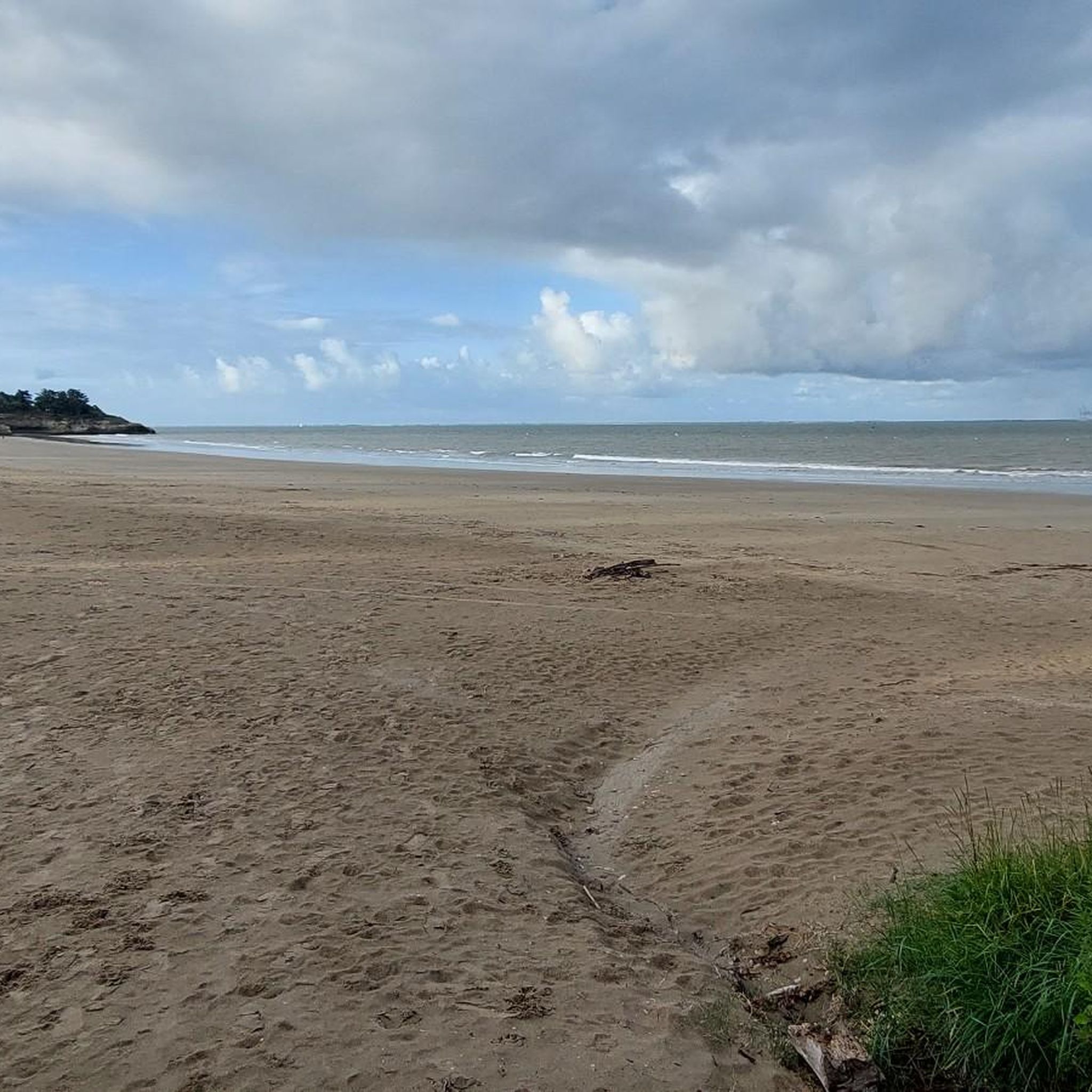
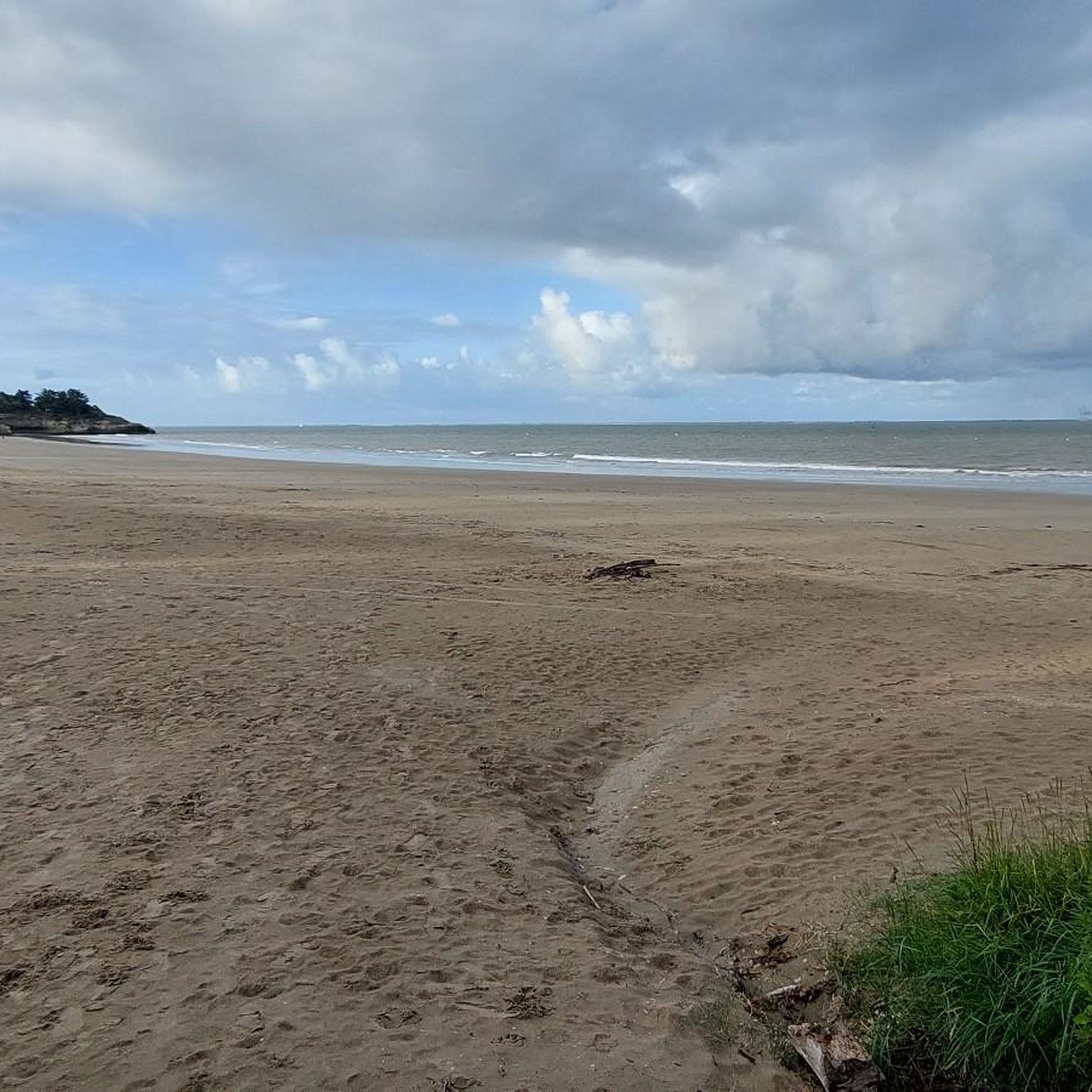
🏖️ General Overview Chay Beach is a family-friendly, fine sandy beach located in Royan (Charente-Maritime), on the Côte d’Argent promenade between Pigeonnier Beach and Pointe du Chay. It stretches for approximately 200 meters and boasts a pleasant natural setting, with a cove bordered by rocks typical of the Charente coastline. 🏝️ Features • 🌊 Beach type: fine sand, sheltered cove. • 🏄♂️ Atmosphere: relatively calm and family-friendly, ideal for children and vacationers seeking relaxation away from the large urban beaches. • 🐾 Pets: prohibited from April 1st to September 30th. • 🫧 Water quality: excellent (Blue Flag label awarded for 2025). 🧭 Lifeguard and Safety • Swimming is supervised during the season (June to early September), with areas marked by red and yellow flags. • The area is classified as a Category 3 "Supervised Beach" and lifeguards are present during the indicated hours. 🪑 Amenities On-site, you can find: • 🏖️ Sun loungers, parasols, and mattresses for rent. • 🚿 Foot rinse and public restrooms. • 📶 Wi-Fi access, first aid station, and an area accessible to people with reduced mobility (assistance may be required depending on the slope). • 🍴 Beachfront restaurant ("Le Chay" bar-restaurant with sea views). 🚶♂️ Atmosphere and Activities • 🎈 Ideal for families and leisurely strolls. • 🌞 People come here for swimming, playing on the sand, flying kites, or simply relaxing by the ocean. • 🅿️ Parking is available nearby, and the beach is easily accessible on foot or by bike from Royan town center in just a few minutes. 🧭 Practical Tips • 📆 Best time to visit: summer for supervised swimming and full services, but also during the off-season for a more peaceful atmosphere. • ☀️ Arriving early in the morning makes parking easier during peak season. • 🐶 Dogs are not allowed during the summer season; check the signs on site during the off-season.
0
0


The Chay de Royan beach is a continuation of the Pigeonnier cove on the Côte d'Argent promenade and offers a larger area than the latter. This sandy beach is family-friendly with a restaurant on the beach. It is supervised during the summer season (mid-June to early September) and you can rent mattresses and cabins. The environment of this beach is very pleasant, there are fewer houses than on the other beaches in Royan. A large car park is available near this beach (left side). Access is possible for people with reduced mobility via an inclined plane with assistance (the slope is steep). Dogs are prohibited from April 1st to October 31st.
1
0
The port of Ribérou is a fishing and pleasure port located at the end of the Seudre estuary, in Saujon. It is one of the two ports in the city, along with that of Breuil, a little downstream. Active since the 11th century, it took on its current appearance from 1842, under the impetus of the Minister of Public Works at the time, Jules Dufaure, a "local boy", who thus attempted to revive maritime trade and fishing activities, which were then in decline. Ideally located, on the edge of the city center, the La Lande leisure center and the preserved areas of the Seudre marshes (towpaths transformed into walking trails), it has become one of the major tourist attractions in Saujon, where theme evenings and the July 14 fireworks are organized. In 2011, the municipality began a renovation program for the port site, entrusted to the architect-urban planner Sophie Blanchet. It consists of transforming the old car parks into a pedestrian esplanade, a real meeting place with modern street furniture and, in the long term, green spaces. From the quays, lined with bourgeois buildings, small picturesque streets lined with hollyhocks allow you to crisscross the district and reach the city centre. The Ribérou lock bridge, known as the "bridge of opposing waters", was renovated in 2010. It marks the separation between the waters of the estuary (port side: brackish water) and the waters of the river (retention basin side: fresh water). Ribérou is a starting point for certain water sports (canoeing and kayaking). It is approximately 250 metres long and 40 metres wide. From Ribérou, it is possible to reach successively the ports of Breuil (Saujon), L'Éguille, Mornac, Chaillevette, Chatressac (Chaillevette), Grandes Roches and Orivol (Étaules), La Grève in Duret and Coux (Arvert), La Grève (La Tremblade) and La Cayenne (Marennes).
0
0
The organs of the Saint-Jean-Baptiste church in Saujon. In 1962-1963, Pierre Nadeau built a 6-stop organ, without visible pipes, entirely expressive. In 1973, Dominique Oberthür carried out a repair of the organ. In 1978-1979, the Etablissements Muhleisen of Strasbourg rebuilt the organ which was inaugurated by Jacques Dussouil on June 9, 1979. The Walther Buffet is a two-body, polychrome, in fir and plywood. The large body has three turrets (the central one in a pointed third) framing two flat faces. The back positive includes two flat turrets framing a flat face. The facade includes 56 tin pipes (29 in the large body and 27 in the back positive). Console in a window projecting from the base. 4 windchests with engravings and registers.
0
0
Frequently Asked Questions
How many touring cycling routes are available around Le Chay?
Le Chay offers a wide selection of touring cycling routes, with over 180 options available. These routes cater to various preferences, including easy, moderate, and difficult trails.
What is the typical terrain like for touring cycling in Le Chay?
The terrain around Le Chay is generally flat, making it well-suited for touring cycling. Many routes are on mostly paved surfaces, providing a smooth and enjoyable experience. You'll encounter diverse landscapes, from coastal areas with cliffs and marshes to the gentle Seudre river and extensive agricultural vistas.
What natural features can I expect to see while cycling around Le Chay?
While cycling around Le Chay, you can explore a variety of natural features. These include coastal cliffs, the tranquil Seudre river, and picturesque marshes. Notable spots include Saint-Georges-de-Didonne Beach and Chay Beach, both offering beautiful coastal views. You might also pass through the Suzac Forest or see the unique geological formations at Pointe du Chay.
Are there any historical sites or landmarks to explore along the cycling routes?
Yes, the region around Le Chay features several interesting landmarks. You can discover historical mills, such as the Mill Inn and the old Morgard mill, which reflect the area's heritage. The Lighthouse of George de Didonne's port is another notable landmark. Additionally, the Riollet Garden, classified among the 'Remarkable Gardens' of Charente-Maritime, offers a beautiful botanical experience.
What do other touring cyclists say about the routes in Le Chay?
The touring cycling routes in Le Chay are highly regarded by the komoot community, with an average rating of 4.3 stars from over 700 reviews. More than 6,000 touring cyclists have used komoot to explore the varied terrain, often praising the scenic coastal paths, tranquil riverine environments, and well-maintained agricultural vistas.
Are there family-friendly touring cycling routes in Le Chay?
Yes, Le Chay offers several family-friendly touring cycling routes, many of which are on mostly paved surfaces and have generally flat terrain. These routes are suitable for all fitness levels, making them ideal for a relaxed family outing. For example, the Pointe de l'Éguille – Riberou Port loop from Saujon is an easy 20.2 km route that takes about 1 hour 22 minutes to complete.
Are there circular touring cycling routes available in Le Chay?
Many touring cycling routes around Le Chay are designed as loops, offering convenient starting and ending points. Examples include the popular Pointe de l'Éguille – Riberou Port loop from Saujon and The market halls in Mornac-sur-Seudre – Riberou Port loop from Saujon, allowing you to explore the diverse landscapes without retracing your steps.
What are the best times of year for touring cycling in Le Chay?
Le Chay is an excellent destination for touring cycling due to its generally mild climate. Spring and autumn typically offer pleasant temperatures and fewer crowds, making them ideal for exploring the region's diverse landscapes. Summer is also popular, especially for coastal routes, but can be warmer.
Where can I park my car when starting a touring cycling route in Le Chay?
While specific parking areas for each route are not detailed, Le Chay and surrounding villages like Saujon, which is a common starting point for many routes, generally offer public parking facilities. It's advisable to check local signage upon arrival for the most convenient parking options near your chosen route's starting point.
Is public transport available for cyclists in Le Chay?
Le Chay is a rural village, and while public transport options might be limited compared to larger cities, regional bus services or local train lines in nearby towns may accommodate bicycles. It's recommended to check the specific transport provider's policies and schedules in advance if you plan to use public transport with your bike.
Are there places to stop for refreshments or food along the cycling routes?
Yes, many touring cycling routes around Le Chay pass through or near charming villages and towns where you can find cafes, restaurants, and local markets. For instance, routes exploring the riverine environment often lead to traditional villages, providing opportunities to stop for refreshments and experience local cuisine.
What are the difficulty levels of touring cycling routes in Le Chay?
The touring cycling routes in Le Chay cater to various skill levels. Approximately 96 routes are classified as easy, 72 as moderate, and 12 as difficult. This range ensures that both beginners and experienced cyclists can find suitable trails, from gentle loops to more challenging distances with slightly more elevation.
Most popular attractions around Le Chay

Get inspired with the komoot mobile app


Explore more
Browse the best Cycling routes in other regions.
