The best cycling routes around Caumont
4.5
(223)
1,525
riders
34
rides
Touring cycling routes around Caumont feature a diverse landscape, characterized by serene plains, rolling hills, and scenic valleys. The region offers paths along rivers such as the Garonne, Gimone, Aveyron, and Tarn, as well as routes following canals. Cyclists can expect a mix of paved roads and wide tracks, with some unpaved sections. This area provides varied terrain suitable for different cycling preferences.
Best touring cycling routes around Caumont
- The most popular touring cycling route is Auvillar and Valence d'Agen…
Last updated: November 12, 2026
4.6
(14)
105
riders
54.5km
03:15
110m
110m
Moderate bike ride. Good fitness required. Mostly paved surfaces.
5.0
(2)
33
riders
15.1km
00:52
40m
40m
Easy bike ride. Mostly paved surfaces.

5.0
(1)
4
riders
59.0km
03:57
870m
870m
Hard bike ride. Very good fitness required. Mostly paved surfaces.
5
riders
Easy bike ride. Mostly paved surfaces.
4.0
(2)
5
riders
11.1km
00:43
30m
30m
Easy bike ride. Mostly paved surfaces.
Get access to more routes and recommendations from other explorers.
Already have an account?
Our route recommendations are based on thousands of hikes, rides, and runs completed by other people on komoot.
Start today with a free account
Your next adventure awaits.

Tips from the Community

The abbey and its cloister, the historic center, the Art Deco buildings, the Napoleon bridge, the towpath, and the Cacor canal bridge are must-sees. Everything can be easily discovered on foot. Moissac is a major stop on the Camino de Santiago thanks to its exceptional heritage, particularly its abbey, a UNESCO World Heritage site. Its Romanesque cloister and sculpted tympanum make it an emblematic place for pilgrims from all over the world.
0
0
The abbey and its cloister, the historic center, the Art Deco buildings, the Napoleon bridge, the towpath, and the Cacor canal bridge are must-sees. Moissac is a major stop on the Camino de Santiago thanks to its exceptional heritage, notably its abbey, a UNESCO World Heritage site. Its Romanesque cloister and sculpted tympanum make it an emblematic place for pilgrims from all over the world.
0
0
The abbey and its cloister, the historic center, the Art Deco buildings, the Napoleon bridge, the towpath and the Cacor canal bridge are must-sees. Moissac is a major stop on the routes to Santiago de Compostela thanks to its exceptional heritage, notably its abbey, a UNESCO World Heritage site. Its Romanesque cloister and sculpted tympanum make it an emblematic place for pilgrims from all over the world.
0
0
The abbey and its cloister, the historic center, the Art Deco buildings, the Napoleon bridge, the towpath, and the Cacor canal bridge are must-sees. Moissac is a major stop on the Camino de Santiago routes thanks to its exceptional heritage, notably its abbey, a UNESCO World Heritage site. Its Romanesque cloister and sculpted tympanum make it an emblematic place for pilgrims from all over the world.
0
0
On July 29, 1808, Napoleon I arrived in Moissac, crossing the Tarn on a pontoon bridge. Since the Wars of Religion and floods, previous structures had been destroyed, and the perilous crossing was done by ferry. Work began quickly but ceased with the fall of the First Empire (1814). It resumed in 1820, leading to the inauguration of the Marie-Thérèse bridge on December 19, 1824. It was named in honor of the Dauphine, daughter of Louis XVI and Marie Antoinette, who is said to have laid the keystone of the bridge. It finally became the "Pont Napoléon" in 1859, after Napoleon III's visit to Moissac.
0
0
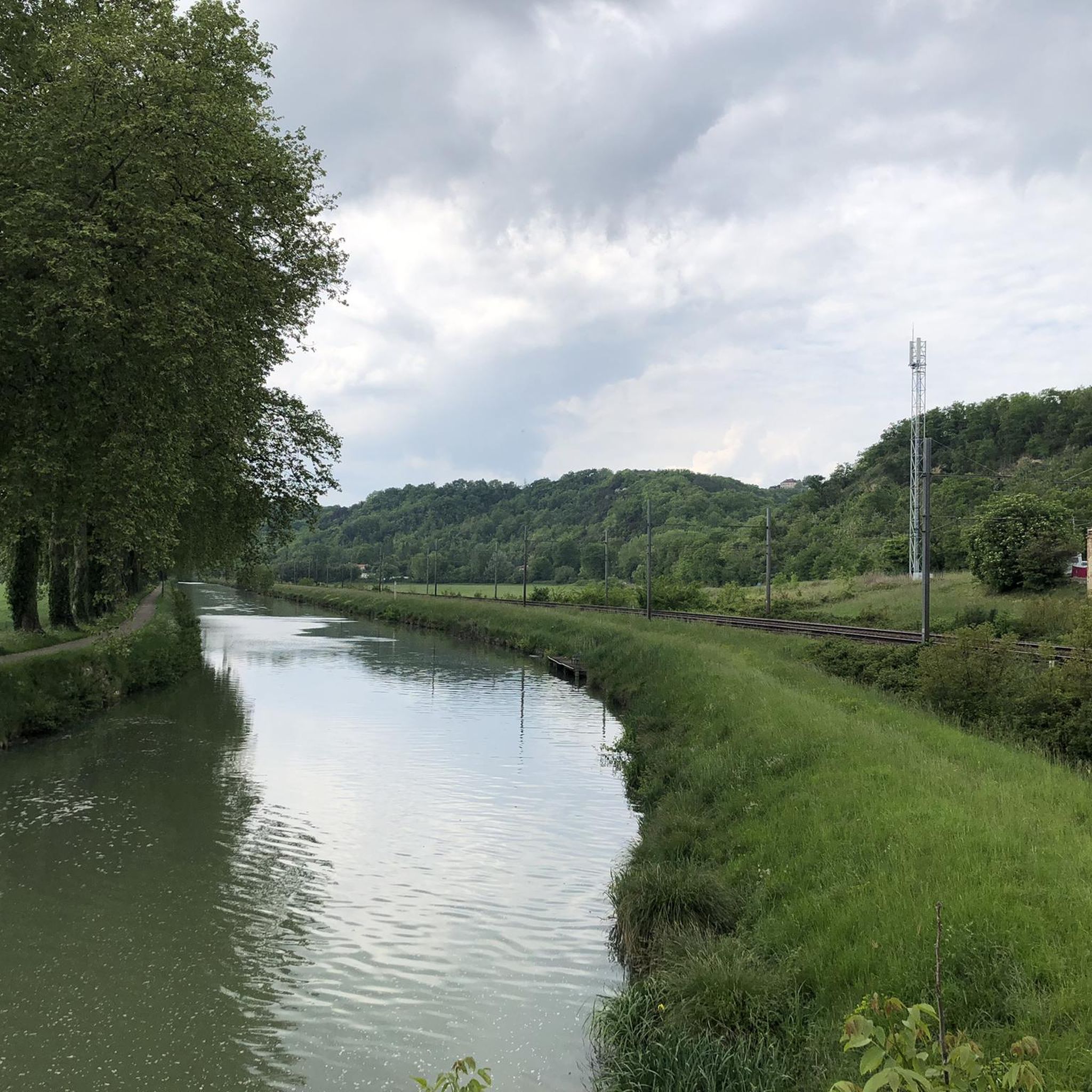
The Pont Cacor is the Canal des 2 mers that passes over the Tarn. With a length of 356 meters and 15 arches, it is the third largest canal bridge in France. Built in 1845, the canal was intended for the transport of goods to Bordeaux. The structure of the bridge, made of Toulouse bricks and white stones from Quercy, symbolizes the meeting of the two waterways and two territories. In addition to being impressive, the Pont Cacor offers a superb view of the Tarn and the orchards of Moissac and Terres des Confluences.
1
0

Third longest canal bridge in France, just after those of Briare in the Loiret and Agen in the Lot et Garonne. Built in 1845, its dimensions, the purity of its lines, the harmonious use of Quercy stone and "Toulouse brick" make it a major architectural element of the region and the heritage of France's Waterways.
0
0

Are you a fan of bridges? No? It doesn't matter, go see it anyway, it's very beautiful.
0
0
Frequently Asked Questions
How many touring cycling routes are available around Caumont?
There are over 30 touring cycling routes around Caumont, offering a diverse range of experiences. These include 16 easy routes, 8 moderate routes, and 8 more challenging options for experienced cyclists.
Are there easy touring cycling routes suitable for beginners in Caumont?
Yes, Caumont offers a good selection of easy touring cycling routes perfect for beginners. For instance, the Auvillar and Valence d'Agen – loop in the Garonne valley is an easy 21.5 km trail exploring the scenic Garonne valley. Another accessible option is the Cacor Canal Bridge – Cacor Canal Aqueduct in Moissac loop from Castelsarrasin, an easy 17.4 km path featuring a canal loop and an aqueduct.
Can I find circular touring cycling routes around Caumont?
Many touring cycling routes in Caumont are designed as loops, allowing you to start and end in the same location. Examples include the Napoleon Bridge in Moissac – Moissac Canal loop from Castelsarrasin, which is 14.2 km, and the Bike parking – Moissac loop from Malause, a 27.6 km route.
What kind of terrain can I expect on touring cycling routes in Caumont?
The Caumont region offers varied terrain, characterized by serene plains, rolling hills, and scenic valleys. You'll find a mix of paved roads and wide tracks, with some routes including unpaved sections. Many paths follow rivers like the Garonne, Gimone, Aveyron, and Tarn, as well as canals.
What natural features or landmarks can I see along the touring cycling routes?
Along the routes, you can discover several interesting landmarks and natural features. Highlights include the engineering marvel of the Cacor Canal Bridge, the historic town of Moissac with its renowned Saint Peter's Abbey Church and Cloister, and the unique Auvillar Circular Market Hall. You might also encounter the impressive Suspension bridge over the Garonne.
Are there any routes that feature waterfalls?
While the immediate Caumont area is known for its river valleys and canals, if you venture further afield towards the Grand Est region (near Chaumont), you can find routes along the Canal entre Champagne et Bourgogne that feature unique natural attractions. For example, a route from Chaumont to Langres includes a detour to the Tufière de Rolampont, a petrifying waterfall. You can find more information on this route via France Vélo Tourisme.
What do other touring cyclists enjoy most about the routes in Caumont?
The touring cycling routes in Caumont are highly rated by the komoot community, with an average score of 4.5 stars from over 190 reviews. Cyclists often praise the diverse landscapes, the peaceful paths along rivers and canals, and the variety of routes suitable for different skill levels.
Are there any longer or more challenging touring cycling routes for experienced cyclists?
Yes, while many routes are easy, Caumont also offers moderate and difficult options. For instance, in the broader region, routes venturing towards the Gorges de la Nesque can extend up to 113 km, providing a more challenging experience. Near Beaumont-de-Lomagne, a 61.7 km path explores the 'little French Tuscany' landscapes, offering a moderate challenge.
Are there touring cycling routes along canals in the Caumont region?
Absolutely. The Caumont area is well-known for its canal paths. Routes like the Cacor Canal Bridge – Cacor Canal Aqueduct in Moissac loop from Castelsarrasin and the Napoleon Bridge in Moissac – Moissac Canal loop from Castelsarrasin are excellent examples of touring cycling along canals. Further afield, the Canal entre Champagne et Bourgogne offers extensive canal-side cycling, such as the route from Joinville to Chaumont, which is ideal for families and showcases 19th-century canal engineering. More details can be found on France Vélo Tourisme.
What is the best time of year for touring cycling in Caumont?
The region, particularly Caumont-sur-Durance in Provence, benefits from a generally pleasant climate. Spring and autumn are often ideal, offering comfortable temperatures for cycling without the intense heat of summer. The 'little French Tuscany' area also provides beautiful scenery during these seasons.
Are there any specific routes that highlight the 'Little French Tuscany' landscape?
Yes, the area around Beaumont-de-Lomagne, sometimes referred to as 'little French Tuscany,' features picturesque rolling hills, serene plains, and scenic valleys. While specific named routes are not in the immediate Caumont guide data, local touring cyclists often explore loops through the Gimone valley, with one moderate 56.4 km trail taking around 3 hours and 27 minutes to complete, and a more challenging 61.7 km path designed to showcase these unique landscapes.
Are dogs allowed on the touring cycling routes in Caumont?
While specific regulations for dogs on cycling routes can vary, generally, dogs are welcome on many public paths and trails in France, especially if kept on a leash. It's always advisable to check local signage or specific route descriptions for any restrictions, particularly in nature reserves or protected areas.
Most popular attractions around Caumont

Get inspired with the komoot mobile app


Explore more
Browse the best Cycling routes in other regions.
