Attractions and Places To See around Le Petit-Fougeray - Top 20
Best attractions and places to see around Le Petit-Fougeray highlight the commune's historical, natural, and rural character in the Ille-et-Vilaine department of Brittany, France. The area features picturesque countryside defined by the Ruisseau de l'étang and its surrounding ponds, alongside the Bois de Chalonge. Visitors can explore local heritage sites and well-preserved hiking trails that traverse varied landscapes.
Best attractions and places to see around Le Petit-Fougeray
- The most popular attractions is Mill trail, a trail where nature is…
Last updated: May 9, 2026
Saint-Maximilien-Kolbé Church
Highlight • Religious Site
Translated by Google •
Tip by

Moulin de la Bouëxière
Highlight • Monument
Translated by Google •
Tip by

Sign up now to discover places like this
Get recommendations on the best single tracks, peaks, & plenty of other exciting outdoor places.
Sign up for free
Mill trail
Highlight (Segment) • Trail
Translated by Google •
Tip by

La Patate du CELAR
Highlight (Segment) • Trail
Very pleasant in dry weather but without any real difficulty (apart from the drop) …
Translated by Google •
Tip by

Corps-Nuds
Highlight • Settlement
Translated by Google •
Tip by

Sign up for free to discover even more attractions around Le Petit-Fougeray.
Sign up for free
Already have an account?
Start today with a free account
Your next adventure awaits.
Login or Signup




Tips from the Community

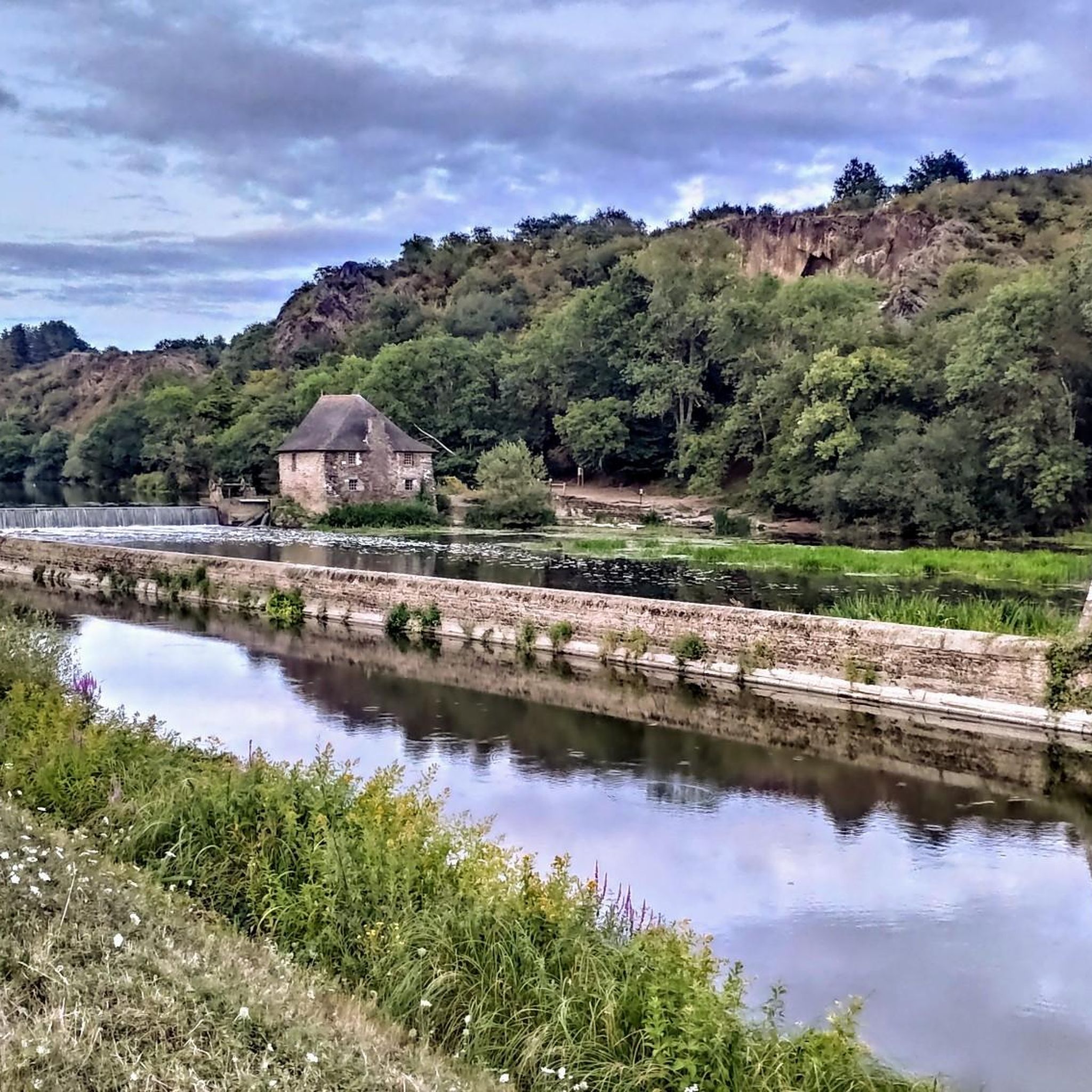
Well done to Alain who is renovating this mill
0
0

Nice but some passages with lots of brambles and nettles impossible to avoid in summer.
0
0

Many centuries ago, our ancestors discovered the possibility of harnessing the power of the elements - which on the one hand could be helpful and useful, but on the other hand could also be a threat as untamed forces of nature - for various purposes and thus be able to do without human or animal muscle power. Mills like these are a good example of the human engineering skills of earlier generations: the heavy millstones used to grind grain into corn or press oil, for example, could be powered by the wind or - as here - water.
0
0

Not at all suitable for electric bikes, steep descent and stones, risk of falls, for cyclists who only master
1
3

The Bouëxière mill dates from 1471, although it has undergone many transformations over time. In 1879, it was notably converted into a flour mill.
0
0

This church stands in the middle of the countryside, you can see it from afar, it is magnificent! The bell tower in the form of a "bulb", characteristic of the Byzantine style, made it pass for an Orthodox church, while it is just linked to the originality of the architect in 1875. Anecdote of the German occupation: in 1941, the Nazi propaganda filmed a film there ("Threshing wheat in Ukraine") to make believe in an advance of German troops in Ukraine (against the Soviet Union). Until 2011, the church was under the patronage of St. Peter the Apostle. On this date, his patronage was changed to that of Saint-Maximilien-Kolbé (1894-1941), a Polish priest with exceptional charisma, especially in the face of Nazism. Held in the Auschwitz concentration camp, he offered himself to take the place of a father sentenced to death. He was canonized (recognized as a "saint" by the Catholic Church in Rome) in 1982.
1
0

The view is magnificent with a small renovated mill
0
0
Indeed very nice, but beware big drop and there are stones a little. It passes in VTC by going there quietly but it is not recommended
0
0
Frequently Asked Questions
What historical sites can I explore in Le Petit-Fougeray?
Le Petit-Fougeray offers several historical points of interest. You can visit the Saint-Maximilien-Kolbé Church, known for its distinctive Byzantine-style bulbous bell tower designed by Arthur Regnault. Another significant site is the Moulin de la Bouëxière, a mill dating back to 1471 that has been renovated. Additionally, the restored Four à pain de la Crimelière (Crimelière Bread Oven) and the Fontaine et lavoir de l'étang (Fountain and Washhouse of the Pond) offer glimpses into past rural life.
Are there any notable natural features or areas to visit?
Yes, the area is rich in natural beauty. The Ruisseau de l'étang (Pond Stream) and its many surrounding ponds are defining features, providing scenic views. You can also explore the Bois de Chalonge (Chalonge Wood), primarily composed of oak trees and home to diverse wildlife. The Landes de Morihan (Morihan Moors) are another natural highlight, where rocks protrude from the landscape, adding to the area's natural diversity.
What kind of hiking trails are available around Le Petit-Fougeray?
Le Petit-Fougeray is known for its numerous well-preserved hiking trails, offering varied and undulating landscapes. A popular option is the Mill trail, a path where nature is very present, though it can have narrow and humid sections. Many trails, including those in the Bois de Chalonge, are part of the commune's hiking circuits. For more detailed routes, you can explore the running trails guide which also features hiking options.
Can I find cycling routes in the area?
Yes, there are several cycling opportunities. The region offers varied terrain suitable for different cycling styles. For mountain biking, you can find routes like the 'Small loop from Crevin' or the 'Bois du Chalonge loop from Saulnières' in the MTB Trails around Le Petit-Fougeray guide. If you prefer gravel biking, routes such as 'Boël Mill – Le Boël loop from Guichen - Bourg-des-Comptes' are available in the Gravel biking around Le Petit-Fougeray guide.
What is the best time of year to visit Le Petit-Fougeray for outdoor activities?
The best time to visit Le Petit-Fougeray for outdoor activities is generally during the warmer months, from spring to early autumn. This period offers pleasant weather for hiking, cycling, and exploring the natural landscapes like the Bois de Chalonge and the Ruisseau de l'étang. While some paths, like the Mill trail, can be humid even in dry weather, the overall conditions are more favorable outside of winter.
Are there any family-friendly attractions or activities?
Le Petit-Fougeray's rural character and natural features make it suitable for family outings. Exploring the hiking trails, such as those around the Ruisseau de l'étang or in the Bois de Chalonge, can be a great family activity. The Moulin de la Bouëxière, a historical mill, is also listed as family-friendly and offers an interesting historical perspective.
What is unique about the Saint-Maximilien-Kolbé Church?
The Saint-Maximilien-Kolbé Church is particularly unique due to its distinctive Byzantine-style bulbous bell tower, designed by architect Arthur Regnault. This architectural choice makes it stand out in the Breton landscape. Historically, it was dedicated to Saint Peter until 2011, when its patronage changed to Saint-Maximilien-Kolbé, a Polish priest canonized in 1982.
What can I expect when visiting the Moulin de la Bouëxière?
When visiting the Moulin de la Bouëxière, you'll see a renovated historical structure that dates back to 1471. It offers a magnificent view and represents an example of early engineering skills, harnessing water power. While it has undergone transformations over time, including being converted into a flour mill in 1879, it remains a significant local landmark.
Are there any challenging outdoor activities for experienced adventurers?
For those seeking more challenging outdoor activities, the area around Le Petit-Fougeray offers some options. The La Patate du CELAR trail, for instance, presents a good climb in varied terrain within the undergrowth, suitable for experienced cyclists. Additionally, some running routes in the running trails guide are rated as 'difficult', such as the 'Bois du Chalonge loop from Saulnières'.
What are some interesting local anecdotes or hidden gems?
Beyond the main attractions, Le Petit-Fougeray holds some curious local details. The village of La Crimelière, for example, is associated with a historical anecdote recounted in a twenty-five-stanza lament. Another curious sight noted at the village's edge is 'Robinets recouverts par un un arbre' (taps covered by a tree), offering a unique, quirky photo opportunity.
What is the Bois de Chalonge and what can I do there?
The Bois de Chalonge is a significant wood primarily composed of oak trees, known for its diverse wildlife including rabbits, deer, and wild boars. Historically, it was the site of a medieval castle. Today, it's an excellent spot for hiking, with several trails integrated into the commune's hiking circuits. You can find routes that explore this area in the MTB Trails around Le Petit-Fougeray guide and the running trails guide.
Are there any nearby towns or attractions worth visiting for a day trip?
Yes, if you're looking to venture slightly further, several notable attractions are within a short driving distance. Chateaugiron (16 km away) is known for its impressive castle and towers. Rennes (22 km away), the regional capital, features a very picturesque medieval center. The Vallée du Canut (Canut Valley, 22 km away) is also a significant natural site for outdoor enthusiasts.
Most popular routes around Le Petit-Fougeray

Get inspired with the komoot mobile app


Explore more
Still not found the Highlight you’re looking for? See guides of the top attractions in other regions:
