Attractions and Places To See around Saint-Juéry - Top 20
Best attractions and places to see around Saint-Juéry include historical sites and natural landscapes, often centered around the Tarn river. The region features notable architectural landmarks, such as the brick structures of Albi, a UNESCO World Heritage site. Visitors can explore a variety of outdoor activities and cultural points of interest within this area.
Best attractions and places to see around Saint-Juéry
- The most popular attractions is Saint Cecilia's Cathedral, Albi, a religious building that is a prominent example…
Last updated: May 4, 2026
Saint Cecilia's Cathedral, Albi
Highlight • Religious Site
Translated by Google •
Tip by

Albi
Highlight • Settlement
Translated by Google •
Tip by

Sign up now to discover places like this
Get recommendations on the best single tracks, peaks, & plenty of other exciting outdoor places.
Sign up for free
View of Ambialet
Highlight • Settlement
Translated by Google •
Tip by

Saint-Salvi Cloister of Albi
Highlight • Religious Site
Translated by Google •
Tip by
Palais de la Berbie
Highlight • Castle
Translated by Google •
Tip by
Sign up for free to discover even more attractions around Saint-Juéry.
Sign up for free
Already have an account?
Start today with a free account
Your next adventure awaits.
Login or Signup

Tips from the Community

Coming to Albi without making a detour to the Sainte-Cécile cathedral is not possible. This religious building in red brick will amaze you as it is so imposing. For my part, it reminds me of an immense stone vessel. Faced with such majesty, you will understand why it has been classified with the episcopal city of Albi since July 31, 2010 on the UNESCO World Heritage List. The first cathedral dates back to the 4th century, but it was during the 13th century that it was profoundly modified by major works. Under the aegis of Sainte-Cécile, patron saint of musicians, take the time to visit this marvel. It is the most visited cathedral in France ahead of Notre-Dame de Paris.
0
0

Saint CECILE, to whom the cathedral in Albi was dedicated, is, among the large circle of saints, primarily responsible for good sound - if one can put it so casually at this point - because she is the patron saint of church music. Many religious choirs are named after her. The dates of her life from the corresponding saint's legend are not historically certain, but she is said to be a martyr from the beginning of the third century. The patron saint's feast day, i.e. her memorial day in the calendar of saints, is on November 22nd in all major Christian denominations.
3
0

Saint-Salvi is undoubtedly the oldest church in Albi (end of the 11th century). It is located a few steps from the cathedral square and is discovered by an architecture in bricks and white stones as well as by its watchtower which dominates the district.
3
0
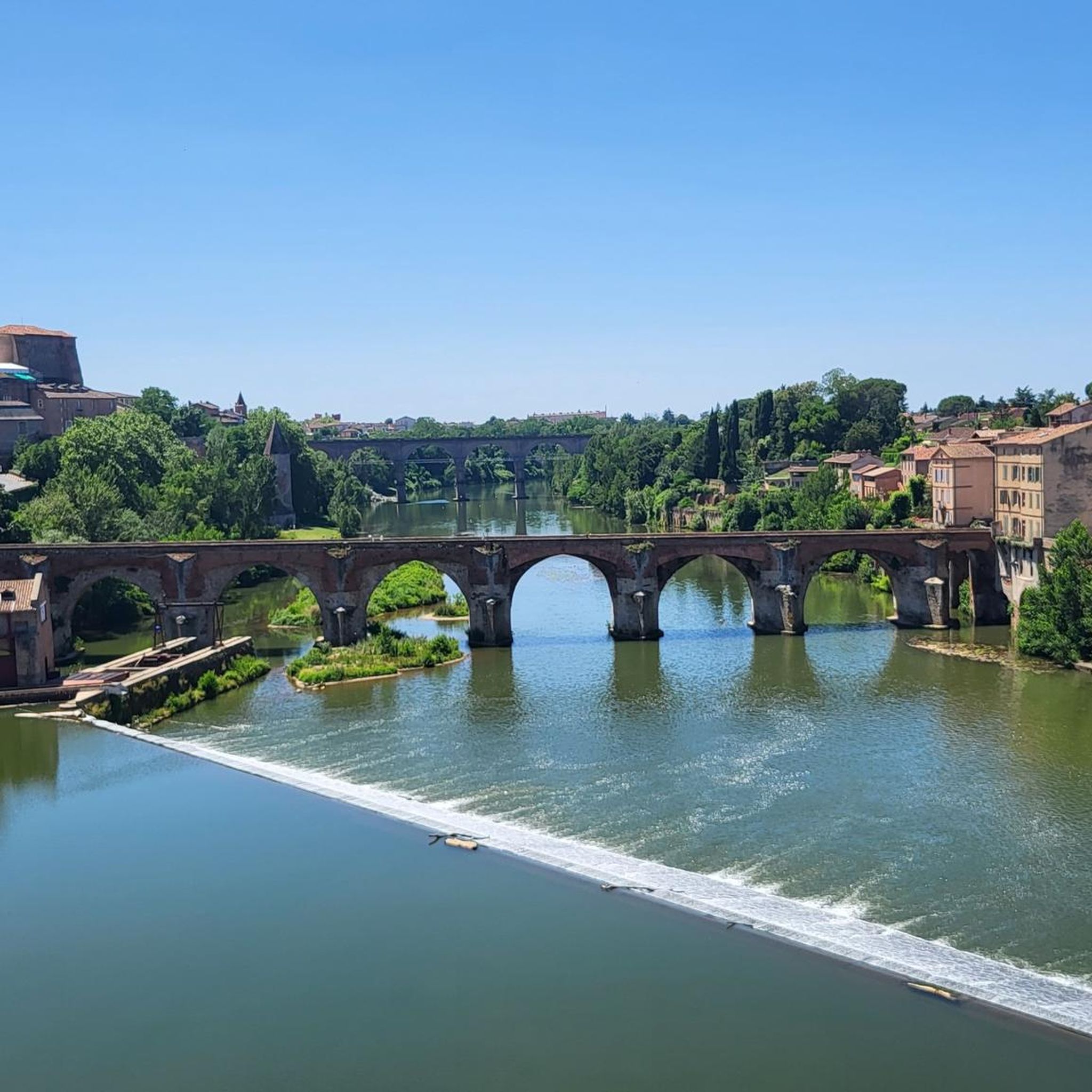
Beautifully situated on the banks of the Tarn, Albi lives up to its name as the "red city"! This bishop's city, built of brick and stone and a UNESCO World Heritage Site, is considered one of the pearls of southwest France. The reason for this? Its beautiful buildings and picturesque charm.
3
0
The palace, with its courtyard of honour and two towers, is still very well preserved. Built in the 13th century, the palace now houses the Toulouse-Lautrec Museum, which displays a large number of works by the famous artist, who was born in Albi: paintings from his youth, portraits, paintings of brothels, sketches of the world of the spectacle.
3
0
The Sainte-Cécile Cathedral is a jewel of Gothic architecture in the south of France. It is the largest brick church in the world. It is also the largest church in Europe whose walls are still completely painted.
4
0

The Tarn valley is steep enough that leaving it involves a nice climb, 5 to 6 km with passages at 10%. And multiple routes around Ambialet.
1
0

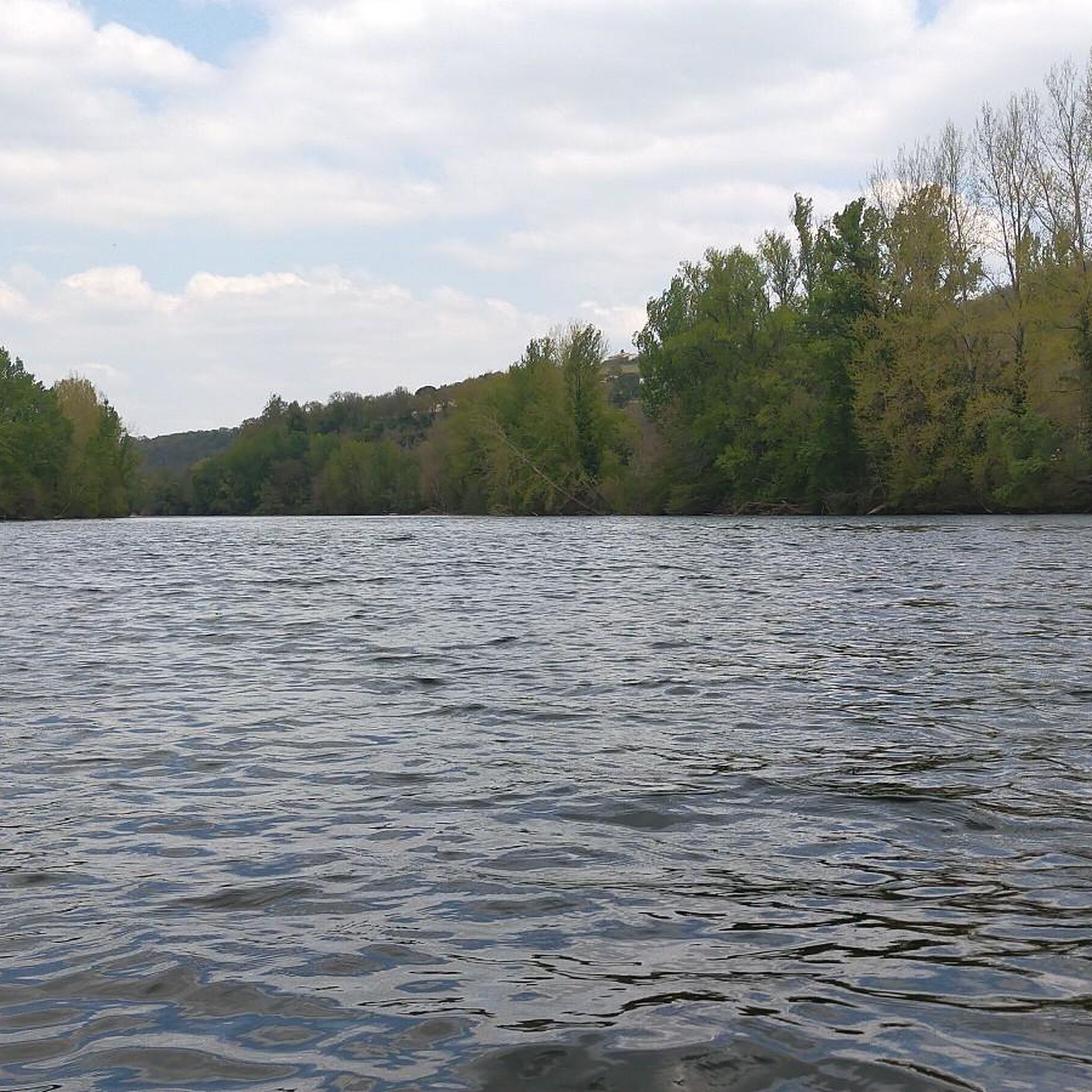
As you come down the D74 road and around the last corner before entering town, you get a splendid view of the village of Ambialet and the old hilltop Cathar fortress. Both look as if they have naturally emerged from the local rock-bed over the past few centuries. There is one restaurant and two cafes in town as well as a cafe and small hotel just over the bridge on the other side of town.
0
0
Frequently Asked Questions
What historical sites can I visit around Saint-Juéry?
The region around Saint-Juéry is rich in history. You can explore the magnificent Saint Cecilia's Cathedral, Albi, a prominent example of Gothic brick architecture and a UNESCO World Heritage site. Also within the UNESCO-listed city of Albi, you'll find the ancient Saint-Salvi Cloister of Albi, one of the city's oldest churches, and the Palais de la Berbie, a 13th-century bishop's palace now housing the Toulouse-Lautrec Museum. Further afield, the View of Ambialet offers a historical settlement with an 11th-century priory and castle ruins overlooking the Tarn.
Are there family-friendly attractions near Saint-Juéry?
Yes, several attractions around Saint-Juéry are suitable for families. The historic sites in Albi, such as Saint Cecilia's Cathedral, Albi, the Saint-Salvi Cloister of Albi, and the Palais de la Berbie (which includes the Toulouse-Lautrec Museum), are all categorized as family-friendly. These offer educational and engaging experiences for various ages.
What kind of outdoor activities can I do around Saint-Juéry?
The area around Saint-Juéry provides excellent opportunities for outdoor activities, particularly along the Tarn river. You can find numerous routes for running, cycling, and road cycling. For detailed routes, explore the guides for Running Trails around Saint-Juéry, Cycling around Saint-Juéry, and Road Cycling Routes around Saint-Juéry.
Where can I find scenic viewpoints near Saint-Juéry?
For breathtaking views, visit the View of Ambialet. This spot offers panoramic vistas of the Tarn river as it meanders around a peninsula, dominated by an 11th-century priory and castle ruins. The Palais de la Berbie in Albi also provides scenic views from its gardens.
Are there easy walks or hiking trails suitable for beginners near Saint-Juéry?
Yes, there are options for easier walks. For instance, the 'Little Blacksmiths' Trail loop from Saint-Juéry' is an easy 4.8 km running route that can also be enjoyed as a walk. You can find more details and other routes in the Running Trails around Saint-Juéry guide, which includes routes of varying difficulties.
What makes Albi a UNESCO World Heritage site?
Albi is recognized as a UNESCO World Heritage site primarily for its Episcopal City, which includes the impressive Saint Cecilia's Cathedral, Albi, the Palais de la Berbie, and the Saint-Salvi Cloister of Albi. This urban ensemble showcases unique brick Gothic architecture and reflects a significant period of medieval European history.
What is the best time to visit the attractions around Saint-Juéry?
The best time to visit Saint-Juéry and its surrounding attractions is generally during the spring (April to June) and autumn (September to October). During these seasons, the weather is pleasant for exploring historical sites and engaging in outdoor activities, avoiding the peak heat of summer and the cooler, potentially wetter winter months.
Can I find information about cycling routes that include the attractions?
Absolutely. The region offers several cycling routes that pass by or near key attractions. For example, the 'Albi Cathedral – Historic Streets of Albi loop from Saint-Juéry' is an easy road cycling route that takes you through the historic city. You can explore this and other options in the Road Cycling Routes around Saint-Juéry guide.
What do visitors particularly enjoy about the attractions near Saint-Juéry?
Visitors frequently praise the grandeur and historical significance of sites like Saint Cecilia's Cathedral, Albi, often noting its imposing brick structure and extensive interior paintings. The picturesque charm of Albi's old town and the stunning natural beauty combined with historical elements at the View of Ambialet are also highly appreciated.
Are there any hidden gems or less-known outdoor spots near Saint-Juéry?
While the main attractions are well-known, exploring the various loops along the Tarn river can lead to quieter, scenic spots. The area around Ambialet, beyond the main viewpoint, offers a 3.5 km footpath around the peninsula, providing a more intimate experience with the landscape and historical ruins away from the main crowds. Additionally, the diverse range of cycling and running trails often uncover charming, less-trafficked areas.
Are there any attractions accessible by public transport from Saint-Juéry?
The city of Albi, home to Saint Cecilia's Cathedral, the Saint-Salvi Cloister, and the Palais de la Berbie, is well-connected to Saint-Juéry by local bus services. This makes it convenient to visit these major historical and cultural sites without a car. For other attractions further afield, checking local bus schedules or considering a car might be necessary.
Most popular routes around Saint-Juéry

Get inspired with the komoot mobile app


Explore more
Still not found the Highlight you’re looking for? See guides of the top attractions in other regions:
