The best running trails around Saint-Sever-De-Saintonge
3.9
(39)
2,116
runners
176
runs
Jogging routes Saint-Sever-De-Saintonge traverse the picturesque Charente-Maritime department of France, offering diverse landscapes for runners. The region, part of the Vals de Saintonge, is characterized by its position between the Boutonne and Charente rivers, featuring a mix of hilly terrain and expansive forests. Runners can explore routes through rural areas and natural settings, often on mostly paved surfaces suitable for various fitness levels.
Best jogging routes around Saint-Sever-De-Saintonge
- The most popular jogging route is Chaniers chain bin loop from Chaniers…
Last updated: May 20, 2026
5.0
(1)
14
runners
13.1km
01:24
40m
40m
Moderate run. Good fitness required. Mostly paved surfaces. Suitable for all skill levels.
4.0
(1)
8
runners
7.67km
00:49
20m
20m
Moderate run. Good fitness required. Mostly paved surfaces. Suitable for all skill levels.

Sign up for free
5
runners
8.11km
00:50
20m
20m
Moderate run. Good fitness required. Mostly paved surfaces. Suitable for all skill levels.
3
runners
13.1km
01:22
70m
70m
Moderate run. Good fitness required. Mostly paved surfaces. Suitable for all skill levels.
3
runners
10.7km
01:07
40m
40m
Moderate run. Good fitness required. Mostly paved surfaces. Suitable for all skill levels.
Get access to more routes and recommendations from other explorers.
Sign up for free
Already have an account?
Our route recommendations are based on thousands of hikes, rides, and runs completed by other people on komoot.
Start today with a free account
Your next adventure awaits.
Login or Signup


Tips from the Community

I really enjoyed this ride. I’m 46, I did it on a 40 year old road bike, it’s more suited to a cyclocross bike!
0
0

Built in the 11th and 12th centuries, this church, listed as a historic monument in 1912, is a spectacular work of art. Well worth the drive past when crossing town!
0
0

The Church of Saint-Martin de Coucoury was built around the 11th century. It is a pretty example of a Romanesque church.
1
0
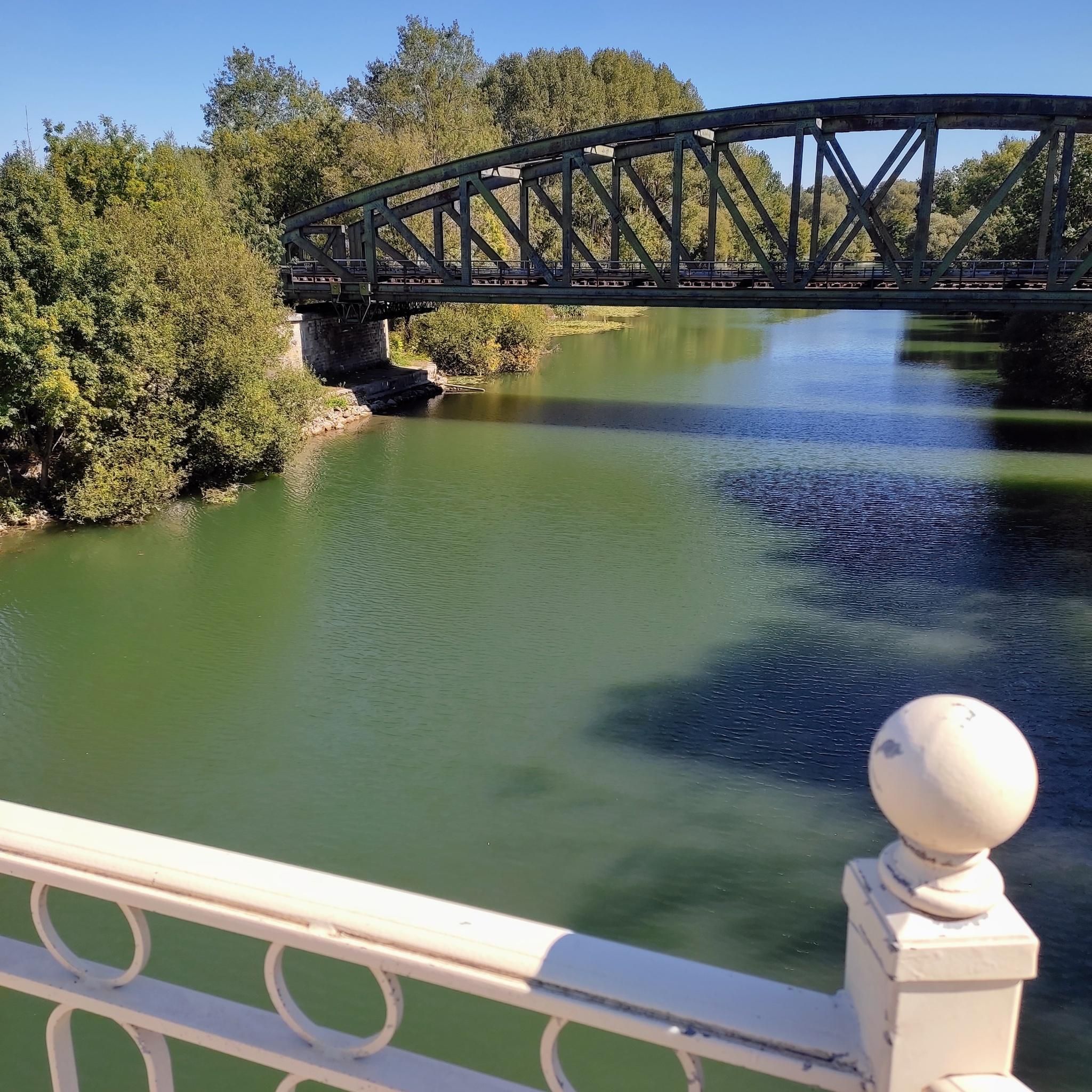
A small bridge over the Etier de Rousson which leads to La Charente. It is on the V92 cycle path.
2
0

The church of Coucoury, built along a Roman road, succeeded older sanctuaries of which only a few traces remain. It is dedicated to Saint-Martin. Most of the single nave building that exists today dates from the second half of the 12th century. Outside, the apse is the most remarkable element; it is limited, on either side, by two buttresses and divided, by two semi engaged columns, into three parts each pierced with a semicircular window. The whole is unified by an elegant border surmounting the windows and connecting them to each other. This very simple harmony is completed by a modillion cornice. On the south wall, the elevation of the nave has preserved fragments of a facing of small cubic rubble and traces of windows, witnesses of an older construction (11th century). This wall is pierced by three Romanesque windows. The square bell tower is massive. It is covered with a four-sloped, almost flat roof, and has two of its faces with beautiful twin Romanesque windows. At the end of the 15th century a chapel was added on the north side. Finally, the western facade is much more recent; indeed the nave, lengthened by nine meters in 1770, ends with a classic facade of fairly good quality with its bosses and its pediment. We can regret the elevation of this new facade in the 18th century because it deprives us of the 12th century facade. You enter the church through a bare door surmounted by a rectangular bay and an imposing triangular pediment (late 18th century). Inside, the nave – high, quite large and without side aisles – is lit by five pierced semicircular windows pierced in the 18th century. The stained glass windows were made in 1869. The walls, in exposed rubble, reveal breaks in the structure, which makes it possible to distinguish the constructions of the Romanesque period from those of the Classical period. In particular on the south wall where you can still see the walled bays of the first Romanesque building (11th century). On the left as you enter: an original stone baptismal font, made up of two twin basins and engraved with eight crests bearing the names of priests. These baptismal fonts date from the 17th century. At the other end of the nave: a stone pulpit dating from 1876. It is a very beautiful Romanesque church in the Saintonge countryside where the centuries have mixed styles for the greatest pleasure of the eyes.
1
0
Frequently Asked Questions
How many running routes are available in Saint-Sever-De-Saintonge?
There are over 170 running routes around Saint-Sever-De-Saintonge, offering a wide variety of options for different preferences and fitness levels. The komoot community has explored these trails extensively, with over 2000 runners using the platform to discover the area.
What kind of terrain can I expect on the jogging trails in this region?
The jogging trails in Saint-Sever-De-Saintonge traverse diverse landscapes, including picturesque river valleys, rural countryside, and accessible forest paths. Many routes feature mostly paved surfaces, while others, like those through the Forêt de Pons or Forêt de la Lande, offer shaded, natural environments. You'll find a mix of flat sections and gently rolling, hilly terrain.
Are there easy or beginner-friendly running routes in Saint-Sever-De-Saintonge?
Yes, the region offers 17 easy running routes suitable for beginners or those looking for a relaxed run. These trails typically have minimal elevation gain and are shorter in distance, providing a pleasant introduction to jogging in the area.
Can I find circular running routes around Saint-Sever-De-Saintonge?
Absolutely. Many of the running paths in the area are designed as loops, allowing you to start and finish at the same point. For example, the Running loop from Saint-Sever-de-Saintonge offers an 8.2-mile (13.1 km) circular experience through varied terrain.
What do other runners enjoy most about jogging in Saint-Sever-De-Saintonge?
The running routes in Saint-Sever-De-Saintonge are highly rated by the komoot community, with an average score of 3.9 stars from over 40 reviews. Runners often praise the region's unspoilt nature, the peaceful countryside atmosphere, and the variety of trails that cater to different abilities, from easy strolls to more challenging runs.
Are there any scenic running routes that follow rivers or greenways?
Yes, the region is situated between the Boutonne and Charente rivers, offering scenic routes along their banks. The Chalosse Greenway Loop, starting from Villa Gallo-Romaine du Gleyzia, is a converted old railway line praised for being 'very cool' on hot summer days. Further afield, the 'Au bord du fleuve Charente' course in Saint-Yrieix-sur-Charente features a green corridor on an old towpath, providing a beautiful riverside run. You can also explore the Chaniers chain bin loop from Chaniers which offers pleasant views.
Are there any running routes suitable for families?
While specific 'family-friendly' designations aren't always explicit, the 17 easy routes available are generally suitable for families with children or those looking for a less strenuous outing. Routes with mostly paved surfaces and minimal elevation, such as some sections of the greenways, are often good choices for a family run or walk.
Can I bring my dog on the running trails in Saint-Sever-De-Saintonge?
Many natural trails and rural paths in the Charente-Maritime department are generally dog-friendly, especially if your dog is well-behaved and kept on a leash. It's always a good idea to check local signage for any specific restrictions, particularly in nature reserves or private lands. The numerous forest and countryside routes provide ample space for you and your canine companion.
Are there any historical or cultural landmarks I can see along the running routes?
Yes, the region is rich in history. While running, you might encounter historical sites like the Saint-Sever Abbey or the Saint-Sever Church. Nearby attractions include the Abbaye de Fontdouce, Saint-Martin Church, and Saint-Césaire Church. The historic town of Saintes, with its Roman amphitheater and extensive old town, is also just 11 km away, offering further exploration opportunities.
What are some longer running routes for more experienced runners?
For those seeking longer distances, the Running loop from Saint-Sever-de-Saintonge covers 8.2 miles (13.1 km) and takes about 1 hour 22 minutes. Other moderate routes like the Running loop from Rouffiac (10.7 km) or the Running loop from Chaniers (10.2 km) also provide excellent options for extended runs through the local countryside.
Are there shaded routes for running during warmer weather?
Yes, the region's forests, such as the Forêt de Pons and the Forêt de la Lande, offer shaded environments that can be particularly pleasant for running during warmer periods. The Chalosse Greenway Loop is also noted by the community for being 'very cool' on hot summer days, providing a comfortable option when temperatures rise.
Is public transport available to access the running trails?
While Saint-Sever-De-Saintonge is a smaller commune, its location within the Charente-Maritime department means that access to specific trailheads might require personal transport. For detailed information on public transport options within the wider Charente-Maritime region, it's advisable to consult local transport authorities or tourist information centers.
Most popular routes around Saint-Sever-De-Saintonge
Most popular attractions around Saint-Sever-De-Saintonge

Get inspired with the komoot mobile app


Explore more
Browse the best Running Trails & Routes in other regions.
