The best road cycling routes around Colombiers
4.5
(20)
603
riders
212
rides
Road cycling routes around Colombiers often traverse varied terrain, including agricultural landscapes and areas with gentle undulations. The region provides a network of roads suitable for different cycling preferences, from flat sections to routes with moderate climbs. Road cyclists can expect to encounter open fields and local villages.
Best road cycling routes around Colombiers
- The most popular road cycling route is The Amphitheatre of Saintes loop from Saint-Léger, a 33.9 miles (54.5 km) trail that takes 2 hours 15…
Last updated: May 21, 2026
14
riders
54.5km
02:15
350m
350m
Moderate road ride. Good fitness required. Mostly well-paved surfaces and easy to ride.
11
riders
43.6km
01:51
260m
260m
Easy road ride. Great for any fitness level. Mostly well-paved surfaces and easy to ride.

Sign up for free
11
riders
39.8km
01:40
250m
250m
Easy road ride. Great for any fitness level. Mostly well-paved surfaces and easy to ride.
11
riders
27.7km
01:08
160m
160m
Easy road ride. Great for any fitness level. Mostly well-paved surfaces and easy to ride.
5
riders
37.1km
01:33
200m
200m
Moderate road ride. Great for any fitness level. Some segments of this route may be unpaved and difficult to ride.
Get access to more routes and recommendations from other explorers.
Sign up for free
Already have an account?
Our route recommendations are based on thousands of hikes, rides, and runs completed by other people on komoot.
Start today with a free account
Your next adventure awaits.
Login or Signup



Tips from the Community

You can also spend a night at the Saint James House B&B, quality guest rooms, swimming pool and view of the Donjon 🙂
0
0

The Abbaye-aux-Dames is built around the church of Sainte-Marie, built in the twelfth century. Famous for its facade and its characteristic "pinecone" bell tower, it is one of the emblematic monuments of Saintonge's Romanesque art. After several wars and fires, the place was restored in the 1970s and 1980s and is now a hotel. When you walk through the long corridors you feel like you have been transported back to the time when the abbey was still alive.
4
0

The keep of Pons is located in the commune of Pons in the French department of Charente-Maritime in the Nouvelle-Aquitaine region. This tower is the old keep of the castle of Pons. 33 m high, it is visible from a long distance and is the symbol of the city. With the Saint-Gilles chapel, the remains of the ramparts and the main building, it constitutes the remains of the ancient castle of Pons.
1
0
Like many amphitheaters in the Roman Empire, that of Saintes was built on the outskirts of the city in a place now called "Vallon des Arènes" (Little Valley of the Amphitheater). The LTS builders took advantage of the local topography to build part of the amphitheater. Today, despite the disappearance of its superstructure, the remains give a very good idea of what this amphitheater looked like in its heyday. The site is now open to visitors all year round.
6
0

A former Benedictine abbey created in 1047, Abbaye-aux-Dames was the first women's monastery in Saintonge. These powerful women were nuns, that is to say, nuns living cloistered and having taken a vow of piety, occupying their lives in contemplation. They carried the crosier, in other words the pastoral staff of a bishop, and minted coins. Richly endowed, the abbey carried its influence well beyond the borders of the county and over time it became one of the most powerful women's monasteries in all of South-West France. With up to a hundred nuns at its peak, it was entrusted with the mission of instructing young girls, often from the French nobility, and counted among its most illustrious residents the future Marquise de Montespan, favorite of Louis XIV. The Abbaye-aux-Dames is structured around the Sainte-Marie church, built in the 12th century, famous for its facade and its characteristic “pine cone” bell tower. The premises were restored during the 1970s and 1980s and now house a Cité de la musique in which the Saintes Festival dedicated to classical music takes place each year. You can also stay in a wing of the building, the cells having been converted into hotel rooms, and leave your bike in a secure room.
0
0
With origins dating back to the Gallo-Roman era, the town of Saintes accumulates sites and monuments like so many layers of a centuries-old history. From the banks of the Charente to the height of the Capitol, there is so much to see along the streets of the city: the Germanicus arch, the thermal baths, the Saint Pierre cathedral, the Jacobins convent, the Musée de l'Echevinage , the Saint Eutrope Basilica, the footbridge over the Charente, etc. The heritage is omnipresent and offers many surprises and viewpoints.
0
0
The Santons people occupied Saintonge during the Gallic era. The Romans conquered the region and settled on the banks of the Charente. The town of Saintes (then designated Mediolanum), located at the western end of the Via Agrippa which linked Lyon (capital of the Three Gauls) to the Atlantic coast, quickly became monumental. At the time of Augustus (27 BC – 14 AD), the city probably became the capital of the province of Greater Aquitaine (Aquitania). This then extended from the Loire to the Pyrenees. Mediolanum is endowed with important public monuments: the amphitheater, the arch of Germanicus, the thermal baths and the aqueduct are still partially visible today. At the time of its peak (end of the 1st century – beginning of the 2nd century), the city must have had several thousand inhabitants. The amphitheater of Mediolanum is one of the earliest in Gaul. It is estimated that its construction began during the reign of Tiberius (14 – 37 AD), and was completed during the reign of Claudius (41 – 54 AD). Like many amphitheaters of the Roman Empire, that of Saintes was located on the outskirts of the ancient city in a chosen and developed site: the “vallon des Arènes”. Thanks to a favorable topography, the builders were relieved of part of their work, the amphitheater resting on the slope of the valley. This elliptical monument, with imposing dimensions (126 meters long and 102 meters wide), made it possible to accommodate several thousand spectators around bloody and violent representations such as gladiator fights (munera) or animal hunts (venationes ). In the 3rd century, the city declined and was entrenched within an impressive rampart, built from the remains of public and funerary monuments from previous decades. The amphitheater is then no longer used. Since the Middle Ages, it has been used, among other things, as a stone quarry. It was classified as a Historic Monument in 1840. It was from this moment that it was gradually restored. Today, despite the disappearance of the superstructures, the remains provide a faithful image of what this monument could have been at the time of its splendor. The site welcomes visitors all year round. Certain objects found during various excavations in the amphitheater district are visible at the archaeological museum.
1
0

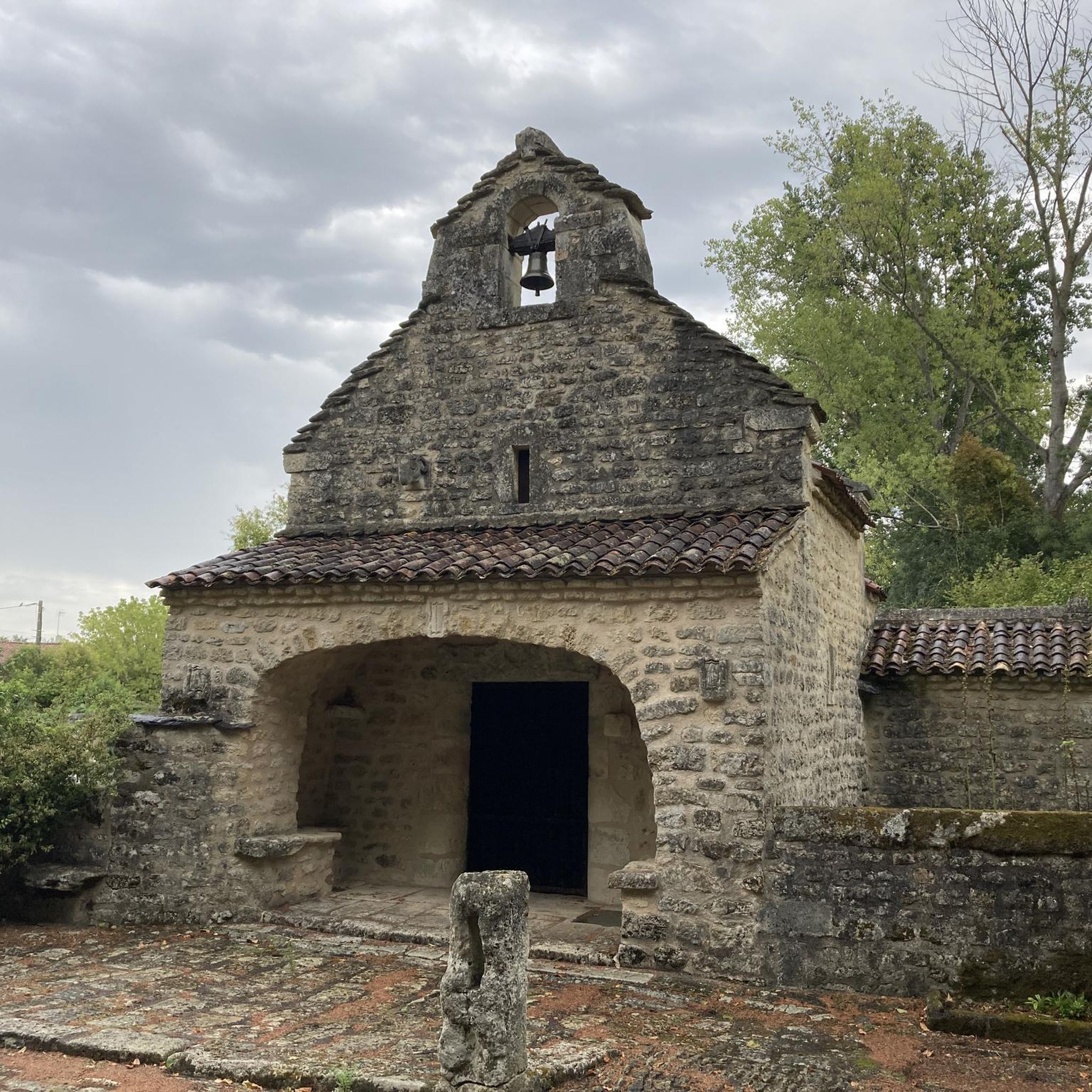
The Church of Saint-Martin de Coucoury was built around the 11th century. It is a pretty example of a Romanesque church.
1
0
Frequently Asked Questions
How many road cycling routes are available around Colombiers?
There are over 220 road cycling routes around Colombiers, offering a wide range of options for different skill levels and preferences. The region's network of roads traverses varied terrain, including agricultural landscapes and local villages.
Are there road cycling routes suitable for beginners or families in Colombiers?
Yes, Colombiers offers a good selection of easier routes. Approximately 66 routes are classified as easy, providing relatively flat profiles and manageable distances. An example of an accessible path is Pons Keep loop from Saint-Seurin-de-Palenne, which is 27.1 miles (43.7 km) long.
What is the best time of year for road cycling in Colombiers?
The region around Colombiers generally offers pleasant conditions for road cycling from spring through autumn. Spring and early autumn provide mild temperatures and vibrant landscapes. While winter conditions are typically mild, it's always advisable to check local weather forecasts for rain or cooler temperatures.
Are there challenging road cycling routes for experienced riders?
Absolutely. For experienced riders seeking more challenge, there are 155 moderate routes and 6 difficult routes available. These often feature more significant elevation gains and longer distances. A popular moderate route is The Amphitheatre of Saintes loop from Saint-Léger, which covers 33.9 miles (54.5 km) with moderate elevation.
What kind of scenery can I expect on road cycling routes around Colombiers?
Road cycling routes around Colombiers are characterized by open agricultural areas, charming local villages, and rural landscapes. You'll often find yourself cycling through fields and past traditional architecture, with varying elevation profiles that offer diverse views.
Are there any circular road cycling routes in the area?
Many of the road cycling routes around Colombiers are designed as loops, allowing you to start and finish at the same point. Examples include Cathedral of Saintes – Abbaye aux Dames de Saintes loop from Berneuil and Moulin de la Seugne loop from Berneuil, which are both popular circular options.
What are some notable landmarks or attractions I might see along the routes?
While cycling, you might encounter historical and cultural points of interest. Highlights in the broader region include the Pons Donjon, the Saint-Martin Church, and the Saint-Vivien Church of Pons. These offer glimpses into the local heritage.
Are there any long-distance road cycling options starting from Colombiers?
While many routes are designed for day trips, the extensive network allows for combining shorter segments into longer rides. For example, routes like La Barbelle – Gouffre du Quai des Roches loop from Berneuil, at 37.1 miles (59.8 km), can be part of a longer exploration of the region's varied terrain.
What do other road cyclists say about the routes in Colombiers?
The road cycling routes in Colombiers are highly regarded by the komoot community, with an average rating of 4.6 stars from over 20 reviews. Cyclists often praise the diverse terrain, the quiet roads through agricultural areas, and the charming villages encountered along the way.
Where are good starting points for road cycling in Colombiers?
Many routes conveniently start from local villages and towns surrounding Colombiers, such as Saint-Léger, Saint-Seurin-de-Palenne, and Berneuil. These locations often provide easy access to the road network and may offer parking facilities.
Are there any specific considerations for road cycling in winter around Colombiers?
Winter in Colombiers is generally mild, but it's important to be prepared for cooler temperatures and potential rain. Roads are typically well-maintained, but always check the weather forecast before heading out and ensure your bike is equipped for wet conditions if necessary.
Most popular routes around Colombiers
Most popular attractions around Colombiers

Get inspired with the komoot mobile app


Explore more
Browse the best Road cycling routes in other regions.
